
January 23, 2026
It has probably been about ten years since I began collecting antiques, especially archaeological artifacts. To be honest, while I have preferences in what I like or dislike, I do not truly understand what makes a work of art good or bad. When it comes to contemporary art, it feels entirely opaque to me. There are certainly pieces within that realm that I like. When I was in middle school, the artist I liked most—after browsing an art encyclopedia at a relative’s house—was Kazuo Shiraga, and in high school my idols were Yayoi Kusama and Nam June Paik. Yet I could not understand why they were so highly regarded, or what exactly made their work “good” as art.
I felt this was a problem. How should the value of something called “art” be determined? Whether or not my sense of value aligned with that of society, as a photographer I needed to acquire some kind of standard; otherwise, I would not even be able to call my own work “work.” To obtain such a standard, I would have to learn it deliberately. If one’s parents are artists or engaged in creative professions, such sensibilities can be cultivated through one’s upbringing. But I was born into a slightly below middle-class, blue-collar household, where no such environment existed.
I decided that I should first become a buyer of art, and from that experience construct my own criteria of value. However, purchasing expensive contemporary art that I did not even understand was far too risky. Simply put, I did not have that kind of money. So I quickly reframed the idea into something more accessible. Archaeological artifacts clearly contain values that I could grasp—history and rarity. I had always been interested in history. I could not understand the value of “beauty,” but I could understand the value of “history.” Instead of buying beauty, I decided to buy history.
Around that time, I happened to meet an antique dealer of my own generation in Kyoto. For someone like me, raised in a suburban blue-collar environment, the world of Kyoto antique dealers seemed prohibitively distant. But his personality, and the fact that we were the same age, lowered that barrier significantly. In the world of Japanese antiques—especially ceramics—most demand centers on relatively recent pieces adorned with beautiful patterns. Among more knowledgeable collectors, there is also interest in the rustic wares of the Kamakura and Muromachi periods. But I had no interest in such things and, as usual, went in an extreme direction. I bought from him a small piece of pottery from the Yayoi period—an archaeological artifact roughly 1,800 years old. I had assumed that something so ancient would be expensive, but in fact it cost less than a round-trip Shinkansen ticket between Kyoto and Tokyo. At that moment, I learned my first lesson about value: without demand, even something old and rare does not become valuable. That said, having few competitors was advantageous for me. I brought the pottery back to New York and placed it on my desk.
This small vessel, nothing more than fired clay, brought about a surprising shift in my perception. The constant presence of something 1,800 years old before me dramatically altered my sense of time. Its existence introduced a kind of temporal distortion into the present—the twenty-first century in which I live. Gradually, that distortion transformed the atmosphere of my room into a space that was neither the present nor the distant past, but something like a timeless zone. This fragile object must have spent most of its existence buried underground. It was probably used for only a few years at most. Over nearly two thousand years, the circumstances of its creation and its function have completely disappeared. The maker’s intentions, emotions, and meanings have been erased by the passage of history. In that sense, they are meaningless. Applied to my own work, the conclusion was clear: whatever intentions or meanings I embed in my photographs are, in the long flow of history, meaningless.
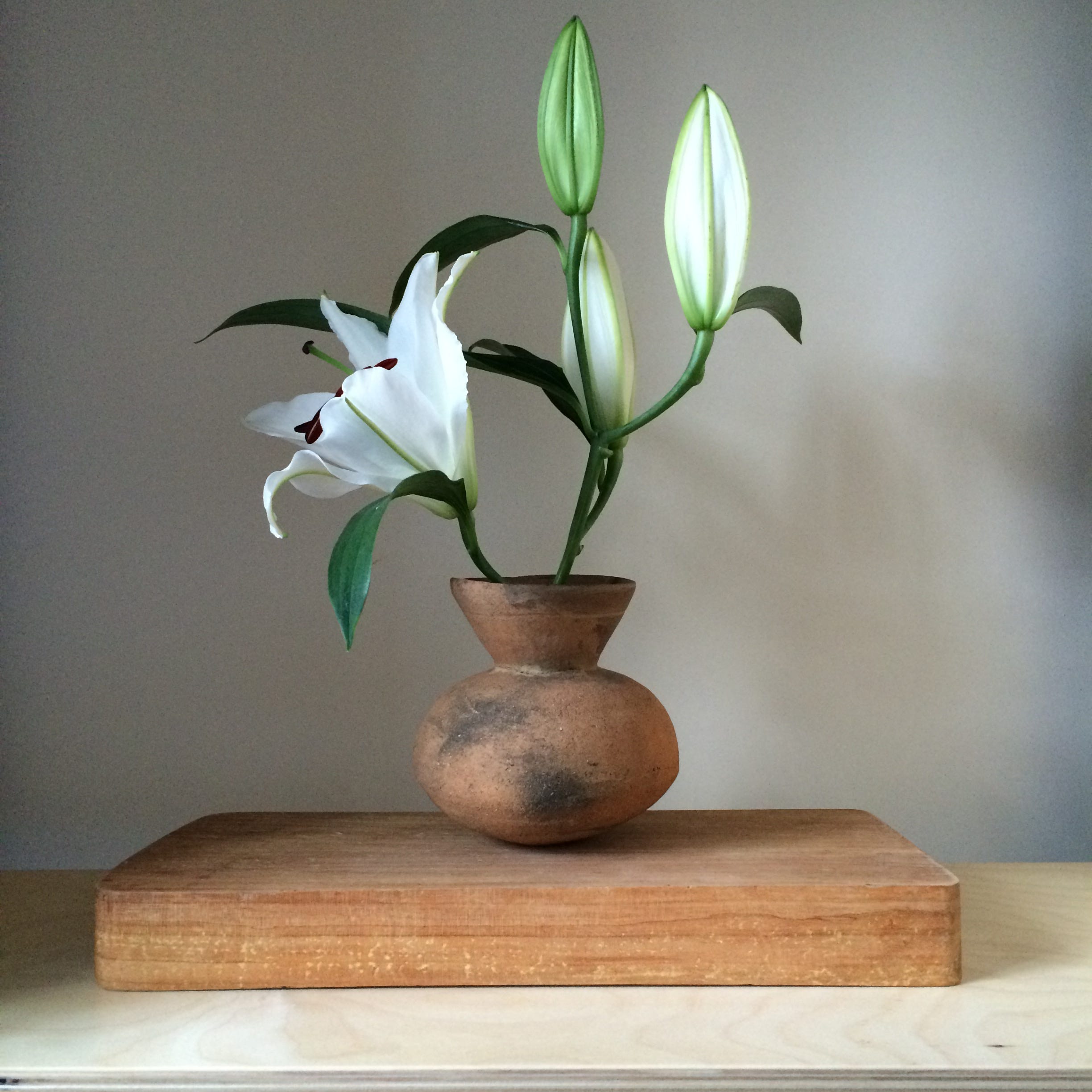
At the same time, this small vessel redefined the act of “seeing” for me. If something like this could be acquired at a price within my reach, what, then, distinguishes it from similar objects in a museum? Until then, I had wandered through museums, looking at archaeological artifacts without much engagement. But after this object entered my life, I began to view museum collections from an entirely different perspective. Material, technique, and the rarity of survival despite the eroding force of historical oblivion—these became visible to me. I found myself pressing close to the glass, examining each object intently. And with that came a clarity: I could understand why these pieces belonged in museums. In fact, each one is a miracle. The small vessel on my desk is beautiful in its own way, but compared to its more modest presence, the objects in museums embody an extraordinary convergence of material and technique, preserved in nearly perfect condition. I could finally say, with conviction, “This is why it belongs here.” What had once seemed like mere relics of the past reappeared before me as luminous crystallizations of human history.
At last, in my own way, I arrived at an understanding of value. Or rather, I realized that although I had “seen” these things many times in museums, I had not actually seen anything at all. This small vessel appeared before me without carrying any trace of the maker’s intention, emotion, or concept, and yet, after nearly two thousand years, it effortlessly redefined my vision. Is it possible for me to imbue my photographs with the same power? As a photographer, my task is to summon that same force.
2026年1月23日
古美術、特に考古学的な遺物を集めるようになってから、もう10年ほど経つだろうか。正直に言えば、私は美術作品の好き嫌いはあっても、その良し悪しは理解できていない。現代美術に至っては、もうすっかり謎の世界だ。確かにその現代美術の中でも私が好きなものはいくつかある。おそらく中学生の頃に、親戚の家にあった美術辞典を見て一番好きだったのは白鬚一雄だったし、高校時代の私のアイドルは、草間彌生とナムジュン・パイクだった。ただそれが何故高く評価されるのか、何故これがアートとして優れているのか、ということに関しては全く理解できなかった。これではまずい、と私は考えていた。「アート」と呼ばれるものの価値は、どのようにして決定されるべきなのか。その価値が、社会の考えるものと自分のものが合致していようといまいと、少なくとも私は写真家として、この基準を身につけなければ、自分の作品を「作品」とすら呼べなくなってしまう。私がこの基準を得る為には、私は意図的に学習をしなければならない。自分の親がアーティストや、クリエイティブな仕事についているのであれば、このようなアートに関する基準は、生まれ育った環境である程度育成される。しかし私は、中産階級よりやや下の、ブルーカラーの家庭の生まれで、家庭にそのようなものを学ぶ環境は何一つ存在していなかった。
まずは自分がアートの購入者になって、そこから得られる体験を基礎にして、私の価値の基準を作ることを考えた。が、流石にそもそも理解できない現代美術作品をいきなり高額で買うのはリスクが高すぎた。そして単純に、私にはそんな金はなかった。私はあっさりとこのアイデアを自分にとってもう少し分かりやすい分野に置き換えてみた。考古学的な遺物であれば、そこには明らかに「歴史」や「希少性」という、私にも分かりやすい価値が潜んでいる。私はもともと歴史には興味があった。私には「美」の価値は理解できなかったが、「歴史」の価値であれば理解することが出来た。「美」を買うのではなく、私は「歴史」を買うことにしてみた。
ちょうどその頃、京都で同世代の古美術商と知り合うことが出来た。京都の古美術商、などというと、私のような都市近郊のブルーカラーの世界に生きていた人間からすると、あまりにも敷居が高いのだが、彼の人柄と、同世代であることがそこの敷居を大幅に下げてくれた。日本の古美術、特に陶磁器の世界であれば、そのほとんどが近世以降の、美しい紋様が描かれたものに人気が集まる。もう少し玄人の世界になれば、鎌倉時代や室町時代の素朴な陶器に人気があるようだ。しかし私はそう言ったものには全く興味がなく、いつも通り極端な方向に直進した。私は彼から弥生時代の小さな土器を買った。恐らく1800年ほどの時代が経過した考古学遺物だ。私はこの遺物は大変古いものだから、随分な値段がするのだろう、と思っていたが、値段は京都から東京まで新幹線で往復する値段よりも安かった。その時に私は価値についての最初の学びを得た。需要がなければ、古くて希少であっても価値は上がらない、ということだ。とは言え私にとって競争相手が少ない、というのは有難いことではある。私はこの土器をニューヨークに持ち帰り、自分の机に置いて生活を始めた。
この小さな土を焼いただけの土器は、私の様々な感覚に驚くべき変化をもたらした。目の前に、常に1800年前のものが存在している、ということは、私の時間の感覚を大幅に変えた。これらの遺物の存在は、私の存在している21世紀という現在に、一つの時間的な歪みをもたらす。そしてその歪みはゆっくりと私の部屋の空気を2000年前でもない、21世紀でもない、一種の無時間の空間に変えてゆく。1800年、もしかしたら2000年以上前に作られたこの土器は、彼の人生の殆どを土の中で埋もれた状態で過ごしているはずだ。この脆い土器が実際に使われたのは、恐らく数年にも満たないだろう。そしておよそ2000年の間に、この土器が作られた経緯や機能は完全に消えてしまっている。つまり、製作者の意図や、そこに込めた感情や意味などは、歴史の流れで見れば、何の意味もない、ということになる。これを私の作品に当てはめていれば、この小さな土器が示す答えは明確だった。私が写真に込めた意図や意味など、歴史の流れの中で見れば、何の意味もない。
同時に、この小さな土器は、私の「見る」という行為を再定義する存在となった。この土器が、私の手の届く程度の価値なのであれば、美術館にある同じようなものとは、いったい何が違うのだろう?それまでは、私は美術館に行っても、これらの考古学遺物をただ漫然と眺めているだけだった。しかしこの土器が目の前に現れて以降、私は美術館に収蔵されている考古学美術を、今までとは全く異なる視点で眺めるようになった。材質、技術、そして歴史の忘却の暴力に晒されても、それでも生き延びた希少性ー私は美術館のガラスに張り付いて、一つ一つの遺物を穴が開くほど眺めるようになった。そしてそこには、何故これが美術館に収蔵されているのか、という理由が、私にもはっきりと分かるほどの明確さで示されていた。実際、それら美術館に収蔵された考古学美術は、その一つ一つが奇蹟なのだ。私の机に静かに座っている、小さな土器は、それはそれで美しい。が、彼のどちらかと言えば謙虚な佇まいから比較すると、美術館に置かれている彼の仲間は、まさに奇蹟と呼べるほどの素材や技術が結集され、それがほぼ無傷の状態で維持されているものばかりだった。「だからこれが美術館にあるべきなのか」と私は心から納得することが出来た。今までは単なる過去の亡霊だったもの達は、この小さな土器のおかげで、人間の歴史の輝く精華として、私の目の前に再び現れたのだった。
私はようやくここで、私なりの方法で、「価値」というものにたどり着くことが出来たのだった。逆に言えば、美術館で、今まで私はこれらのもを何度も「見て」はいたが、実際には、何も見ていなかった、ということだ。この土器はそれを作った人間の意思や感情、ましてコンセプトなどというものを一切持たずに私の目の前に現れたのにも関わらず、およそ2000年の時を経て、私の視覚を易々と再定義したのだ。私が、この小さな土器と同じ力を、私の写真に与えることは可能だろうか。私の写真家としての命題は、この土器と同じ力を召喚することにある。
No posts
Comments
Nothing yet. Say the first thing.
Sign in to join the conversation.