
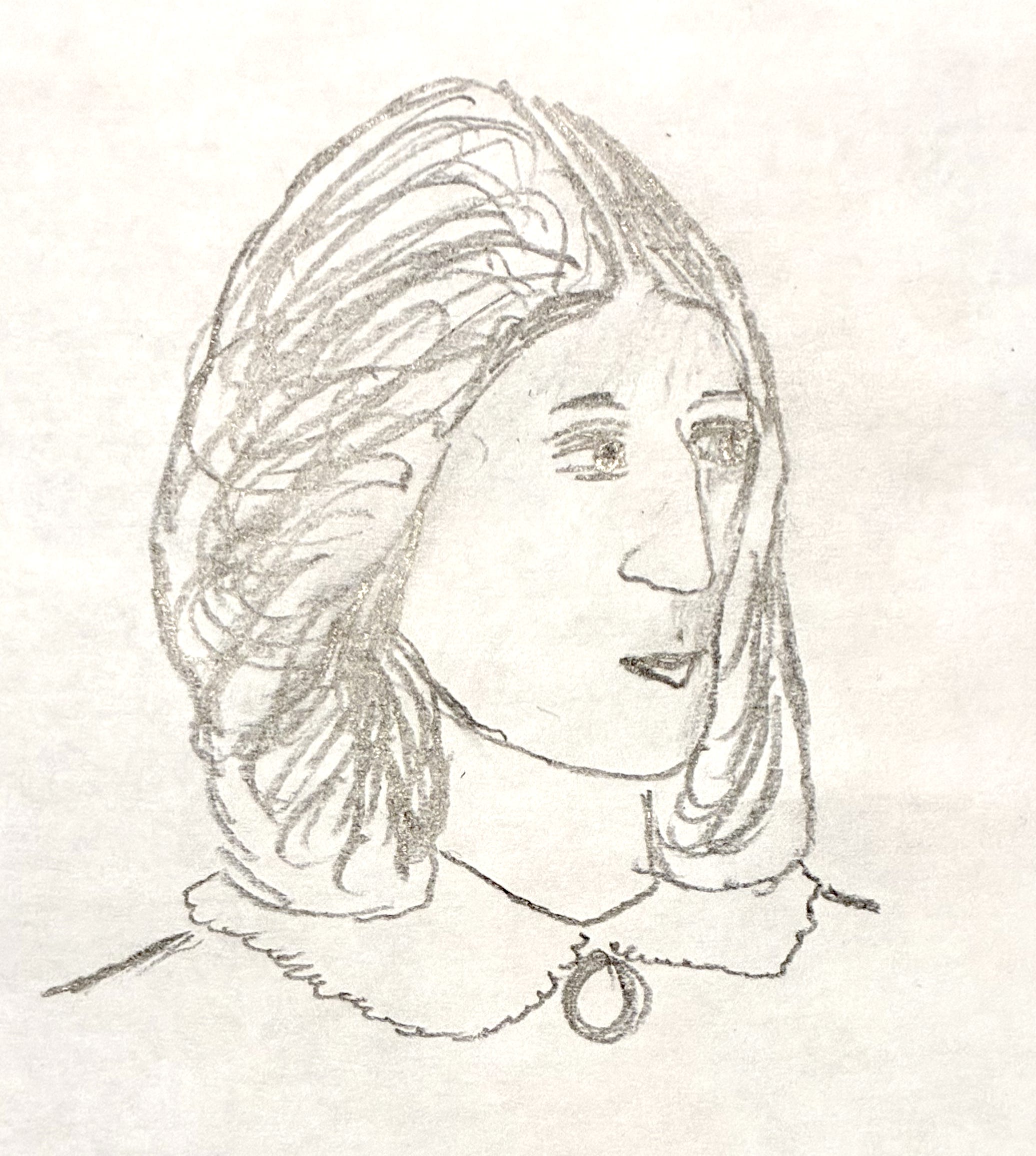
Why did George Eliot, or Mary Ann Evans, decide to translate Spinoza’s The Ethics into English? Who was she and why did she choose this project? That’s what we’re discussing today.
As a reminder, the schedule of chapters for this read-along is as follows:
March 13 - Introduction: George Eliot’s Spinoza (we’re here)
March 20 - Part I: Of God
March 27 - Part II: On the Nature and Origin of the Mind
April 3 - Part III: On the Origin and Nature of the Emotions
April 10 - Part IV: On the Servitude of Man and on the Power of the Passions
April 17 - Part V: On the Power of the Intellect, or, On Human Liberty
 Part 2: "The Slavery of Being a Girl” - Nasty Women Writers")
Philosophical texts can often seem impenetrable to people outside of the discipline. There is a specific use of jargon that builds on the tradition and is obvious to those inside the circle of philosophers yet arcane to those of us on the outside. When I found out that Spinoza had been translated into English by a novelist, I had a suspicion that was the version that would make the most sense for someone like me. And while we still haven’t gotten into the meat of Spinoza’s text this week, the introduction chapter to George Eliot’s Spinoza has already given me that bit of pleasure I anticipated when choosing this version.
What we learn in this opening chapter is a bit about the woman behind novels like Middlemarch, Silas Marner, and Daniel Deronda. We learn that she lived an untraditional life for 19th century England. That she was in a romantic relationship with a married man who she referred to as her “husband” though they never married. And we learn that she was determined, in both the metaphysical and psychological sense, to chart her own course when it came to study and choice of career. That she translated such a monumental book and wrote as many great novels as she did under a pen name to hide her identity—and gender—is a testament to how powerful her will must have been.
And through her diary entries and letters to friends, we begin to learn a bit about the 17th century Jewish Dutch philosopher whose ideas we are about to embark on. We learn that he was not, in fact, an atheist as his critics claimed but was a pantheist, or, more precisely, a panentheist. The idea that everything is in God. And once you understand the interdependence and interconnectedness of everything, you begin to understand how much we are impacted by, and depend on, those around us. Eliot, in her literary work, wanted to unravel “how human lives are shaped, even determined, by influences beyond their control.”
Mary Anne was so taken by Spinoza’s ideas, which she claimed spoke to something she felt but hadn’t yet seen put into words. In a way, the best literature evokes the same feeling in us. And so, she spent most of 1855 and the early parts of 1856 working on translating Spinoza from the original Latin into English before finally completing it and deciding it was time to begin in earnest her true passion of writing literature.
On September 22 of 1856, she wrote in her journal that she began working on a story and, six weeks later, another entry recorded that she had finished writing. That first piece would go on to be the trilogy Scenes of a Clerical Life, and launch her as the powerhouse novelist she would become. Throughout all of her novels she imbued her stories with the deterministic lens she picked up from Spinoza but fused with freedom. Human relationships form a “vast and complex web of causes” but it is through her characters “gaining greater understanding of themselves and their relations to others” that they achieve some sense of liberation, enlargement of soul, quiet empowerment, and, therefore, a measure of happiness.
One area I’m particularly excited to understand more is how Spinoza manages to thread the needle of a determinist universe while avoiding reductive materialism. Elasticity despite the fixed causal nature of things. And despite himself living a frugal and unmarried, seemingly celibate, life, he didn’t advocate for self-denial the way the ascetics did, nor did he advocate for overemphasis in the other direction of material pursuits of wealth, status, or power. His philosophy, it seems from this opening introduction, is one of moderation not too dissimilar from what we got out of Montaigne. Marriage, as one example, is cited as “in accordance with reason” if it “expresses a mutual desire that is produced ‘by the love of possessing and wisely educating children; and if, besides, the love of both the man and woman is not excited by the [physical] person alone, but is chiefly caused by freedom of soul’”.
Human friendships are also important to the Spinozist, and Eliot, worldview.
Given George Eliot’s Spinozist insight into the irreducibly interdependent “web” of human life, the solution to this problem can never be one that cuts a person off from her community or puts her fundamentally at odds with it. We see this very clearly in the case of Silas Marner, who leads a “withered,” barely human existence on the outer margins of his village; though that community is very far from enlightened, Silas begins to flourish as his relationship with an abandoned child, Eppie, draws him into it. Indeed, his growing dependence of his neighbors is portrayed as a kind of empowerment.
God, Eliot would come to believe, was found within the very best of human nature. Sympathetic friendships are core parts of her novels, especially non-romantic ones between men and women. Friendships irreducible to “romantic love or political comradeship” but rather to something more. Call it spiritual, call it cosmic, call it whatever word feels appropriate to you. But fundamentally, it is about kindred natures.
That’s what Spinoza was after and what we hope to arrive at by reading Eliot’s translation of his work. To understand at a deeper level the interconnectedness of everything and within that knowledge, how to live a good and meaningful life.
Comments
Nothing yet. Say the first thing.
Sign in to join the conversation.