
"‘That Joke Isn't Funny Anymore’ was always one of my favourites. It just fell through the roof. It was one of those lovely times when the feeling just falls down on you from the ceiling somewhere and it almost plays itself. It gives it an almost esoteric feeling.” -Johnny Marr, Uncut, February 2008
The song began taking shape in late September 1984 during rehearsal soundchecks on the Smiths’ British west country mini-tour (the final leg of the band’s debut album tour). It was completed and recorded the following month at Amazon Studios in Liverpool during the sessions for the Meat Is Murder studio album.
Although the album credits reflect the Smiths as producing the song, Johnny Marr largely fulfilled this role, while Stephen Street served as recording engineer. Additional overdubs on the track were completed the following month at Ridge Farm Studios in Surrey before it received its final mix in December 1984 at Island Records’ Fallout Shelter studio in London.1
The fifth track on the Smiths’ Meat Is Murder album, issued on 11 February 1985, “That Joke Isn’t Funny Anymore” is nestled between the masked confession of “What She Said” and the cultural decay of “Nowhere Fast.” Read together, the three songs form a striking triptych of Morrissey’s Manchester youth…introspective, intellectually restless, emotionally isolated, and devastatingly blunt. Within that sequence, however, “That Joke Isn’t Funny Anymore” emerges as the album’s emotional centerpiece.
For many contemporary critics, as well as a great many Smiths fans, “That Joke Isn’t Funny Anymore” represents the artistic pinnacle of Meat Is Murder. While every track on the album possesses its own distinctive strengths, none combines Johnny Marr’s compositional ambition with Morrissey’s lyrical depth and vocal intensity quite so completely. Expansive yet intimate, tender yet imposing, the song unfolds with remarkable patience, its sweeping arrangement and emotional progression creating an experience that feels less like a conventional pop recording than a sustained meditation on empathy, isolation, and despair. It is a work of unreserved emotional beauty, one that captures the Smiths at the height of their creative powers. Among an album of exceptional songs, “That Joke Isn’t Funny Anymore” remains first among equals.
Listen to the album version of the song here:
0:00
-4:58
The release strategy of both the Smiths and their record label in the first months of 1985 is rather quixotic considering the timing of the release of the band’s second studio album. Despite having already been released the previous August as the B-side of the “William, It Was Really Nothing” single, as well as being included on the Hatful of Hollow compilation album (released November 1984), Rough Trade chose to capitalize on the unexpected popularity of “How Soon Is Now?” by reissuing it as a single on 28 January 1985 rather than leading with new material from the forthcoming album. The fact that “How Soon Is Now?” was omitted from the original UK edition of the Meat Is Murder album makes this decision even stranger, though to be fair the single did give fans their first preview of the new album by way of its B-side, which contained “Well I Wonder.”
The pattern continued after the album's February release, not to mention the onset of the band’s Meat Is Murder Tour that commenced later the same month, further obscuring any coherent promotional strategy. On 18 March, Rough Trade issued "Shakespeare's Sister,"2 backed by "What She Said," an album track from Meat Is Murder. Meanwhile, Germany and Italy received the album's penultimate track, "Barbarism Begins at Home," as an A-side single, while the Netherlands was given an exclusive summer release of the album's opening track, "The Headmaster Ritual." This patchwork of UK B-sides and territory-specific singles suggested a fragmented, almost improvised approach to promoting the Smiths' second studio album.
What never materialized was a conventional (and timely) UK single from the album to sustain momentum and extend the album's commercial life. Instead, nearly five months would pass before “That Joke Isn't Funny Anymore" finally appeared as the official UK single from Meat Is Murder on 5 July 1985.
The decision was driven not by Rough Trade but by Morrissey himself. Geoff Travis saw little commercial potential in "That Joke Isn't Funny Anymore" and regarded it as an unsuitable single, attempting to persuade Morrissey to reconsider. Recalling the exchange years later, Travis remembered telling him, "That's not a good idea… It's a bad idea, it's not a single." Morrissey, however, would not be moved. "Being me," Travis recalled, "I said, 'Fine, you want it to come out, it'll come out.' ... That was the first moment I can remember of any friction."3 Morrissey's insistence ultimately prevailed, underscoring that, for him, the song's artistic importance outweighed conventional marketing logic.
Whatever the artistic merits of the decision, the timing ran counter to standard record industry practice and made little promotional sense. By July, most fans interested in Meat Is Murder already owned the album, leaving scant incentive to purchase a single built around one of its more familiar tracks.
While it is understandable that “Hand in Glove” failed to reach the UK Top 100 in the spring of 1983, given that the Smiths were still an unknown quantity, every subsequent single they released achieved a respectable chart position, with one notable exception. At number 49, “That Joke Isn’t Funny Anymore” became the band’s lowest-charting single after their debut, making it their poorest commercial performer of their recording career (a rather ironic outcome given that it came from the Smiths’ only studio album to reach number one on the UK Albums Chart, debuting with gold-certified shipments of over 100,000 copies on its first day). Even Johnny Marr of all people came to recognize that the choice for album single was something less than optimal:
"I'd secretly wanted it to do well because I thought it would be our big torch song, our Dusty single. For about two days I got excited thinking we might have a big 'All I See Is You'-type torch song in the chart. Then reality struck. Why would they play that continuously on Radio 1?"4
While the single’s 12-inch edition retained the complete 4:57 album version of the song, the 7-inch edition was edited to a more radio-friendly 3:49 by excising most of Johnny Marr's atmospheric guitar coda and the song's distinctive false fade. The reduction came at a high price, sacrificing one of the composition's most haunting and emotionally resonant passages.
Listen to the edited 7-inch single version in the following link:
0:00
-3:48
The 7-inch edition paired the single with a live version of "Meat Is Murder" on its B-side. The 12-inch expanded upon this by adding live performances of "Nowhere Fast," "Stretch Out and Wait," and "Shakespeare's Sister," all performed during the Smiths' 18 March 1985 concert at the Oxford Apollo.
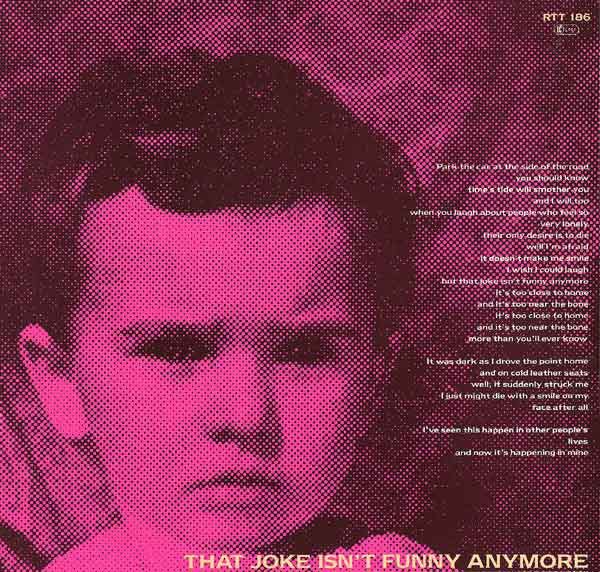
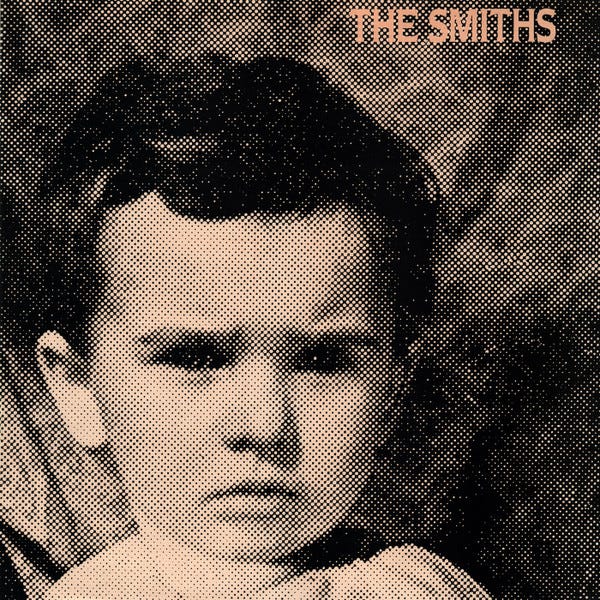
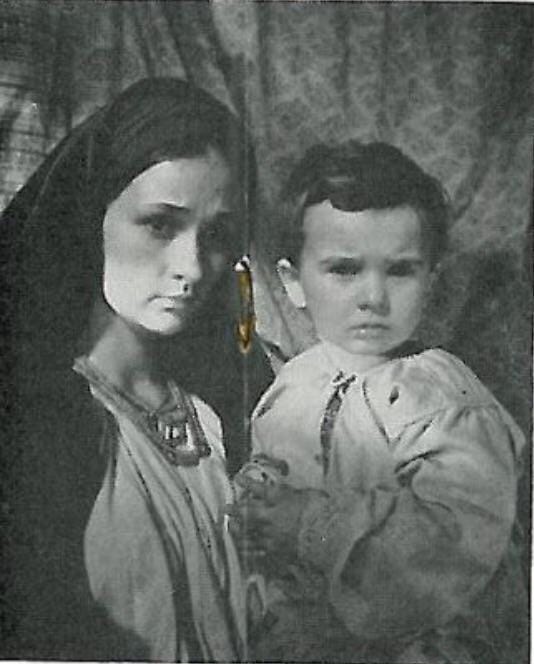
According to Jo Slee5 in Peepholism: Into the Art of Morrissey, Morrissey chose a photograph of an unknown Italian child actor from the 1960s that he found in an old issue of Film and Filmmaking magazine (the publication was actually titled Films and Filming) for the single's sleeve. This account is only partly correct. The image was in fact a cropped publicity still from the 1964 Soviet film The Enchanted Desna, depicting an uncredited child actor. The original photograph also included the child's on-screen mother, Odarka, portrayed by Russian actress Zinaida Kiriyenko. Morrissey later explained his attraction to the image: "If ever a human face portrayed such pained stainlessness – apart from my own – it would surely be this child's. The eyes are encrusted with hurt and premature wisdom, making the poor banished children of Eve seem like snotty simpletons in comparison."6

In the remainder of this essay, I explore:
The hidden details behind the single’s sleeve and deadwax inscription.
The musical and lyrical brilliance that makes this one of the Smiths’ greatest recordings.
Morrissey’s own explanation of the song, the persistent rumor surrounding its inspiration, and why its legacy ultimately eclipsed its commercial failure.
Whether you've loved this song for decades or are only now discovering its quiet brilliance, its story runs far deeper than the title alone suggests. Join me as we uncover the remarkable story behind one of the Smiths' most enduring masterpieces.
Subscribe to read the full essay.
Comments
Nothing yet. Say the first thing.
Sign in to join the conversation.