
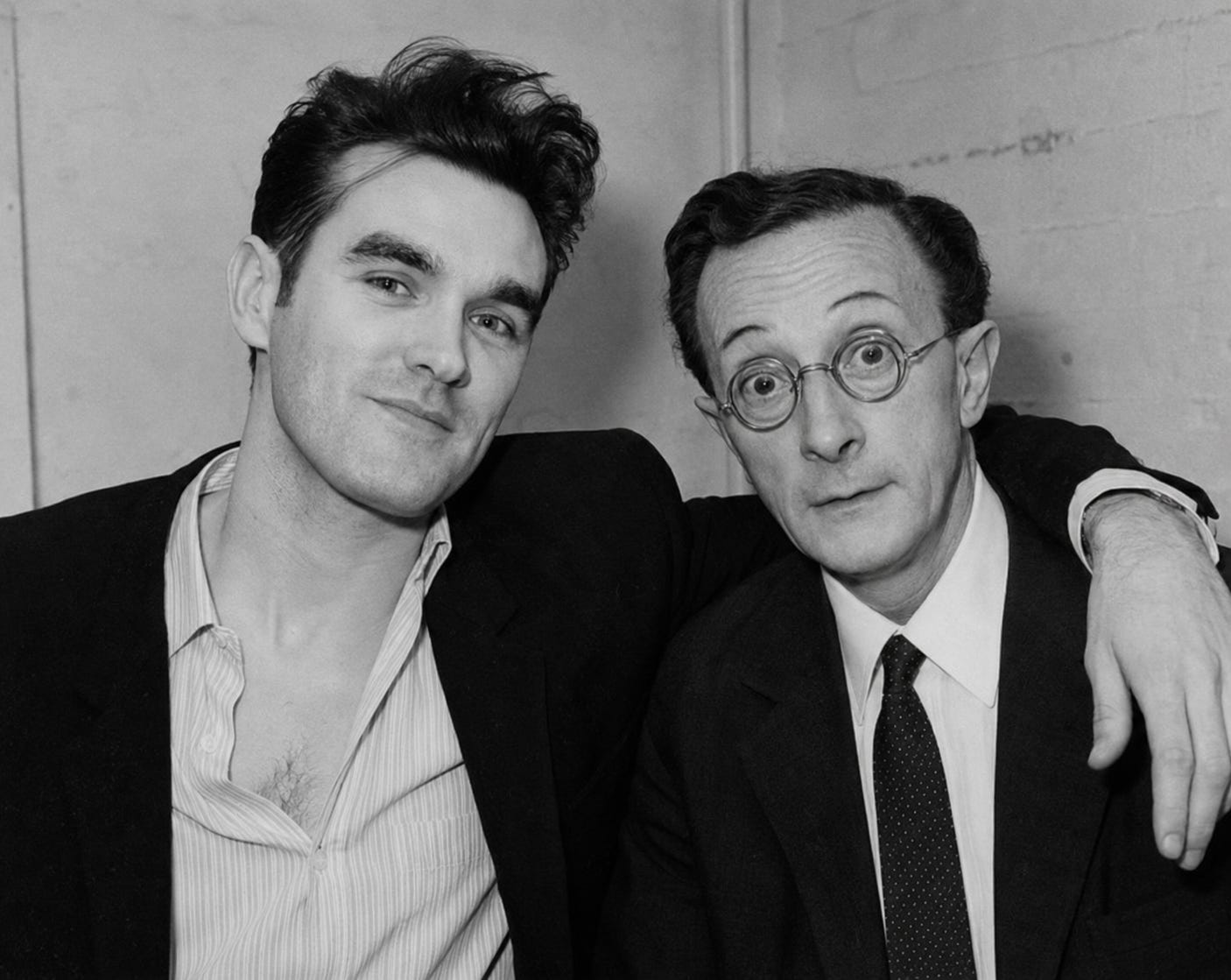
Charles Hawtrey was an English actor, comedian, singer, pianist, and theater director best remembered for his appearances in the beloved Carry On films. The Carry On franchise - comprising feature films, Christmas television specials, a television series, and stage productions - was a fixture of British popular culture from 1958 through 1992. Hawtrey appeared in twenty-three of the films, as well as several television specials, becoming one of the series’ most recognizable faces.
Morrissey’s affection for Hawtrey was rooted not only in the actor himself but also in the wider world of the Carry On films. In a June 1986 interview with NME, reflecting on the series, Morrissey remarked: “When you think of Charles Hawtrey, Kenneth Williams, Hattie Jacques, Barbara Windsor, Joan Sims, Sid James... the wealth of talent!”1 Hawtrey, however, occupied a particularly special place among those performers, emerging over time as one of Morrissey’s most enduring cultural touchstones.
Morrissey’s admiration for Hawtrey was unusually personal. When Hawtrey died in October 1988, Morrissey wrote his obituary for NME, describing him as:
“The very last comic genius... Charles Hawtrey’s death ties in with the advance chill of 1992, the slaughter of the British passport, and the last death wheeze of the real England... By all accounts being unfriendly and friendless, Hawtrey’s mystique surpasses Garbo. I personally loved him.”
The tribute reveals that Morrissey saw Hawtrey as far more than a comic actor. To him, Hawtrey represented a disappearing England - eccentric, defiantly individual, and increasingly out of step with the modern world. It is therefore unsurprising that Hawtrey would come to occupy a recurring place in Morrissey’s artistic world, appearing not only in his writing but also in his visual imagery.
In the promotional video for "Everyday Is Like Sunday," released in May 1988, Morrissey includes two brief clips of Hawtrey (at approximately 2:44 and 3:04), both taken from the 1972 film Carry On Abroad, reportedly one of Morrissey's favorite entries in the series.
See the video here:
Hawtrey's presence extends beyond the film extracts themselves. Morrissey's promotional imagery for the period repeatedly evokes the actor, suggesting that Hawtrey functioned not merely as a favorite performer but as a recurring visual motif within Morrissey's own artistic vocabulary.
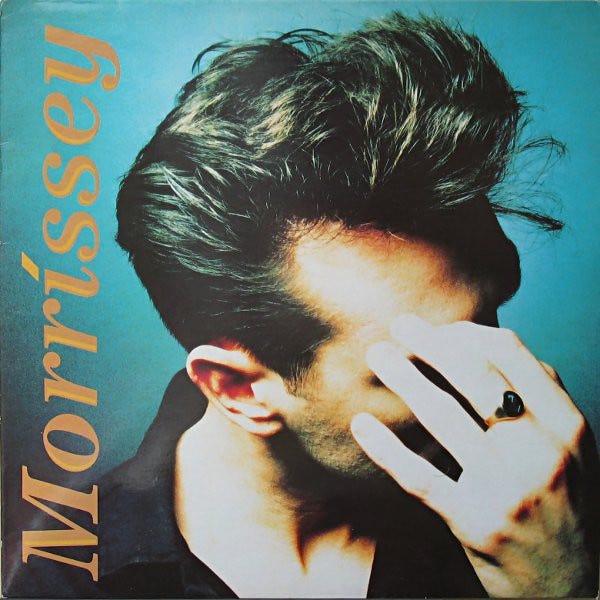
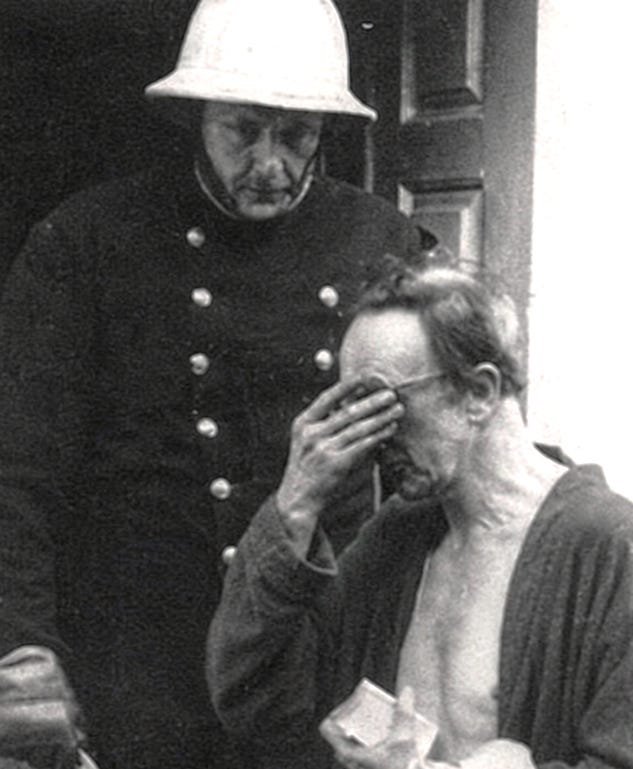
Morrissey also appears to pay visual tribute to Hawtrey in the sleeve artwork for the “Everyday Is Like Sunday” single. His pose closely mirrors a now-famous newspaper photograph taken after a fire at Hawtrey’s home in August 1984, in which the actor - disheveled, emotional, and without his trademark toupee - is led to safety by firefighters.
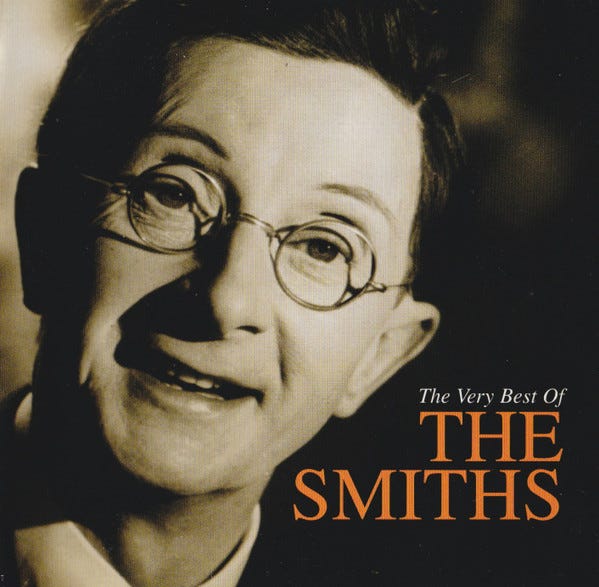
Charles Hawtrey also appears on the sleeve of The Very Best of The Smiths, the 2001 compilation album released by WEA. Unlike the record sleeves that Morrissey carefully curated throughout his career, however, neither he nor the other members of the Smiths had any involvement in the album's conception or artwork, as the release was issued without the band's consent. Nevertheless, the label's decision to feature Hawtrey is telling. By 2001, the actor had become so closely associated with Morrissey's artistic ethos that his appearance on the sleeve felt entirely consistent with the visual language Morrissey had cultivated over the preceding two decades. Not everyone was impressed with the result. Mojo magazine memorably dismissed the sleeve as "an adman's approximation of a Smiths cover."
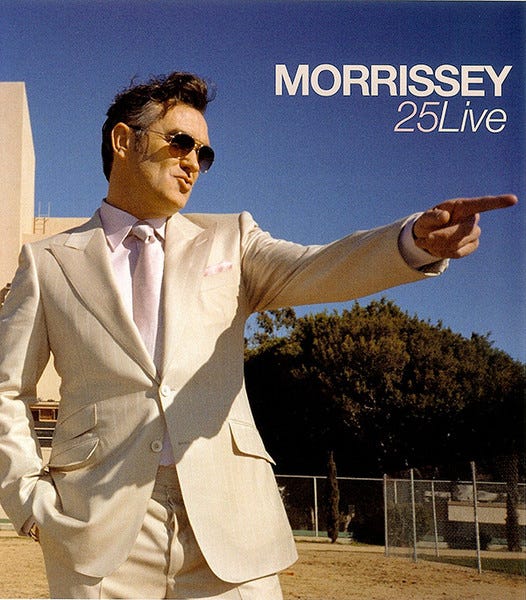
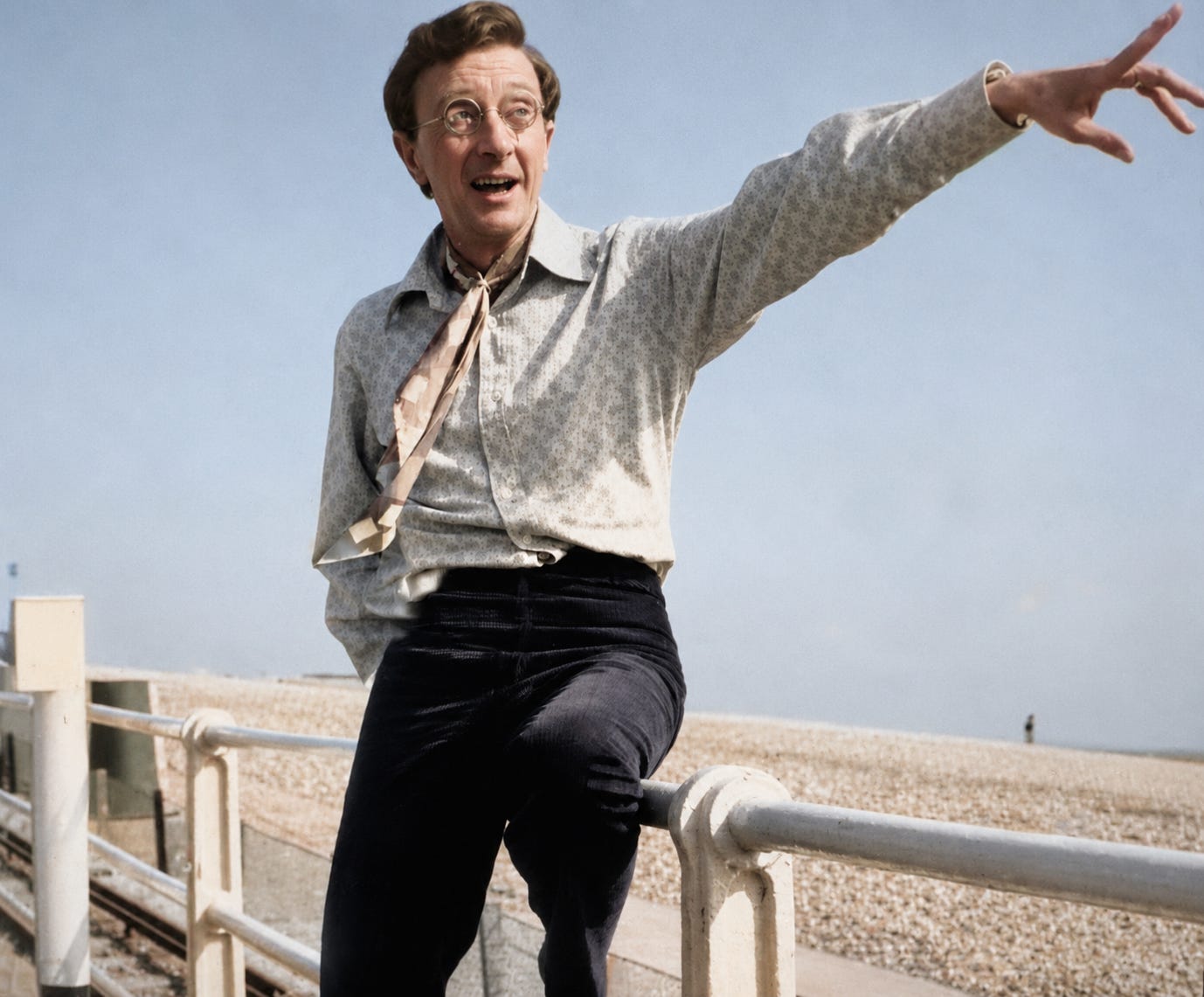
The visual references did not end there. Morrissey again appears to channel Hawtrey in the cover artwork for 25 Live, the 2013 concert film documenting his March 2, 2013 performance at Hollywood High School in Los Angeles, celebrating twenty-five years of his solo career following the dissolution of the Smiths. Once again, Morrissey’s pose evokes Hawtrey’s familiar screen persona and photographic imagery.
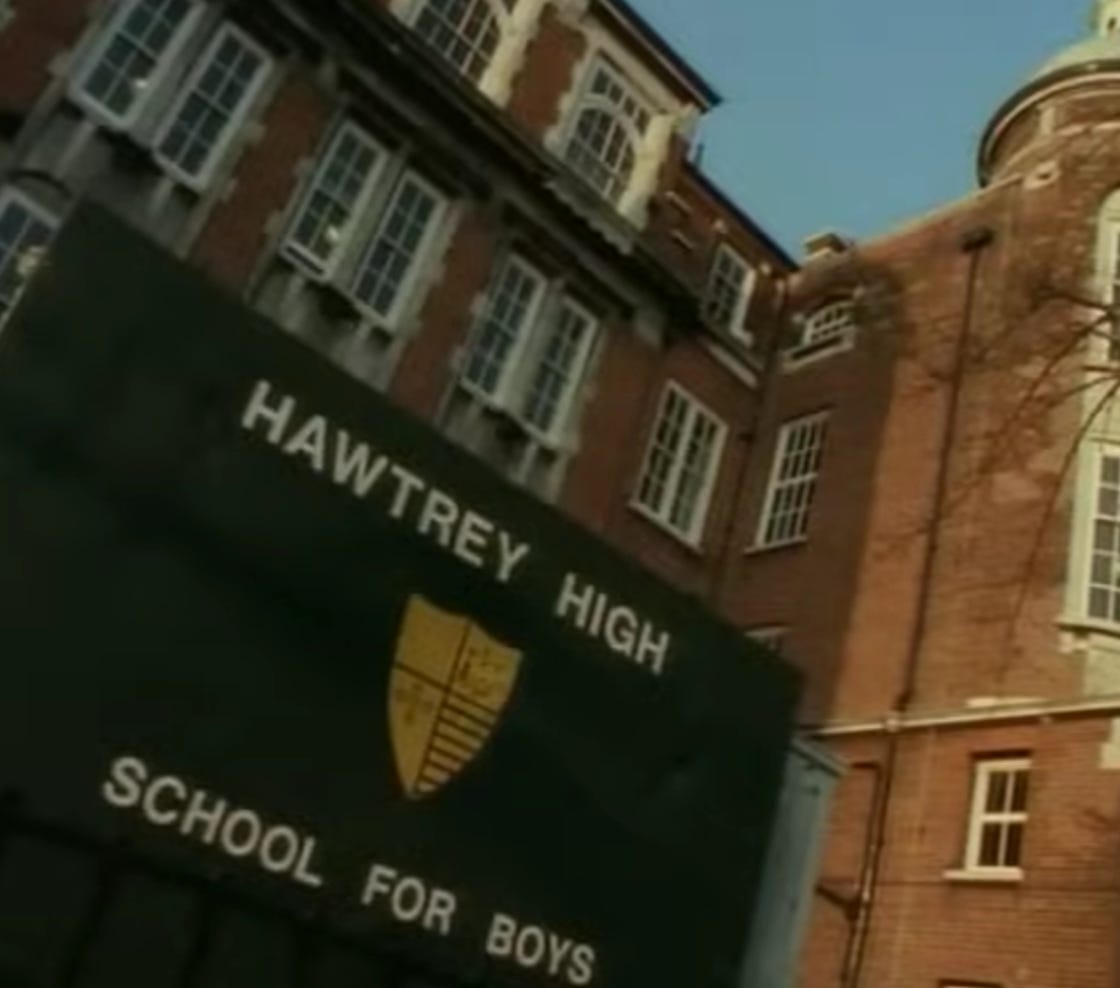
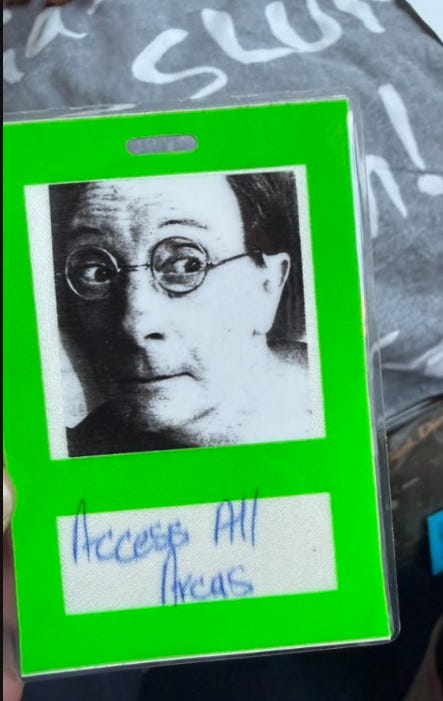
Hawtrey's influence surfaced elsewhere throughout Morrissey's solo career. The promotional video for "Interesting Drug" is set at the fictional "Hawtrey High School For Boys," while Hawtrey's image appeared on backstage passes for Morrissey's December 1988 concert in Wolverhampton
.
In her book Peepholism: Into the Art of Morrissey, former Rough Trade production manager Jo Slee notes that several stills of Charles Hawtrey from the Carry On films were considered for sleeve artwork over the years, including one depicting Hawtrey alongside fellow Carry On star Kenneth Williams2 in drag from Carry On Constable.3
Born George Frederick Joffre Hartree in 1914, Charles Hawtrey lived a life that was often as unconventional as the characters he portrayed. Much of his private life remains obscure, owing in part to the fact that he carefully guarded his relationships during a period when homosexual acts between men were criminal offenses in Britain.
By most accounts, Hawtrey was a difficult man. His heavy drinking, promiscuity, and increasingly eccentric behavior alienated many of those around him. He could be openly hostile to admirers, reportedly tearing autograph requests in half while swearing at fans. Fellow Carry On star Kenneth Williams described visiting Hawtrey’s home in Deal, Kent, where the actor had accumulated dozens of antique brass bedsteads in the conviction that they would someday make him wealthy.
Hawtrey spent much of his adult life living with his mother, who later developed Alzheimer’s disease. Williams recounted one extraordinary incident during the filming of Carry On Teacher: when Joan Sims shouted that Hawtrey’s mother’s handbag had caught fire after being singed by cigarette ash, Hawtrey calmly poured a cup of tea into the bag, snapped it shut, and resumed his conversation as though nothing had happened. He also regularly brought his mother to film sets, locking her in his dressing room while scenes were being filmed.
Williams, himself a closeted gay man, envied Hawtrey’s comparative fearlessness despite the legal and social risks of the era. He once remarked:
“He can sit in a bar and pick up sailors and have a wonderful time. I couldn’t do it.”
On June 6, 1981, Hawtrey suffered a heart attack. Three years later, he again made headlines after a fire destroyed much of his home. The blaze began after he reportedly fell asleep with a lit cigarette while sharing his bed with a fifteen-year-old rent boy. Newspaper photographs from the incident showed a shaken, partially clothed, and toupee-less Hawtrey being led from the burning house by firefighters. Afterwards, he told reporters:
“The smell of smoke woke me up and there were flames coming up the stairway. I’ve lost a lot of valuable antiques and sentimental keepsakes, but I am all right. It was all very frightening.”
His final months were equally tragic. On October 24, 1988, Hawtrey collapsed outside the Royal Hotel in Deal, shattering his femur. Doctors discovered severe peripheral vascular disease caused by decades of heavy smoking and advised that both legs be amputated to save his life. Hawtrey refused, reportedly declaring that he would rather “die with his boots on.”
He died three days later, on October 27, 1988, at Windthorpe Lodge Nursing Home in Walmer, Kent. According to one oft-repeated story, he threw a vase at a nurse who asked him for an autograph while he lay dying. On November 2, he was cremated at Mortlake Crematorium, where his ashes were scattered. Only nine mourners attended the service, and none were close friends or family.
It is perhaps not difficult to understand why Morrissey found Hawtrey such a compelling figure. Beneath the comic performances lay a man who was deeply solitary, defiantly eccentric, and profoundly misunderstood - a gifted entertainer whose private life was marked by loneliness, contradiction, and decline. Those themes recur throughout Morrissey’s own work, though fortunately not the decline, making his enduring affection for Charles Hawtrey seem less surprising than inevitable.
Whether by consciously paying tribute through his own imagery or by becoming a visual reference point adopted, even imperfectly, by others seeking to evoke the Smiths’ aesthetic, Hawtrey’s presence runs quietly but unmistakably through Morrissey’s artistic universe. It is one of the more revealing examples of how Morrissey’s cultural heroes were not simply admired from afar but woven into the fabric of his own identity as an artist.

Ian Pye, "Some Mothers Do 'Ave 'Em," New Musical Express (NME), 7 June 1986.
Kenneth Charles Williams (1926–1988) was an English actor, comedian, and diarist, best known as one of the principal stars of the Carry On film series, appearing in twenty-six of its thirty-one films. He also enjoyed a prolific career in British radio and television comedy.
No posts
Comments
Nothing yet. Say the first thing.
Sign in to join the conversation.