
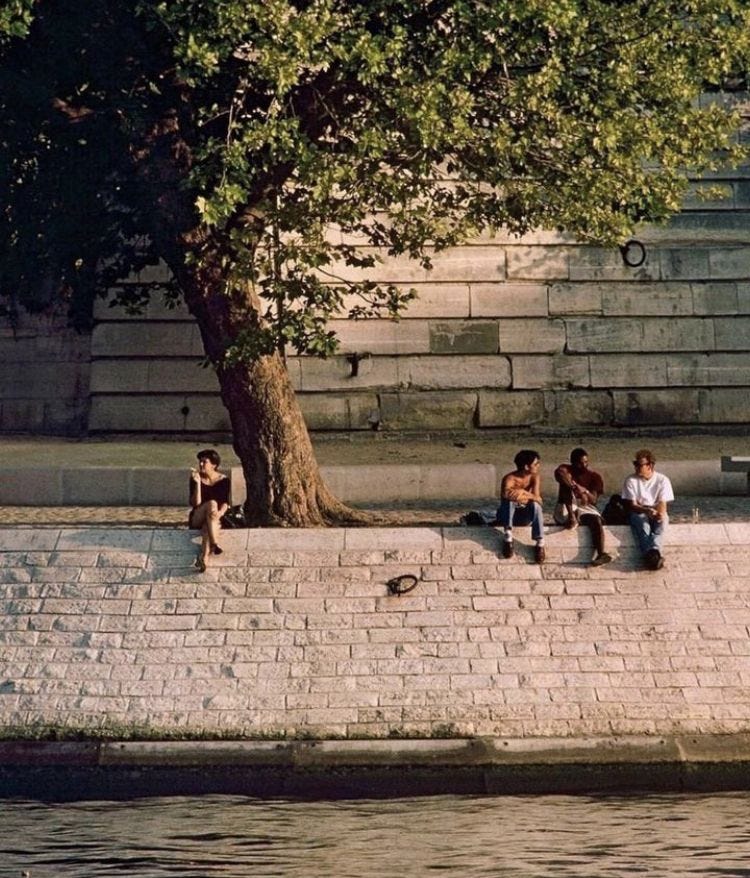
It occurred to me, between glasses of red and an empty afternoon, that nothing has been quite as ruinous to the world as the idea that it ought to be improved.
There is a curious charm to the idea that we, the product of our contemporary upbringing, can somehow stand in judgment of the vastness of nature and ancient drama of human history. The world has existed for millennia without the need for our self-important attempts to correct it, hasn’t it?
It’s not that one shouldn’t aspire to betterment. It is quite charming when someone dedicates their days to some meaningful pursuit. When one works hard on something they find value in. It’s more that it is silly to think that there exists a version of the world that suits every single person in this floating sphere.
The trouble is that we assume that we can, or even should, improve anything that doesn’t involve our direct surroundings. Look at the past century, for instance—two world wars, countless revolutions, and enough sociopolitical upheaval. If there’s one thing that history has taught us, it’s that humanity is, by and large, hopelessly committed to a state of entropy, and any attempt to impose a sense of order is likely doomed to collapse.
It is worth noting that, in practice, the more fervently people set out to improve the world, the worse they tend to make it. Every utopia seems to require a gulag, every revolution a culprit, and every savior ends up leaving behind a somewhat unpleasant pile of receipts.
Improving the world, I’ve noticed, is often the last refuge of people who are neither willing nor able to improve themselves. It is far easier to denounce systems and structures than to wake up early, sit alone with one’s own thoughts, and seek goodness within one’s own surroundings. Blaise Pascal once said that “all of humanity's problems stem from man's inability to sit quietly in a room alone.” I’m increasingly inclined to believe he’s quite right at that.
Much harm, after all, has been done by people determined to improve the world; even if their intentions were sincere. Indeed, the most ambitious projects of reform and transformation are usually carried forward by individuals who believe deeply in the goodness of their cause—or fool themselves into it. History, however, provides no shortage of examples in which grand visions of progress have produced suffering rather than flourishing.
The notion of “improving the world” carries a certain comic quality. The world is vast, complicated, and resistant to our opinions aboutt. Those who set out to perfect it often discover that the materials of human life—ambition, fear, loyalty, desire, stubborness—do not abide to abstract plans. In attempting to repair one part of the world, they frequently damage another. Perhaps a more reasonable ambition would be smaller in scope; and grander in spirit.
After all, much of the genuine good in the world has been created by people who were not attempting to reshape humanity at all. They were simply living their lives well. They raised families, cultivated friendships, practiced their crafts, and tried to treat the people around them with kindness and fairness. Their ambitions might have been modest, but their contributions were far from that.
There is also a peculiar satisfaction in letting the world unfold in its own rhythm. One could argue that trying to improve it is a rather neurotic impulse, born from our collective anxiety about our inability to control the chaos of existence. How deeply human, this desire to stamp out uncertainty, to paint over the cracks in the walls with a coat of optimism. Far better, at times, is to admire the beauty of the cracks and the other imperfections that make the world, and indeed life, worth living.
The better course, I think, would be to try simply to live well within it. To care for one’s family and friends, to act honorably in ordinary dealings, and to contribute in modest ways to the well-being of the community immediately around them. These things rarely attract the attention of history. But they may do more good than the grand schemes that we so often give our attention to.
The world, I am certain, contains beauty enough to occupy a lifetime. Only if one has the patience to notice it. There are landscapes to walk through, books to read, conversations to savor, sunsets to appreciate, wines to taste, and many other small pleasures of ordinary days. It would be a shame to spend more of our time arguing about how the world ought to be, than enjoying how it actually is.
Until next time,


No posts
Comments
Nothing yet. Say the first thing.
Sign in to join the conversation.