
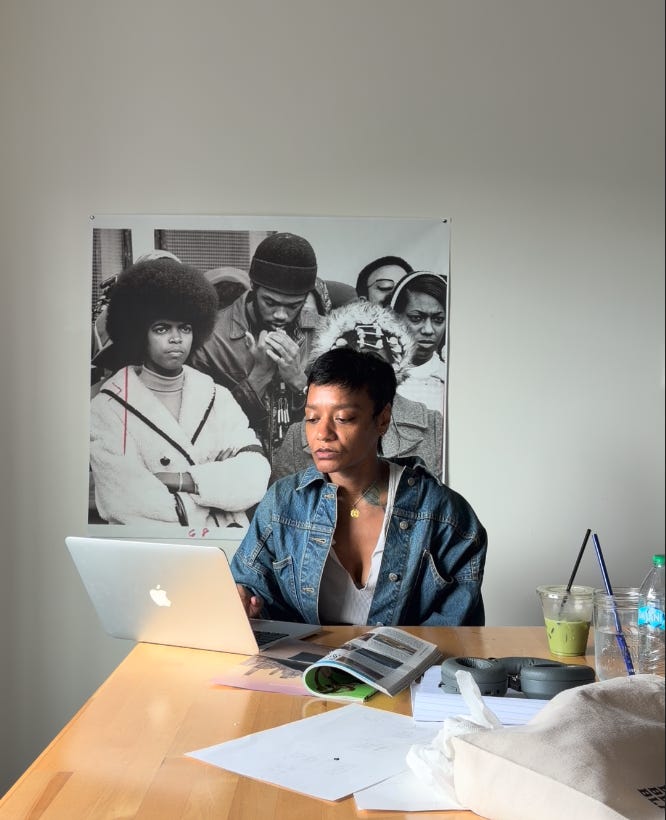
Several years ago, while working on my exhibition Oklahoma is Black, I came across a photograph from an Oklahoma archive that has stayed with me ever since. I’ve had the image hanging in my studio for years now, and I’ll sometimes find myself staring at it.
What has haunted me most about the photograph are the faces of these Black women. Especially contrasted with the man behind them. His gaze lowered, hand to mouth, caught in a moment of soft introspection. They, instead, feel immovable. Their gazes forward, facing whatever, or whomever, with an unwavering steadiness.
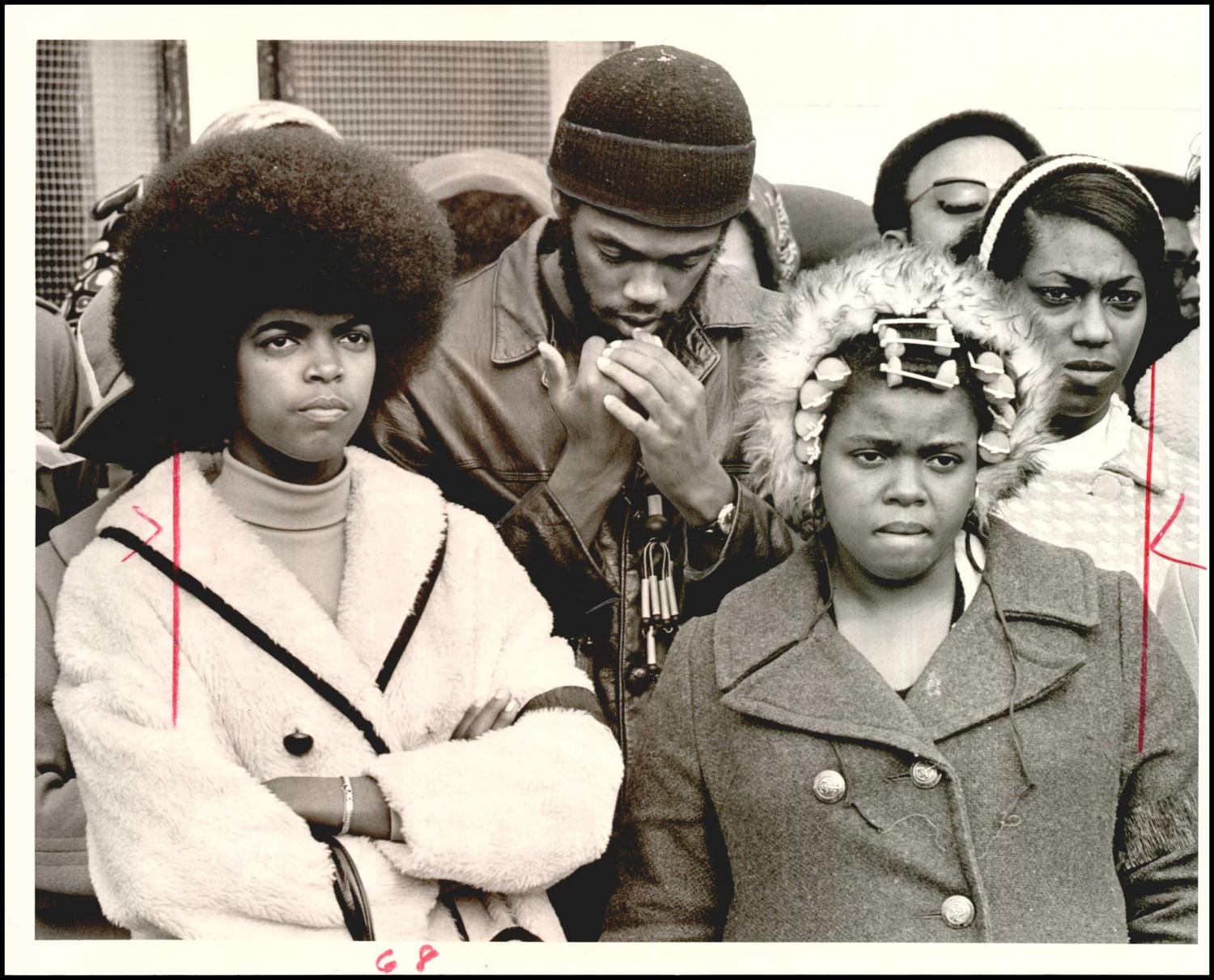
I think Black folk have a particular ability to express with our faces and bodies. And I think we also have a particular way of reading one another’s faces and bodies. I wonder if that’s partly why I feel so drawn to the women here. I recognize a familiar weariness, wariness, and a quiet rage that feels common to the experience of being a Black woman in the United States.
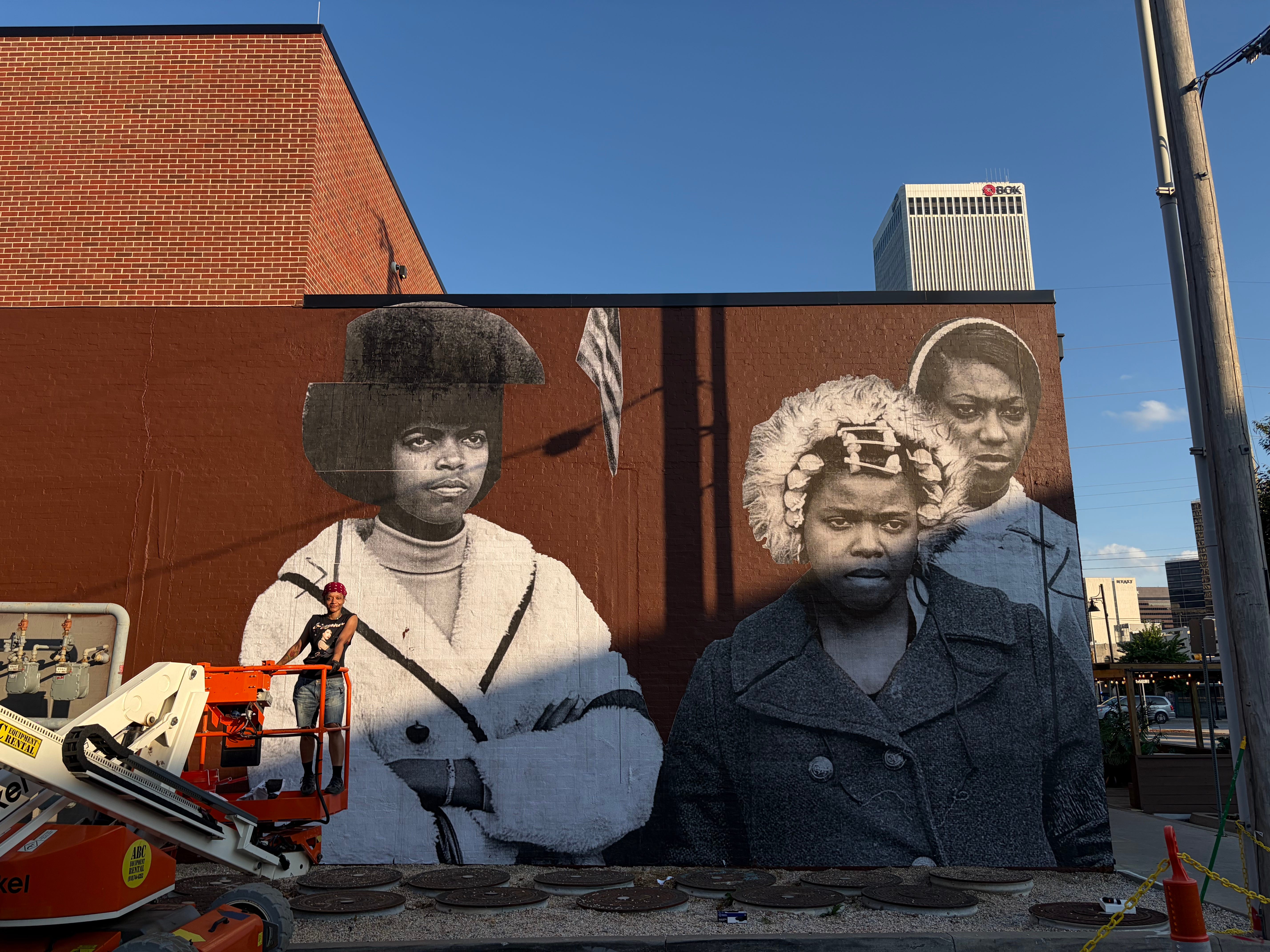
When considering what I wanted to install as the first mural for a project on a wall I’d been eyeing for months, this photograph immediately came to mind. I’ve spent a lot of my career choosing and placing certain faces into public space: Black faces, women’s faces, queer faces. Deliberate choices meant to amplify a person’s presence, emotion, and voice in spaces where those things are often oppressed or dismissed.
With this work, I didn’t want to simply reproduce someone else’s photograph. When creating a large scale mural, I think carefully about the image itself, the architecture it sits on, and how it will be read from the street.
So I removed the man entirely, opening up the composition and giving the image room to breathe. His absence also allows the women to stand fully in their own power. Not to be read in relation to him, not as protectors, not as supporters, and not as Black women leading the charge. Common narratives often placed on us.
Nah. Just them. Allowing the intensity of their faces to do the work. It’s why I left the title of the piece as Untitled. There is nothing to prescribe to the image. The women are enough on their own.
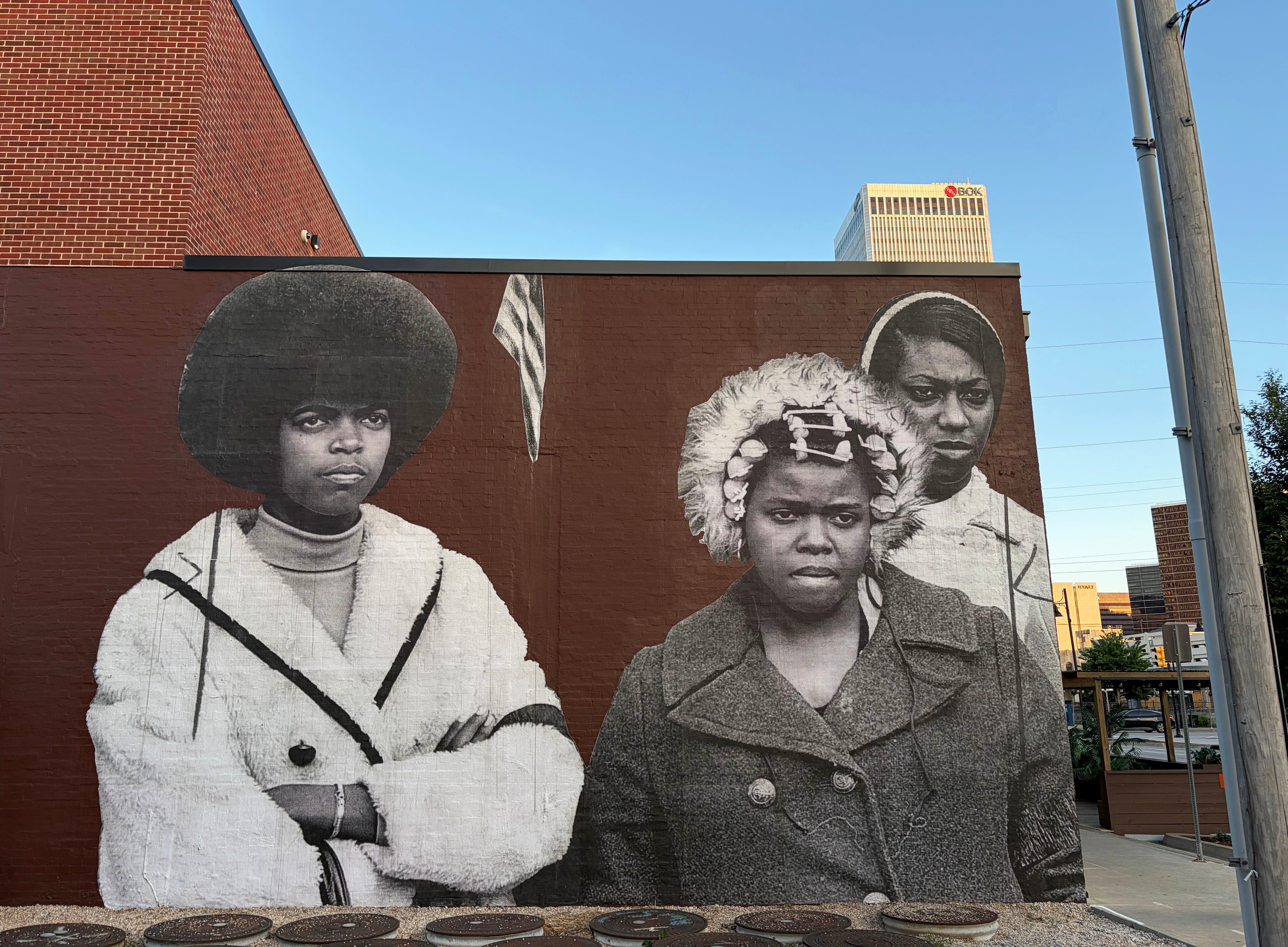
The piece feels like the continuation of a thread in my work. Placing images of women, particularly Black women, in public space who are refusing to perform any sort of emotional accessibility.
To complicate the image as a mural, and not just a photograph, I drew a United States flag and placed it behind them, partially obscured and at a smaller scale. I felt this gave the piece more tension.
I made this work in this specific place, at this specific time, with intention.
To install this piece in Tulsa, Oklahoma, just blocks away from Greenwood, where a hundred years ago bombs were dropped on Black people, while also knowing this work will exist during the 250th anniversary of the United States, is not lost on me. I know that while images of American flags flying triumphantly will be on display here, I wanted to have these three people standing in quiet dissent. Their anger, disappointment, and refusal, feeling both historical and current.
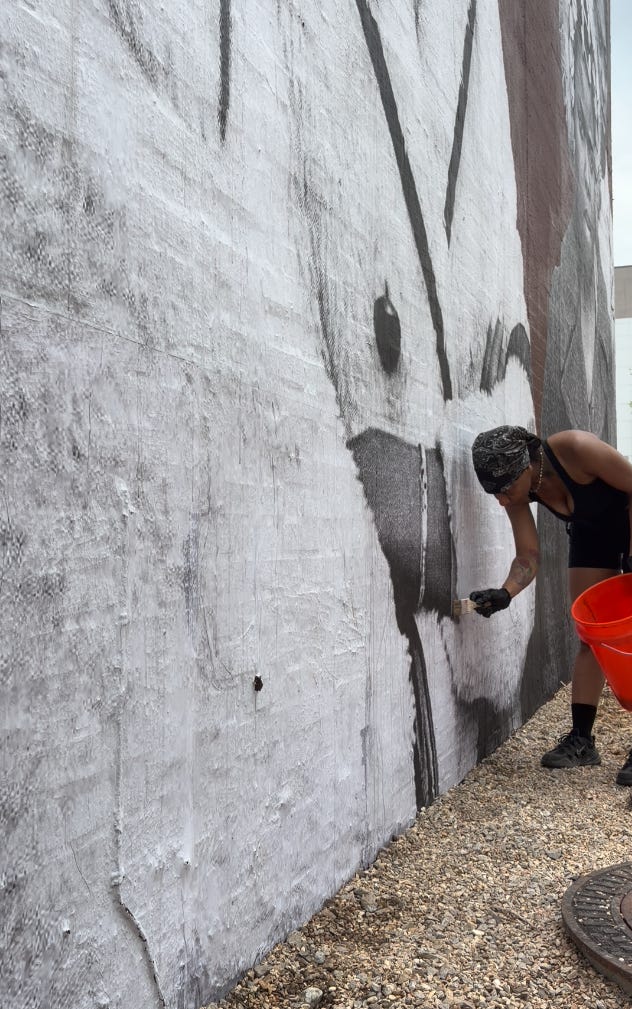
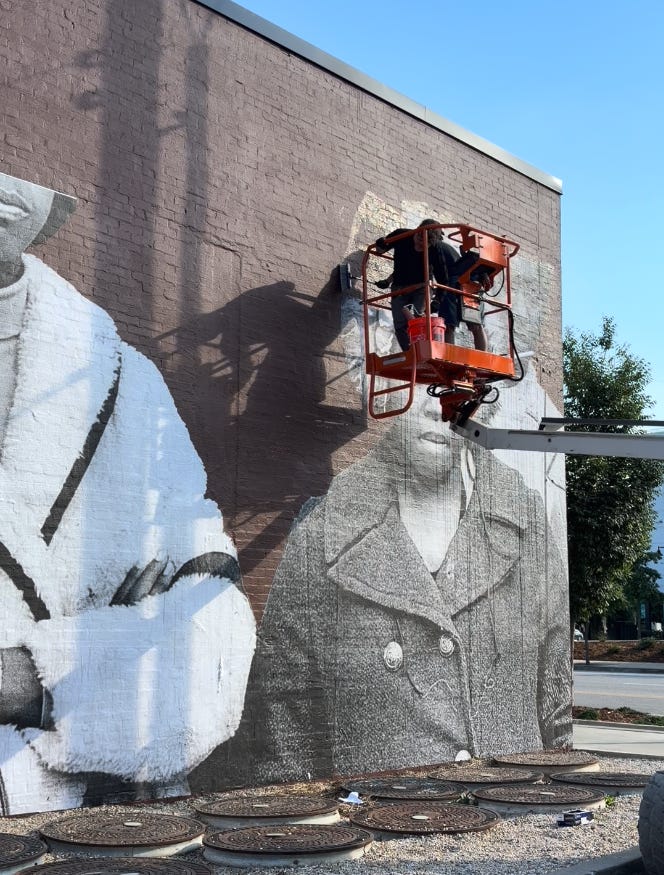
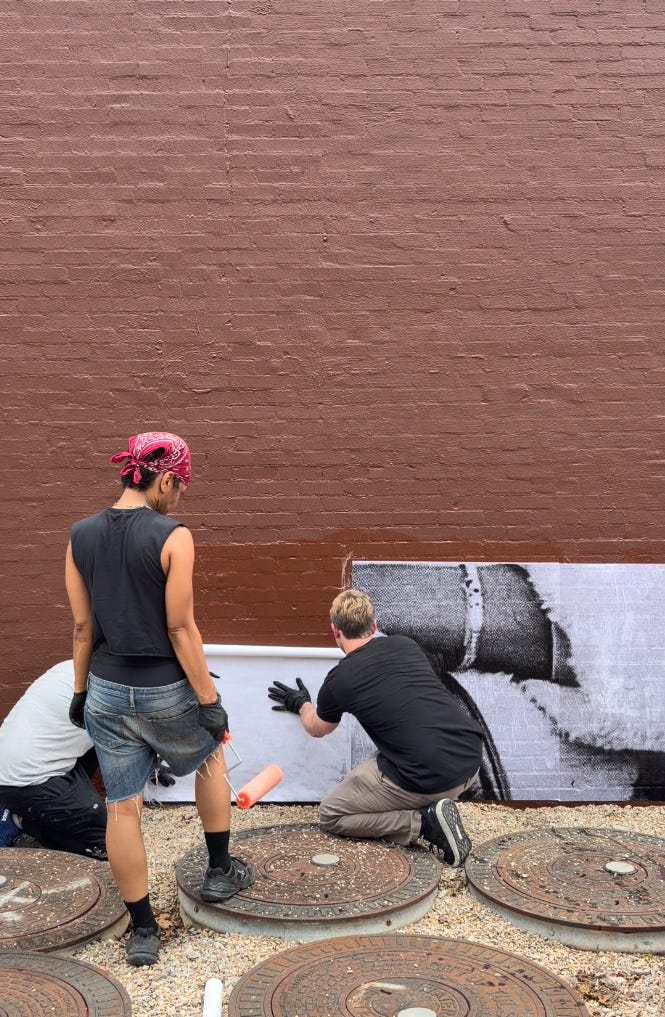
What also interests me about the work is that it still remains open.
The image can be read differently depending on what a viewer brings to it. Their own assumptions. Their own discomforts. Their own projections. And I’m curious about what assumptions people will bring to it. I have spent well over a decade placing images of women with autonomy over their own emotional expressions into public space, and I stay fascinated by how often people project their own perceptions onto them.
This is a temporary piece. It will exist only for a few months. A quick and large interruption within Tulsa.
I found this image in an Oklahoma archive. Now these Black Oklahoma women are taking up space on an Oklahoma wall. And I love that.
A note on language:
I don’t know these folks. And I recognize that I am assigning gender by referring to them as women and men. I do so intentionally. While I could speak about them more broadly as individuals or simply as people, part of what has stayed with me about this image is what I perceive as the particular emotional power held within Black womanhood.
A note on the original photo:
I haven’t yet been able to identify the photographer who took this photo. I have spent time researching its origin and will update this post if/when I locate proper attribution.
No posts
Comments
Nothing yet. Say the first thing.
Sign in to join the conversation.