
I recently organized a trip for a group of my New York friends to visit Oklahoma. This would be my first time bringing friends to my hometown since I’ve lived on the east coast for over 20 years. When I planned this trip, I knew how it would go logistically–we’d visit Greenwood in Tulsa, my family in OKC, and attend a historic Black rodeo in Okmulgee. What I didn’t plan for was how emotionally affecting it would be. How deep the trip would take us.
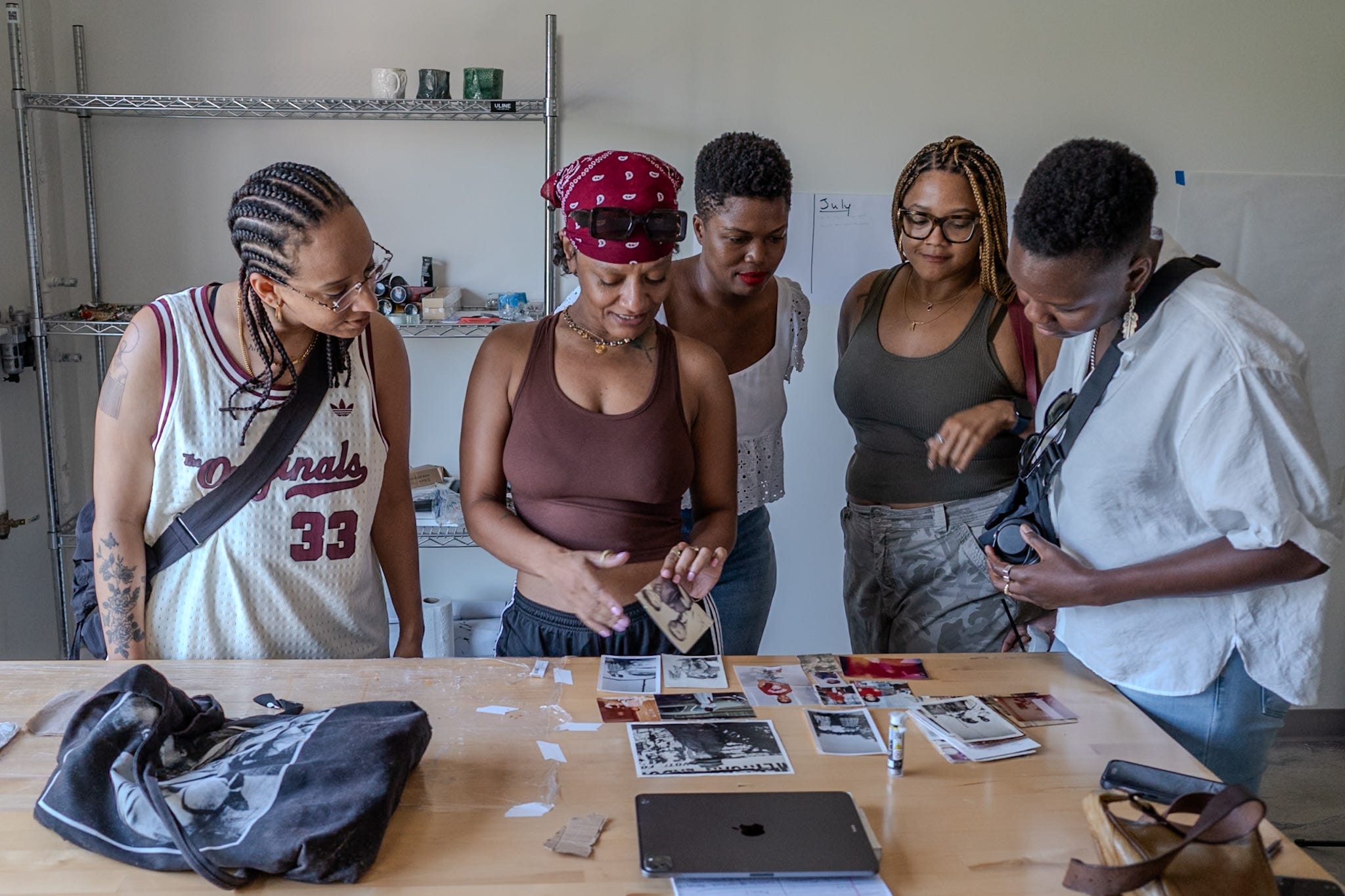
My friends, six Black folks mostly from Brooklyn with one person from Philadelphia and another from Atlanta, all queer women except for one, landed in Tulsa on a sweltering Wednesday in early August. After adjusting to the heat, we made our first stop at my studio at the Tulsa Artist Fellowship. I showed them some things I’m working on and thinking about here, convoluted projects that deal with my own history in this state and the present navigation of Blackness and womanness here.
We then headed towards Historic Greenwood. As we walked, I pointed out to them the plaques on the ground that mark where Black businesses were located when the massacre happened in 1921. Before White Tulsans, armed with guns and bombs, burned them all to the ground. These are Black people who have heard of the Tulsa Massacre, but have never been to the land where it happened. Never stood under the same stretch of sky where Black people lived and loved and died. The same sunset that one hundred years ago was choked by the smoke from 40 city blocks of burning homes. The physical energy and memory of that event is never lost from this place. I often feel it. I didn’t ask, but I wonder if my friends felt it too.
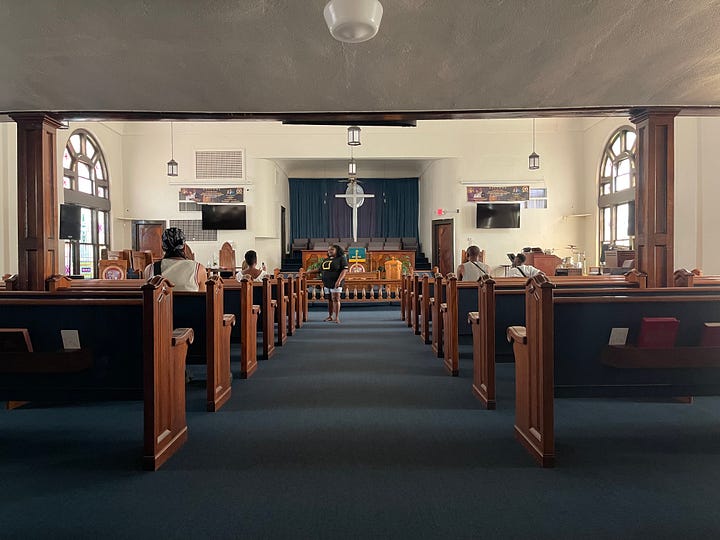
We visited the Historic Vernon AME Church, one of the many churches that was destroyed during the massacre. Four years ago I created a multimedia installation in the sanctuary. We were given a tour by a steward of the church. She talked about the history of the church and the current White supremacist motivated challenges that Tulsa still faces. There are many. Like, censorship in classrooms.
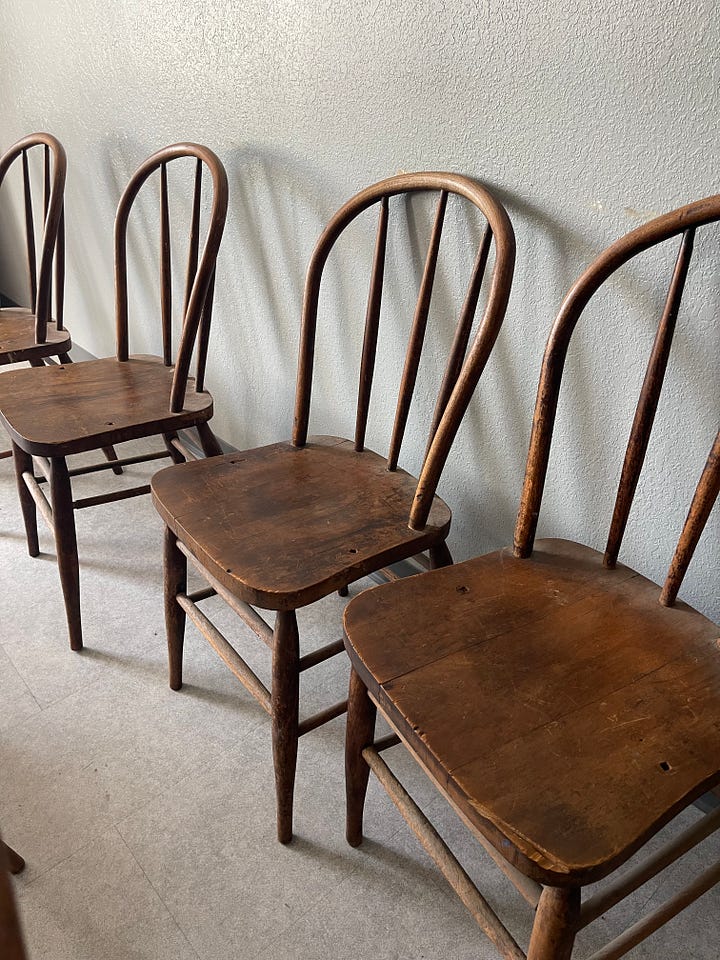
She walked us through the building and sat us in the same chairs that survivors sat in in 1921 to discuss how to rebuild after their community was just destroyed. One person in our group learned about Black Freedmen for the first time and the fact that some Native Tribes participated in slavery by holding Black people enslaved.
We ended the day with food and rest.
The next day, I drove us to Oklahoma City. Our first stop was to visit the First Americans Museum. The museum was an opportunity to learn more about the long history of Indigenous people of this land. The history of brutal White violence and annihilation in Oklahoma is particular but also representational of the entire country in many ways.
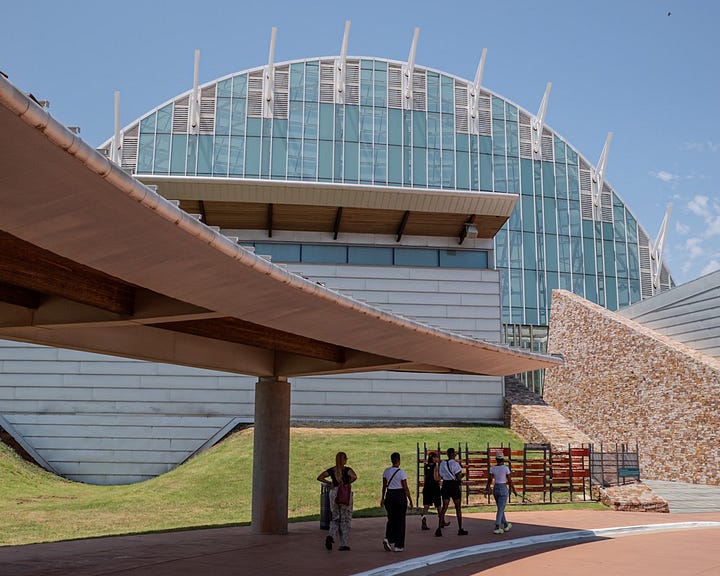
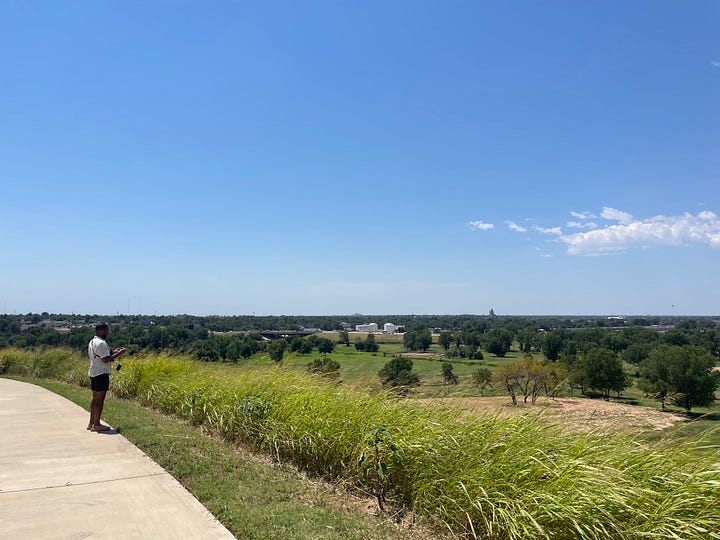
It was a hard start to the trip. There were tears and long silences.
After the museum, I drove them through the east side of OKC where I grew up, pointing out the Black restaurants, the NOI men selling bean pies on the corner, my childhood dentist’s office. We ended up at my mama’s house. It was a bit surreal for me. The homies that I’m often cackling with in a bar at 1 AM on any given night in Brooklyn, were sitting at the feet of my mother and aunts eating ribs and catfish. There have been several times in my adult life that I have been invited into the homes of the parents and grandparents of my friends. If you’ve never experienced this before, I hope you do. To have the care and wisdom of elders granted to you expands your idea of community. Intergenerational branches of your communal tree that extend and offer you cover. Even if just for a few hours.
I want to offer that to anyone who lives in a place where they did not grow up: if your hometown still has love there for you, take your friends there. Introduce them to a place through your particular lens, share with them that part of your life so that they can know you and that place better.
This was my turn to offer that to my friends. I’m in mama’s house, the house I grew up in. But that was a new space for my friends and talking to them afterwards, they expressed how special it was. I also got to share a bit of my NY life with my family and show them that, no I’m not alone in New York lol. I got people who care about me there too.
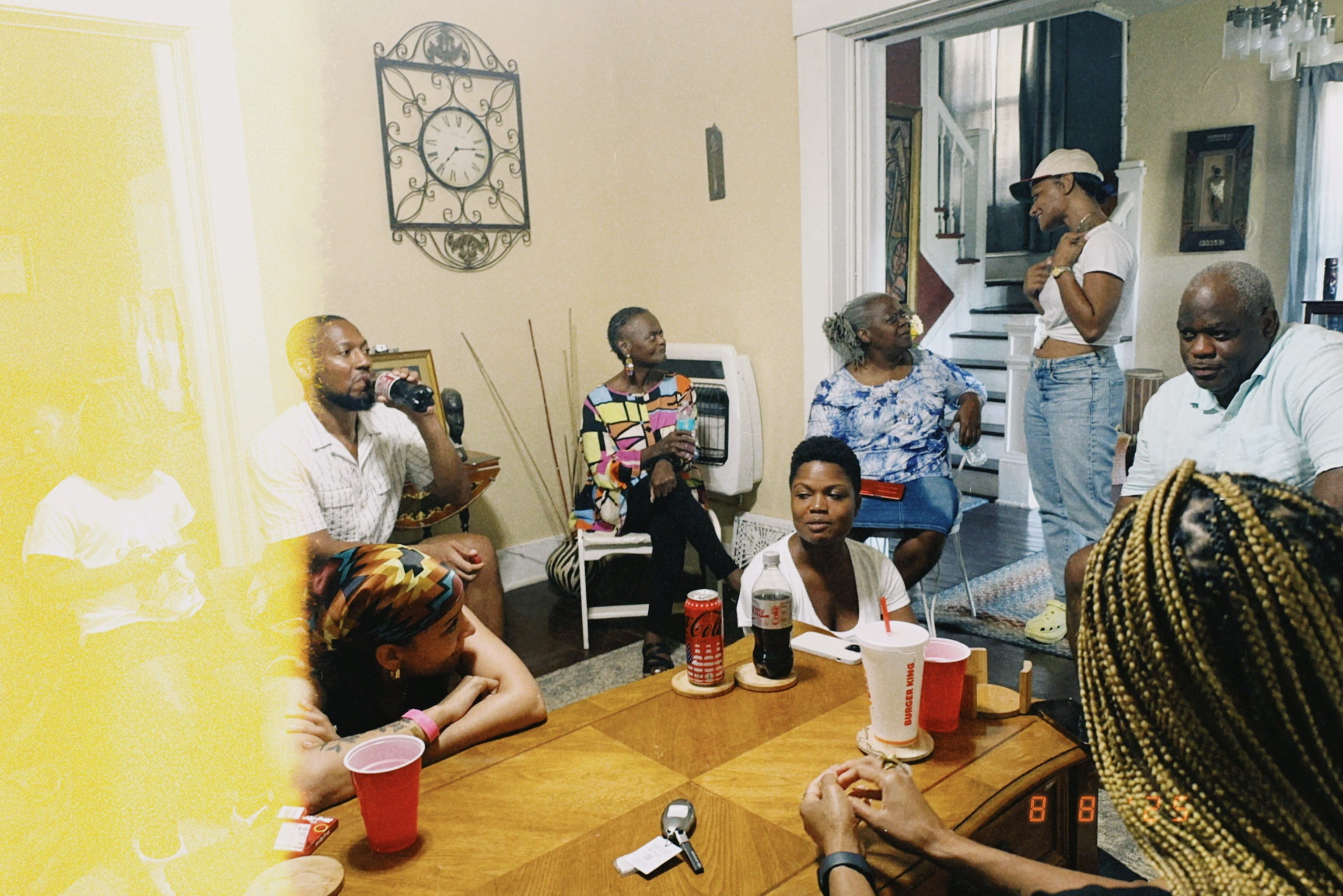
That was the second leg of the trip: the current life of Blackness in Oklahoma. After they saw the history of violence and devastation, I showed them here is how we live and love today.
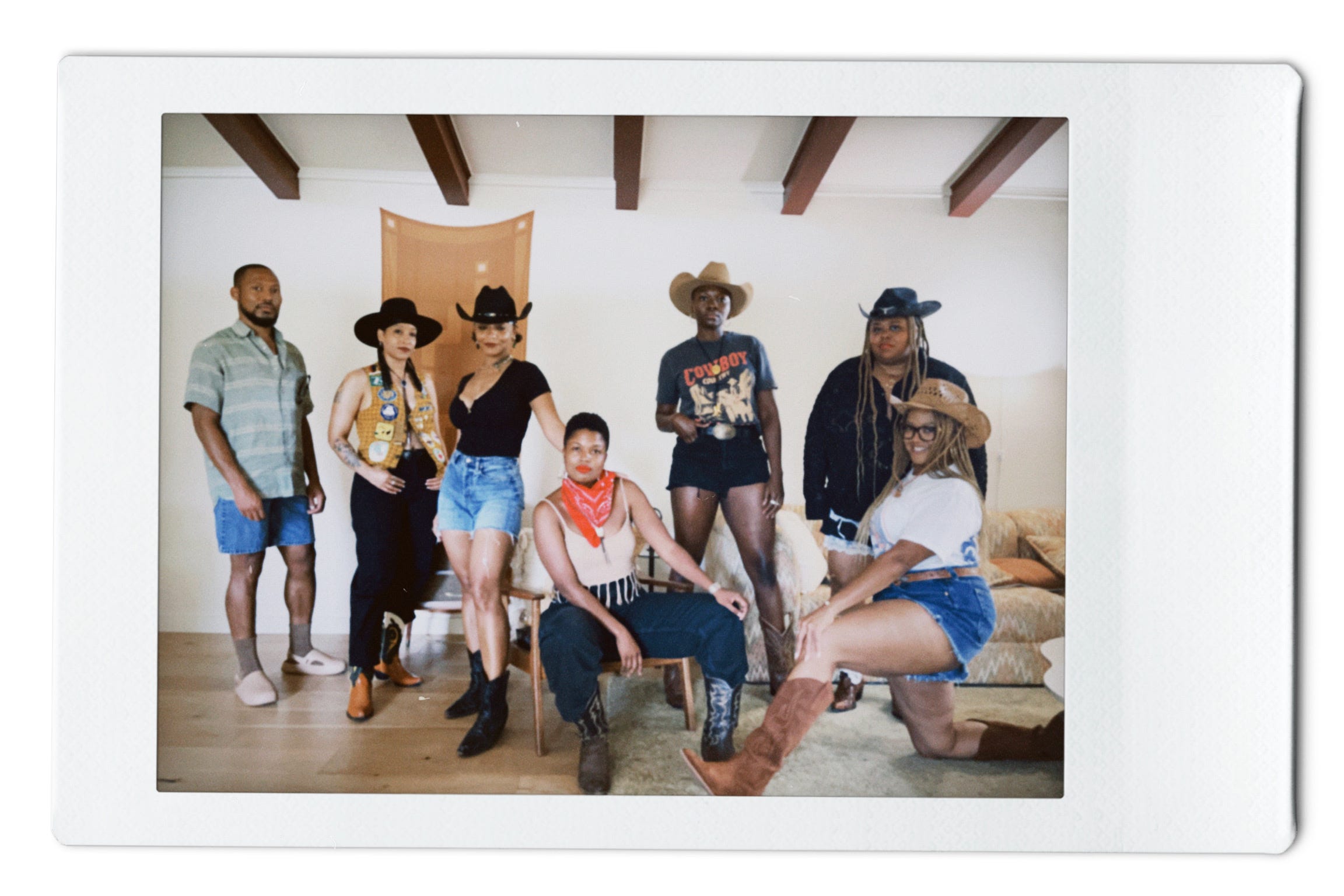
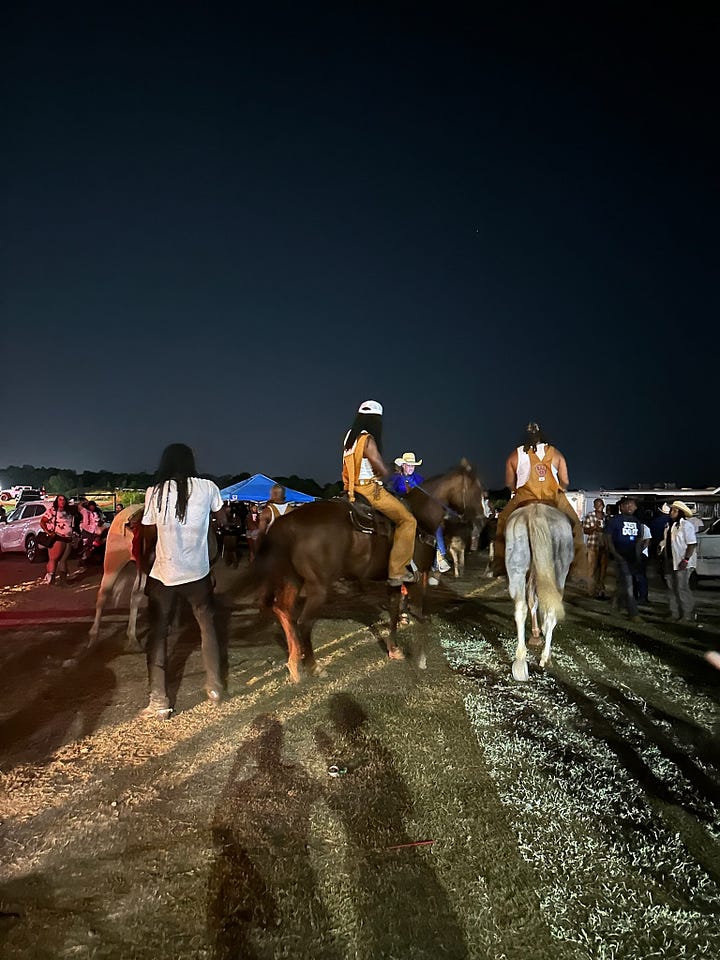
On the last day of the trip, we end the arc of Black Oklahoma life with the joyful country shit. On Saturday afternoon, after everybody put on their best Western inspired outfits and took editorial style photos like the fashionable queers they are, they were ready to attend the Okmulgee Rodeo, one of the oldest Black rodeos in the country, and the first rodeo for each of my friends. I’mma tell you–I’ve only been to rodeos that are Black. And I’ve only been to rodeos in Oklahoma. I don’t know what they are like in other cities but in Okmulgee, it’s a singular event. Hundreds of Black people are gathered–in boots, on horses, in the stands, in the arena, babies and elders.
My grandmother was born and raised in Okmulgee. In her last years, she would mention the town often. Her mind drifting back to her youth, to memories of her father and sisters and brothers, not realizing that her memories were the past and not the present. For me, this trip with my friends was dense with emotion. I’m taking these relatively new people in my life to a land with generational history for me. At the rodeo, I took a solo walk around the arena and came across a vendor selling cha-cha. I haven’t had cha-cha since my grandmother got sick and stopped cooking many years ago. I told that to the vendor, an older Black lady, who then shared with me about her own mother’s recent death. I bought a jar–for myself, for her, for my grandma, for love.
The rodeo is a blur of warm brown. A warm sun drowning under a dusty landscape of brown skin, brown dirt, brown horses. A blur of motion. A friend pointed to a huge orange moon that hovered just above the bleacher stands. “Look at that moon. What is this magical place you’ve brought us to?”
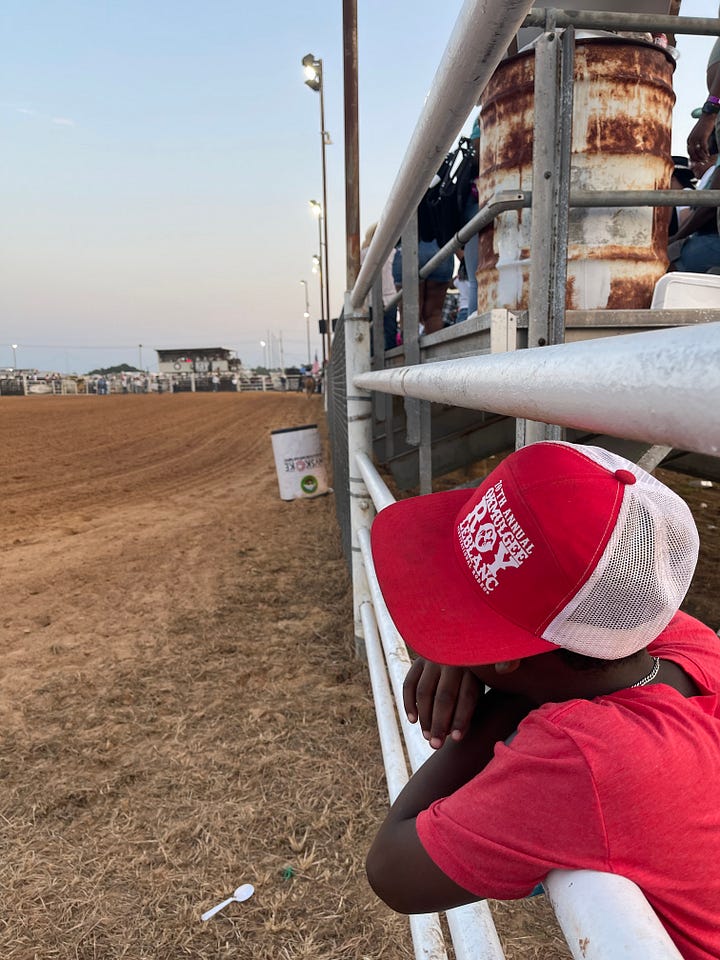
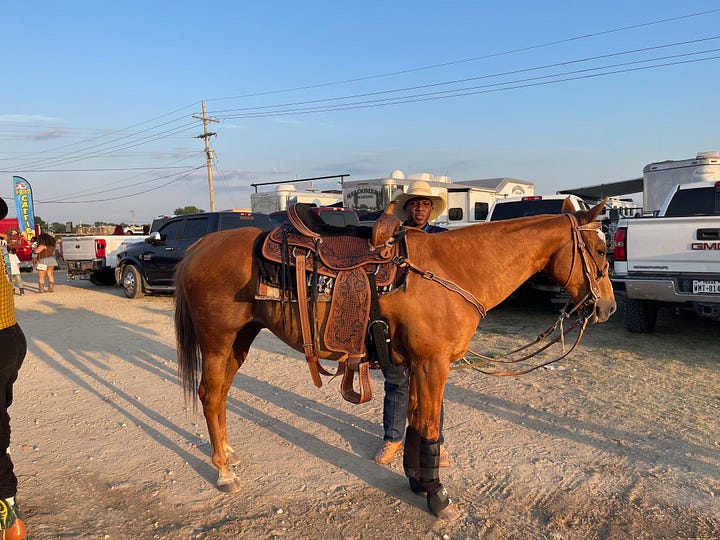
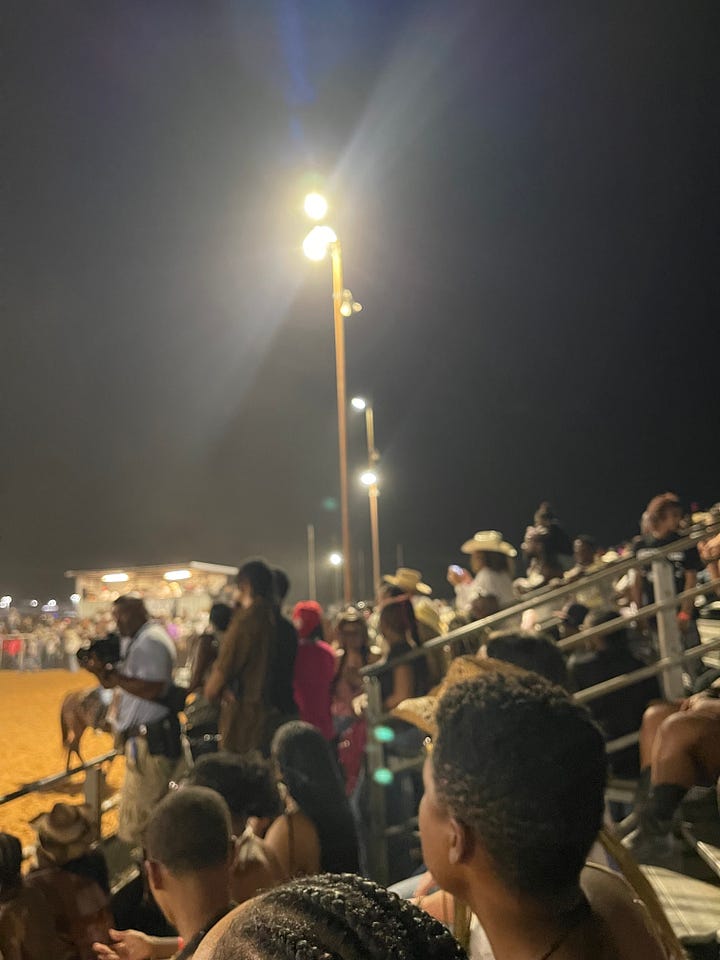
The trip highlighted for me the dichotomy of Oklahoma. It is calm and beautiful in its slow pace and open sky. But sitting under that is a tension of violence. Sitting under everything here is the history of violence and the threat of it. I often feel in my body that there is danger lurking in the quiet. The danger of violent Whiteness, insidious poverty, oppressive ideology.
The morning after the rodeo was departure day. The last friends to leave and I had breakfast and chatted about their experience. These smart Black women and Black man pointed out their nuanced observations, what was opened up for them personally from being there, and expressed how wonderful of a time they had.
While my group of friends were new to this part of the country and diverse in their backgrounds and types of Blackness, they sat in the bleacher stands at the rodeo, on the couches at my mama’s house, in the pews at Vernon AME Church, and looked like they belonged there. Because they did. Because we do.
No posts
Comments
Nothing yet. Say the first thing.
Sign in to join the conversation.