

It’s been a while since I wrote here.
I have been thinking a lot and researching, looking at my investment strategy and trying to understand the markets.
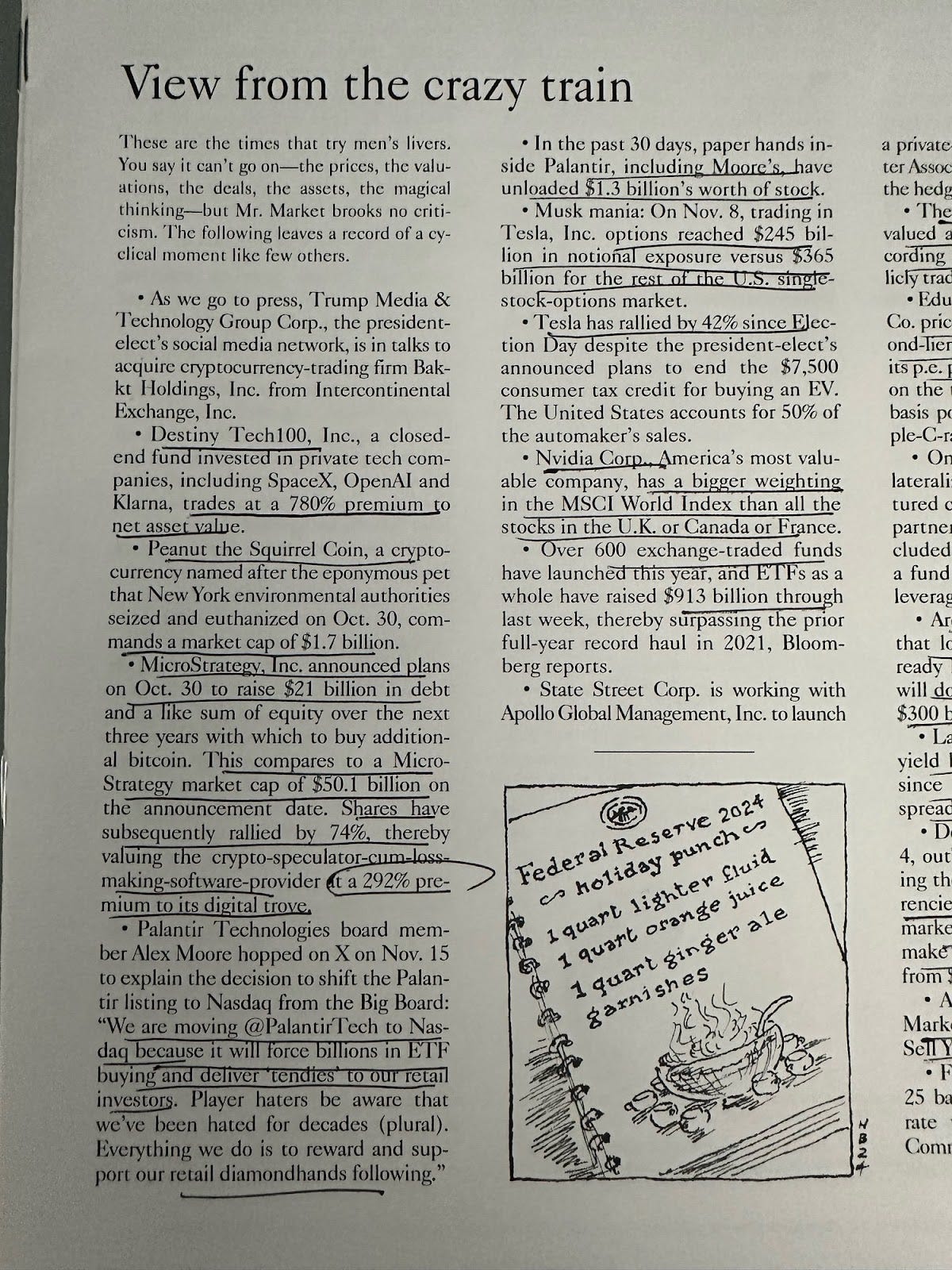
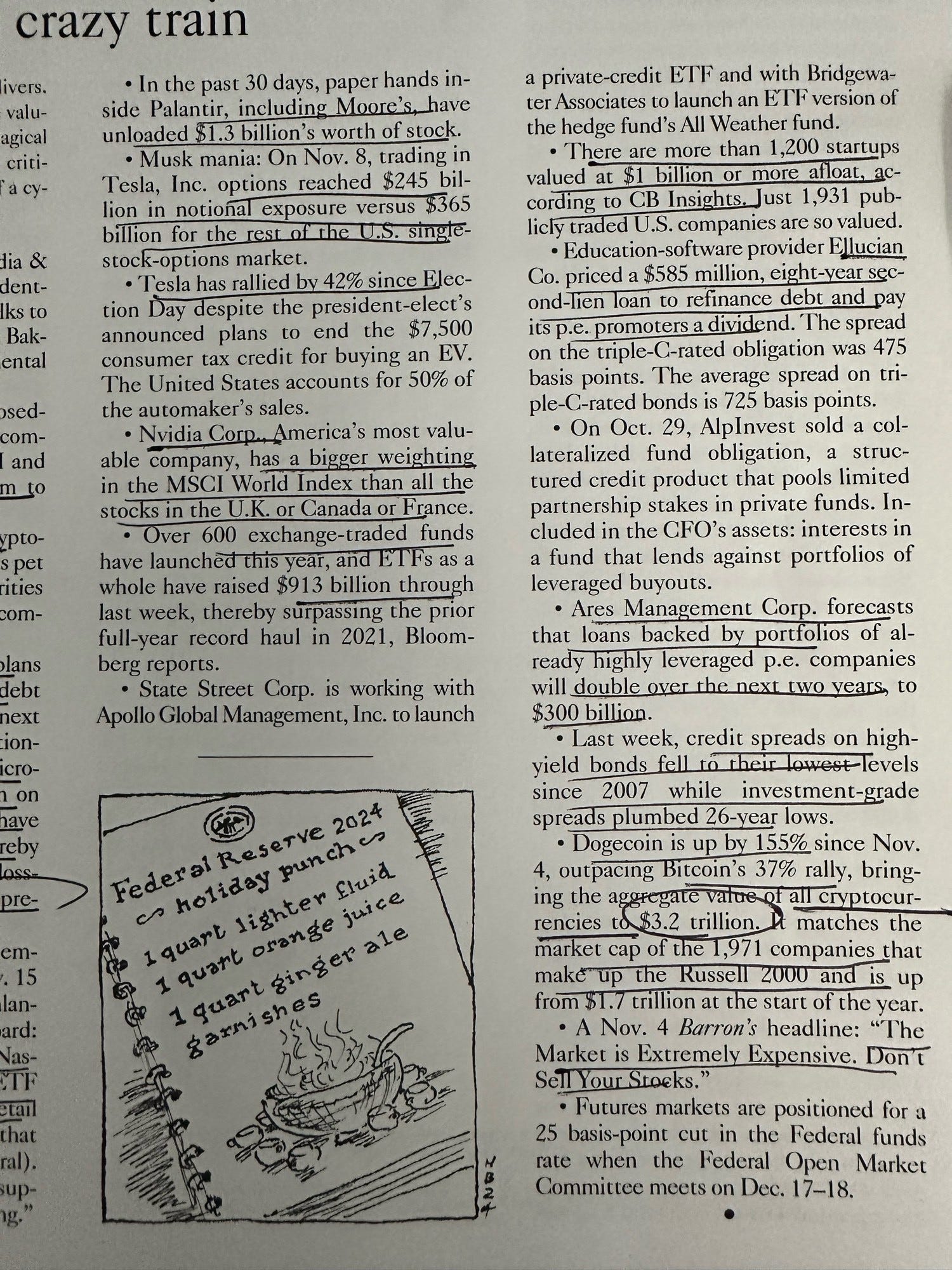
The section below is from Grant's, and it sums up much of what I am seeing these days.
I’ll follow this up with Blackrock’s 2025 outlook:
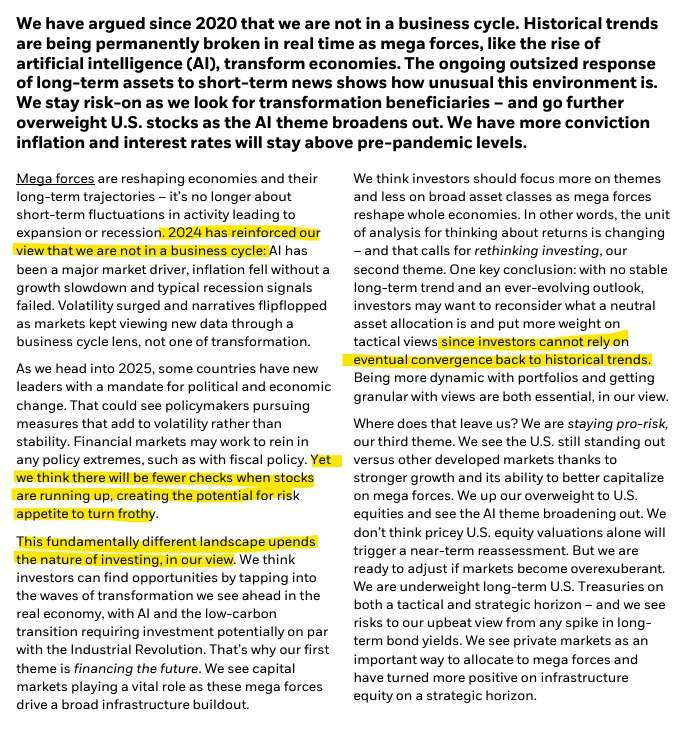
I find it hard to argue with either.
Parts of the markets do seem crazy right now, but I don't see anything on the horizon that might stop the madness.
The only thing I can say is that the Blackrock piece has echos of this:
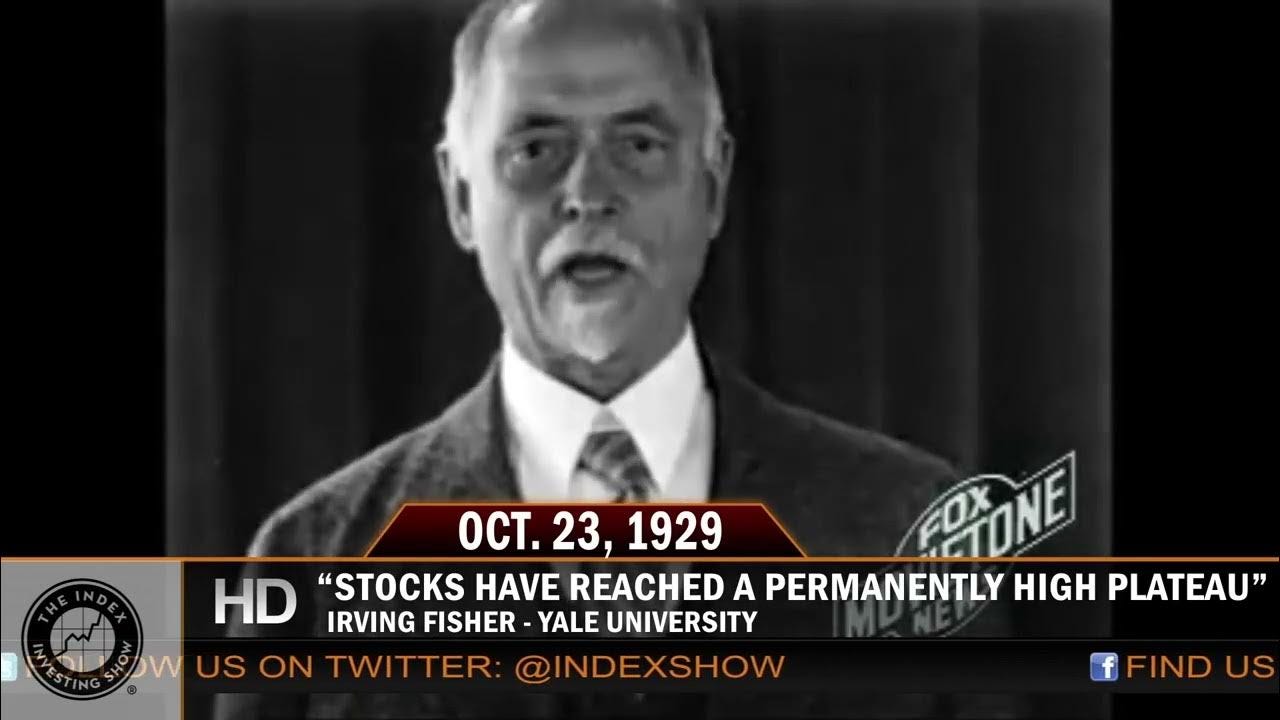
I’m by no means calling for a 1929 style crash. But things are strange in investing land.
Blackrock points out that all the typical signs of an upcoming recession failed to predict the current economic conditions - things like the inverted yield curve, the Sahm rule, and high inflation did not lead to a recession as they have previoulsy.
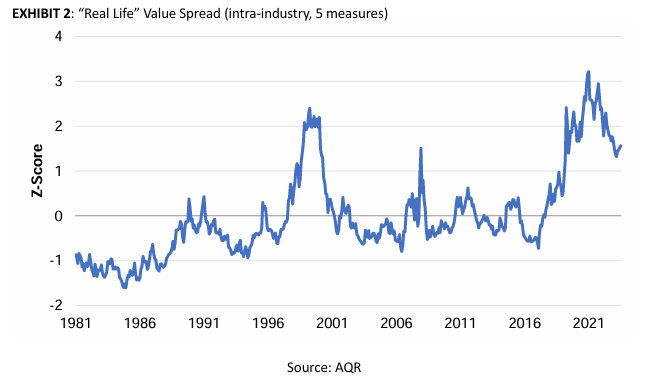
At the same time, as highlighted by Cliff Asness and others, traditional stock valuation metrics don't seem to apply anymore.
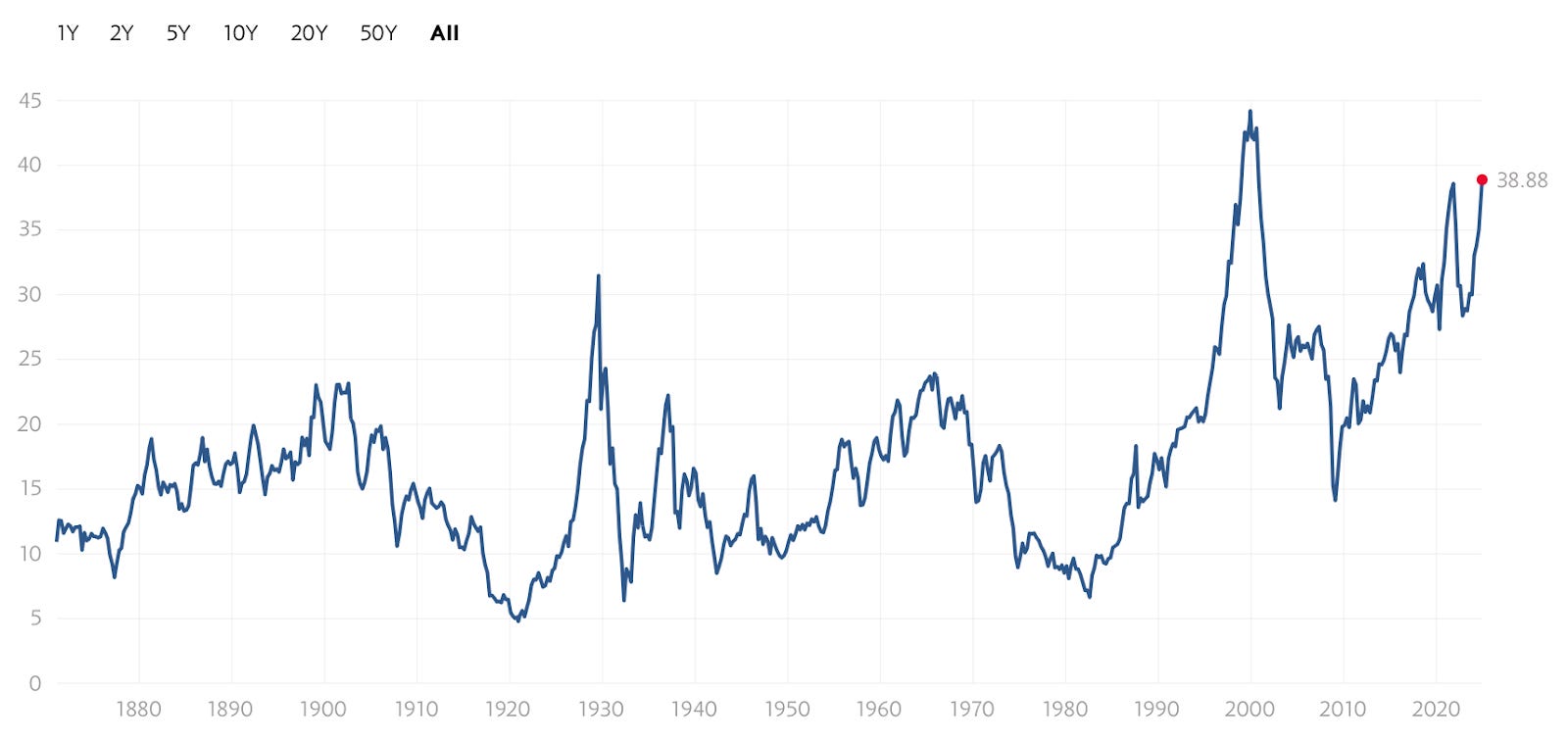
Traditional valuation metrics for stocks don’t appear to work.
Since 1990, the only time the Shiller PE ratio has touched the historic average of 15 was at the bottom of the 2008 crash:
My portfolio is doing well (why wouldn't it be when everything is going up?), but it makes me question what is happening.
This has led me to re-assess a few fundamental things, starting with:
The obvious answer is to make money - to turn some money today into more money tomorrow.
That seems reasonable. Let's look at the next question...
Ignoring special situations like buyouts or mergers, there are two ways to get returns:
By selling our shares to someone else for more than we paid.
Directly from the company in the form of dividends or buybacks.
That’s it. Those are the only ways to actually get returns from investing.
Let’s look at each one.
If you believe in valuing stocks based on a company's fundamentals, then the market looks crazy as described in the Grant’s article.
You have MicroStrategy - essentially a levered bet that Bitcoin will keep going up, meme stocks (Roaring Kitty posted on X recently), fartcoin (it’s a thing), and things like FICO at 100x earnings.

“Hot air rises”... I don’t know how you read that, but I read it as “I know this is totally made up, with nothing behind it, but I’m going to buy it anyway because someone even more foolish than me will buy it later for even more.”
Prices now seem driven by narratives, momentum, and beliefs rather than fundamentals.
Historically, when valuations get too high, they come back down. But does that mean they will this time?
Is Blackrock right that things could be different going forward?
There are some factors that may cause markets to behave differently than in the distant past:
Rise of passive investing - Fewer people are trying to determine what assets are worth, and lots of money flows into passive funds regardless of valuations.
401(k) plans - They constantly push money into markets, putting upward pressure on prices.
Dominance of US stocks - Investors worldwide want to invest in the profitable US companies.
Value investing has underperformed growth for so long that fewer use this strategy.
Today's highly valued companies like Amazon and Microsoft are very profitable real businesses, unlike the money-losing dot-coms of 2000.
Social media herds investors into all behaving alike, destroying the wisdom of crowds that’s supposed to lead to efficient markets.
Average holding periods are very short now, around 6 months. If nobody is holding for the long run, is the market sill a weighing machine in the long run?
The idea that a stock represents ownership in a company is a decent starting point, but I don't think you can stop there anymore.
If you plan to get returns by selling to another investor, you can't assume they are valuing the business based on fundamentals.
They could be:
Buying because the stock is in an index they track.
Buying based on momentum.
Day trading.
A high-frequency trader following order flows.
Buying based on hype about the "next big thing."
A computer algorithm trading based on data patterns.
Selling part of a business is not like selling a whole small business to someone analyzing its value as an operating entity.
Today's markets have many participants playing by different rules. The low friction to trade has changed behaviors too.
Things may be different going forward, but they may not be. The problem is, by the time we know for sure, a decade or two will have passed.
That's too long to wait on the sidelines. For me, this means trying to minimize reliance on the opinions and behaviors of other investors for my returns.
All my thinking and research has brought me back to the same place:
I'm still looking for no-brainers and trying to get returns directly from profitable companies.
This part is simple. Companies make money, and some share profits directly with owners through:
Dividends
Buybacks
The more I think about it, the more this approach makes sense to me. If stocks represent ownership in a company, the reason to own it is to get the profits.
If I offered to sell you 5% of a company that grew the profit by 20% each year, but told you that the majority owners plan to never distribute any profits, would you buy it?
What's the point of owning a highly profitable company if the majority owners never let you get any of the cash?
Investing in companies with good shareholder yields through dividends and buybacks makes practical sense.
It also removes the need for the market to correctly value the company for me to profit from my ownership.
If you want to hear from me more often about direct shareholder returns, I’m writing several articles a week over at Compounding Dividends.
No posts
Comments
Nothing yet. Say the first thing.
Sign in to join the conversation.