
1,000 subscribers is where a newsletter starts working for you instead of the other way around. Recommendation engines kick in, cross-promo partners take your emails seriously, and the first sponsor conversations become possible. It’s also a number most people chase without ever working out what it requires of them each week.
The thing I got wrong with my early newsletters was treating all subscribers as one currency. A subscriber from an ad and a subscriber from a guest post cost different amounts, open at different rates, and quit at different speeds. 1,000 people from short-form video and 1,000 people from podcast interviews are two different newsletters.
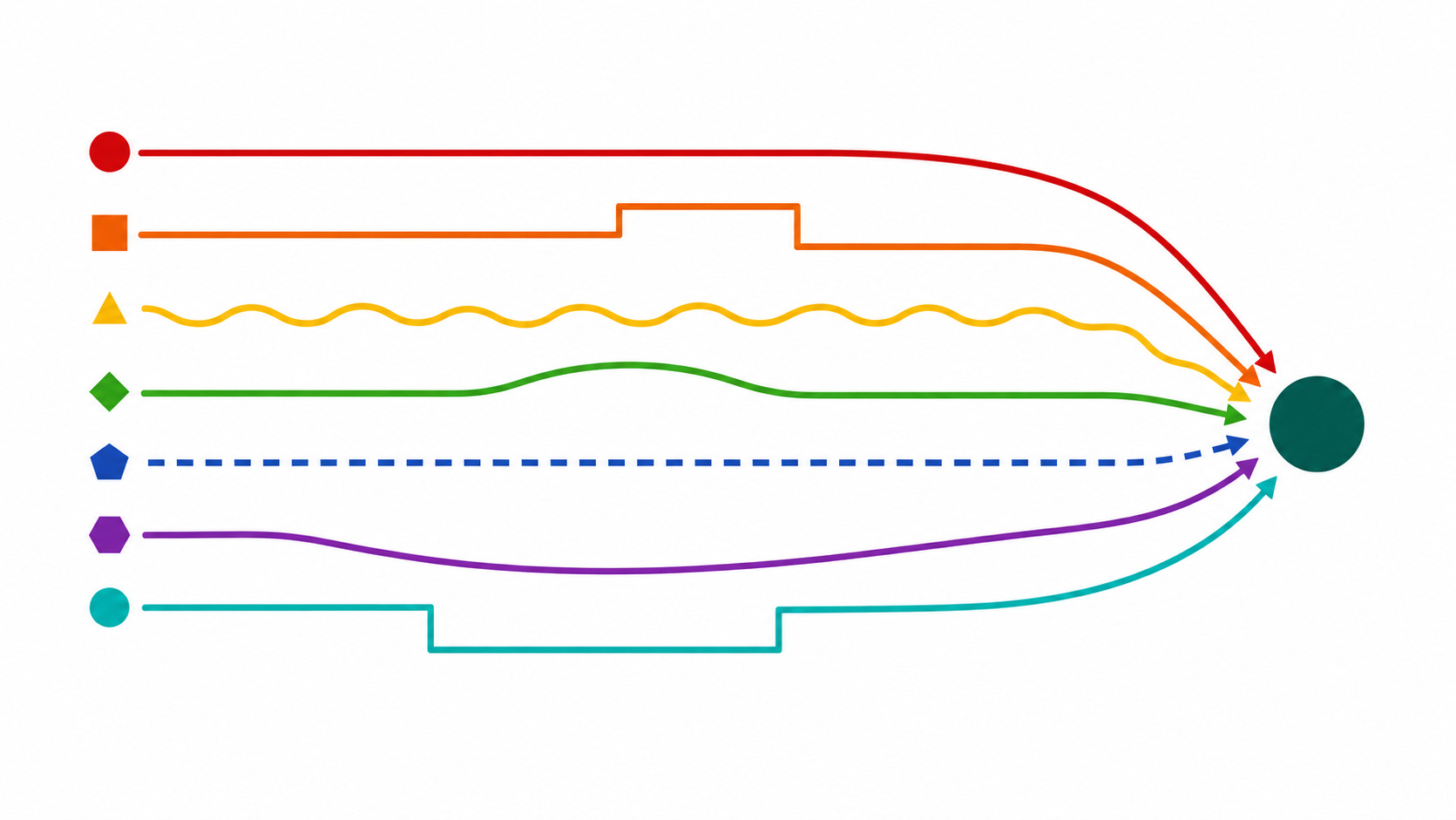
This guide runs the growth math backwards. For each of the 17 paths below you get the weekly action, the conversion math behind it, a realistic timeline in weeks, and the part nobody mentions when they post the growth chart.
A note on the numbers: the rates here come from my own newsletters and from founders I’ve interviewed. They’re starting assumptions for your model, not benchmarks to hold yourself to. Swap in your own data as soon as you have any.
We’ll cover:
Manual and spike paths
Borrowed audience paths
Social paths
Paid paths
Search and evergreen paths
Asset paths
What all of this looks like at 250 subscribers
1. Your own network, asked directly
Not a launch announcement. A personal message to every contact who’d plausibly care: “I’m writing a weekly email about X, can I add you?” Out of 300 contacts, 30-50% say yes when asked one to one. That’s 100 to 150 subscribers in 2 to 4 weeks, plus whatever your email signature and bio links pull in afterwards.
Catch: this path ends at roughly 200 and there is no path two inside it. Its real job is giving your open rate a healthy baseline so every later channel inherits good deliverability.
2. The launch spike
A Product Hunt launch, a Hacker News post that lands, or a free public database people share. A good launch brings 200 to 600 subscribers in a week. Two or three launches a year is realistic for one person.
Catch: spikes flatter the chart and hide that the weekly engine isn’t built. A launch audience that arrived for a free thing needs a welcome sequence that sells the weekly email, or half of them never open issue two.
3. Recommendation swaps
Five reciprocal recommendations with newsletters your size or slightly bigger. Each active partner sends 5 to 15 subscribers a week, so five partners is 25 to 75 a week. From a 200-subscriber base, that’s 12 to 30 weeks to 1,000.
Catch: recommended subscribers open 10 to 20 points below the ones who found you themselves. Review each partner monthly and cut the ones sending people who never open. The swap that pads your count and sinks your open rate costs more than it pays.
4. Guest posts
One guest essay in a 20,000-subscriber newsletter converts 0.5 to 1.5% of that list, so 100 to 250 subscribers per placement. Landing one takes 4 to 6 pitches. At one placement a month you need 5 to 8 of them, which is 25 to 40 pitches and 20 to 35 weeks.
Catch: the placements that convert require your best material, which means giving your strongest ideas to someone else’s audience first. Most people quietly refuse to do that, and it shows in their results.
5. Podcast guesting
Two episodes a month, each sending 20 to 60 subscribers if the show is genuinely in your niche. That’s 40 to 70 weeks to 1,000 on guesting alone.
Catch: nobody types a URL they heard in their headphones. You need a domain short enough to remember and a link in the show notes, and even then audio converts worse than anything else on this list per listener. The compensation is that podcast subscribers are the highest-intent people you’ll ever add.
6. Roundup placements
Getting listed in the “best newsletters for X” articles that already rank. Pitch 30 of them, land 8 to 12, and the combined listings send 10 to 40 subscribers a week indefinitely. Alone that’s 25 to 60 weeks. As a layer under another path it’s some of the cheapest growth available.
Catch: you don’t control your position on the list, and the top slots go to newsletters the writer already reads. The pitch that works is making their update easier, not asking for a favor.
7. LinkedIn
Four posts a week. The first 6 to 8 weeks produce almost nothing while the algorithm works out who you are. After that, a working profile funnel converts to 30 to 60 subscribers a week. Total: 20 to 40 weeks.
Catch: subscribers come from your profile, not your posts. The post earns the profile visit and the profile makes the sale, so a featured lead magnet and a one-line pitch in your headline matter more than any individual post. And the reach is rented. One algorithm change can halve your weekly number without warning.
8. X
The same mechanics as LinkedIn with worse conversion for most business niches right now. 40 to 70 weeks at consistent output, unless a thread hits and compresses six months into a weekend.
Catch: the algorithm pays for engagement, not conversion, and the two have drifted apart. There are accounts with 80,000 followers and 900-subscriber lists. Follower count on X predicts almost nothing about your email growth.
9. Short-form video
Three clips a week on TikTok, Reels, or Shorts. This is the lottery path: the median outcome is 30 to 80 weeks, and the tail outcome is 1,000 subscribers in six.
Catch: views don’t convert, bios do. A million views with a bare “link in bio” produces almost nothing. The whole path depends on a magnet in that link worth stopping for, and even then video viewers are the fastest-churning subscribers of any source here.
10. Reddit and niche communities
Answering real questions where your topic already gets discussed, with your newsletter mentioned maybe one time in ten. Done consistently: 10 to 25 subscribers a week, so 40 to 80 weeks alone.
Catch: the ratio is the whole game. Sell once too often and you’re banned from the exact places your readers gather. This path suits people who’d be answering those questions anyway, and punishes everyone else.
11. Meta ads
$2 to $4 per subscriber for most business niches, running traffic to a lead magnet page rather than a bare signup form. $3,000 of budget is 750 to 1,500 subscribers in 4 to 8 weeks.
Catch: the cost is the honest part. Ad subscribers open 15 to 25 points lower for their first month, and without a welcome sequence that earns the second open, you’ve bought a list that quietly rots. Budget for the sequence before the ads.
12. Paid recommendations
SparkLoop, beehiiv Boosts, and their equivalents. $2 to $4 per subscriber that survives the engagement filters, and you should only pay on filtered subscribers. Budget-dependent: 4 to 10 weeks.
Catch: expect 30 to 40% of raw signups to be rejected as low quality, and treat any network that won’t filter as a hard no. The gap between paid-rec networks is bigger than the gap between this path and ads.
13. Buying sponsorship slots
A solo ad in a 20,000-subscriber newsletter costs $500 to $1,000 and returns 80 to 250 subscribers, if the ad sells a specific free asset rather than “subscribe to my newsletter.” Five to eight good placements is $3,000 to $6,000 and 10 to 20 weeks, limited mostly by finding slots worth buying.
Catch: results vary 5x between placements at the same price. Buy one test slot before committing to any package, and ask for the click numbers from the last three ads they ran. A seller who won’t share them is answering your question.
14. SEO
Two long-tail posts a week with the newsletter embedded as the next step. Traffic starts moving in month 4 to 6, and a good post converts 3 to 8% of readers with a relevant magnet inline. Total: 40 to 70 weeks.
Catch: the first 20 weeks pay nothing, and most people quit inside them. The compounding is real, but only for the person still publishing in month six. Decide up front whether that’s you.
15. YouTube
One video a week. Slowest ramp on this list at 50 to 90 weeks for most channels, and the highest-retention subscribers once it works, because they arrive already knowing your voice.
Catch: production eats the week, and your newsletter CTA competes with YouTube’s own subscribe button, which the platform will always favor. The channel becomes the main asset and the newsletter becomes the backup. Choose this path only if you’re fine with that inversion.
16. The lead magnet as the strategy
Not a PDF bolted onto a signup form. One genuinely useful asset, a template pack, a database, a calculator sheet, distributed everywhere for months: every directory, every relevant thread, every bio link, every guest appearance. Run properly this converts 20 to 40% of the people who land on it, against 2 to 5% for a bare subscribe page, and reaches 1,000 in 15 to 35 weeks.
Catch: magnet subscribers came for the file, not for you. The welcome sequence has one job, converting a downloader into a reader, and if it fails you’ve built a list of people who got what they wanted already.
17. The free tool
A calculator, scorer, or generator built in a week or two on whatever platform you already use, with results or updates gated behind email. When one ranks or gets shared, it sends 20 to 100 subscribers a week on autopilot. Timeline is 12 to 52 weeks, and the variance is the honest number there.
Catch: the tool needs its own distribution. Most free tools get ten visits a week because their maker treated launching as the finish line. A tool is an SEO and launch project with a signup form inside it, not the other way around.
250 is the more useful first target, because it’s where recommendation swaps become possible and open-rate data starts meaning something. The math shrinks accordingly:
Your network alone, asked directly, gets most of the way there in a month.
One guest post plus two recommendation swaps covers it in 4 to 8 weeks.
On ads or paid recs it’s $500 to $1,000.
On LinkedIn it’s the first 12 to 15 weeks, most of which is the dead zone.
The effort isn’t linear though. Your first 250 cost more per subscriber than any 250 after them, because every channel starts at zero trust. Whichever path you pick, the early weeks are the expensive ones.
Capture conversion. A bare subscribe box converts 2 to 5% of visitors. A page offering one specific asset converts 20 to 40%. Same traffic, up to 10x the subscribers, which is why the asset paths multiply every other path on this list rather than competing with them.
Compounding versus resetting. A LinkedIn post is dead in 48 hours. A ranking roundup listing, an SEO post, or a free tool keeps paying every week you don’t touch it. Resetting channels are faster to start, so they’re the right opening move, but by 500 subscribers you want at least one compounding channel installed underneath, or you’ll be running the same sprint forever.
Then there’s the stacking. Most real 1,000-subscriber newsletters I’ve looked at are three of these running together: a spike for the first jolt (path 2), a weekly engine for steady growth (7, 11, or 14), and recommendations switched on underneath (3). One path gets you there eventually. A stack gets you there before you lose interest.
Pick the path whose weekly action you’d still be doing in month six
Rewrite the math with your own niche and your own honest conversion rates
Work backwards to a weekly input: pitches sent, posts published, dollars spent
Track that weekly input instead of tracking the subscriber count
Which path are you on, and how do your numbers compare? Reply or leave a comment, I read all of them.
Ask me anything about modeling your path in the comments below
Want to get in front of 33k+ founders and makers? Consider sponsoring this newsletter
Get access to the Tiny Empires Method course and learn how to build a 6-figure solo business by joining Pro Membership at nocodefounders.com
Comments
Nothing yet. Say the first thing.
Sign in to join the conversation.