
In 1:1 conversations with CIOs over the past month, the same worry keeps surfacing. Things are moving too fast.
The appetite for AI has never been higher, and the pressure to move on it is relentless. Boards want speed. Competitors are moving. So the pace keeps climbing, often faster than the organisation underneath can comfortably absorb.
When the pace outruns the organisation, corners get cut. And when corners get cut, the change doesn’t land. The system goes live, the comms go out, and three months later people have quietly gone back to the old way.
We tend to call that change fatigue and treat it as inevitable. It isn’t.
Here’s what most transformation portfolios do well. They track change one project at a time. Each project knows exactly what it’s delivering, to which function, by when. The governance is built around the delivery.
Here’s what few of them do: flip the lens.
They rarely stop to ask the reverse question: across every project running right now, which teams are absorbing all of it at once?
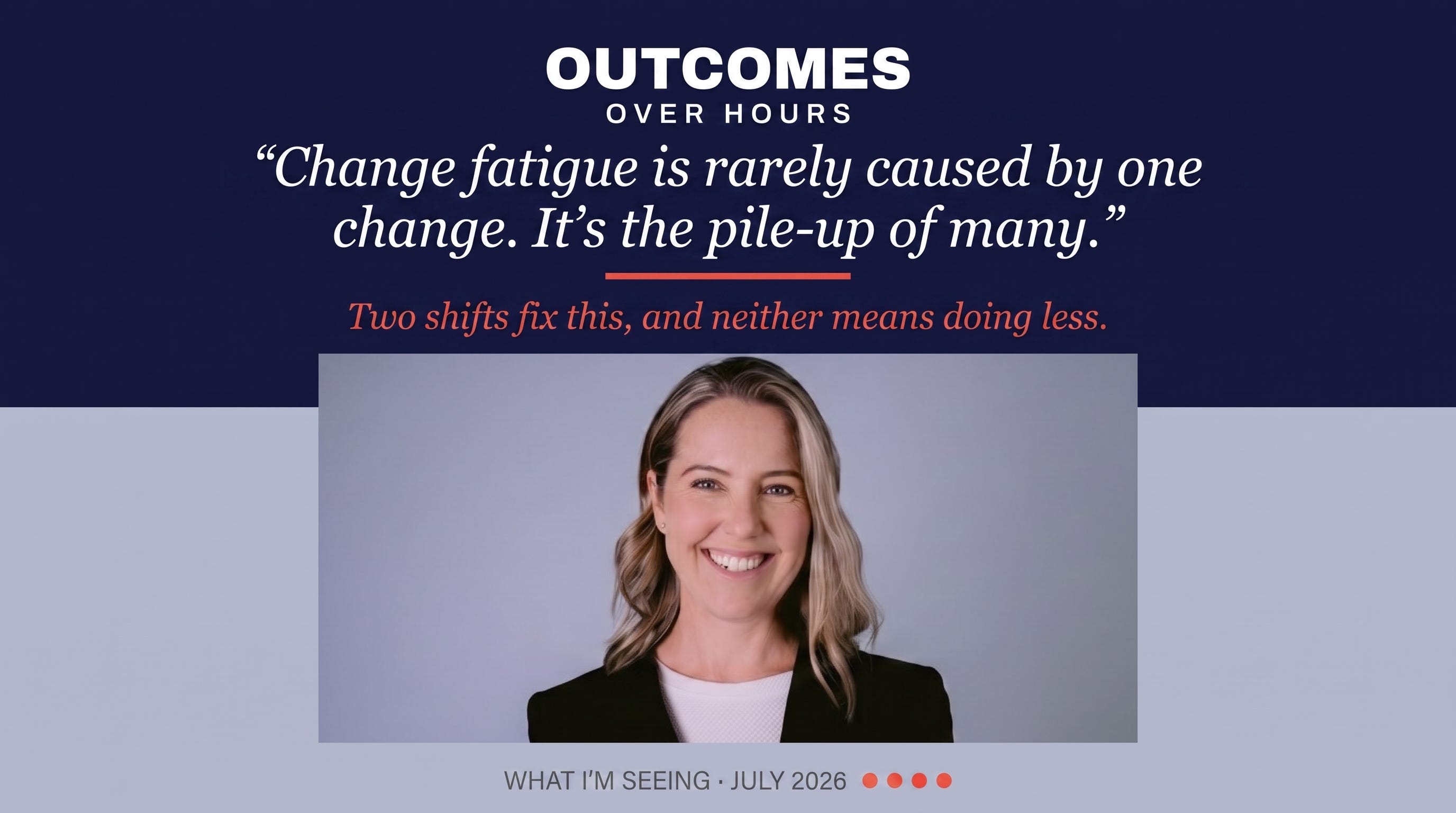
That question changes everything, because change fatigue is rarely caused by one change. It’s the pile-up of many, all landing on the same people in the same few weeks.
A single system upgrade is manageable. A system upgrade, a policy change, a new process and a capability uplift, all hitting the same team in the same month, is where adoption quietly dies. The team runs out of capacity to absorb, so they absorb none of it properly.
Two shifts fix this, and neither means doing less.
Map change by the teams receiving it, not just the project delivering it. Lay every initiative across the organisation and look down the columns, function by function. Where is the load concentrating? Which team has four things landing in the same month while another has none? That view rarely exists, because each project only sees its own lane.
Sequence for absorptive capacity. Once you can see the pile-up, you can space it out. Move the capability uplift which isn’t time-sensitive to a month later so it doesn’t collide with the mandatory system go-live. Stagger the policy change. The total scope still gets delivered, but it arrives at a pace the team can actually take on. Smarter sequencing beats brute-forcing four changes through one exhausted team.
Then you hold that view in your operating rhythm, so the cumulative load stays visible as new initiatives get added, rather than being checked once and forgotten.
Years ago I was the Director of Transformation for the back-office functions of a large organisation here in Australia. Like most transformation environments, we had many programs, projects and initiatives running all at once.
We did something though that most portfolios don’t. Alongside the usual view of what each project was delivering to each business area or function, we ran the reverse analysis. We looked at the main teams and asked how much change was landing on each of them.
I still remember the graph that showed how much complex change was going to land on each major team over the coming months.
It clearly showed that March and April were looking brutal for the Customer Service team if we went ahead as planned, as so many initiatives led by other departments had their go-lives scheduled across those two months.
We were about to go live with system changes, policy updates, process changes and a capability uplift, all that the Customer Service needed to know about. March/April suited the delivery schedules of the projects, but took no account of how much that one team could absorb in that window.
So we resequenced. Same scope, same ambition, spread across a timeline the team could actually absorb properly. All the change landed instead of bouncing off.
It’s worth thinking about which of your initiatives affect other departments. It matters just as much to think about how many of them are hitting the same team at the same time, and where you need to sequence more intelligently.
With so many teams running full steam at AI right now, this matters more than it ever has. Every AI rollout, every agentic pilot, every governance change lands on a human team that’s already carrying a full load of BAU.
The capability that’s becoming decisive for a modern leader is the discipline to slow certain things down in order to speed sustainable progress up.
So before the next go-live date gets locked because it suits the project, take a look down the column. Ask what else is landing on that team that month. Then sequence for the people who have to absorb it, not the plan that’s convenient to deliver.
Change that lands beats change that’s launched.
Every week, I share what I see. Subscribe and see it too.
Tina Paterson is the founder of Outcomes Over Hours. She partners with tech leaders and their leadership teams to deliver the right outcomes faster and easier.
Because humans who strategically leverage AI will always win.
No posts
Comments
Nothing yet. Say the first thing.
Sign in to join the conversation.