
This week, I visited an orthopedic clinic. Sadly, not as a researcher, but to address a (happily only slightly) injured foot of a family member. Great clinic, walk-in availability, helpful and efficient staff. If this was an ordinary market transaction, I’d give them a 5 star Yelp review. Except for one little detail. Part of the injury fix was a temporary boot. They offered me a choice of two styles, figured out the correct size, put it on my family member, then proceeded to have me sign a waiver acknowledging I would pay for it even if my insurance didn’t cover all of it. Except at no point in the process did I ever learn what the price was! I was given the item, signed away a promise to pay, but have no idea what it cost!
Is this the insanity that keeps you coming back to my posts, dear reader?
If anyone else feels discouraged by this, you’re not alone. Prices in healthcare have been so hard to find for so long that patients have stopped looking. A Health Affairs study of nearly 3,000 nonelderly U.S. adults found that only 13 percent of patients had looked for information about their expected spending before receiving care and only 3 percent compared costs across providers.1 This is only logical given the amount of time and frustration it takes to get an answer to “how much will it cost?”
Most industrialized healthcare systems don’t operate like a market. Yes, even the supposedly “market-based” U.S. healthcare system: does any of the transaction I described above sound like how you buy groceries, clothes, or streaming services? Well-functioning markets are defined by easily accessible prices. To understand why prices are so opaque in the U.S., we need to understand the systems which are creating them, starting with the biggest category of healthcare spending: hospitals.
Hospital balance sheets rely on two categories of payors in the U.S.: Medicare/Medicaid (government payors) and commercial insurers. Public payors provide a guaranteed baseline, but these programs set fixed reimbursement rates ahead of any care provided. Medicare pays less (maybe even half) than commercial insurers,2 and Medicaid usually is even worse. Hospitals have almost no bargaining power to make changes to this portion of their balance sheet, other than refusing these programs entirely. Not really an option, since, according to the American Hospital Association, Medicare and Medicaid pay for over 70% of hospital inpatient days, even though they account for less than half of average hospital revenue.3
Hospitals make up the difference with a financially-desirable population of commercially insured patients. Commercial health plans directly negotiate with hospitals to agree on reimbursement rates. Understandably, this is a lengthy process and can depend heavily on the relative bargaining power of the hospital versus the market share of the insurance carrier.
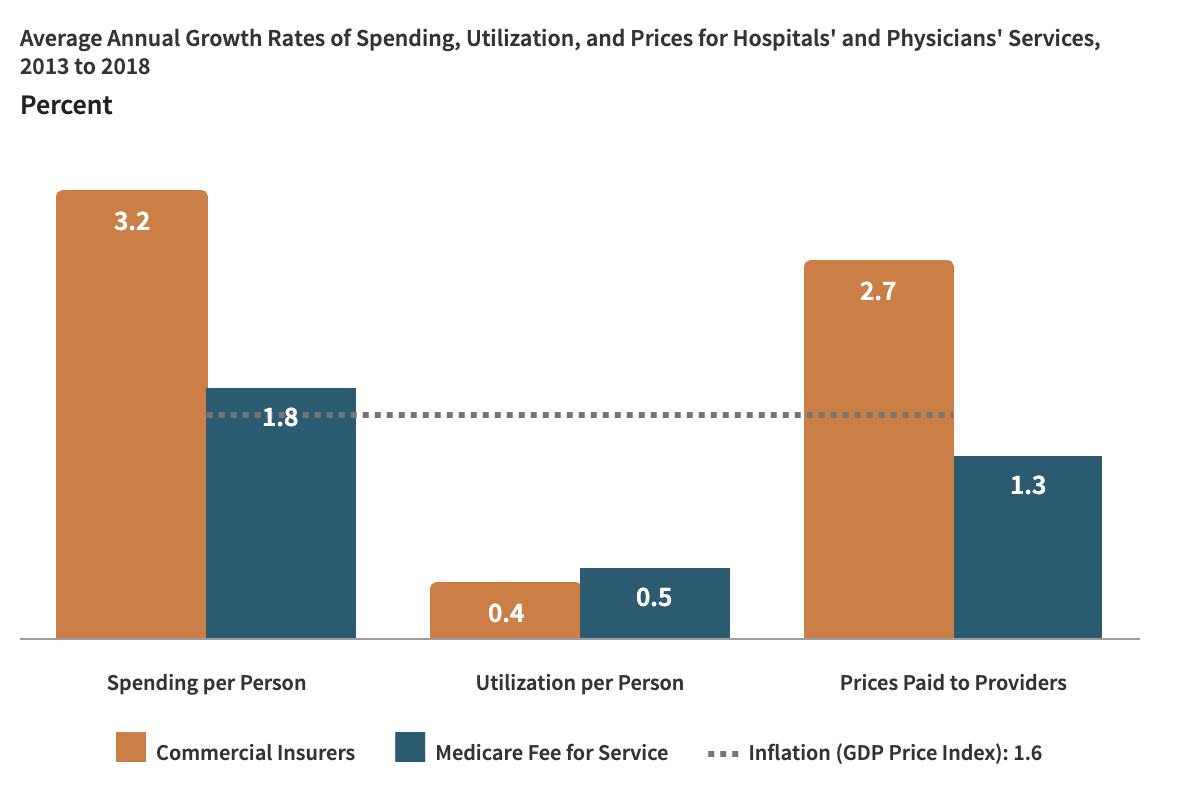
Imagine the headache of trying to individually negotiate a price for every one of the hundreds of services offered by a hospital. Often, to skip this step, contracts will use an index to cover a large swath of services. Contracts may include payment rates that are indexed to Medicare’s rate, for example, or contract to pay a fixed percentage of the hospitals “list price.” “List price” in healthcare means a price that the provider says is their price. Notice: “says is their price,” not “recently sold at this price.” It’s like when you hopefully list your sentimental 90’s memorabilia on Ebay- you are allowed to list whatever high price you want, but that doesn’t magically make your McDonalds Teenie Beenie babies valuable.

To be clear: the “list price” you see on your Explanation of Benefits page is not ever, never ever, nope not a real thing. No one pays this “list” price. It is used as a benchmark to create shortcuts between different parties bargaining. A large commercial insurer may be able to negotiate large discounts off this “list price,” whereas an insurer with less bargaining power can’t shave off as much. In either case, how should a provider choose this somewhat imaginary price, if it is always getting actual reimbursement as a percentage of the “list price”? If you said, “as high as I can get away with”- you’re a great strategist!
As aggravating as the imaginary “list price” is, there are a few reasons why providers might have trouble committing to a pre-set price in the first place.
First, medical procedures have unexpected components. The full price of a procedure depends on the mix of services you end up using. For example, giving birth: are you going to end up with medication? Will you need a C-section? What if the baby has an emergency need for oxygen? There is a lot of uncertainty. Think about contracting a renovation in your home. You might discover that electrical wiring needs more work than planned or your design needs extra permit fees. Depending on your contract with the builder, you might be on the line for any additional services you didn’t originally write in.
Second, the health condition of the patient matters. In our home renovation example, this is when you discover that you have termite damage or your interior joints are rotten from a missed plumbing leak. Surgical procedures can be complicated by comorbidities such as heart disease or diabetes.
Consider major joint replacement. For a relatively healthy patient, the procedure is fairly standardized:
predictable anesthesia risk,
routine wound healing,
shorter hospital stay,
lower infection risk,
simpler rehabilitation.
But for a patient with comorbidities such as diabetes, heart disease, or obesity the same procedure becomes substantially more complex because the patient may need:
extra cardiac clearance/testing,
tighter glucose management,
specialized anesthesia monitoring,
longer inpatient recovery,
management of complications like infection or poor wound healing.
A healthy patient is relatively standardized, but care pathways diverge unpredictably with more comorbid conditions or the older patients. A review by the Mayo Clinic found that joint replacement patients with one additional comorbidity were associated with longer lengths of stay and a 5.1% increase in Medicare payments for an entire episode of care.4 A healthy patient’s episode of care is easier to price in advance, while the medically complex patient’s costs are much less predictable.
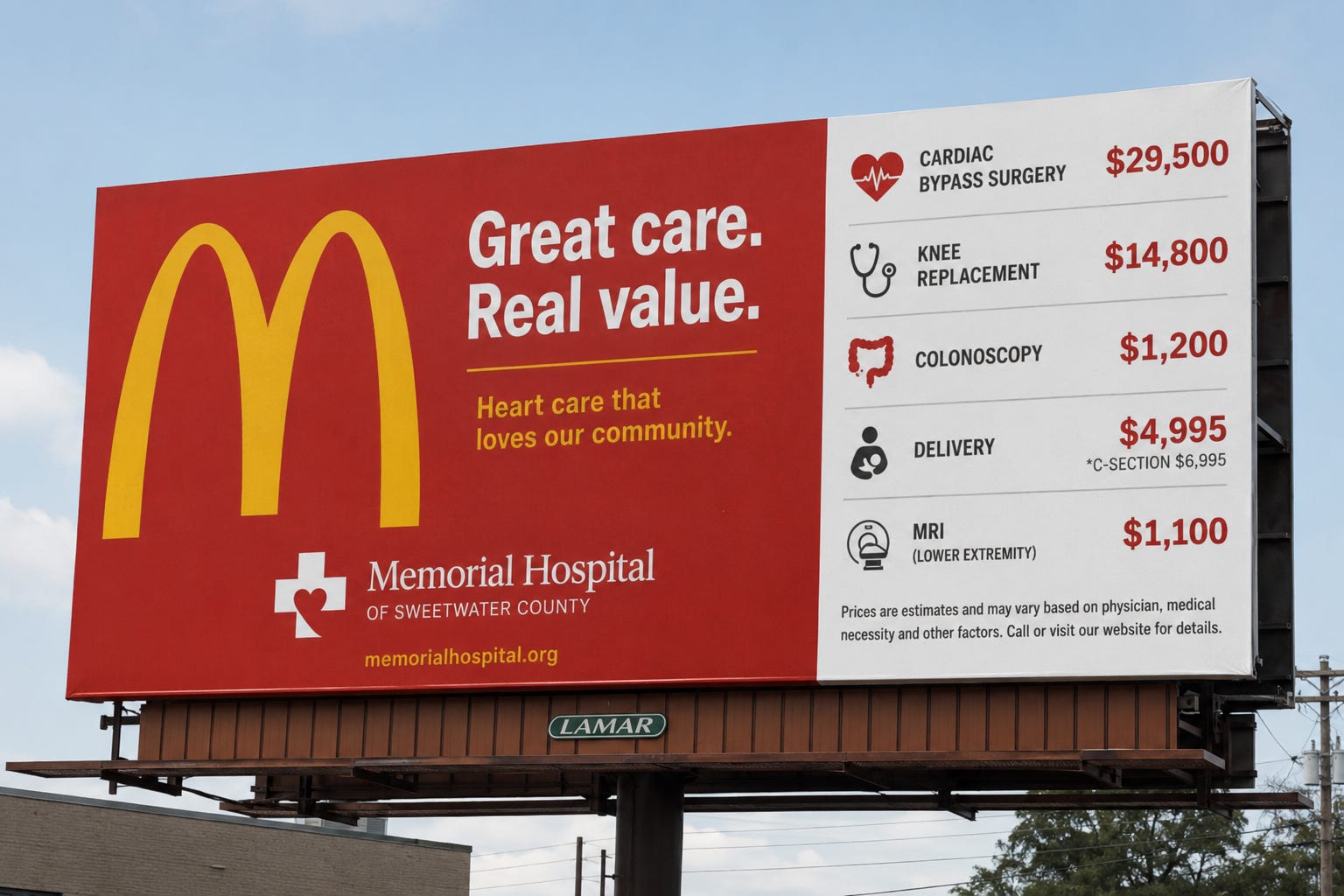
Other parts of the well-functioning economy have some method of publicly listing and searching their prices. Why not healthcare?
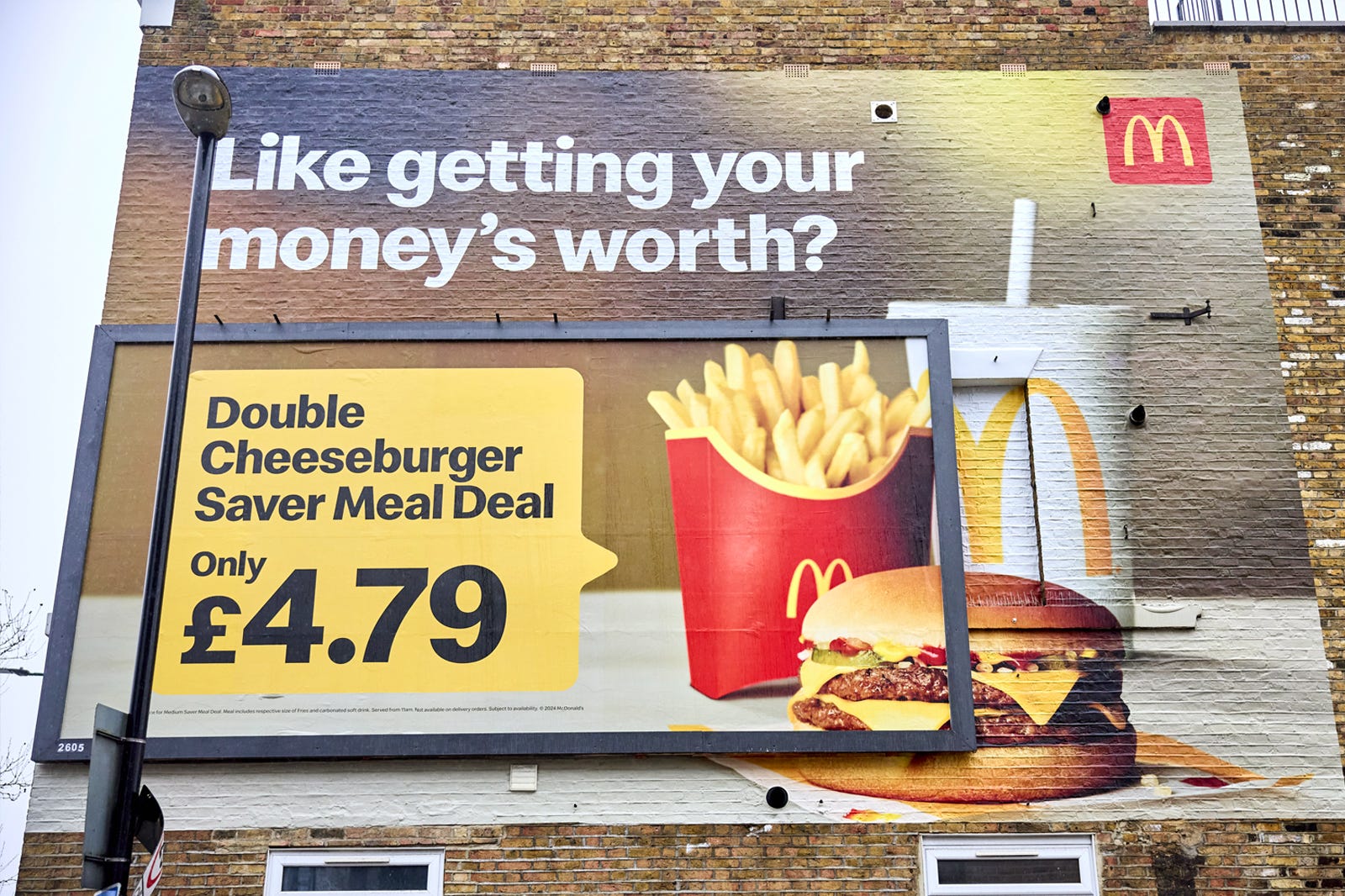
First, hospitals are often a monopoly or only have one other hospital for competition. In four out of five U.S. metropolitan areas, one or two health systems control more than 75 percent of the market.5 McDonald’s has competitive pressure from Burger King, Taco Bell, Wendy’s, Chick-fil-A (Ok, I’ll cede certain fierce Southern loyalties may exist in that list, but you get the idea!) Part of McDonald’s strategy to win business is to show that their prices are cheaper than similarly positioned products. If you’re the local hospital monopoly you don’t need to bother with that, since you’re the only choice.
Second, in the U.S., and every other country that uses medical insurance as a way of paying for care, insurance blunts the effect of any savings that patients might get by shopping around for a cheaper price. If the consumer only has to pay 20% coinsurance, this removes about 80% of the consumer’s motivation to seek out a better price.
This is where we rely on insurers to negotiate better prices for us, ahead of time. This is also where managed care has stepped in with the idea of networks and out-of-pocket price differences that push consumers towards providers where the insurer has pre-negotiated lower costs.
The complaint from hospitals is usually that insurers do an excellent job of this and insurers force their margins too low. If true, hospitals don’t have much incentive to share their prices publicly because it may hurt their bargaining power. Insurance companies have been rapidly consolidating over the past 20 years. A recent NBER paper shows that the top three insurers in the large group commercial market (i.e. Employer-Sponsored Insurance) control 91 percent of the market.6 Your local hospital is trying to make a deal with only three possible companies across the table. Anyone who’s tried to bargain knows that showing your real hand hurts the negotiation.
McDonald’s isn’t negotiating with a third-party intermediary for our hamburger and we, the consumers, get to reap all the benefits of our savings. True, McDonald’s may be handing Burger King some advantage by making its McValue menu public, but there are also many hamburger buyers to win away from its competitor Burger King. The lure of price information to attract many buyers ends up winning over the disadvantages of competitors knowing them as well.
Share this post with someone who’d also enjoy healthcare with a side of searchable prices!
If you aren’t already on Team Price Transparency through your own similarly frustrating office experience, the ability to find prices also matters because prices vary widely across the U.S. and have for a long time. The RAND Health Care Price Transparency Initiative has been monitoring prices in the U.S. since 2016, continuing the work led by the Dartmouth Health Atlas since the 90s. Their latest attempt to compile prices includes over $81.5 billion in spending in over 4,000 hospitals and 4,000 ambulatory surgery centers nationwide. RAND found that prices in commercial insurance ranged from less than 170% of Medicare’s pre-set prices (in Arkansas) to over 300% of Medicare’s prices. The high price states include the usual high cost-of-living suspects: California and New York. But this high price list also includes less obvious states: South Carolina, West Virginia, Wisconsin, Delaware, Florida, and Georgia, some of the lowest cost-of-living states. This already tells us healthcare prices are messed up- that they seem totally unrelated to the rest of the economy around them!
Moreover, prices aren’t even uniform at the state-level. Within states, the difference between the lowest quartile of spending and the highest quartile is a difference of 45%. If standard procedures cost 45% less in a neighboring county, we want consumers and insurers to have this information to leverage it, either through consumer choice or from competitive forces to match lower prices.
As a final thought, you might say, “I’m busy and I have decent insurance, I’ll join the team later.” I’d remind you that better choices save money for the patient, the insurer, and the system which is facing above-average inflation, but even closer to home: How can you make good choices among (even well-covered) procedures and providers if you only know the benefits, not the costs? Better choices keep the flow of patients through the system more efficient. Choosing without knowing the cost can leave you with a large bill for services that ultimately weren't worth it to you. It can also lengthen wait times when scarce appointment slots are used for lower-value care instead of patients who would benefit more. No one is a winner here.
The good news is there are some important policy changes already starting. Tune into next post to learn more!
Thanks particularly to Jeff Fong for wonderful editorial help, and Abby ShalekBriski , Rhishi Pethe , Venkatesh V Ranjan , and Mike Riggs for brilliant encouragement and selection of topics. And to my sister for her justified outrage on this issue and request for explanations!
Comments
Nothing yet. Say the first thing.
Sign in to join the conversation.