
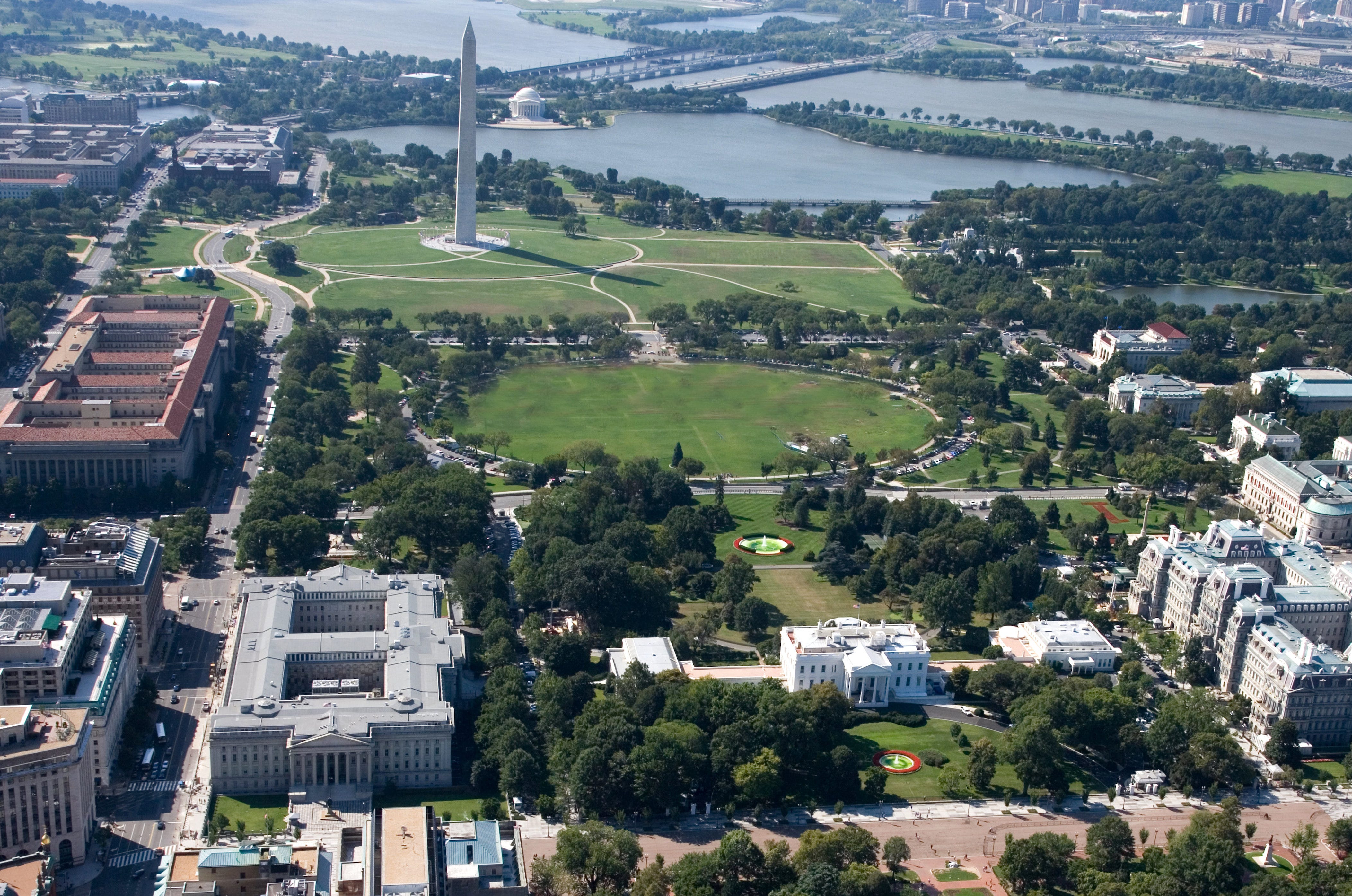
Various media are reporting that the White House has proposed restricting public access to Lafayette Square Park during unspecified “heightened conditions.” Trump Administration officials have submitted a request to a federal design panel, the Commission of Fine Arts, to approve the addition of a permanent fence around the park. The administration claims this is necessary owing to “security” concerns relating to demonstrations.
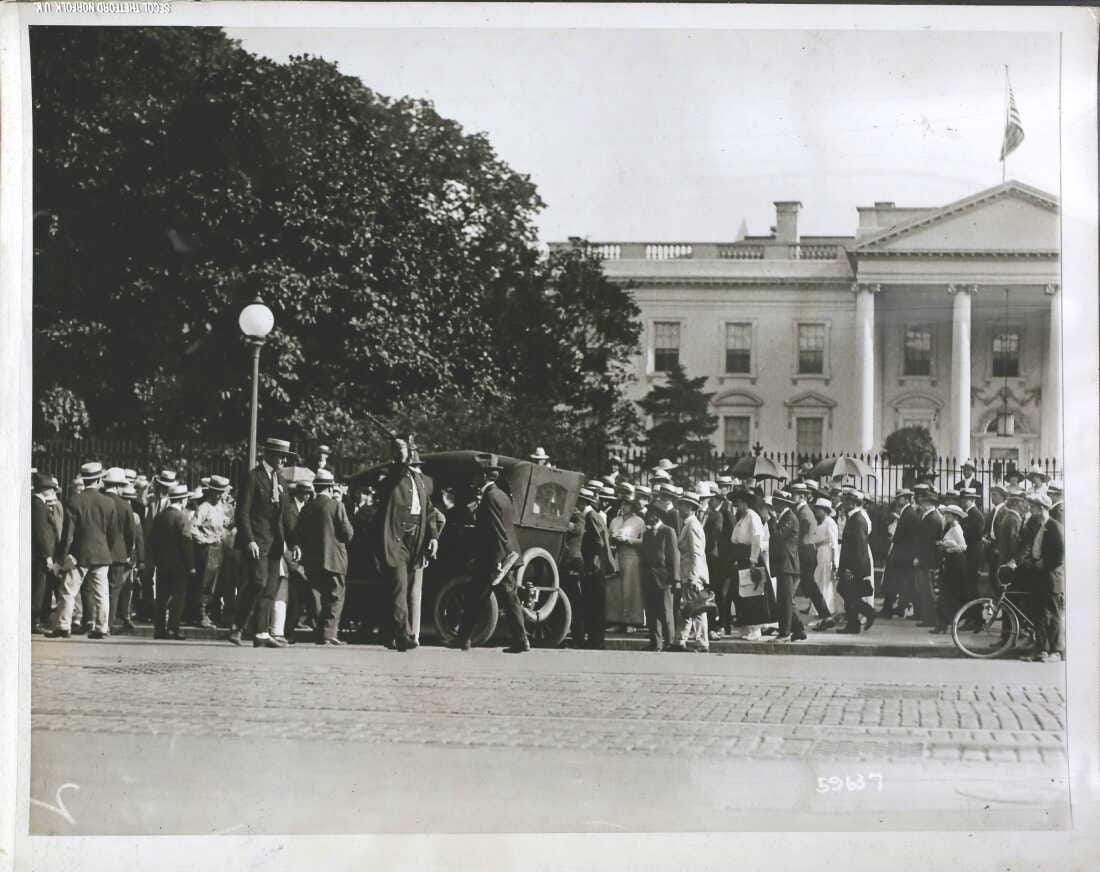
Lafayette Park, a seven-acre space located directly north of and within sight of the White House, has been a frequent site of public protests. Here, for example, is an image of a demonstration in the park for women’s suffrage. The National Park Service issues more than a hundred permits a year for demonstrations, although gatherings of fewer than 25 people are not required to have a permit.
During President Trump’s first term, Black Lives Matter demonstrators gathered there after George Floyd’s murder. Trump infamously marched outside, with one of his top generals, his Attorney General, and other officials in tow, to hold a Bible upside down and demand an end to the demonstrations. Police had earlier cleared the park using tear gas and rubber bullets. At one point during the BLM demonstrations the president, who never misses an opportunity to falsely equate public protests and riots or to deride protesters as “thugs,” reportedly suggested to his Secretary of Defense that demonstrators be shot in the legs.
Fencing off and possibly closing Lafayette Park for indeterminate periods would undermine vitally important First Amendment free speech, assembly, and petition rights. In 2012, I testified before a House subcommittee investigating the presence of Occupy Wall Street demonstrators in another D.C. park, McPherson Square. I was invited by the committee to testify about the importance of access to such places for purposes of exercising First Amendment rights.
As I explained, under settled First Amendment doctrine, public parks are recognized as “traditional public forums.” As the Supreme Court has explained, public parks have “immemorially been held in trust for the use of the public and, time out of mind, have been used for purposes of assembly, communicating thoughts between citizens, and discussing public questions.” I testified:
Throughout our history, exercise of these rights has been critical to proselytizers, petition-gatherers, and political movements. This has been especially true of parks such as McPherson Square, which are located in the nation's capital and near the seat of government. The National Mall, Lafayette Square, and the Lincoln Memorial have all been sites in which national moments and public memories have been deeply inscribed. As the D.C. Circuit has recognized, local parks in the District "constitute a unique situs for the exercise of First Amendment rights." Thus, it is especially important that rights to speak, protest, and petition remain as broad and robust as possible in these places.
My testimony drew on the arguments and claims in my first book, Speech Out of Doors: Preserving First Amendment Liberties in Public Places (Cambridge University Press, 2008). The book focused on the necessity of preserving access to public places, including but not limited to parks, to facilitate the exercise of First Amendment rights and to support various free speech values. As the Black Lives Matter, No Kings, and countless other demonstrations have since shown, even in a digital age the people fervently want to gather in public places - particularly during moments of high tension and conflict.
Speech Out of Doors examined the special relationship between place and public expression, and criticized government efforts to restrict, shrink, and narrow access to public places, including parks and streets, to control and sometimes suppress public contention. The book identified and analyzed the causes of the erosion of expressive space, which include privatization, the built environment, legal restrictions on public assembly and expression, reliance on security justifications and the corresponding militarization of public places, and aggressive protest policing.
Fencing off Lafayette Park and potentially closing it based on “security” concerns fits the general pattern. It raises the same serious First Amendment concerns. Lafayette Park is no ordinary public forum. Rather, it is what I referred to in the book as an iconic space which speakers have historically relied upon to communicate with government and raise public awareness of various causes. As mentioned, countless protests have occurred, and continue to occur, in the park.
The park’s location, which in terms of public spaces is as close as one can physically get to the White House, allows demonstrations to occur not only in a highly symbolic place but also in a location where it is difficult for government officials to ignore the messages. For example, during an anti-Vietnam War protest in 1967, President Johnson and his family apparently could hear the chants from inside the White House: "Hey, hey LBJ, how many kids did you kill today?"
As I explained in Speech Out of Doors, aside from its practical advantages, location can also be an important part of demonstrators’ messaging. Demonstrating near the seat of power enhances the communicative impact of an assembly. In Clark v. Community for Creative Non-Violence (1984), the Supreme Court upheld a National Park Service regulation that banned camping (but allowed overnight vigils) in Lafayette Square Park and on the National Mall. (My congressional testimony addressed this regulation.) Advocates for the unhoused chose the park to emphasize to those in power the perils of living without shelter. The majority rejected their claim, and in doing so provided a sterile description of the place they had chosen as the site of their demonstration. But in a dissenting opinion, Justice Thurgood Marshall admonished the majority for its thin attention to place:
Missing from the majority's description is any inkling that Lafayette Park and the Mall have served as the sites for some of the most rousing political demonstrations in the Nation's history. It is interesting to learn, I suppose, that Lafayette Park and the Mall were both part of Major Pierre L'Enfant's original plan for the Capital. Far more pertinent, however, is that these areas constitute, in the Government's words, "a fitting and powerful forum for political expression and political protest."
As Justice Marshall explained, “respondents clearly intended to protest the reality of homelessness by sleeping outdoors in the winter in the near vicinity of the magisterial residence of the President of the United States.” In other words, demonstrators chose the location intentionally in order to amplify their message.
President Trump has been making a lot of aesthetic changes to the White House and surrounding areas. This one, however, comes with serious constitutional implications. To be sure, the administration’s report to the Commission refers to Lafayette Park as a "vital venue for First Amendment activity" and concedes that permanent fencing would limit visibility of protests. These are sufficient reasons to deny its request (although one should not expect a Commission comprised of Trump appointees to do so, and it has indeed indicated support for the fencing proposal).
Representative Eleanor Holmes Norton has introduced a bill in Congress to prohibit adding permanent fencing around Lafayette Park. The bill, of course, has no real chance of becoming law. As she observed, “Permanent fencing at Lafayette Square would send the wrong message to the nation and the world by continuing to transform our democracy from one that is accessible and of the people to one that is exclusive and fearful of its own citizens.”
Unfortunately, that is precisely the message the White House, which already sits behind a new steel fence Trump recently had constructed, wishes to send to dissenters and demonstrators. Given the president’s clear lack of respect for the right to engage in public protest, there is little reason to think that the fencing and other barriers, which the administration contends will make closure of the park much easier, will not be used for that purpose at the very first sign of public dissent.
No posts
Comments
Nothing yet. Say the first thing.
Sign in to join the conversation.