
Mahmoud Khalil has been a target of the Trump Administration for a long time. Khalil was one of several international students lawfully studying at American universities who were targeted, arrested, detained, and subject to deportation by the Trump Administration because they participated in campu activism relating to Gaza - and took the “wrong side.” The administration invoked seldom used provisions of U.S. immigration laws under which it treated any public statement of support for Palestine or its people as anti-Semitic and, worse, “pro-Hamas” speech that threatened U.S. foreign policy interests.
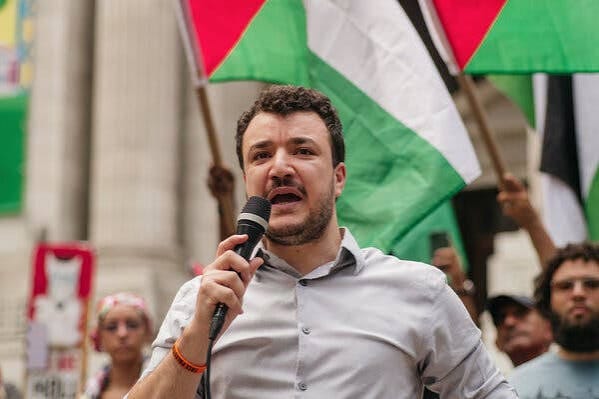
Khalil and other international students prevailed in early litigation over their detention. Judges in bail proceedings uniformly agreed that their detention was based on protected expression and thus violated the First Amendment. However, things were always going to be more difficult for the challengers in immigration courts and on appeal, where deference to the government and issues like jurisdiction might undermine their cases. Indeed, Khalil has thus far not been successful in seeking to enjoin his deportation on First Amendment and other constitutional grounds.
Khalil is refusing to go quietly. He has filed a federal lawsuit alleging that U.S. officials and private parties entered into a conspiracy to deny him civil rights including his right to engage in protected speech. The allegations in that lawsuit would have undoubtedly received greater attention, but for the myriad of scandals and conflicts swirling around the second Trump administration.
I want to highlight the allegations in the lawsuit, which detail just how far the current administration and its supporters have gone to turn protected political speech into alleged support for terrorism. The campaign to punish pro-Palestine speech was premeditated, in the same way early historical fights targeted communist, socialist, and other “radical” speakers.
Whether or not Khalil prevails in his lawsuit, and there will be obstacles there as well, there is plentiful evidence that right wing think tanks, activists, and government officials sought to suppress pro-Palestine political advocacy in the United States. Khalil’s lawsuit, if it survives a motion to dismiss, will shed further light on this effort (as discussed below, we already know a great deal).
Before he won a second term in 2024, President Trump declared that he would “crush” the pro-Palestine movement. The quiet part was already being spoken out loud. Although unwavering support for Israel may be waning on the left, both political parties have long supported Israel. Officials in both parties have sometimes overreached in characterizing pro-Palestine speech as anti-Semitic or as necessarily supporting Hamas. However, a presidential candidate to run on a platform of “crushing” a political movement was something else entirely.
When he made his campaign promise, Trump was reacting, as many candidates and officials were, to the campus protests that followed the October 7, 2023 terrorist attack by Hamas against Israel. Republicans had already made a big show of grilling university presidents over what they viewed as coddling rather than forcibly removing and arresting student protesters and refusing to condemn calls for violence against Israel. There was indeed anti-Semitic and violent rhetoric on some campuses. But criticizing Israel’s response to the attack or generally supporting the Palestinian cause or the Palestinian people is neither anti-Semitic nor unprotected speech.
Nonetheless, it became a standard right wing talking point that campus protesters should be punished for any expression that supported Israel’s declared enemies. But “crushing” a political movement? Was this simply the president, as is his habit, charging up the political rhetoric? And where did the idea to pursue this agenda by targeting international students who engaged in campus activism come from?
We know a lot more about the origins of the administration’s policies regarding pro-Palestinian speech and speakers as a result of a Massachusetts federal district court decision declaring that it violated the First Amendment. In American Association of University Professors v. Rubio, Judge William Young held a bench trial during which he received many exhibits relating to efforts to target and deport international students and heard testimony from several Trump administration officials who worked at the Department of State and the Department of Homeland Security. Judge Young ruled that the plaintiffs had proven that the Trump Administration adopted a plan to target, detain, and deport international students based on their political advocacy and that this policy violated the First Amendment.
The trial record contains many details about how administration officials, including a working group at the White House, originated the ideological deportation policy. Testimony and exhibits also showed that DHS and ICE agents were fed names of international students from two websites that identified individuals who had engaged in pro-Palestine advocacy and activism. DHS and ICE officials used these sources to compile files on several international students, some of whom were then targeted for arrest, visa revocation, and detention. (You may recall images and recordings of masked agents arresting some of the students in or near their homes.)
At the trial, Trump Administration officials provided details about how these cases were processed, and the court received memoranda in which officials pointed to protected expression as grounds for arrest and revocation. In fact, as Judge Young concluded, the officials proceeded with no little or no regard as to whether the speech at issue was protected by the First Amendment. (Judge Young concluded that it was core political speech, and that legally resident aliens are entitled to the protection of the First Amendment).
The public record in AAUP v. Rubio helps Khalil’s case. Many of the same defendants and participants were involved in that case, which addressed essentially the same ideological deportation policy Khalial challenges here. As discussed below, Khalil alleges a conspiracy to deprive him of his civil rights. However, as detailed as the testimony and materials at the trial were, they did not tell the full story of how the administration’s ideological deportation policy originated or who was involved in its framing and implementation. There were some objections based on executive privilege to disclosing Stephen Miller and other officials’ participation. It was sufficient for the plaintiffs’ claims in AAUP that a policy was adopted and implemented in ways that violated the First Amendment. Khalil will need more if he is to succeed.
There is more - much more - to the story of how the executive branch came to target and seek to deport individuals for their political speech. To understand the origins of this policy, we need to step back to the period prior to Trump’s election in November 2024.
The Heritage Foundation, which authored the much-discussed “Project 2025,” developed a lesser-known blueprint for a project known as Project Esther: A National Strategy to Combat Antisemitism. The project came together in the wake of Gaza-related campus protests. Here is the project summary:
America’s virulently anti-Israel, anti-Zionist, and anti-American “pro-Palestinian movement” is part of a global Hamas Support Network (HSN) that is trying to compel the U.S. government to abandon its long-standing support for Israel. Supported by activists and funders dedicated to the destruction of capitalism and democracy, the HSN benefits from the support and training of America’s overseas enemies and seeks to achieve its goals by taking advantage of our open society, corrupting our education system, leveraging the American media, coopting the federal government, and relying on the American Jewish community’s complacency. The National Task Force to Combat Antisemitism intends to enlist all willing and able partners in a coordinated effort to combat the scourge of antisemitism in the United States.
The same movement candidate Trump vowed to “crush” was identified by “Project Esther” as a sinister threat to American national security. Its offense, you’ll note, is “trying to compel the U.S. government to abandon its long-standing support for Israel.” The authors purport to have identified a nefarious “Hamas Support Network” and linked the pro-Palestine movement, and pro-Palestine speech and association, to it.
Billing it as an effort to combat anti-Semitism in the U.S., Project Esther’s authors sought to “organize and guide all willing and able partners in a coordinated effort that employs all available resources to combat the scourge of antisemitism in the United States. Our hope is that this effort will represent an opportunity for public–private partnership when a willing Administration occupies the White House.”
The public bit is important. The report does not acknowledge that speech designed to influence American foreign policy toward Israel is core protected political speech, or that sharing the goals of a terrorist group cannot is not a legitimate basis for punishing lawful speech and association. Hence governments cannot participate in any “partnership” that crosses these lines.
The report relied in part on information compiled by Canary Mission, an organization that identifies and tracks the activities of faculty, protesters, and others who it deems sympathetic to Palestine or Hamas. Although its aims were broad, Project Esther focused in part on denying those associated with the pro-Palestine movement access to educational institutions. It proposed to remove what it viewed as anti-Semitic courses and Hamas-supporting propaganda from curricula and terminate faculty who supported Palestine. It also sought to ensure that groups and individuals associated with the movement were denied access to campuses and suggested their visas be revoked for unspecified “violations.” The plan called for the removal of international students who were identified as pro-Palestine demonstrators.
As for that partnership with a “willing Administration,” after Trump was elected his State Department and Homeland Security Department targeted, arrested, and sought to remove Khalil and other pro-Palestine demonstrators. As reported by The New York Times, Heritage celebrated:
And last year, months into Mr. Trump’s campaign to detain and deport foreign-born protesters, its authors took a victory lap. Mr. Greenway, then a national security director at Heritage, said it was “no coincidence that we called for a series of actions to take place privately and publicly, and they are now happening.”
This is where Khalil’s complaint picks up. He alleges that officials in the Trump Administration, including Secretary of State Rubio, Acting Attorney General Todd Blanche, and Stephen Miller, conspired with employees of the Heritage Foundation and two private organizations (Canary Mission and Betar) that targeted campus protesters, to violate his First Amendment rights. He seeks monetary damages as well as declaratory and injunctive relief pursuant to an 1871 law enacted to address the atrocities of the Ku Klux Klan.
The complaint is 130 pages long. It contains a detailed “timeline” of the alleged conspiracy. The complaint goes into great detail concerning the “longstanding hostility” of the defendants to pro-Palestine protesters and the Pro-Palestine movement in the U.S., the social and political climate following the Hamas attack in Israel, and the subsequent protesters on U.S. campuses. It relies on candidate Trump’s vow to “crush” the pro-Palestine movement, the content of Heritage’s “Project Esther” report, and Heritage’s celebration of its “wins” during the early days of the second Trump term. The complaint also details how the plan was implemented, including the adoption of the Trump Administration’s ideological deportation policy and the arrests of Khalil and other international student activists pursuant to that policy.
In addition to the broad conspiracy, Khalil alleges that “gross procedural irregularities” in his arrest and immigration proceedings constitute the continuation of the conspiracy. And he alleges that the defendants have “ignored, tolerated, or embraced bona fide antisemitism,” which demonstrates their attacks on Palestinian advocacy are pretextual.
The complaint describes a blueprint for suppressing political speech and activism by high-level government officials and private conspirators. It is a chilling document, in the sense that it shows how a government and its enablers have targeted a viewpoint because it might convince audiences to take a closer look at Israel’s actions in Gaza. Remarkably, neither the government nor private defendants have been at all reticent about supporting this agenda - indeed, if anything, they seem proud of it. It is astonishing just how much the complaint relies on direct quotations from Project Esther.
Regarding the conspiracy, the complaint alleges:
“Soon after the Blueprint was published, and the Trump Administration was elected into office, the Blueprint’s stated goal of recruiting a private “coalition” was accomplished when the Betar and Canary Mission Defendants began their work to effectuate the conspiracy, sometime between late 2024 and January 2025.”
“Upon information and belief, pursuant to the Blueprint, in or around November 2024, the Betar and Canary Mission Defendants began surveilling and pre-selecting Palestinians and their supporters as targets of the conspiracy with the goal of beginning the execution of the “public-private partnership,” and then communicated directly with the Federal Defendants who effectuated the arrest, detention, and attempted deportation of those pre-selected targets.”
Thus, the public-private “coalition” Project Esther referred to had come together. Betar and Canary Mission supplied nearly all of the information DHS and ICE relied on to generate action reports that led to the revocation of student visas. Indeed, Betar identified 8 out of the 9 international students the administration sought to deport. Betar also shared its work with Heritage for “Project Esther,” and publicly announced this cooperation. Canary Mission was also involved with both Project Esther and the federal government’s efforts to deport international student activists. Other than the Heritage angle, this information was adduced at the AAUP trial.
As for the federal defendants, as noted candidate Trump was not shy about his plans if elected. Sure enough, one of his first executive orders directed agencies to seek to deport individuals who “espouse hateful ideology” - including those who “advocate for, aid, or support designated foreign terrorists and other threats to our national security” and those who “bear hostile attitudes toward [U.S.] citizens, culture, government, institutions, or founding principles.” A second executive order stated that the Trump Administration would target for investigation “post-October 7, 2023, campus anti-Semitism.” As Khalil’s complaint alleges, the executive orders “parrot and cement the strategy described in the Blueprint, by falsely casting activism in support of Palestinian rights as antisemitic and terroristic so as to justify retaliatory arrests and deportations on precisely those grounds.”
The lawsuit alleges that
senior federal officials, including Defendants Miller and Armstrong, as well as representatives from DOS and DHS . . . met 12-20 times to plan the implementation of the conspiracy to target individuals pre-selected by the Private Defendants for arrest, imprisonment, and deportation. In these meetings, they discussed, among other things, a process to deport Palestinians and/or their supporters.
The complaint relies on the trial record in AAUP for this and other allegations relating to planning and executing the alleged conspiracy.
Khalil alleges that the co-conspirators’ plan consisted of
(i) identifying and targeting non-citizen students or academics who are Palestinian and/or support Palestinian rights; (ii) falsely accusing them of antisemitism or supporting terrorism; (iii) revoking their visas or finding them removable using sections of the INA never before deployed against constitutionally protected speech; (iv) arresting or attempting to arrest them by often-masked agents of the Federal Defendants, lacking judicial and administrative warrants; (v) hurrying to transport arrested individuals into detention centers over 1,000 miles from their homes, in an effort to evade the jurisdiction of federal courts that Federal Defendants believed would most closely scrutinize their unprecedented action; (vi) openly seeking to deport them on the basis of their support for Palestinian rights; and (vii) touting their success at repressing support for Palestinian rights following their arrest and detention. And, at least in Mr. Khalil’s case, engaging in procedural irregularities in the charging documents and even manipulating the adjudication of his immigration case and subjecting him to a sham immigration process, to ensure the conspiracy’s success—Mr. Khalil’s expulsion from the United States—despite the blatant constitutional violations.
The complaint contains excerpts from private defendants’ social media and other communications in which they boast about their role in achieving deportation orders and statements by Rubio, Miller and other officials celebrating the results.
In sum, the complaint is a detailed and chilling account of how a blueprint to target and sanction speakers for protected speech and association came to be adopted and enforced by government officials at the highest level. Anyone concerned about the preservation of First Amendment rights should be deeply disturbed by what is alread in the public record as well as what is alleged in Khalil’s complaint.
And on the “it can’t happen here” front, while the effort here applied to foreign nationals lawfully in the United States, the Trump Administration has designated “Antifa,” an alleged domestic organization, a “domestic terrorist organization” and criticized ideas it associates with the political left as insufficiently patriotic. And it is just getting revved up about the scourge of Democratic Socialism, which it has already falsely equated with “Communism.”
Will Khalil prevail? The question assumes, of course, that he will not be deported prior to any disposition. Indeed, he may have filed the lawsuit in part to convince the courts to allow him to stay. We shall see how the immigration matter plays out.
I cannot say there is a clear analog for Khalil’s allegations from which to handicap the result. Perhaps the closest analogy might be Red Scare era cases, but as far as I know they did not allege such a wide-ranging public-private conspiracy.
The trial record in AAUP is critically important in the sense that it allows Khalil’s lawyers to present detailed aspects of the alleged conspiracy based on the findings of the trial court rather than merely alleging them based on information and belief. Still, there is much to do in terms of connecting some of the defendants, in particular Miller, Blanche, and Rubio, to the alleged conspiracy - and, more importantly, proving that they conspired to violate Khalil’s rights rather than engaged in lawful enforcement of federal immigration laws. There will likely be some evidentiary obstacles, including claims of executive privilege. And government officials may try to claim some form of immunity from this particular kind of civil lawsuit.
Ultimately, I concur with these comments by Stephen Vladeck, a law professor at Georgetown University Law Center, who weighed in for The New York Times:
The government’s behavior in Khalil’s case stinks to high heaven. . . . Whether that opens the door to this kind of broad theory of civil liability is another question altogether. Courts will be worried about what kind of precedent it would set unless there are clear reasons Khalil’s case is not just factually unique but legally unique.”
It may well be that this case is factually and legally unique. Still, I agree that courts will be concerned that allowing the case to move forward may interfere with core executive functions relating to enforcement of immigration laws and national security.
Regardless, Khalil’s complaint, like the trial record in AAUP, has provided some transparency regarding how those in power and their enablers have run roughshod over First Amendment rights. In the final analysis, the remedy for this violation may have to come at the ballot box.
No posts
Comments
Nothing yet. Say the first thing.
Sign in to join the conversation.