
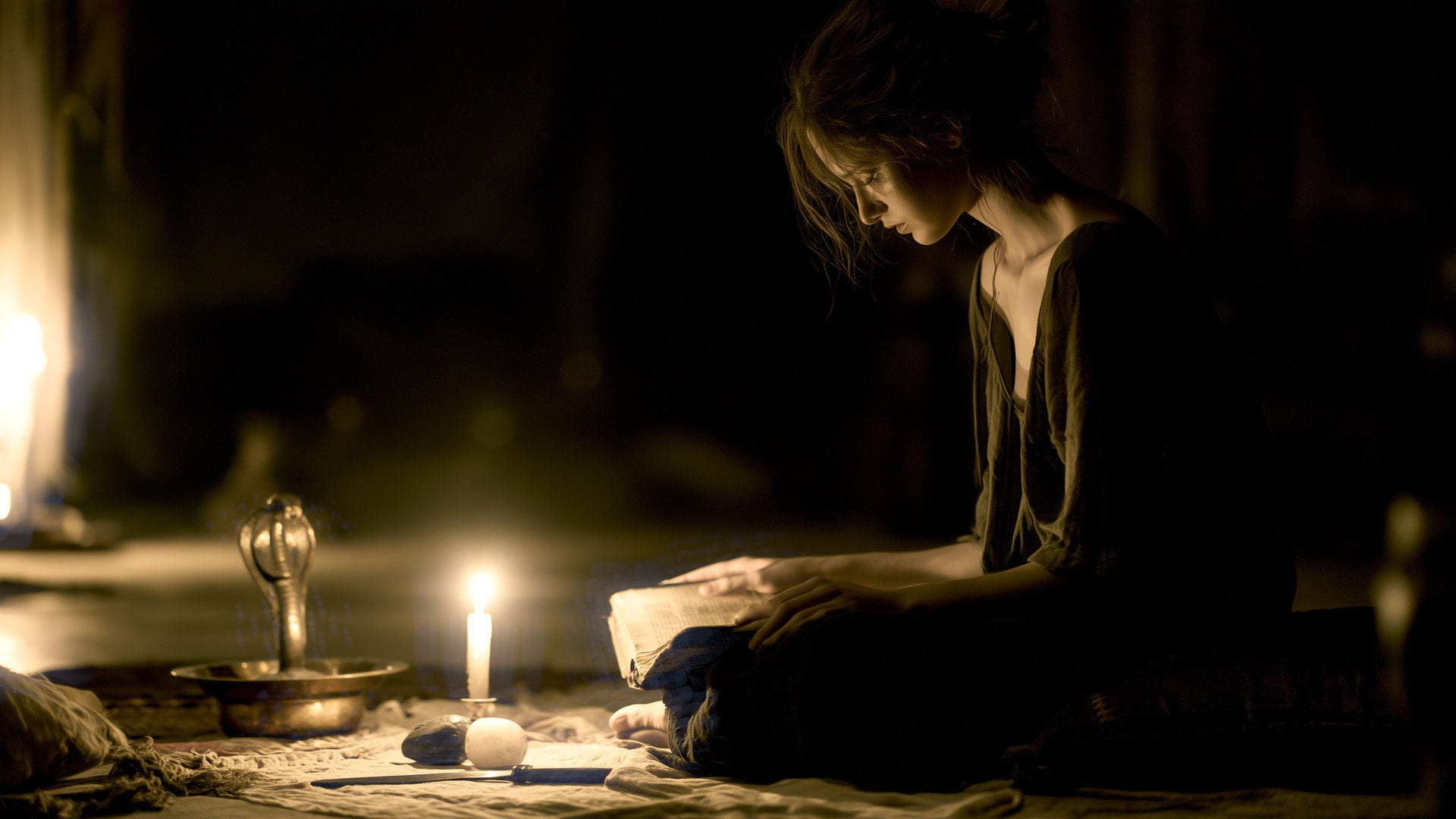
A note on this series: This is Part Eight, the final instalment of an eight-part series drawn from my developing book, Dark Tarot: Unleashing the Power of the Tarot for Dark Magick and Self-Discovery. Across the series, I have been exploring the Dark Tarot as a practical system of magical divination, moving beyond fortune-telling into the operative formula of Sigil, Spell and Sorcery.
The previous articles have taken us from the question that opens the gate, through the three-card operation, into Sigil as magical body, Spell as voice, Sorcery as ritual action, and finally through trance, active imagination and the forbidden images encountered when the cards become living psychic doorways.
Now those experiences require somewhere to live.
That place is the grimoire.
A single reading may startle you. A year of readings will begin to teach you. A lifetime of magical record-keeping may reveal the pattern of the soul.
There is a peculiar danger in a successful Tarot reading. It can feel complete.
Something startling appears. The cards fall together with uncanny precision. A hidden problem suddenly acquires a name. A synchronicity follows. We close the deck with the satisfying sense that something important has occurred.
Then three weeks later, much of it has disappeared.
The exact question is forgotten. The strange object encountered during trance becomes vague. We remember that one card seemed particularly important but cannot quite reconstruct why. The dream that followed has been reduced to a general impression. The ritual was performed, something happened afterwards, but we never returned to ask whether the two were actually related.
Experience without record becomes memory, and memory is an unreliable magician. The Dark Tarot therefore requires more than readings. It requires a magical record.
The journal is not an administrative accessory to the practice. It is one of its principal instruments.
Through it, isolated experiences become sequences. Sequences become recurrences. Recurrences become correspondences. And correspondences, tested against experience over time, become part of the practitioner’s personal magical language.
This is the long work of the Dark Tarot.
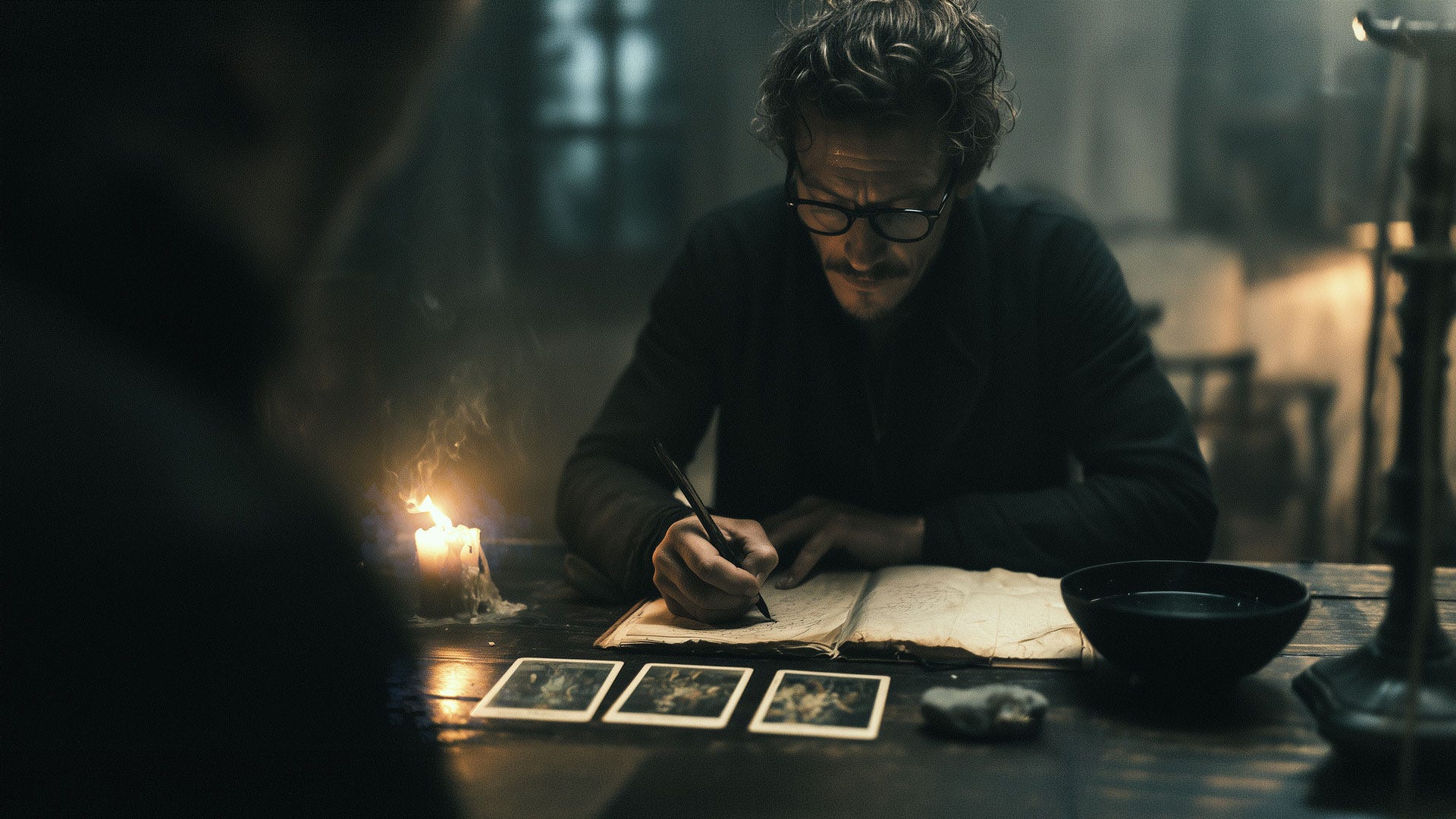
At the beginning of Tarot study, we naturally ask:
What does this card mean?
That question is necessary. We learn the traditional symbolism. We study the imagery. We discover the elemental, planetary and zodiacal correspondences. We read what other practitioners have seen in the card.
Eventually, however, another question becomes more important:
What does this card do when it comes for me?
This is a very different question.
Suppose The Vampyre (The High Priestess) appears repeatedly across several operations. The traditional correspondence to the Moon remains useful. The Dark Tarot image of the crypt, coffin, trance and forbidden knowledge provides an initiatory doorway.
But your journal may reveal something further. Perhaps whenever The Vampyre appears, keys follow. The first time, a key is handed to you during trance. Months later, the card appears, and you dream of a locked library. A third appearance coincides with discovering an old diary.
During another working, the card produces no crypt at all but a hospital corridor and a locked medicine cupboard.
Eventually, the key becomes part of your lived correspondence to The Vampyre.
No book could have given you that correspondence in advance because it belongs to the dialogue between the archetypal card and your own psychic history.
The meaning has become relationship.
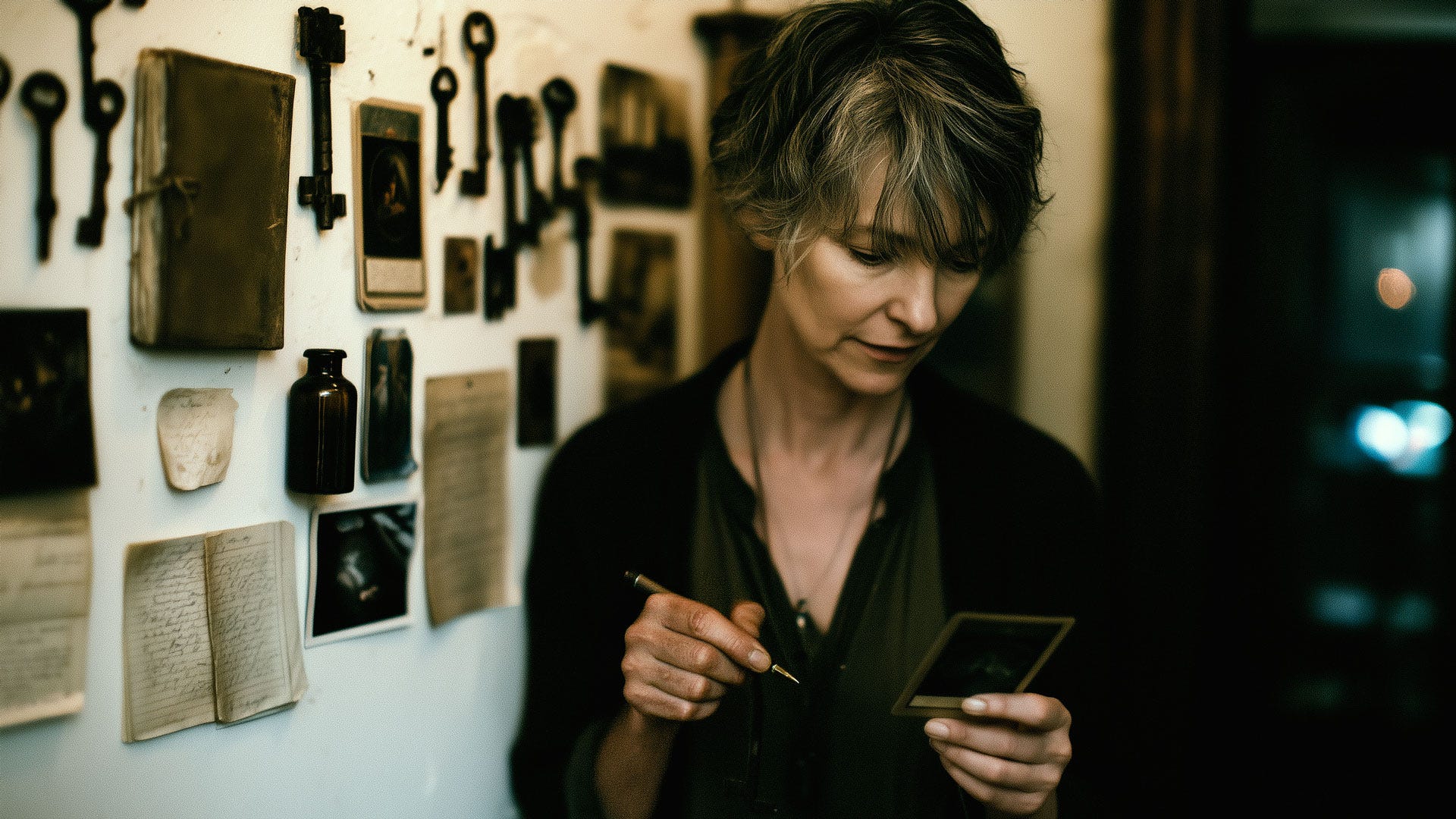
Earlier in this series I discussed traditional Tables of Correspondence. They remain enormously useful. Western ceremonial magick has developed sophisticated networks linking Tarot cards with planets, signs, elements, Hebrew letters, colours, perfumes, plants, stones, magical weapons, sounds and ritual operations.
My own early Dark Tarot tables drew upon this inheritance. But a correspondence table and a grimoire are not quite the same thing.
A table says:
This card corresponds to this planet, this colour, this letter, this sound.
A grimoire says:
This is what happened when I invoked it.
This is what appeared in the dream.
This is the object I was given.
This is the sound I heard.
This is the ritual I constructed.
This is what I thought would happen.
This is what actually happened.
And this is what I understood six months later.
The first is a map inherited from others.
The second contains your footprints.
The Dark Tarot needs both. The inherited map provides orientation. The footprints prove that somebody has actually walked there.
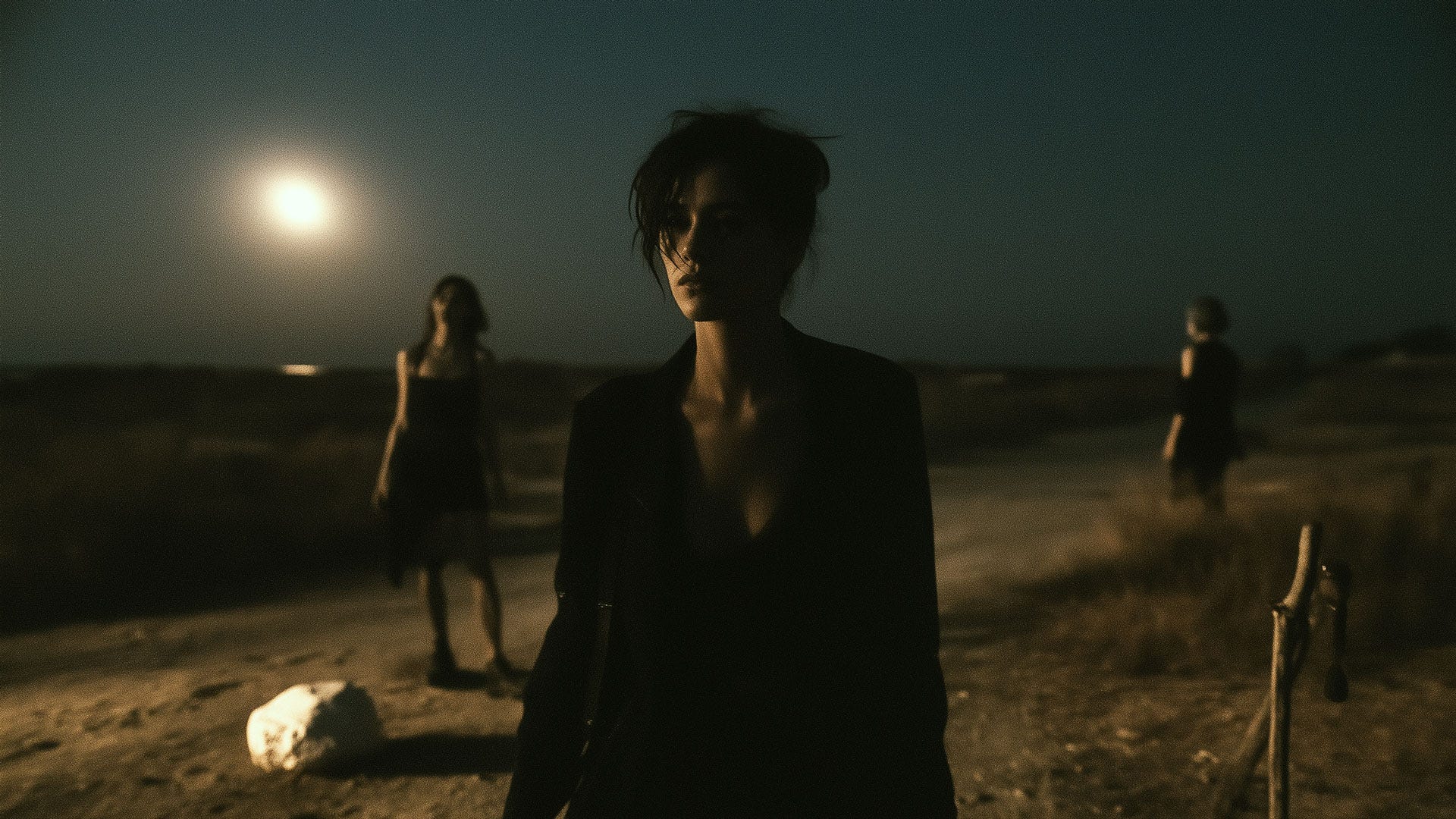
One of the ideas present in the earliest Dark Tarot material was that every journey adds something to the card.
A Dark Tarot image was never intended to become a replacement set of rigid definitions. The original images were deliberately compact. They created psychic atmosphere: enough structure to provide an entrance, but enough darkness to allow something unexpected to occur. Repeated trance journeys then added further symbols, experiences and correspondences.
This remains fundamental to the method.
You do not “finish” The Lunatic (The Fool) because you have performed one trance journey.
You return.
Five years later, the wasteland may have changed.
The solitary road may lead somewhere it did not lead before.
The dreamer may have awakened.
Or perhaps you discover that you are now the figure being watched by another person wandering the path.
Archetypal images possess extraordinary persistence precisely because they are not exhausted by a single interpretation. Jung encountered something similar in his own relationship with active imagination. The image develops through dialogue. We return to it, and because we have changed, the relationship changes.
The grimoire records these returns.
A magical record becomes useless if it contains only successes.
This is particularly important in occult practice because hindsight is seductive. Once something happens, the mind is remarkably skilled at rearranging memory so that the result looks inevitable.
The journal should therefore contain failures, confusions, dead ends and embarrassments.
Record the spell that produced nothing.
Record the trance in which you saw nothing.
Record the sigil that seemed perfect and later felt completely wrong.
Record the prediction you retrospectively tried to smuggle into a system that was never supposed to be fortune-telling.
Record the ritual that became so aesthetically elaborate that you lost sight of what you were actually trying to accomplish.
Record the coincidence that looked numinous on Tuesday and completely ordinary by Friday.
This is not negativity. It is magical discipline. A grimoire containing only marvels becomes mythology about oneself. A grimoire containing uncertainty becomes research. And research is exactly what the Dark Tarot requires.
Some of the most valuable entries will make very little sense when they are first written. A red shoe. Three frogs. A railway station underground. Someone continually saying Tuesday. A glass of milk left on a grave. A childhood song sung backward.
Do not throw these things away because they fail to correspond to anything in Liber 777. Record them.
The image may belong only to that particular operation. Or it may return years later and reveal itself as part of a larger pattern. The grimoire allows the unconscious something the rational mind rarely grants it: Time!
Not everything must be interpreted immediately.
The Dark Tarot is concerned with what remains concealed. It would be contradictory to demand that every hidden thing explain itself the moment it appears.
Ethical reflection should be written into the magical record, not left as an assumed virtue outside it.
For every significant working, ask:
What did I want?
Why did I want it?
Who else could have been affected?
What boundaries did I establish?
What did I refuse to do?
What responsibility followed if the operation succeeded?
Did the result make me more conscious, or did it simply gratify the original desire?
Would I perform the same working again?
These questions matter because magical practice can easily create narratives of causation around coincidence.
If someone leaves our life after a banishing operation, what exactly are we claiming happened?
If money arrives after a prosperity spell, what ordinary causes also contributed?
If a relationship changes after an invocation, what conversation, decision or behaviour played a role?
The purpose of these questions is not to explain away magick. It is to protect it from vanity.
Adjustment (Justice) belongs profoundly to the grimoire because every magical record ultimately becomes an account of consequence. The scales ask not only whether the operation worked, but what we became through performing it.
Some Dark Tarot operations produce immediate change. Others apparently produce nothing. Still others begin unfolding so slowly that the relationship between ritual and outcome becomes visible only in retrospect.
This is where Time (The Wheel of Fortune) enters the grimoire.
An operation performed in August may begin making sense in November.
A recurring card may disappear for years and then return when a similar life pattern emerges at another level.
A dream image may acquire significance only after meeting someone who carries it.
The journal allows the Witch to notice cycles that ordinary memory cannot hold.
It also protects against premature certainty.
Write what happened.
Date it.
Then return later.
A useful practice is to revisit major operations after:
one week, one month, three months, six months and one year.
The meaning may change dramatically. That change belongs in the grimoire too.
There is another way of understanding this practice.
The grimoire is not merely a record of what the Tarot did. It is a record of the person who encountered it. Across pages and pages, another narrative gradually becomes visible.
Certain questions keep returning.
Certain fears repeatedly disguise themselves.
Certain cards appear around particular thresholds.
Certain dreams accompany periods of initiation.
Some symbols grow stronger.
Others disappear.
One kind of sorcery repeatedly succeeds while another produces frustration.
The practitioner begins to see not simply isolated magical operations, but the contours of a life.
In this sense, the Dark Tarot journal becomes a record of soul-making.
The cards provide mirrors, doors and ordeals, but the continuing subject of the grimoire is the developing relationship between consciousness and destiny.
This is why the journal eventually resembles something closer to a personal Book of Shadows than a collection of Tarot readings.
It contains rites, dreams, sigils, voices, failures, initiations, correspondences and encounters with the numinous.
It records not what the Witch believes.
It records what the Witch has done.
Before moving into the final practicum, I want to gather the twenty-two original Dark Tarot images together in one place.
These are the abbreviated visionary images from which my own Dark Tarot work developed. They should not be treated as definitive descriptions. They are starting images: atmospheres through which the traditional trumps may be approached differently and used as doorways into trance.
The work begins when these images encounter your own unconscious.
A lonely deserted path lit by moonlight, the wastelands. A lone man walks staring at the Moon. A dreamer, sleepwalking.
Within a ritual chamber a Sorcerer prepares elemental and familiar spirits for their night errands. Sigils of desire. Projections.
An open coffin in a crypt or sanctuary in which lies a female vampyre. Trance. Astral states of consciousness. Forbidden knowledge.
A Witch or Mambo within her ritual chamber, preparing to open forces upon the physical plane. Fetishes.
The hidden forces of the dragon tracks, both within and without.
A priest making preparations for a funereal rite. A dark figure hidden by the cowl of his robe. Withholding knowledge.
An Arabian boudoir, heavy incense burning. Within, two naked people sit staring into each other’s eyes. Around them lie the naked bodies of unconscious individuals.
Yogic and Tantra practices. Comets and meteors. A rite of initiation by tribal ordeal.
Invocation of destiny or karmic forces. Ancient Egyptian rites of passage.
A silent darkened room in which is seated a silhouetted figure. A powerful force emanating from beyond. Solo sexual sorcery. Manual stirring of ojas in a partner.
A dark spiralling goddess from whom emanates a vortex of irresistible power. Development of the chakras. Awakening the Kalas.
A crescent Moon hanging low in the western night sky, tinged red with the ochre of desert dust. An energetic red-haired woman riding her male partner.
The Spider Sorcerer, whose victim may be killed, saved for later use, interacted with, played with or freed. Secret venoms and fetishes.
A séance circle in which a spirit appears at the centre. An abbey ruin and graveyard whose entrance is a half-open gate.
A Magus sensually massaging a priestess. Within the shrine, dew drops appear upon the altar. An elixir.
A Witches’ Sabbat and invocation of the Beast. Dark and unseen forces erupting. Chaos magick and sexual sorcery.
Dionysian excess. Shattering of forms. Acts of blasphemy.
A star-strewn night sky. A dark bedroom in which lies a naked Black woman. A black hole in space: absorption of all light and energy.
Sorcerers assume animalistic form and perform acts of lunar sorcery. The Mass of Amrit. Evocation of forgotten powers.
An eclipse. A black sun. A neutron star. The desert of Set at night.
Dark sorcery overthrowing the status quo: the forces of change. Evocation of the Dark Self. Cults of the Shadow.
The domain of the living dead. The eternal myth. Never Neverland. A dark universe in which the Dreamer awakens.
A Note about using Liber 777 and traditional Qabalistic values
In the original system, the Geomancer (the Emperor) and the Yoni (the Star) carry the Thelemic transposition of the corresponding letters associated with the Emperor and Star. The argument for these changes in their values comes from Thelema’s Liber AL vel Legis (The Book of the Law) chapter I: verse 57, where it says: “All these old letters of my Book are aright; but Tzaddi is not the Star.” Crowley interpreted this as saying that Tzaddi must not be attributed to the Star; in his solution, “Tzaddi is the letter of the Emperor … and Heh is the Star.” In the Dark Tarot book, I present them with this same correspondence.
The Other Change
Crowley exchanged the traditional positions of Justice and Strength so that the cards’ numbers would match their unmistakable astrological and Qabalistic symbols:
Atu VIII — Adjustment: Libra, the scales. (Adjustment in the Dark Tarot.)
Atu XI — Lust: Leo, the lion. (Enchantress in the Dark Tarot.)
In many traditional and Golden Dawn-based decks, those positions are reversed: Strength is VIII and Justice is XI. Crowley regarded that arrangement as an inconsistency because the imagery clearly identifies Justice with Libra and Strength with Leo. In Crowley’s The Book of Thoth he describes this as the “kink” that requires the cards to be “counterchanged” if their astrological attributions are to remain natural.
The Astrological Rationale
The key point is that Crowley wanted the Major Arcana to follow the zodiac in the proper sequence. These two trumps correspond to paths on the Tree of Life are:
Adjustment is the path of Lamed, traditionally associated with Libra.
Lust is the path of Teth, traditionally associated with Leo.
Crowley’s change allows these Hebrew letters and zodiacal correspondences to agree with the cards’ images rather than forcing the images to fit an inherited numbering scheme.
N.B. My thanks to Marco Visconti, who generously shared his thoughts when I raised a question about Liber AL I:57. His view of Crowley’s solution was that it is an elegant and serviceable symbolic map—without claiming it as the single objectively correct arrangement—and helped clarify my own approach to the correspondences used in the Dark Tarot.
This distinction deserves emphasis at the end of the series.
The list above is my Dark Tarot at its point of origin. It should not simply become yours. In the book I go into much greater detail on these experiences that they are drawn from; I give them here as a visualisation stepping off-point. I expressly use these so that I am not entering a predictable Tarot doorway.
If every practitioner enters The Lunatic (The Fool) and reports the same wasteland, the same path and the same dreamer, then something has gone wrong. The image has become doctrine rather than doorway.
You may enter The Lunatic and discover a railway platform at midnight.
You may enter The Witch (The Empress) and find a suburban kitchen.
You may enter The Necromancer (Death) and encounter no graveyard at all, but an unanswered telephone ringing in an empty house.
These are not errors. They are the beginning of your correspondences.
The purpose of the original images is to disturb the familiar Tarot sufficiently that another field becomes accessible. Once the doorway opens, you must discover the terrain for yourself.
Eventually the crucial question is no longer:
What does this card mean?
It becomes:
What does this card do when it comes for me?
That is the question from which the Dark Tarot grimoire grows.
An Endnote
Dark Tarot: Unleashing the Power of the Tarot for Dark Magick and Self-Discovery is my current book-in-development, drawn from decades of work with Tarot, Witchcraft, ritual magick, trance practice and the NOX current.
This eight-part series has offered a first public exploration of the Dark Tarot as a practical system of magical divination. Across the series we have moved from the Question that opens the gate into the threefold formula of Sigil, Spell and Sorcery, then into trance, active imagination, dream incubation and the personal images that emerge when the cards become living psychic doorways.
This final article brings those strands together in the practice that allows the work to deepen across years rather than disappear after individual readings: the Dark Tarot grimoire.
Paid subscribers can continue below with a complete Dark Tarot magical-record template, a twenty-two-card correspondence-building practice, and a simple closing rite for beginning their own grimoire.
Comments
Nothing yet. Say the first thing.
Sign in to join the conversation.