
I have a pact with myself that I don’t write the newsletter if I have to go looking for something to have a lukewarm take about. Last week that’s how I felt. I didn’t want to talk about the horrible aftermath of a man becoming a main character in social media, I didn’t want to go on about Trump again, and so on. I think there are some things on my mind this week that I feel ready to write about, but let’s start with food.
I’ve always found categorical arguments about food to be more annoying than the usual typological arguments (which are definitionally annoying to begin with). You know the kind of thing I mean—the person who ambushes you and says “you know what’s a fruit? tomato is a fruit” or “rhubarb is a vegetable!”. Don’t cross the semantic streams, kids: food words are food words, botany words are botany words. Fruity tastes and vegetal tastes are what sort one food from another. Though then within each category, there are big differences in how different edible plant products actually eat and cook—an apple, a raspberry and a lemon might be “fruits” in my head but they aren’t even remotely interchangeable as things to eat.
“Nuts” are another category where as a cook I’m not terribly invested in their biological differences. Almonds, hazelnuts, and peanuts live in a very related culinary space for me even though in botantical terms they are different. I would put in a few other seeds as well—pumpkin seeds and sunflower seeds. I’d call a soybean sort-of-a-nut but I wouldn’t call any other “bean” a nut. (“Nut” is also a semantically live word in general in English, when you consider the variety of other things it can mean—testicles, insanity or mania, a difficult problem, a dominant hand in poker, a derisive interjection.)
On the other hand, being a proper Pollan-reading omnivore who at least pays some heed to how the food you eat got to market and from there into your pantry means you have to care a bit about how particular foods are cultivated and what they are in biological terms. Just because something isn’t meat doesn’t mean that it’s got a halo around it at all times.
Are almonds extraordinary water hogs, for example? Well, maybe more than some plants grown in the Central Valley of California, but almonds are pretty well-adapted to a Mediterranean-style climate. (Which, mind you, is now in short supply in the actual Mediterranean.) Arguably almonds could be grown in more places in smaller amounts on a more sustainable basis. The almond isn’t essential to global diets, but it’s been eaten by humans for an extraordinarily long time, and it is very likely a plant that foragers semi-domesticated in the long gestation of sedentary agriculture by favoring plants producing the sweet almond over the bitter. (Regarding bitter almonds, when I get to the letter P I am going to write about poison, which has a very deep and interesting relationship to food.) The flavor of almond—often just a small amount—is nested deep in many Old World cuisines.
Or how about peanuts? If you’re my age, you almost certainly were introduced to George Washington Carver in elementary and middle school, appropriately so, given his genius as an agronomist and his importance in 20th Century American history. (Though Carver’s prominence in post-civil rights secondary education was also a function of him being a ‘safe’ example of Black excellence.) One of the things that was a staple part of the lesson on Carver was that crop rotations that included peanuts in the U.S. South would restore soil health depleted by heavy cotton cultivation while also providing Southerners, especially Black, farmers in particular more food security in their own households. The reasons why peanuts contribute to soil health are actually pretty complex, and in the longer run of things, peanut cultivation in the United States became more intensive than rotational and centered on the state of Georgia. But the peanut overall is the opposite of almonds historically. It comes originally from the New World and took much longer than many other crops from the Americas to really settle into global diets. It only got to its present place of relative prominence in various cuisines quite late and as part of a process of government-sponsored advocacy. (Carver wasn’t the only proponent of subsidizing peanut cultivation—British imperial agronomists pushed for groundnut, aka peanut, cultivation in several regions of Africa in the 1930s and 1940s.)
Understanding the agriculture of nuts is also one way to understand that there’s a couple of very different things happening around nuts in relationship to food. For one, if you go with my personal understanding of things like “soybeans” and “sunflower seeds” as sort-of-nuts, edible oils are more important consumables than the nuts themselves. But actually, it varies by quite a bit depending on the nut itself. About half of the peanuts grown are made into peanut oil and half are eaten otherwise. For sunflower seeds, it’s mostly oil rather than snacking. For walnuts, only a small percentage is made into oil.
But there are all sorts of other kinds of processing. There are nut butters, where peanut is king. There are nuts sold in shells where it’s not a big deal to shell them (pistachios) and nuts where buying them in shells feels like an exercise in masochism (walnuts). There are nuts that are made into flours and dairy “milk” substitutes. (Or their “milk” is just used for what it is, e.g., coconut milk and cream.)
So talking about nuts from a cook’s perspective is a big conversation, bigger in culinary scope by far than my column on fish. Maybe it’s best approached in those terms: the routine nut, the favorite nut that I prize above others, the nut I absolutely loathe?
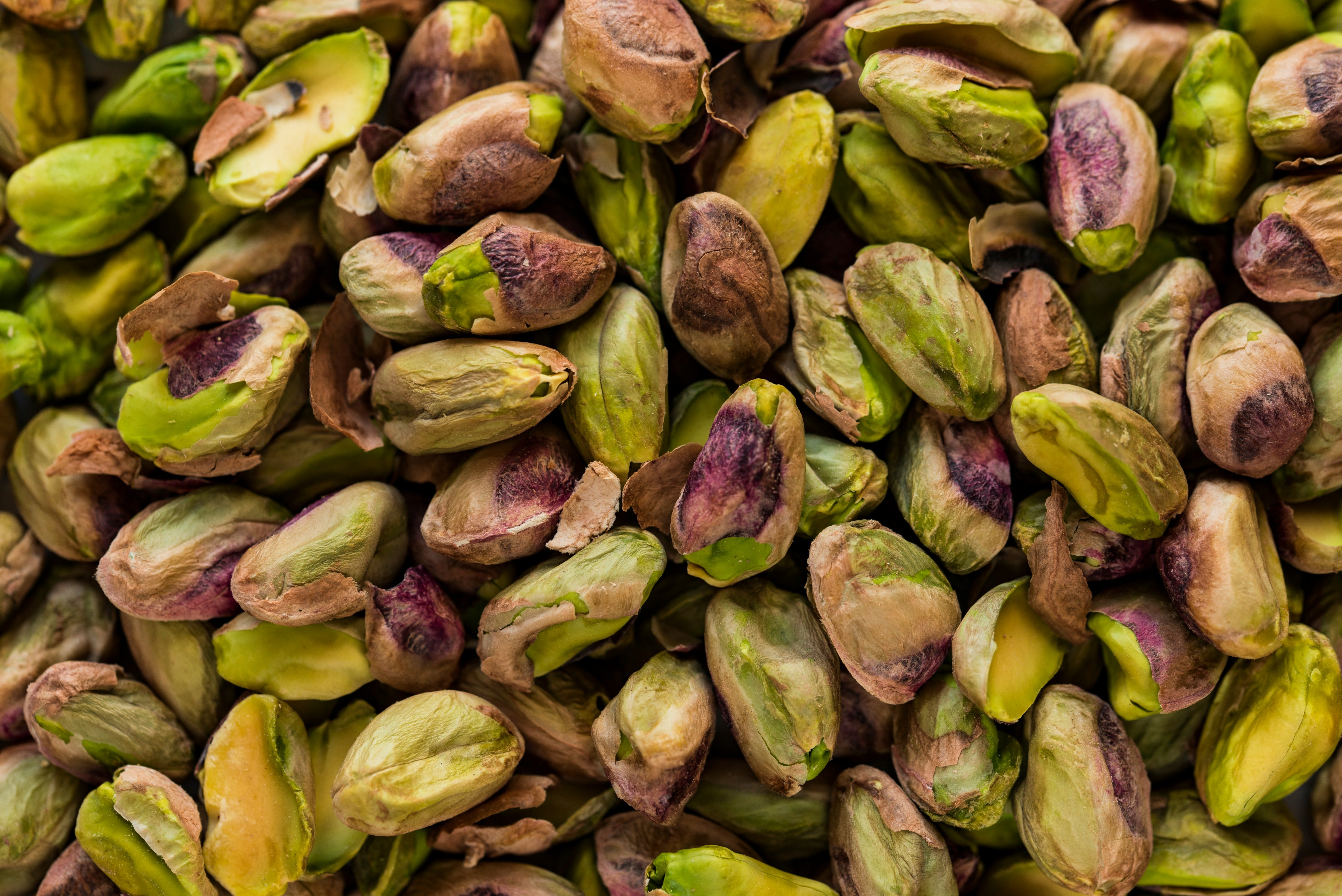
The routine nut I think has to be peanuts. When I deep-fry, I prefer peanut oil to canola or safflower, both for its high smoke point and for how it interacts with food. (There’s something subtle about the taste of canola aka rapeseed that I particularly don’t like, despite its reputation as a neutral cooking oil.) Peanut butter is not only the only nut butter I like to spread on toast or dip things into, it’s central to some of the West African stews I like best and to various sauces and marinades in Southeast Asian cuisines. I love tossing roasted peanuts in a salad or into a bowl of cold sesame noodles. They’re one of my favorite snacking nuts and there’s a couple of different ways to make them good as a snack or street food. If I have a jar of peanuts in the pantry, I’m almost certain to use it within a month or less in various ways.
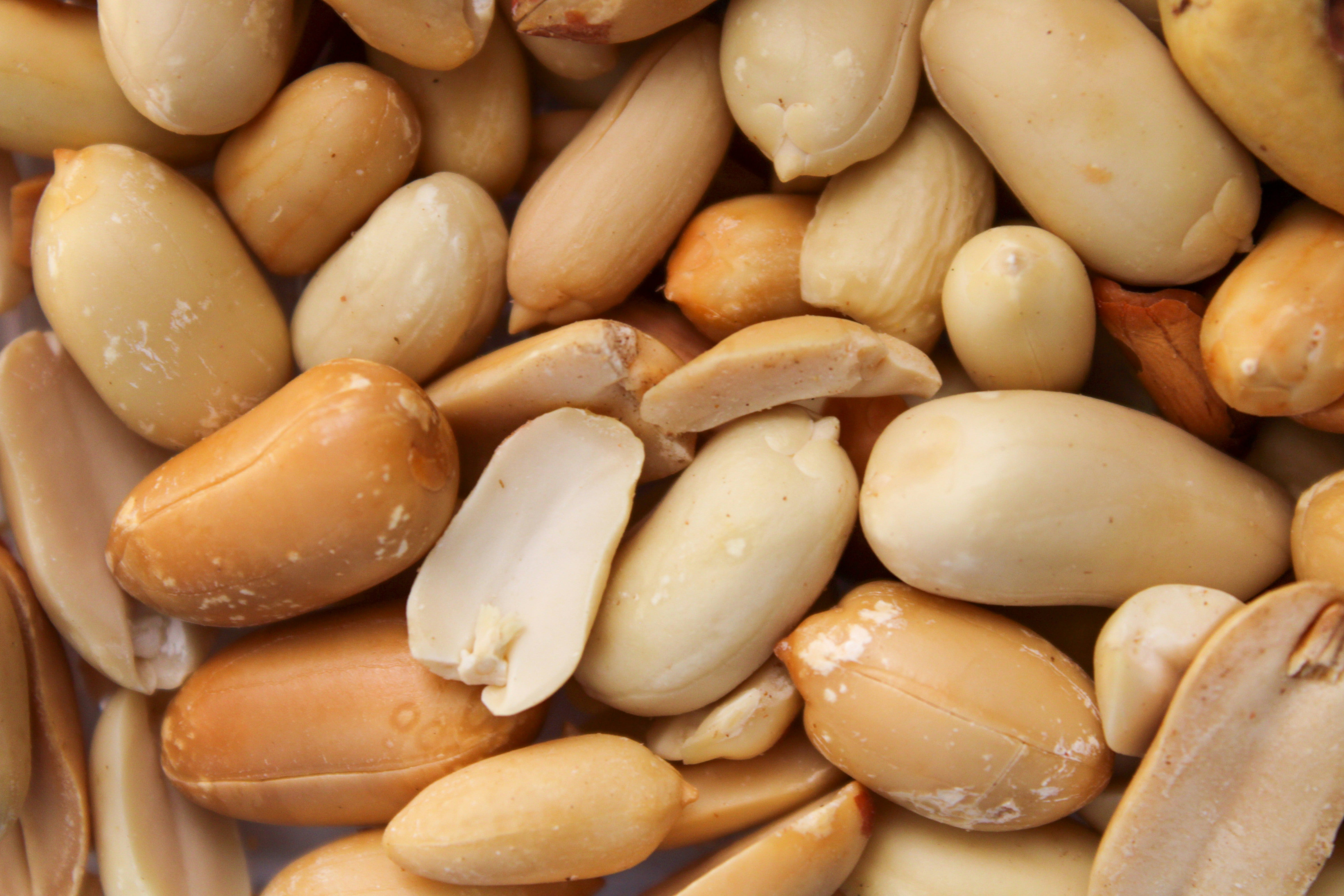
My favorite, however, are pistachios. Unlike peanuts, they aren’t really the defining cornerstone of many recipes but they’re the special twist in a great many. They’re the ultimate switch-hitting nut that works as well in sweet foods as it does savory ones. They make an impact whole, rough-chopped, and fine ground. The color of pistachios is a defining color, a green that belongs to them and to nothing else.
Swapping out the pine nuts for pistachios in pesto creates a distinctive end outcome. I just recently tried putting finely ground pistachios on several bagels in a batch I was making and it worked wonderfully. They work famously well in salads and pastas. And not only are they tasty in a variety of dessert preparations (especially cakes and muffins) but the green color is triumphant in a lot of desserts. They’re great in granola, and central to the unjustly trendy Dubai chocolate and all its bastard offspring. About the only bad pistachio preparation I’ve ever had was a vile gloppy liqueur and that was mostly because it was too sweet. There are other pistachio liqueurs that are lovely and restrained.
The nuts I really can’t stand are macadamias and hazelnuts. I find their flavor overwhelmingly dominant—they overwhelm anything they’re used with. I just stop dead if I bite into a cookie or chocolate or mixed nuts if either of these nuts are in play. I can’t stand Nutella, I’d rather eat Marmite. I can imagine that there might be a way to make something with hazelnut that would blend that taste into something vaguely palatable, but the macadamia is never going to share the stage with anything, as far as I can imagine.
Cashews are probably #3 on my preference list. I’m particularly fond of adding them to stir-fries and similar dishes. In between, I’m well-disposed to using walnuts and almonds when a recipe calls for it, but in both cases, I think a fine touch is required, especially with walnuts. Pecans seem pretty unidimensional to me but a great pecan pie is a wondrous thing. Chestnuts are 100% seasonal for me—they go in a stuffing and that’s about it. I think with pine nuts I may actually have some kind of genetic taste-blindness—the only thing I taste with them generally is a metallic ‘flavor’ that I mentally associate with aluminum foil and a numbing sensation, a bit as if I’d eaten Szechuan peppercorns. Coconuts are so far out of the comparison for me that I think of them as their own thing, not as a relational ingredient where I might use coconut or instead use some other nut. I can barely even remember eating a brazil nut, so I have no opinion there. (I get my selenium from animal protein.)
As a food category, not a botanical one, nuts are in a kind of bracket in my own mind and taste buds. When I take stock of them as I do here, I realize that I value a few nuts a great deal. But I don’t think about nuts a lot—I don’t crave them for themselves, I don’t set out to cook a nut dish or make a thematically nutty meal. I can go for a long time without longing for nuts, but when my favored nuts cross my path, I’m glad to see them.
Image credit: Photo by Joanna Kosinska on Unsplash
Image credit: Photo by Abril Chavira on Unsplash
No posts
Comments
Nothing yet. Say the first thing.
Sign in to join the conversation.