
In many of my food-related newsletter columns, I describe how I learned about a food or a recipe, how I learned to cook it, and how it became an important part of my meal-making repertoire. How I learned to love a food as I came to understand it and feel in control of its preparation.
This column is the opposite: the story of falling out of love with a dish.
My partner’s paternal grandparents were both immigrants from Greece, and she consequently grew up with some affection for Greek cuisine, though she ate it mostly at restaurants and festivals rather than at home. So one of the first priorities I had as the cook in our home was to learn some of the Greek classics and make those for her, especially on holidays and on her birthday.
I became fairly proficient with some of the more challenging dishes, particularly making dolmades, grape leaves stuffed with minced lamb and rice. You can sometimes buy those premade in markets and they’re usually pretty nasty, whereas mine, I will say proudly, are usually pretty good as long as I take the time to roll them up tightly. They’re a lot of work, however, much like any dumpling or stuffed preparation, and I always have to steel myself when the time comes to make them.
I think my apex achievement was making a batch of stifado, a Greek stew of lamb or beef that also usually has pearl onions, honey and the typical Greek aromatics like cinnamon, for a potluck with colleagues where the guest of honor was the actress Marina Sirtis, who very gratifyingly wanted to know who made the stifado, which she liked very much.
In my long decade’s journey into Greek gastronomy, my partner most frequently requested that I make moussaka. Which I obediently did.
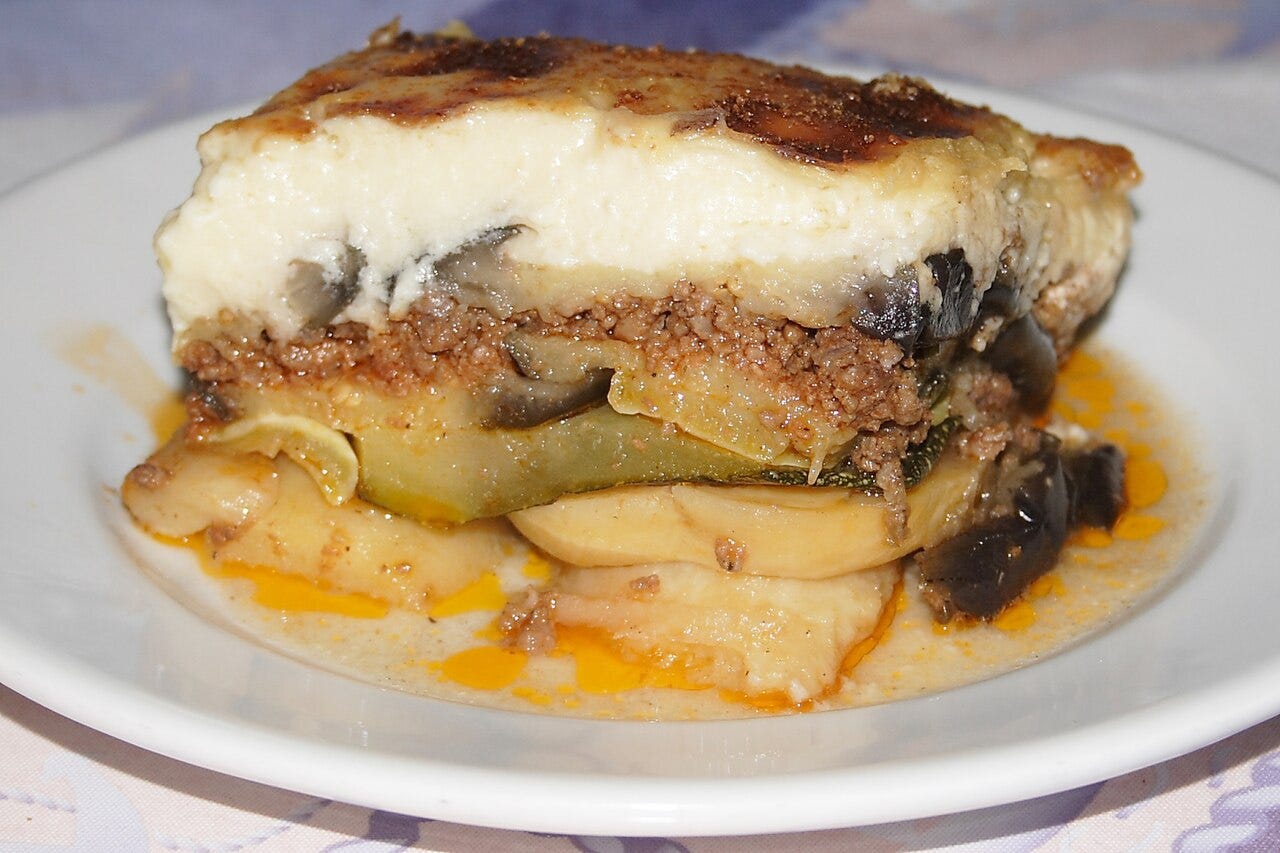
Moussaka is essentially a layered casserole rather like lasagna. There’s a meat-and-tomato sauce that usually tastes rather like stifado only it’s in the style of a bolognese, with finer bits of long-stewed beef or lamb. There’s a cheesy, creamy bechamel sauce on top. But the layering is generally not structured with pasta but with long slices of eggplant.
Greek food is really just a minor variation of a cuisine cooked in western Turkey, the Levant, Egypt and North Africa as well as the southern Balkans. Moussaka is one of the common dishes across that whole region. In many cases, it’s made without meat. Its defining feature is the eggplant and the layering of the casserole.
Which is why I think I came to dislike it. Today’s essay could just as easily be E for Eggplant. (Or A for Aubergine.)
I used to cook eggplant a lot, and I was proud of my eggplant cookery. I learned to salt the big purple ones in a colander to get some of the bitterness out of them. I liked the smaller and more flavorful Japanese eggplants and put them in a variety of dishes, including stir-fries or grilled after long marination in soy sauce, rice vinegar, garlic, ginger and sesame oil. I smoked eggplant on an outdoor grill and made baba ghanoush as a dip with it. The solidity and mouthfeel of eggplant felt like it could anchor a lot of dishes, and particularly made them, rather like mushrooms, an ingredient that could make a vegetarian or vegan dish feel substantive and distinctive.
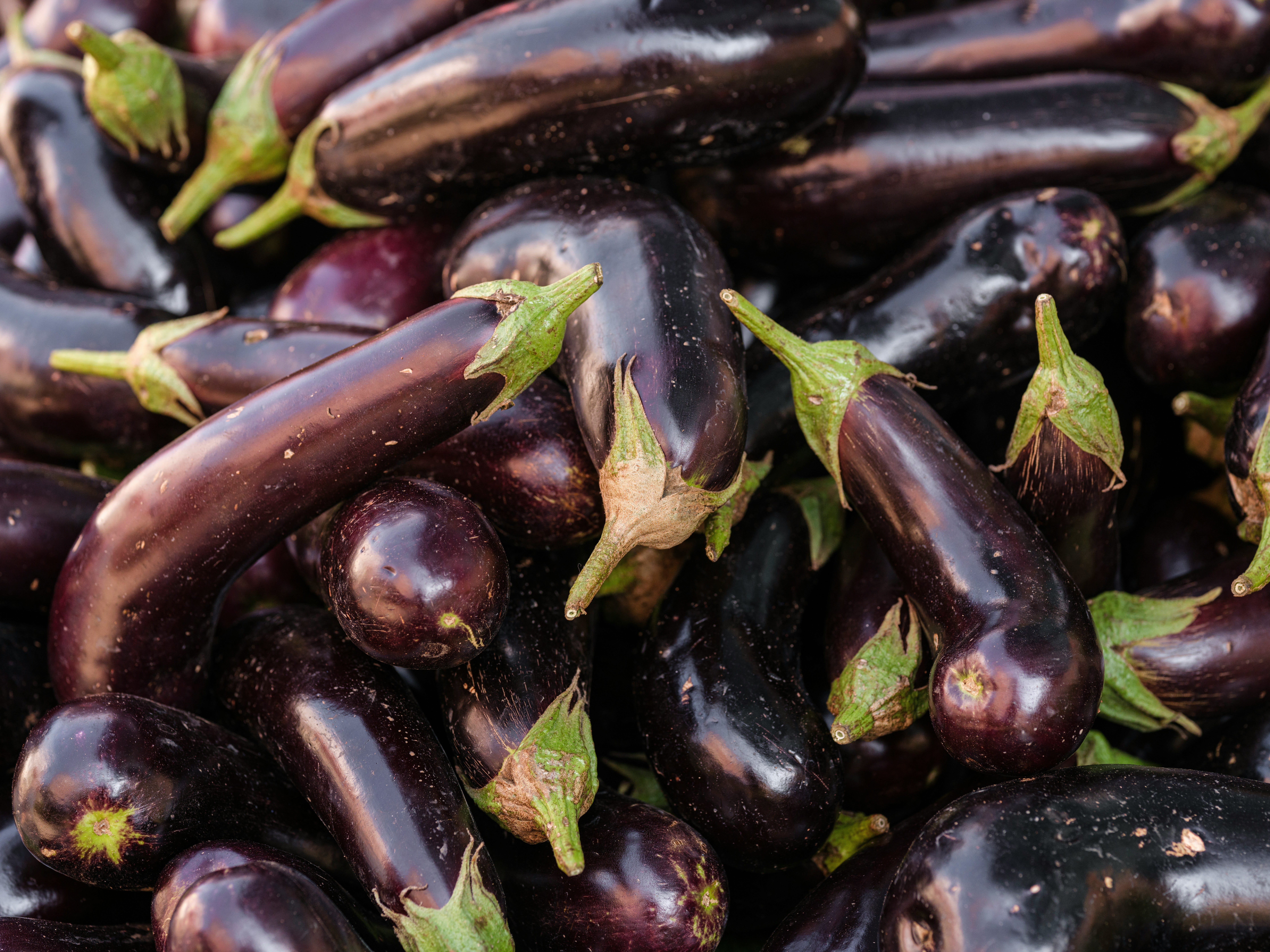
We ate a lot of eggplant, including in five or six episodes of moussaka cooking and eating in a year.
And then something happened. I started to notice a fair amount of intestinal distress when I had eaten eggplant the day before. There’s a complicated thing all of us go through when we feel like we’ve eaten something that is responsible for an unpleasant time in the bathroom. Few people are completely empirical about it—we don’t methodically experiment to find out whether the culprit is what we suspect it is. Sometimes we just decide that it was the one ingredient we can remember in what we ate yesterday (or more inaccurately, whatever we ate a few hours ago which we haven’t really digested yet, though that might precipitate a bout of vomiting due to spoilage.)
Sometimes when you’re looking for a suspect, you settle on a food that you have decided you just don’t like all that much. It’s an excuse to stop eating it. That’s how I’d come to feel about eggplant. I’d cooked it a lot as an act of generosity and virtue, a feeling that I ought to learn about it and cook it and use it. A cheaply priced, versatile and filling vegetable that had a lot of varieties, that could stand up to all sorts of techniques—you could bake it, you could grill it, you could marinate it, you could smoke it, you could fry it, and the outcomes were often gratifying. It took on flavors but retained its distinctiveness. But somehow the more I used it and the more I knew about it, the less I enjoyed eating it.
It’s not uncommon to develop a sensitivity to eggplant. It’s a nightshade family plant and all of them are known to cause a variety of adverse reactions for some consumers, but eggplant maybe most of all. So maybe I wasn’t wrong to decide that some next-day unpleasantness was attributable to it. But I also didn’t hesitate to indulge the suspicion because I was already heading for the eggplant exit just on taste and mouthfeel alone. A big bite of eggplant, I’d already decided, was just unpleasant—something about the flavor, the texture, turned me off.
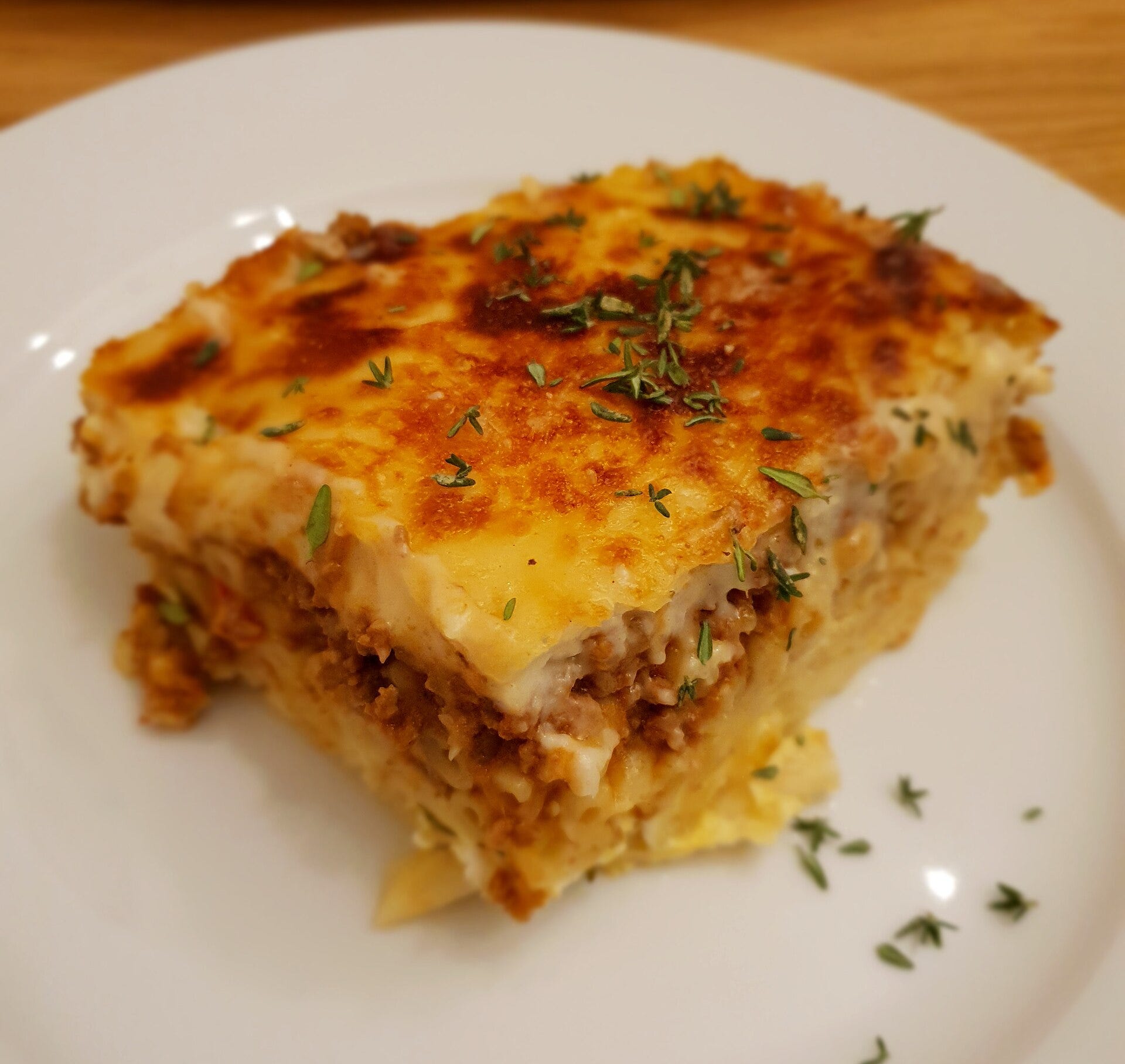
Nevertheless, I was also prepared to continue making moussaka as a loving gesture, and eating it with enthusiasm. But as the calendar rolled around to a likely moussaka-making date that year, my wife asked, gingerly, if maybe I wouldn’t make moussaka this time. At a recent Greek festival, she’d finally realized that she’d never liked moussaka, that she always hated the eggplant in it, and that what she was really thinking of was pastitsio, which is very similar to moussaka, only without the eggplant, with tube pasta like penne on the bottom, and with the bechamel on top having saffron added to it. I made that gladly, because I like it too.
It was a kind of O. Henry moment decades into a long marriage. Eggplant was summarily kicked to our culinary curb. I haven’t made moussaka since and I doubt I ever will again. Even if Marina Sirtis shows up to another potluck.
Image credit: By Robert Kindermann aka RobertK - Own work, CC BY-SA 2.5, https://commons.wikimedia.org/w/index.php?curid=1067141
Image credit: Photo by engin akyurt on Unsplash
Image credit: By Sam Bailey - Own work, CC BY-SA 4.0, https://commons.wikimedia.org/w/index.php?curid=75094678
No posts
Comments
Nothing yet. Say the first thing.
Sign in to join the conversation.