
Hey, I’m Timothe, cofounder of Stellar & based in Paris.
I’ve spent the past years helping 500+ startups in Europe build better product orgs and strategies. Now I’m sharing what I’ve learned (and keep learning) in How They Build. For more: My Youtube Channel (🇫🇷) | My Podcast (🇫🇷) | Follow me on Linkedin.
If you’re not a subscriber, here’s what you’ve been missing:
How Front is turning product teams into AI-powered growth engines
Inside Amplitude’s journey to enterprise-scale Product analytics
Few product leaders face AI transformation under the same conditions.
Weglot is a 70-person SaaS company that has grown to more than €35M ARR with a product and engineering organization of roughly 20 people. Yousign operates at a larger scale with around 200 employees, 90 people across Product and Engineering, and more than €40M in revenue. Cegid represents another level entirely: more than 6,000 employees, 2,000 people in R&D, and over €1B in revenue.
Despite their differences in size, maturity, and organizational complexity, all three companies are facing the same challenge: how to transform product and engineering organizations into AI-native organizations.
Their journeys started at different moments. Yousign began roughly 18 months ago. Weglot launched its AI reorganization only a few months ago. Cegid started exploring the topic more than two years ago. Yet all three have converged toward similar questions: How do you scale adoption? How do you redesign workflows? How do you avoid creating new bottlenecks? And what happens to product roles when AI becomes part of daily work?
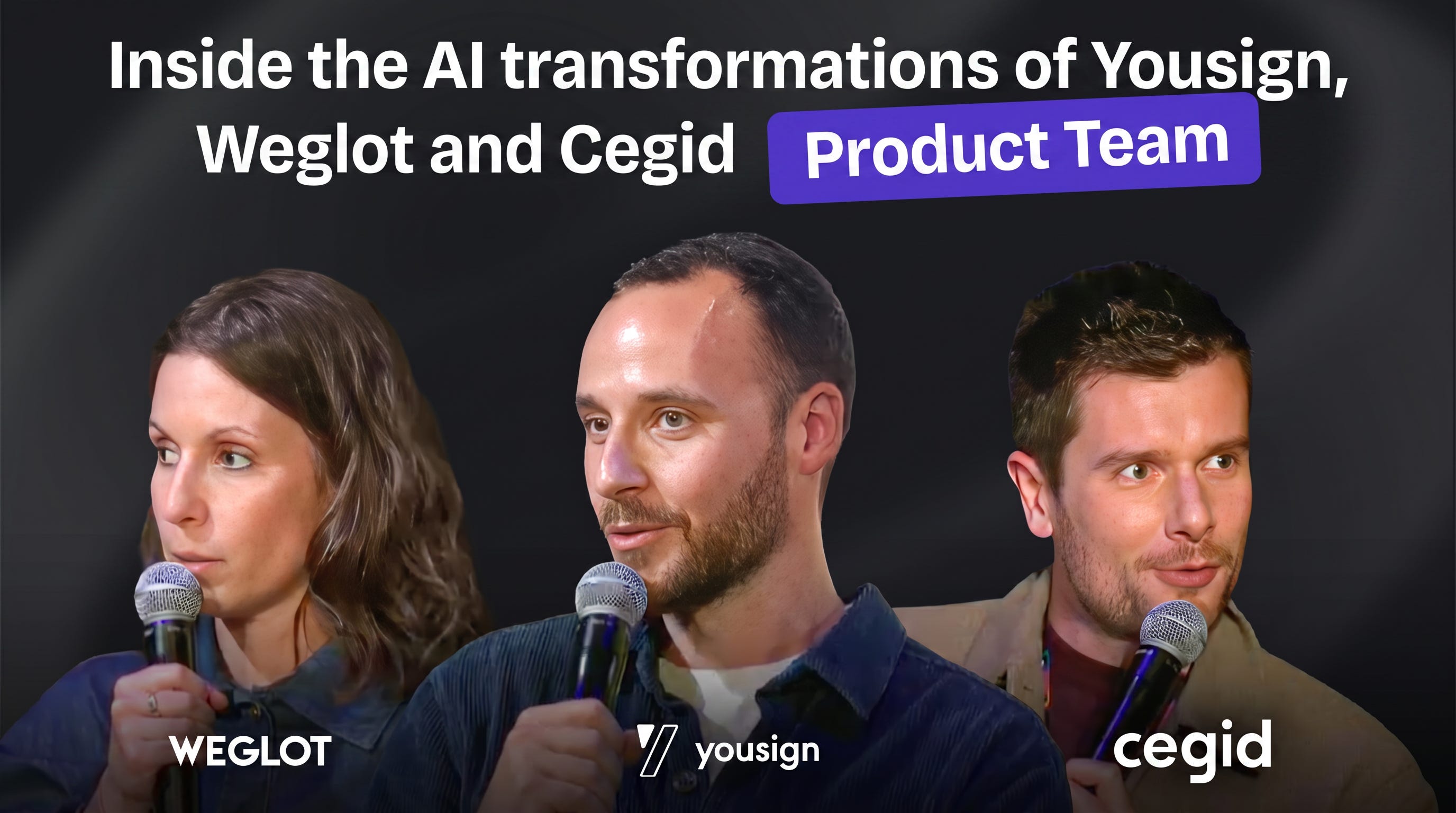
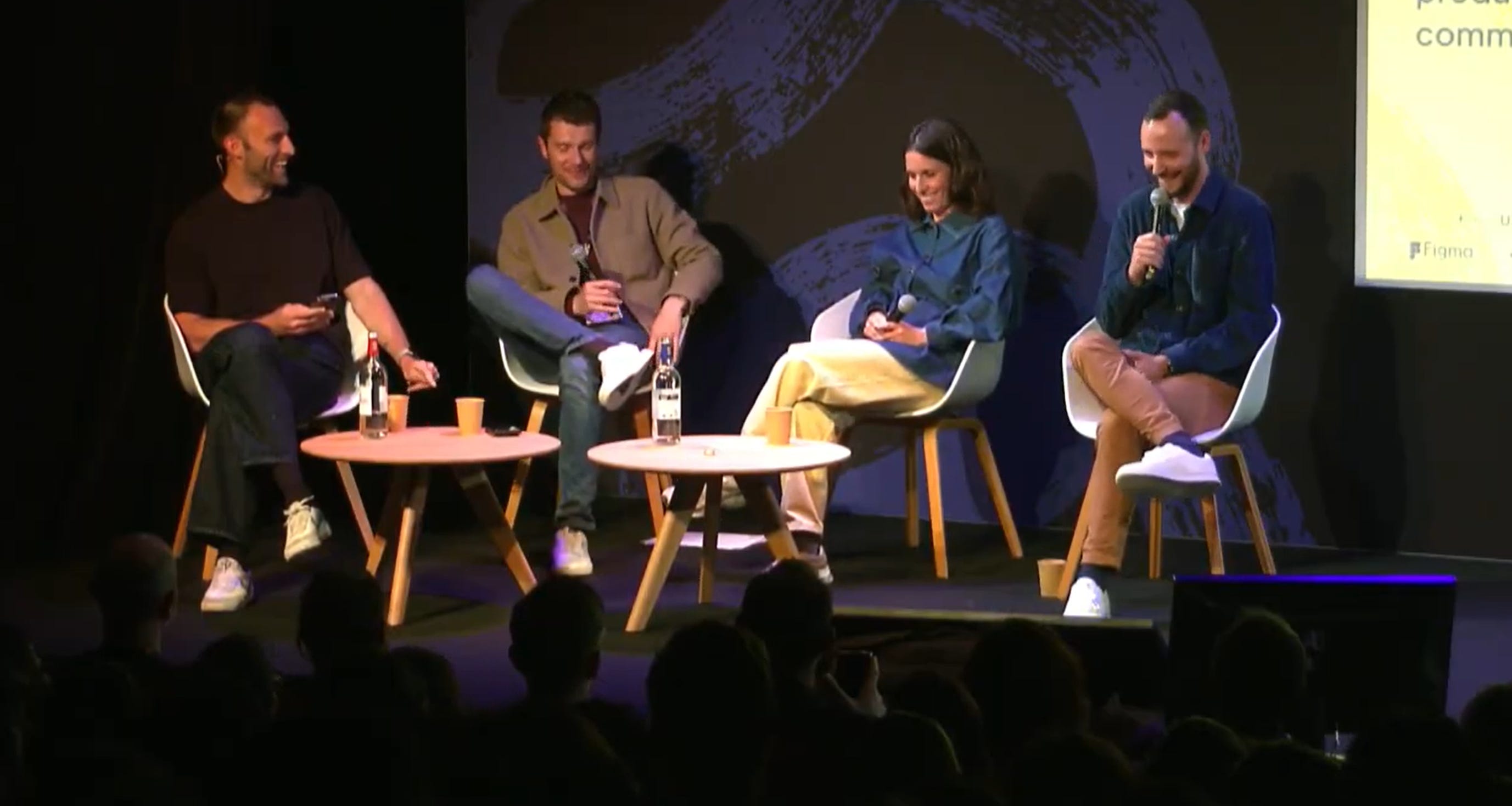
I sat down with Justine Poggi, VP Product at Weglot, Christopher Parola, CPO at Yousign, and Florian Cordel, VP Product at Cegid, to discuss how they are building AI-native product organizations.
Disclaimer: The organizational choices and technical solutions shared in this newsletter aren’t meant to be copied and pasted as-is. Always keep your company’s context in mind before adopting something that works elsewhere! 😊Most companies immediately jump into tools.
The three leaders described a different starting point.
Before workflows, before training, before governance, they first created organizational permission.
At Weglot, leadership explicitly communicated that AI was part of the company’s future. The objective was simple: remove the psychological friction employees felt when using AI tools.
Justine explained that some team members felt relieved simply because AI usage had become officially accepted. Once that barrier disappeared, experimentation accelerated naturally. Teams could explore tools freely without being forced into predefined workflows or approved solutions.
Cegid followed a similar pattern. Leadership actively sponsored experimentation, allocated budgets, and encouraged teams to test AI solutions. The objective was not immediate standardization. The objective was creating enough momentum for meaningful adoption to emerge organically.
What stands out is that none of these companies started with rigid governance.
They started with legitimacy.
Only after people felt empowered to experiment did organizations begin asking harder questions about scale, operating models, and workflow design.
“It was important to legitimize it. People told me they could finally use AI officially and no longer felt like they were doing something wrong” - Justine Poggi
Many AI transformations fail because leaders attempt to define best practices before anyone has actually found them.
The opposite happened here.
At Yousign, the first wave came from enthusiastic engineers and product managers. A small group started automating QA, specification writing, documentation, and numerous repetitive tasks. Those early adopters discovered what worked long before management formalized anything.
Weglot observed the same phenomenon.
By giving teams broad access to tools, the company quickly identified natural power users. These individuals discovered highly effective use cases that eventually became examples for everyone else. Weglot even organized internal demonstrations where power users showcased their workflows to the rest of the company.
Cegid actively encouraged this behavior.
Power users create local optimization.
AI-native organizations require system-wide optimization.
This distinction appeared repeatedly throughout the discussion.
At Yousign, some product managers achieved substantial gains through AI-assisted QA and documentation. The challenge became ensuring every squad benefited from those improvements. The company eventually integrated AI skills into career expectations, training programs, and operating standards. AI proficiency became part of the role itself.
Weglot experienced a similar transition.
Initially, the company dedicated exploration time across Product and Engineering. Later, they shifted toward focused implementation sprints, assigning owners to specific workflows and industrializing successful practices across teams.
Cegid described this stage as rebuilding the operating system of Product and R&D.
Once experimentation produces enough evidence, leadership must reintroduce a top-down layer. Teams have already explored the possibilities. The organization’s job becomes deciding which practices deserve scale.
Christopher described the danger clearly.
Some employees became experts in AI tooling while others still lacked basic workflows that were already proven to save time. The gap between early adopters and everyone else eventually becomes a scaling problem.
“We probably waited too long before moving into the scaling phase and defining how we wanted the organization to work” - Christopher Parola
One of the strongest themes from the discussion was that AI rarely eliminates bottlenecks.
It relocates them.
At Yousign, engineering productivity increased dramatically. Approximately 80% of code is now generated by AI agents. Yet overall productivity gains remain closer to 20–30%. The reason is simple: teams start spending newly available capacity elsewhere. Some solve useful problems. Others optimize activities that were never priorities.
The result is that organizational constraints simply move.
Yousign’s bottleneck shifted toward enablement and go-to-market execution. Teams started shipping features faster than commercial and customer-facing teams could absorb them.
Christopher shared a statement he never expected to hear:
“For the first time in my life, someone from the revenue side told me: you ship too much” - Christopher Parola
At Weglot, the bottleneck moved in another direction.
Developers gained speed faster than product teams. Product managers struggled to generate enough validated opportunities to keep pace. The company even accelerated a PM hire instead of hiring additional developers because Product had become the limiting factor.
The implication is critical.
Measuring AI success solely through individual productivity metrics can be misleading.
What matters is whether the entire system becomes faster.
AI challenges one of the oldest assumptions in software organizations: role ownership.
Throughout the discussion, all three leaders described increasing overlap between traditional responsibilities.
Product managers generate prototypes. Engineers contribute to discovery. AI tools create documentation, analysis, and enablement assets that previously belonged to specialized functions.
This creates friction.
Many organizations still operate with strong mental models around ownership.
Christopher argued that AI-native organizations require a different mindset. Teams must focus on outcomes rather than protecting responsibilities. If someone can solve a problem effectively, organizational value matters more than historical boundaries.
Florian pushed the idea even further.
Instead of starting from existing job titles, he suggested redesigning organizations around required capabilities. His teams increasingly map workflows first, then determine which responsibilities belong to humans, agents, or hybrid combinations. Only after that do they discuss titles or reporting structures.
The shift is subtle but profound.
Traditional organizations ask: who owns this?
AI-native organizations increasingly ask: what is the most effective way to achieve this outcome?
Many teams focus on prompts. The panel focused on knowledge.
Florian highlighted a problem that becomes visible only after teams start building advanced workflows: AI systems are limited by the quality of organizational knowledge.
Competitive intelligence, product context, market expertise, customer understanding, and historical decisions often live inside people’s heads. Humans can navigate those gaps naturally. Agents cannot.
As organizations increase AI usage, knowledge management becomes a strategic capability.
Documentation can no longer be optimized exclusively for human readers. It must also become consumable by agents.
This changes how teams think about product documentation, competitive intelligence, internal research, and market knowledge.
Many AI workflows underperform because the underlying knowledge is incomplete, fragmented, or poorly structured.
Teams conclude that a workflow does not work when the underlying issue is incomplete or poorly structured information.
Organizations that solve knowledge management first create dramatically stronger foundations for AI adoption.
One of the clearest mistakes discussed during the panel came from Cegid.
The company experimented with dedicated AI teams.
The result was disappointing.
AI became isolated instead of integrated. Product teams delegated responsibility rather than learning new capabilities themselves. Eventually, the approach created distance between AI initiatives and actual product development.
The lesson is important because many companies are currently making the same decision.
Creating an AI team feels like progress.
It creates ownership, visibility, and structure.
Yet it can also unintentionally communicate that AI belongs to specialists rather than everyone.
The alternative proposed by Florian was to build enablement and platform capabilities. Shared infrastructure, reusable components, common semantic layers, and organizational support mechanisms create leverage across the company while keeping ownership inside product teams.
Another recurring mistake was chasing every new tool.
Both Weglot and Yousign warned against endless experimentation. Teams need periods of stability where workflows can be measured, improved, and scaled. Organizations that continuously switch tools rarely create durable behavior change.
AI-native organizations are built through repetition and adoption.
They are not built through constant tool exploration.

Legitimizing AI usage inside the organization is often more important than selecting the perfect tool stack.
Power users should discover high-value workflows before leadership attempts to standardize AI practices across teams.
Individual productivity gains only matter when they are translated into organization-wide operating systems and habits.
AI does not remove bottlenecks. It shifts them toward product strategy, enablement, discovery, or organizational coordination.
Product organizations should redesign responsibilities around outcomes and capabilities rather than historical role boundaries.
Knowledge management is becoming foundational infrastructure for successful AI adoption and agent-based workflows.
Scaling AI requires periods of standardization and operational discipline after the initial exploration phase.
Dedicated AI teams can unintentionally isolate transformation efforts from core product development teams.
Discovery becomes more valuable as implementation becomes faster because shipping the wrong thing also becomes easier.
The companies making the fastest progress combine bottom-up experimentation with top-down organizational alignment.
Dive deeper into this topic with Justine Poggi, VP Product at Weglot, Christopher Parola, CPO at Yousign, and Florian Cordel, VP Product at Cegid, in my latest podcast episode:
Enjoyed this newsletter? Share it with your network using the button below—your support means a lot!
No posts
Comments
Nothing yet. Say the first thing.
Sign in to join the conversation.