
This is Throwbacks, a newsletter by me, Michael Weinreb, about sports, history, culture, and politics—and how they all bleed together.
If you like what you read, please click the button below, join the mailing list for FREE. And if you’ve been reading for a while, please consider joining the list of paid subscribers to unlock weekly paid posts and allow me to expand Throwbacks’ offerings. And please share it with one or two people you know.
Share Throwbacks: A Newsletter About Sports History and Culture
I.
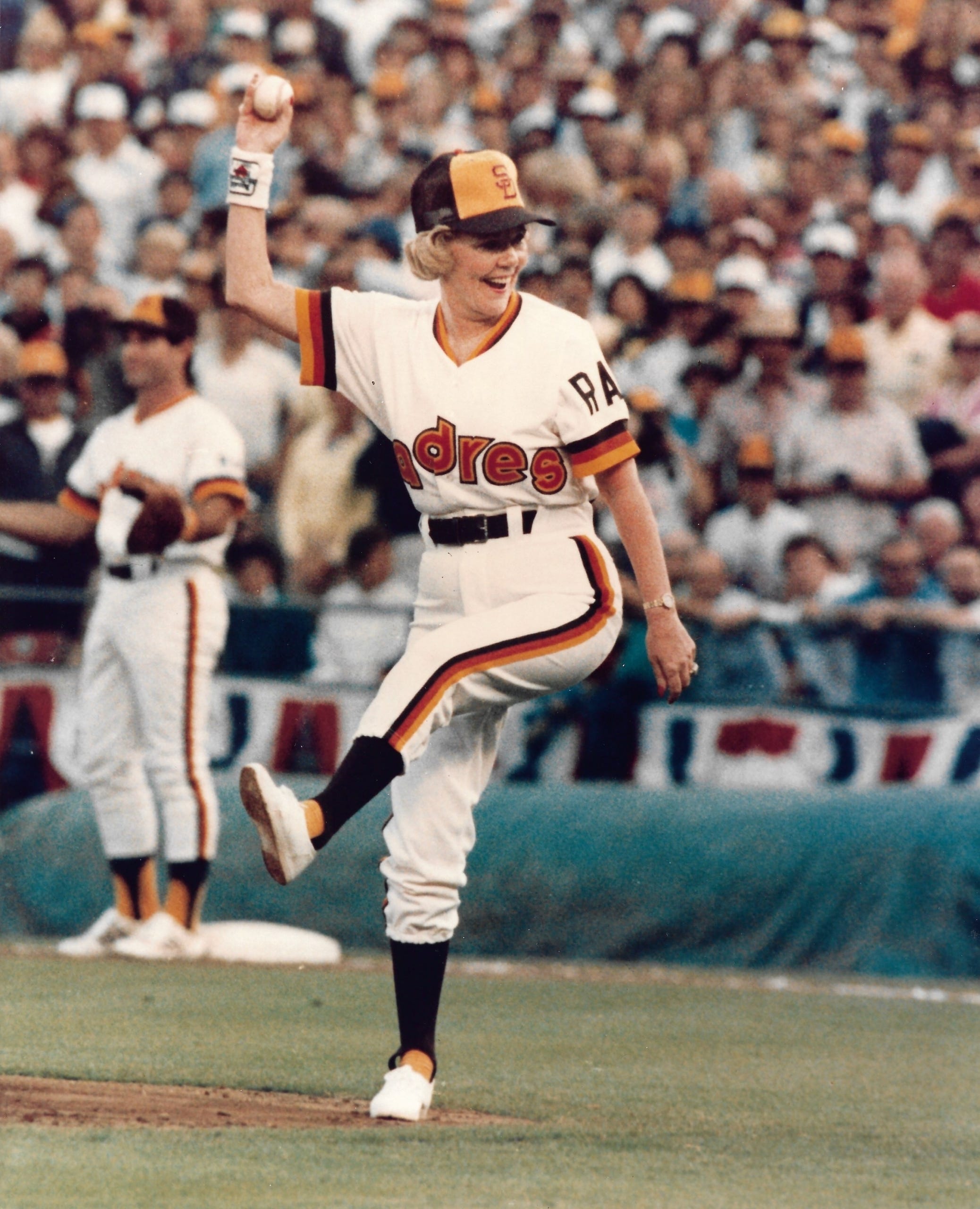
By the summer of 1990, Joan Kroc decided she’d had enough of baseball. She’d tried to sell the San Diego Padres once before, in 1987, three years after the death of her husband Ray, who built McDonald’s into an American institution, for better or worse1. She had a buyer lined up, a man named George Argyros, a real-estate mogul and tightwad who already owned the Seattle Mariners and whose endemic cheapness and threats to leave town had already managed to alienate much of Seattle, as well as many of his own players. Argyros’ arrogance so completely botched the run-up to the sale that Kroc wound up holding onto the team for three more years, and then, as she began thinking about selling again, she came up with an idea.
Kroc was not exactly a model owner herself—after she banned beer in the clubhouse, pitcher Goose Gossage complained that she was “poisoning the world with her hamburgers”2—but Kroc was absolutely loyal to the city of San Diego. She was also a philanthropist who quietly gave money to flood victims in North Dakota and bequeathed millions to National Public Radio after her death. She believed in the Padres as a civic asset more than merely an investment product, and so she approached the mayor of San Diego and asked whether it would be possible to donate the team to the city alongside a $100 million trust fund to help them run it. Then she reportedly took the idea to an eight-member screening committee of baseball owners, who immediately shot her down.
“It sounds impractical,” said Dodgers owner Peter O’Malley, who chaired that screening committee, and who appeared to deliberately overlook the fact that the Green Bay Packers had made such an ownership structure quite practical for decades, at least until the NFL and every other sports league decided that kind of thing was more trouble than it was worth. And so Kroc sold instead to a consortium of local investors who would at least keep the team in San Diego, who didn’t run it particularly well, either, but who would further the idea that sports teams are best run without constant and unnecessary interference from the people themselves.
II.
There have always been and always will be terrible sports owners like George Argyros, men—and other than the rare exceptions like Kroc and Marge Schott, who was herself quite a piece of work, they are almost always men—who are determined to prove their business acumen by engaging in a constant war against their own labor force and their own fan base. But over the past few years, it feels like that process has accelerated; it feels like this is now the default state. Sports teams have become so valuable in the modern era that they are viewed as foolproof investment properties, leagues are courting venture-capital money to keep up, and wealth inequality is so stark that the handful of people who can afford these properties almost appear to be competing far more over money than over championships, and view them largely as fungible assets.
This week, the Los Angeles Lakers were essentially flipped like a Brentwood McMansion, sold by businessman Mark Walter to the former chairman of the Walt Disney Company and the brother of the president of the United States’ son-in-law for $12.5 billion, which would net Walter a $2.5 billion profit in the course of a single year of ownership. Usually, sales like this are telegraphed months in advance, but this time, it came from out of nowhere, over the course of a single weekend. Walter, it turns out, is also under investigation by the Justice Department, and in this era of open corruption, there is inevitable speculation as to whether he sold the team to a member of the president’s extended family as an attempt to get the federal government off his back. All of which shows just how much even one of the most coveted franchises in professional sports has essentially become just another asset to be bargained and bartered with.
Meanwhile, several hundred miles to the north, in the city of Portland, Oregon, a man named Tom Dundon wound up purchasing a basketball team in a city he seems to actively dislike. He is cutting costs, cutting staff, feuding with a city that only has one professional team in the three major sports leagues, and flirting with the notion of moving his team to a city that he finds more palatable. And yet he now appears upset about the hostile environment he himself fostered in Portland after essentially pulling the spiritual equivalent of showing up at a party and punching the host straight in the face. “In recent months,” wrote Oregonian columnist Bill Oram, “Dundon has repeatedly told people in his circle that he bought an NBA team to have fun and that this, well, has not been fun.”
It seems clear by now that Dundon is vexingly clueless about his public image; as the owner of the Carolina Hurricanes of the NHL, he seemed to think nothing of etching the names of his own family above the names of his own players on the Stanley Cup. And I will say again, it is nothing new for oblivious rich people to own sports teams, but at a moment when the issue of income inequality is actively redefining American politics, the sheer weight of this cluelessness seems to be growing heavier and heavier. Dundon’s hostility toward a city he hardly knows just amplifies the sense that no one is listening to the rest of us anymore, and that the covenant between a team and a city has been entirely broken down into a pure boardroom-driven relationship. And maybe, for men like Tom Dundon, that relationship is the fun, but for the rest of us, it feels kind of perverse to deliberately pull a Logan Roy on a city that’s done absolutely nothing to deserve it.
III.
Already, this is taking a toll, with NBA teams deliberately tanking and commissioner Adam Silver’s reputation sinking into the mud with each idiotic twist in the Dundon story. Meanwhile, baseball is locked into a paradigm of such rampant mistrust between ownership and labor that there may not even be a season next year, and commissioner Rob Manfred spent any credibility he had left years ago. The NFL, held together more tightly by Roger Goodell’s ability to consolidate power over the course of decades, still has its share of incompetent owners in Cleveland and New York and beyond. Over in England, where the gap between rich and poor in the Premier League has always been yawning, Jeff Bezos is on the verge of becoming a part-owner of the Liverpool Football Club as the president of FIFA attempts to further monetize the World Cup itself. There is a sense—both inside sports and outside of it—that everything is out of our control, that sports leagues themselves are becoming increasingly enshittified, that any sort of obligation toward the city and the fan base and toward civic engagement are essentially antiquated concepts, that these are investment properties first and foremost, and that any other view is built on the kind of 20th-century naivete that would lead a woman like Joan Kroc to believe she could even do the right thing in the first place.
Here in the Bay Area, one baseball team’s incompetent owner chose to strip his team for parts for the better part of a decade before using that as cover to move his team out of town; the other team is owned by a shadowy family whose patriarch clearly has absolutely nothing in common with the city his team represents, which is probably why virtually everyone inside the franchise was afraid to say anything when several of its own players violated the historic covenant between the team and some of its most marginalized fans.
There are geographic and cultural mismatches like this all over the country, and all over the world—teams purchased by people who have seemingly no interest in the product itself as anything more than an interchangeable baseball or basketball or football widget, and who are actively hostile to the cities they’ve bought into. Over time, it creates a distance between a team and its fan base that isn’t always easy to repair. Owners like this have always existed, and they will continue to exist, but eventually, I imagine, they will emerge from their cultural bubble as the country snaps back from this era, and they will come to realize that it isn’t fun at all when they have no idea what they’ve actually bought into.
This newsletter is a perpetual work in progress. Thoughts? Ideas for future editions? Respond to this newsletter, Contact me via twitter or at michaeliweinreb at gmail, or leave a comment below. If you enjoyed this newsletter, please join the list, consider becoming a paid subscriber, and/or share it with one or two people you know.
As someone who recently attempted (and largely failed) to consume McDonald’s lab-engineered foodstuffs for the first time in several years, I’d lean toward the latter.
Gossage did not comment on what that meant for the McRib.
No posts
Comments
Nothing yet. Say the first thing.
Sign in to join the conversation.