
This is Throwbacks, a newsletter by me, Michael Weinreb, about sports, history, culture, and politics—and how they all bleed together.
If you like what you read, please click the button below, join the mailing list for FREE. And if you’ve been reading for a while, please consider joining the list of paid subscribers to unlock weekly paid posts and allow me to expand Throwbacks’ offerings. And please share it with one or two people you know.
Share Throwbacks: A Newsletter About Sports History and Culture
This one originally ran a few years back, but I figured I’d re-up it for the anniversary of one of the most weirdly explosive moments in baseball history.
Thank you again for reading, supporting and sharing this newsletter. And if you’d like to support its ongoing existence, here’s a link to get 20 percent off either a monthly or yearly subscription.
I.
Forty-three years ago this month, a man got into a raging argument in the Bronx. However, several things made this different from the volcanic disagreements that are part of everyday life in New York City, including that this man was not a New Yorker at all. This man, in fact, was a staunch Republican who was born in West Virginia (though his older brothers were born in Brooklyn), and grew up in El Segundo, California. Also, this man was not screaming at parked cars on a street corner, or sending back soup at a deli. Instead, this man unleashed his righteous fury in the most hallowed corner that the Bronx has ever known.
And in this moment, at the height of his rage, George Brett was as New York as any New Yorker could possibly be.
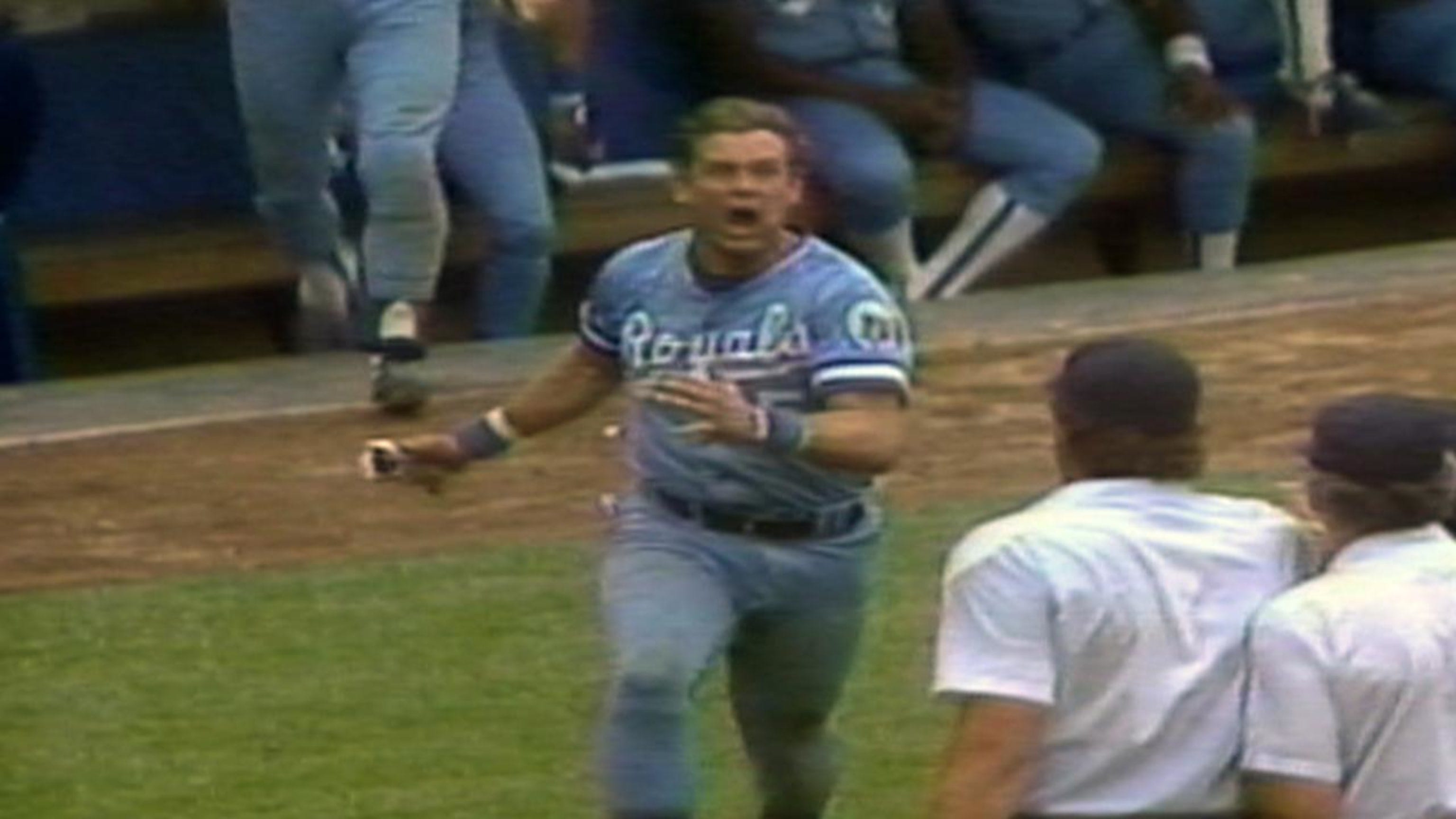
There has never been a more entertaining moment of distilled rage in baseball history than what occurred on July 24, 1983, at Yankee Stadium. And honestly, who could blame Brett for these histrionics? He had just hit what appeared to be a game-winning home run against the New York Yankees, and now the umpiring crew—including a towering oak of a man named Tim McClelland—had just called him out based on an obscure rule for utilizing too much of a wood sealant on his Louisville Slugger.
It was ridiculous. It was hilarious. It was esoteric. It was both entirely performative and utterly real. It was the essence of New York in fifteen frenetic seconds, a moment that’s more enduring than it probably should be and weirder than you realize, all because it took place in a city where everyone is constantly jostling with eight million other people just to hold onto everything they’ve got.
II.
Something was happening in New York in the early 1980s: A city that had been through a decade of tumult and bankruptcy and disco was beginning to rebound. It was transitioning into a new era of loudness and gaudiness and self-regard. Cats had opened on Broadway the year before the Pine Tar Incident, in 1982, a ridiculously over-the-top spectacle that “was a tribute mostly to how much money could be lavished on furry costumes and how many fake whiskers could be painted on a human face,” wrote The New York Times’ Frank Bruni.
The city, Bruni wrote, was suddenly full of “loopy fantasies,” a shimmering haze of designer drugs and dance clubs and real-estate moguls erecting gold-plated towers as paeans to their own ego. The Reagan era was in full bloom, and people took big swings; the hottest restaurant in town, The Odeon, would be immortalized a year later in Jay McInerney’s coming-of-age novel Bright Lights, Big City. Uptown and downtown were beginning to merge; hip-hop, born in the Bronx a decade earlier, was becoming the dominant brand of music, a loud and brash and unapologetic art form that captured the soul of a city that was noisy and messy and difficult.
Maybe George Brett, a Kansas City dude by way of SoCal, didn’t appear to be a natural fit in this world. But in a lot of ways, he was. Brett was a great baseball player, a future Hall of Famer; he was also foul-mouthed and supremely confident. Like New York itself, he was an entertaining asshole you couldn’t help but like. In 1980, he flirted with a .400 batting average before ending the season hitting .390, but up until July 24, 1983, he was best known not for being an outspoken pain in the ass, but for the painful hemorrhoids that caused him to remove himself from a World Series game in 1980.1
On July 24, 1983 the Royals and Yankees were fierce rivals, the two most competitive franchises in the American League. And once Brett hit that home run in the top of the ninth inning, the gamesmanship began, a three-card Monte play for the ages by both sides. Yankees manager Billy Martin claimed that Brett had violated baseball rule 1.10 (b). This was the one that declared that a sticky brown substance called pine tar—which may or may not improve a hitter’s grip on the bat while simultaneously easing their eczema—could not cover the bat more than 18 inches from the handle.
Why eighteen inches? Apparently, McClelland told the New York Times’ Tyler Kepner, the rule had been devised to protect hitters from pine tar getting on the ball, thereby allowing pitchers to get a better grip on the ball. “It’s kind of funny how the rule was made for the protection of the hitter,” McClelland said, “but the penalty was on the hitter.”
Meanwhile, Royals pitcher Gaylord Perry, who knew something about a thing or two about three-card monte, attempted to hide the bat from umpiring crew chief Tim Brinkman before Brinkman tracked it down in the Royals dugout. (These days, it’s in the Baseball Hall of Fame.)
This whole scene was inherently absurdist, a crystallization of baseball’s bureaucratic silliness, the national pastime as a reflection of the American affinity for red tape. The umpires, somehow unable to locate a ruler, laid Brett’s bat across the 17 inches of home plate, saw that it exceeded the legal limit, and tossed Brett out of the game. At which point, Brett had already told a teammate that he was going to lose his mind if they threw him out. So once they did throw him out, Brett said, he had no choice but to lose his mind. And he did it so convincingly, with such propulsive force, that no one remembered George Brett for his hemorrhoids anymore.
III.
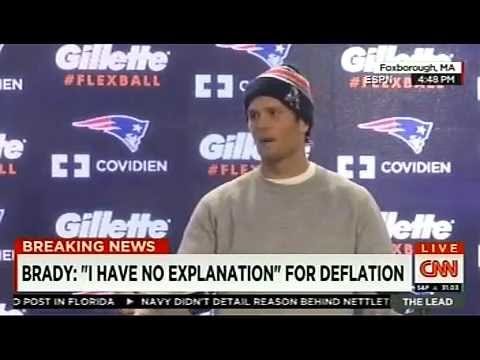
The Pine Tar Incident was so inherently bizarre that the New York Times—the same New York Times that recently jettisoned its sports section—put it on the front page of the paper, next to deadly serious articles about Israel and the K.G.B. and the C.I.A. in Latin America. Each of those stories was byzantine and confusing, but so was Pine Tar Incident. The drama carried on for months, as the American League office reviewed (and eventually overturned) the decision to call Brett out, as appeals piled up and lawsuits were threatened and Yankee fans found the ideal outlet for their loudmouth yammerings in the years before WFAN sports-talk radio even existed. It was Deflategate before Deflategate.
Deflategate (January, 2015)
·
February 2, 2022
This is Throwbacks, a newsletter by me, Michael Weinreb, about sports, history, culture and politics. Welcome to all new readers/subscribers, and if you like what you’re reading, please join the mailing list and share, on social media or through e-mail or however you feel comfortable sharing. (
More than anything, this was a New York story. In a city driven by tabloid energy, a city where you hear taxi horns bleating in your sleep, a city that Frank Bruni called “the country’s messiest and most mesmerizing laboratory,” the Pine Tar incident was just another example of the city’s brash exceptionalism. This was also a city that respected rampant pugilism, and it would, now and until the end of time, kind of respect George Brett, too.
Three weeks later, the Pine Tar game resumed in New York City, with the Royals now leading 5-4. It ended quietly, as the Royals’ legendary closer, Dan Quisenberry, dispatched the Yankees in the bottom of the ninth to save the game in front of an announced crowd of 1,245. And the city went back to its business.
“If it happened in Cleveland back then, if it happened in Oakland back then, would we be doing this?” Brett told an ESPN interviewer the other day. “But it's New York City, you know, and that's the whole deal. New York's a big deal.”
This newsletter is a perpetual work in progress. Thoughts? Ideas for future editions? Respond to this newsletter, Contact me via twitter or at michaeliweinreb at gmail, or leave a comment below. If you enjoyed this newsletter, please join the list, consider becoming a paid subscriber, and/or share it with one or two people you know.
No posts
Comments
Nothing yet. Say the first thing.
Sign in to join the conversation.