
This is Throwbacks, a newsletter by me, Michael Weinreb, about sports, history, culture, and politics—and how they all bleed together.
If you like what you read, please click the button below, join the mailing list for FREE. And if you’ve been reading for a while, please consider joining the list of paid subscribers to unlock weekly paid posts and allow me to expand Throwbacks’ offerings. And please share it with one or two people you know.
Share Throwbacks: A Newsletter About Sports History and Culture
For a summer Friday, I thought I’d re-up this piece from the very early days of Throwbacks, with a few updates and revisions. I wish it didn’t still feel topical, but here we are.
I.
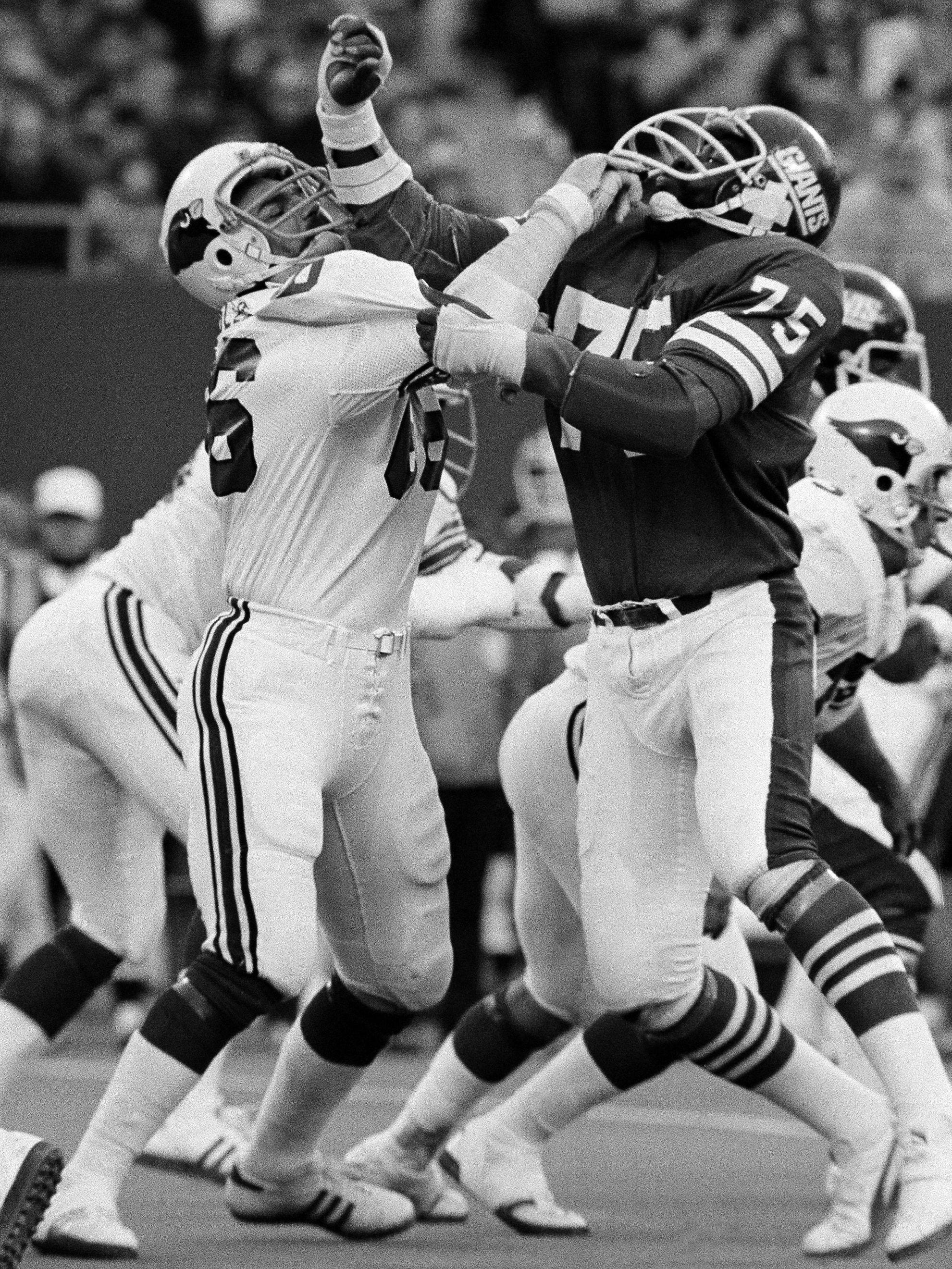
In 1972, with their fifth round pick in the NFL draft, the St. Louis Cardinals drafted an offensive lineman out of the University of Wyoming. His name was Conrad Dobler, and he was not especially talented, but he had something else to recommend him: He was unapologetically vicious. This was during an era when professional football was coming into its own as the national pastime, when the Super Bowl was still in its infancy, and when the league embraced both old-fashioned heroes like Bart Starr of the Green Bay Packers and newfangled villains like Al Davis of the Oakland Raiders. It was a brutal sport that was not afraid to embrace its inherent brutality, and amid the ugliness of the Vietnam War, and amid the burgeoning scandal surrounding the break-in at the Watergate Hotel, the ethos of professional football—the preferred sport of Richard M. Nixon himself—seemed to comport with the ethos of an increasingly jaded country.
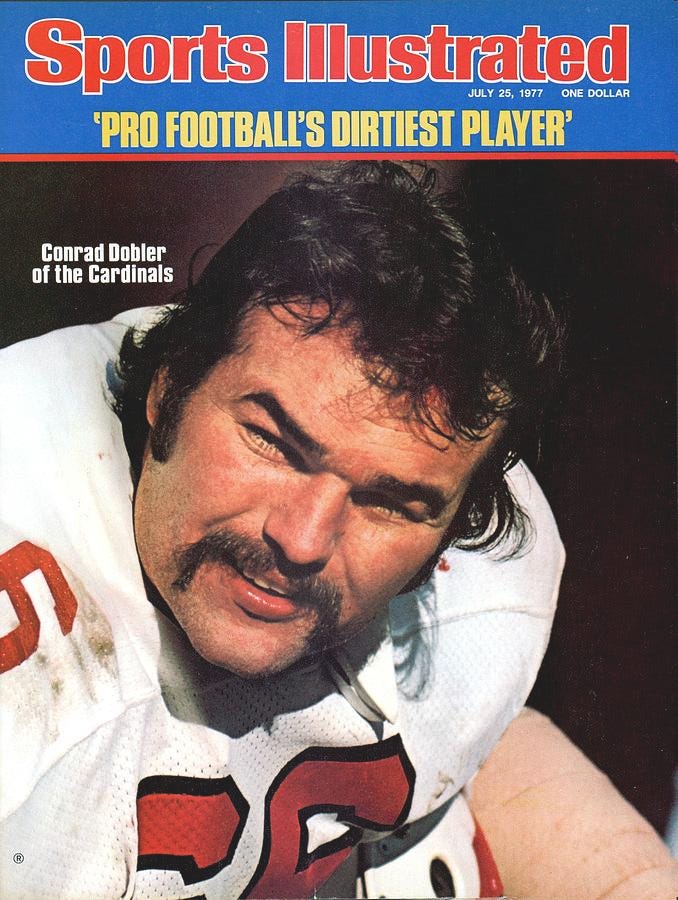
After the Cardinals cut him once, the franchise brought Dobler back for another chance, and he came to realize something: You do not play professional football as much as you survive it. Dobler was willing to do anything to survive. On the field, he became a character. He played the heavy. He gouged his opponents’ eyes through their facemasks; he utilized a nasty move called a leg whip to knock them on their ass. He bit them, he kicked them, he fought them, he dragged them down—he did whatever he had to do to make it in the NFL, which, in July of 1977, landed him on the cover of Sports Illustrated with the headline, “Pro Football’s Dirtiest Player.” Later, he titled his autobiography They Call Me Dirty.
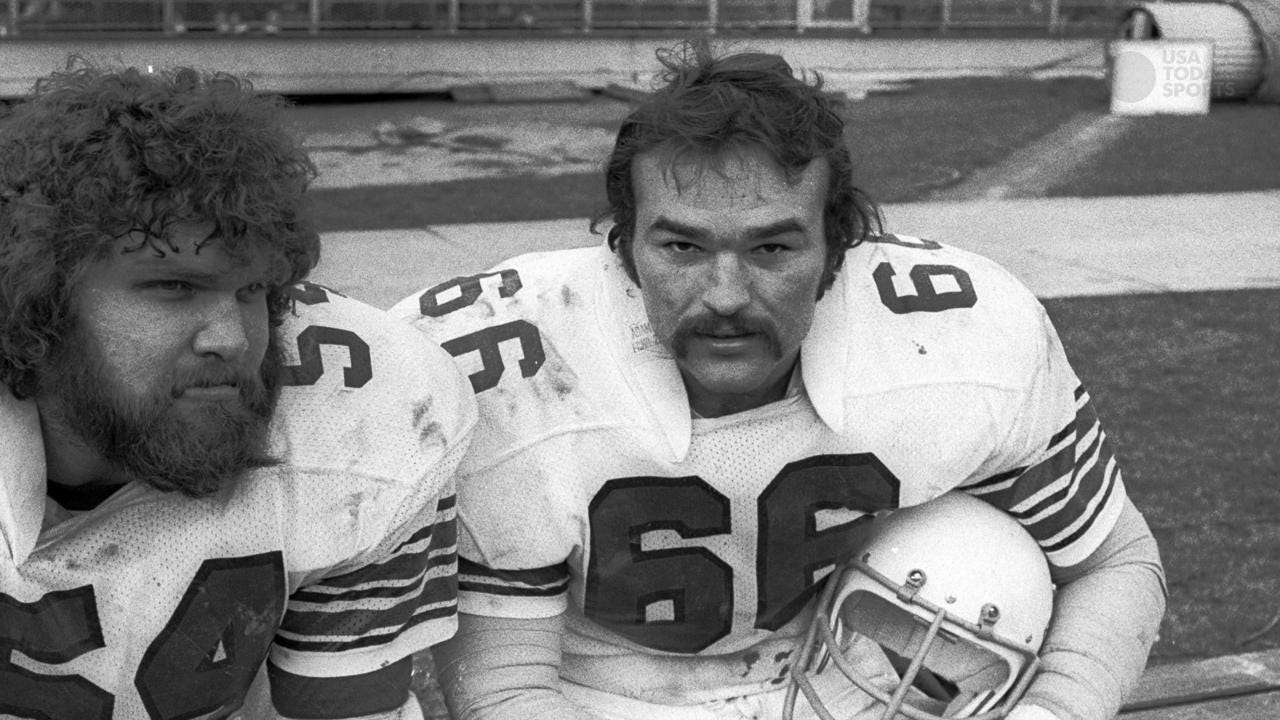
Years later, in the first decade of the 21st century, as professional football was just beginning to come to terms with what that brutal era had wrought—the ravages of concussions and CTE, a generation who had been left crippled both mentally and physically—I spent some time with Conrad Dobler in Kansas City for an ESPN.com profile. Even as he admitted his body and mind were breaking down, he remained unapologetic; he was, in fact, one of the more prickly and complicated figures I think I’ve ever profiled. (At one point, he told me every high-school aged boy should be forced to take a punch to the face, just to know what it feels like.) Dobler understood the sacrifice he made, but he also expected that sacrifice would not leave him destitute and in constant pain and without recompense for what he’d given to the league. At the time I spoke to him, he’d joined a class action lawsuit against the NFL Players’ Association, trying to get them to open their books.
“I played a rough, tough game the way it was supposed to be played,” Dobler told me. “The whole dirty thing came from my opponents. And why did my opponents do that? Because I kicked their f---ing ass.”
II.
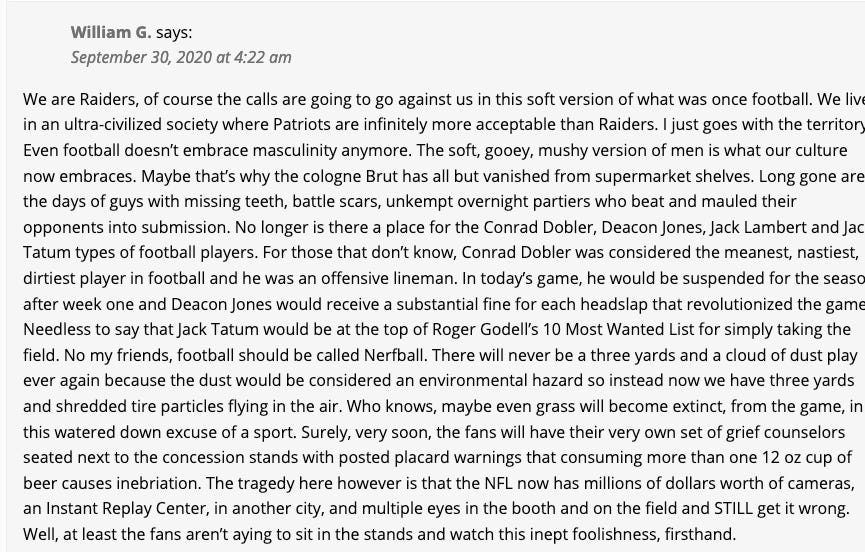
Here is an actual reader comment from an actual Oakland Raiders fan site, nearly fifty years after Conrad Dobler came into the NFL:
III.
I’ve written about this idea in a different context before, but I can’t stop thinking about it, because the idea that the culture has somehow grown “soft” has existed at the forefront of nearly every political discussion for nearly a decade now. I would imagine there’s a huge overlap with the same vocal segment—like the commenter above—who have decried professional football, in the years since I interviewed Conrad Dobler, for attempting to minimize the long-term side effects and deaths of the players who gave their all for the sport by shoring up the rules and trying to mitigate the needless violence. There is a feeling among this vocal segment, just as there was in the 19th century, that masculinity is somehow under attack, and that America is growing weak, and that this weakness is a product of our politics.
And so this is what we’ve come to: To that vocal segment of America, caution is weakness. Empathy is fatuousness. The entire country is essentially the Pro Football Talk comment section, where compassion is regarded as a character flaw; hell, in a way, it’s the entire Internet, which has stripped our public dialogue down to its basest instincts. There is no recognition of the irony that this very attitude is driven by fear, by the worry that men—and particularly white men, who make up a far smaller portion of the NFL than they did in the early 1970s, and make up a smaller portion of the country as a whole—will somehow be marginalized in a future that offers something closer to fairness to women and minorities.
When I interviewed Conrad Dobler, he never would have admitted that he was afraid—of what the future might look like for him, of what it would feel like for his body to break down, piece by piece—but it was obvious that’s what he was feeling. I’d like to think he was trying to be a better person, even if he didn’t know how (in 2016, he told USA Today that he couldn’t remember his children’s names); but he still clung strongly to those old ideas, in a way that couldn’t help but make you wonder what we as a society had wrought.
Maybe this is what we’re observing at this moment: Not the impending end of a political era, but the implosion of the idea that every problem can be solved by squaring up and threatening to kick its ass. Eventually, a culture built around performative toughness has to face the same stark truth: You can’t brawl your way out of mortality. And in those moments, you are forced to come to terms with your own unapologetic viciousness; in those moments, you have to face your own fears, rather than project them onto the rest of us.
This newsletter is a perpetual work in progress. Thoughts? Ideas for future editions? Respond to this newsletter, Contact me via twitter or at michaeliweinreb at gmail, or leave a comment below. If you enjoyed this newsletter, please join the list, consider becoming a paid subscriber, and/or share it with one or two people you know.
No posts
Comments
Nothing yet. Say the first thing.
Sign in to join the conversation.