
This email may be too large for your inbox, click “View entire message” to see the full posting.

Spring
Early Spring - March 20 to April 19
Slowly but surely from under the leaf litter small nubbins of plants begin emerging from the soil. The red-velvet mite and the scarlet cup fungus bring a burst of color to the forest floor. The early spring ephemerals bloom in this time: hepatica, spring beauties, bloodroot. Foliage of the waterleaf and the early greens of false mermaid and jewelweed blanket the forest in green.
While the days have been getting brighter since the Winter Solstice, the Spring Equinox is the day when the amount of daylight per day surpasses the darkness (as of March 19th we have 12:05 hrs of daylight).
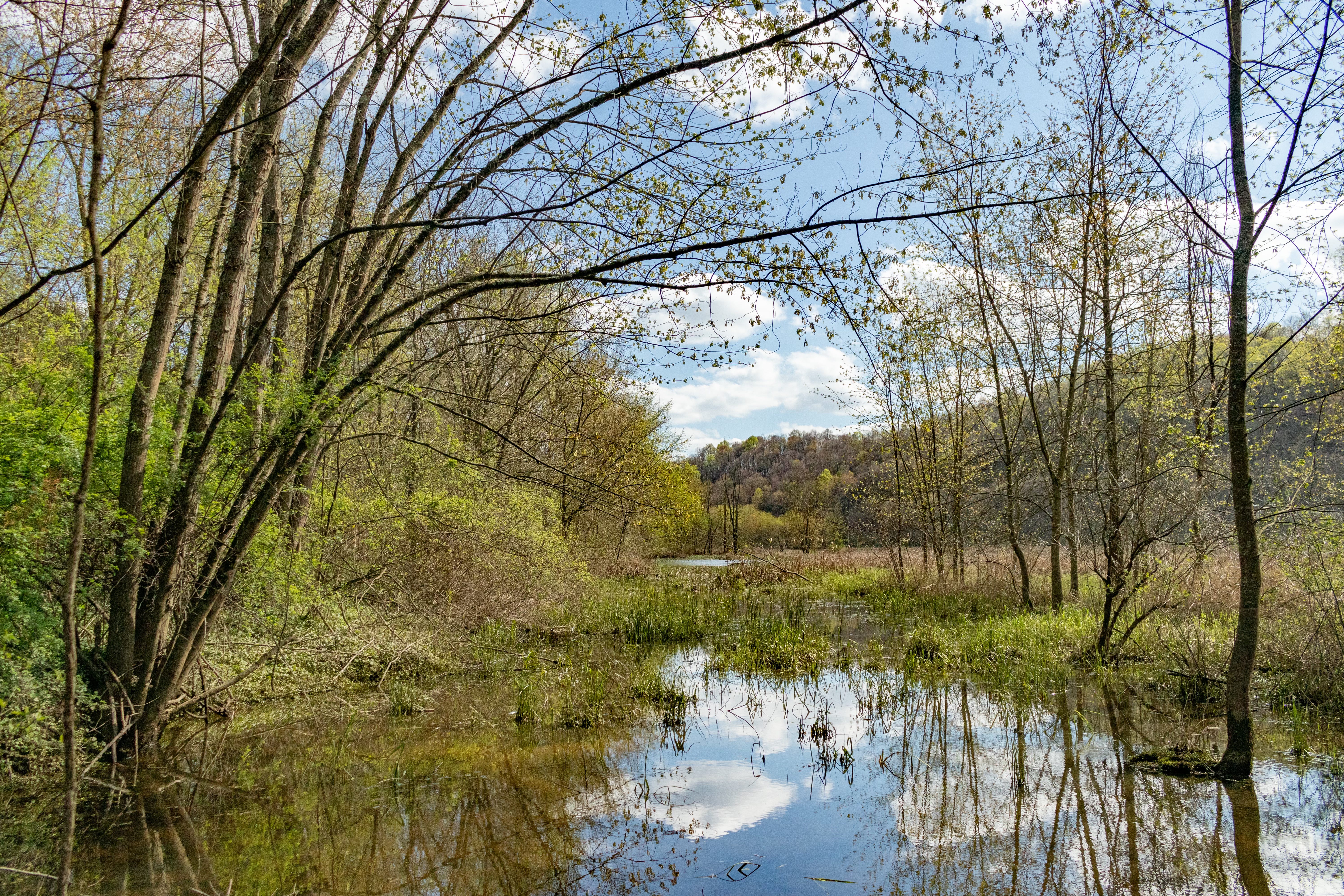
Below are a number of ways to embrace the change of seasons and I encourage all of you to make a little time to slow down and reflect.
Sit by a fire and contemplate the light returning to your life. This can be a bonfire, a fireplace, or a candle, whatever works for your life.
Take a relaxing bath allowing the warm water to release the stresses of the previous year so you may emerge recharged and ready for the next turn around the sun.
Write down your intentions for the coming season, reflect on what brings you joy, take a moment to see where you are.
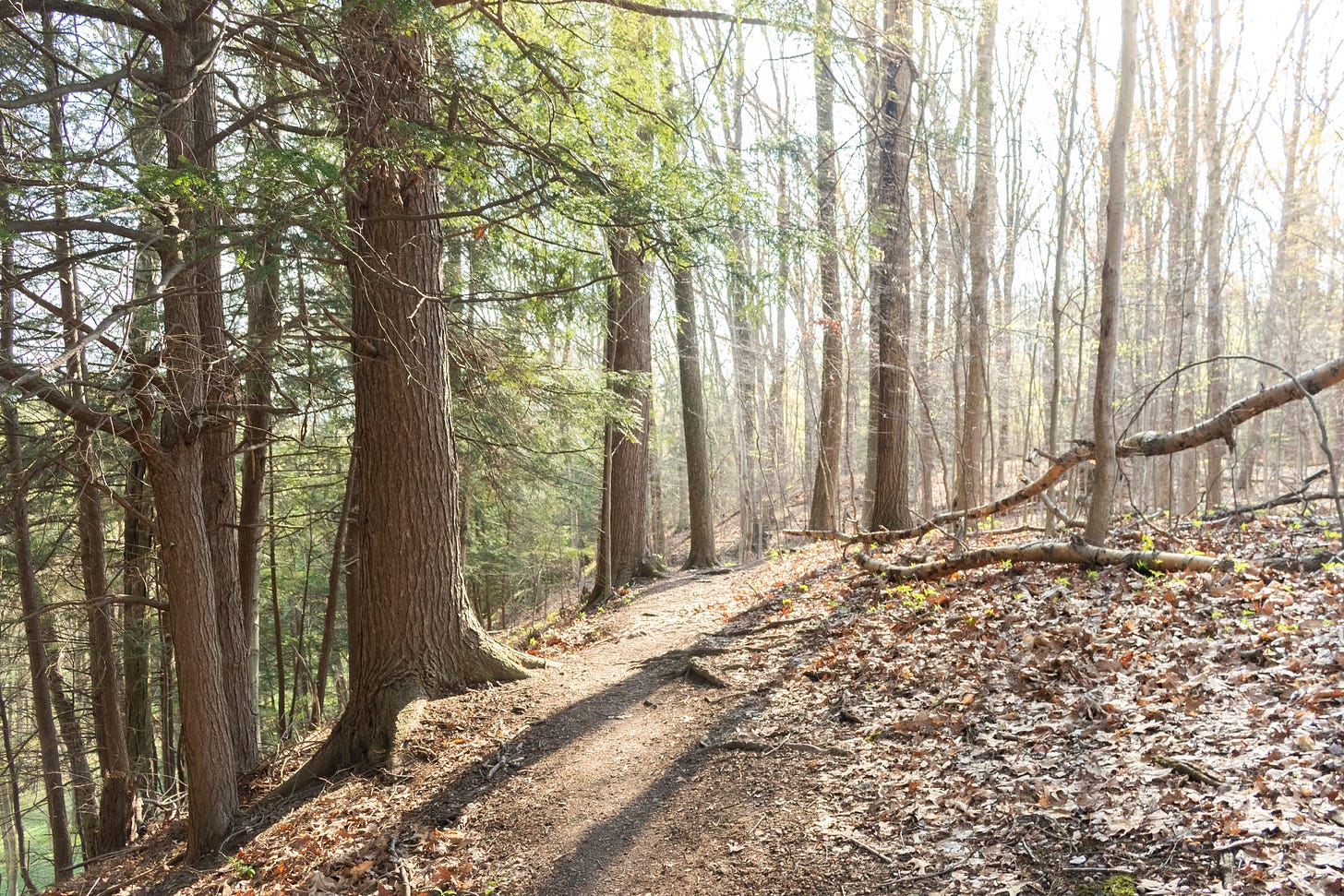
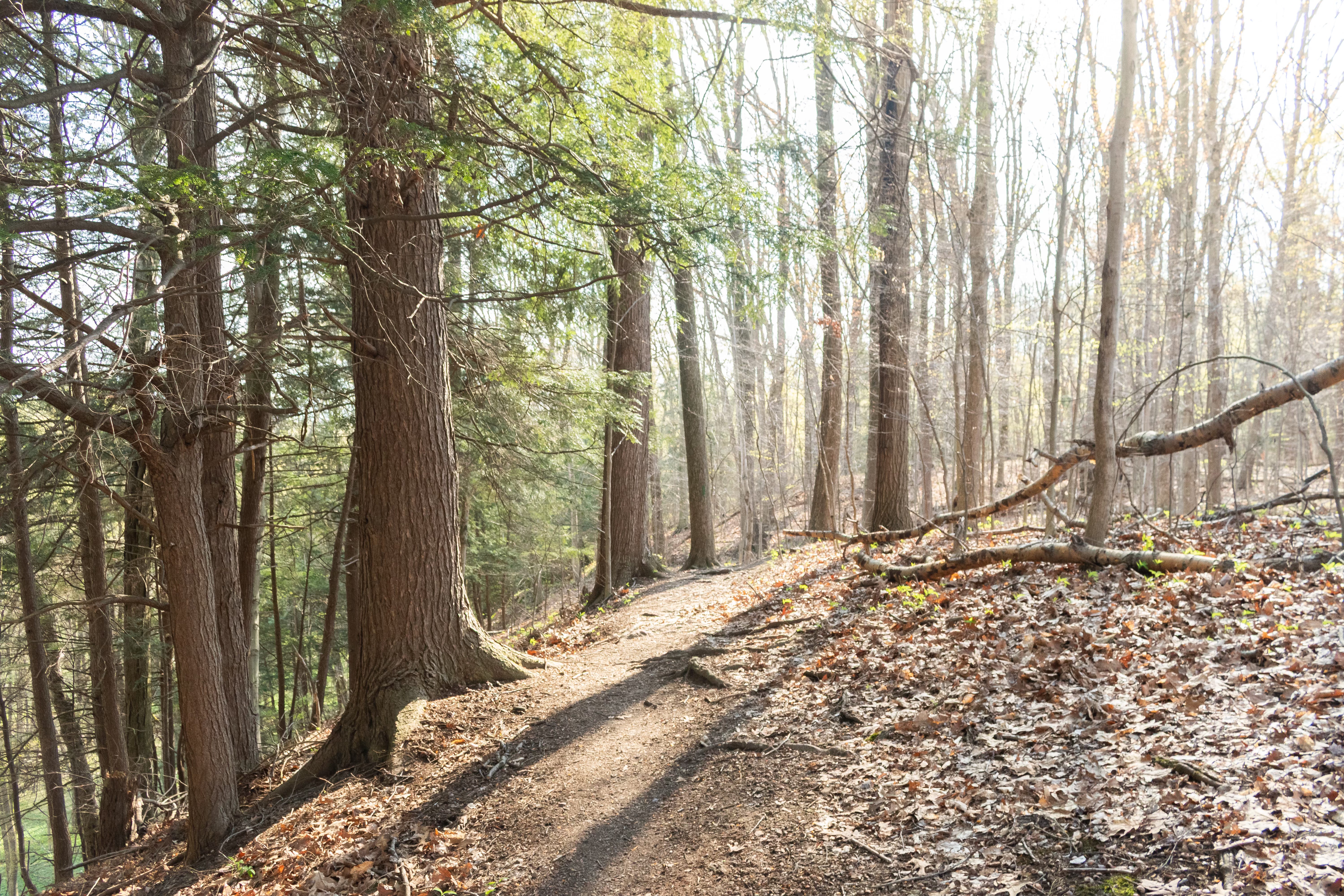
Enjoy a quiet walk outdoors. Feel the cold air on your skin, observe the light of the returning sun, quiet your mind for the duration of the walk, you don’t need to be anywhere but right here in this moment.
“Nature does not hurry, yet everything is accomplished” - Lao Tzu
Determination
Set your sights and grow!
March marks a big turning point focusing on the transition from winter to spring. If you look and listen closely you can already hear & see it happening: birds are singing their spring songs, salamanders are beginning to make the journey to their vernal pools, the very earliest ephemerals are surfacing, and the tree buds are swelling, soon to bloom.
March urges us to move forward. We, ourselves, are also waking from the winter period of rest and this season reminds us to get ready. Grow, bloom, take winter’s dreams and bring them to fruition.
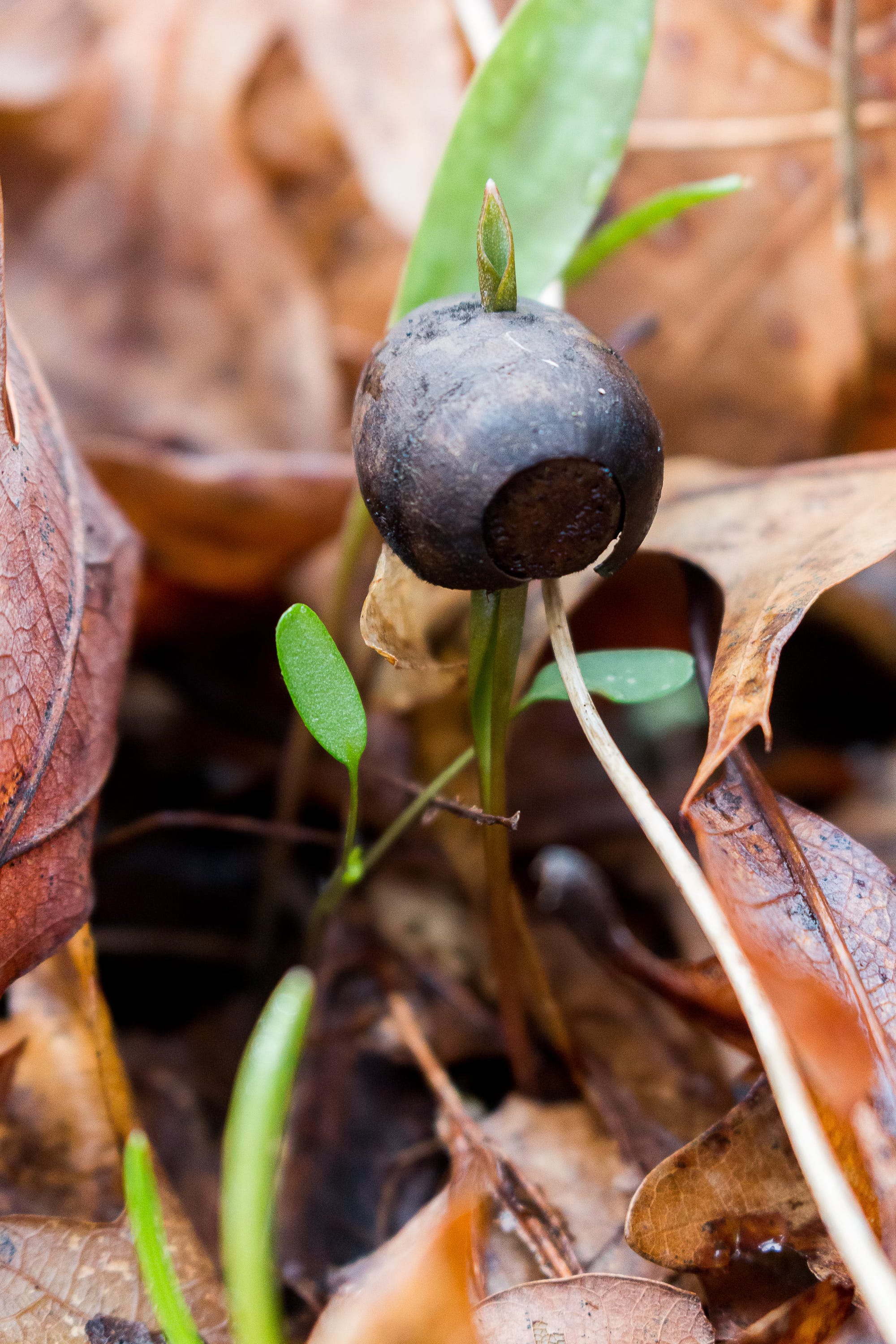
Flower close up
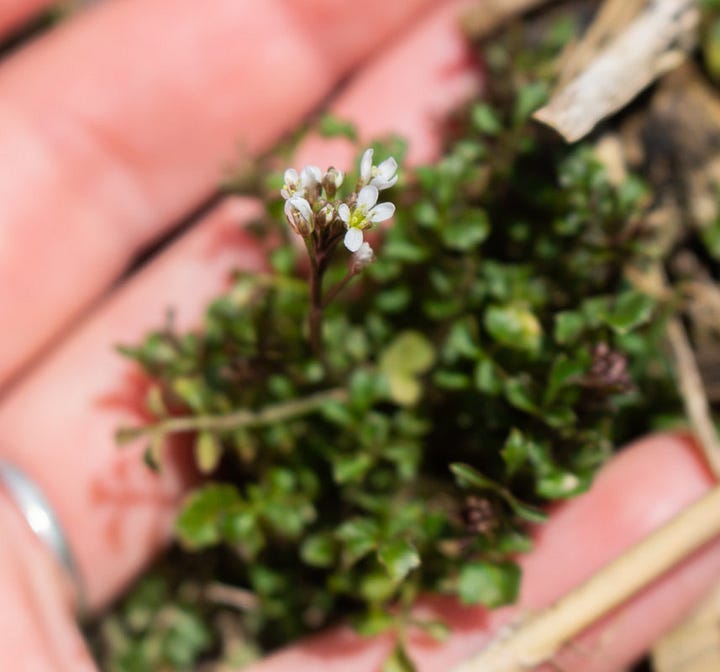
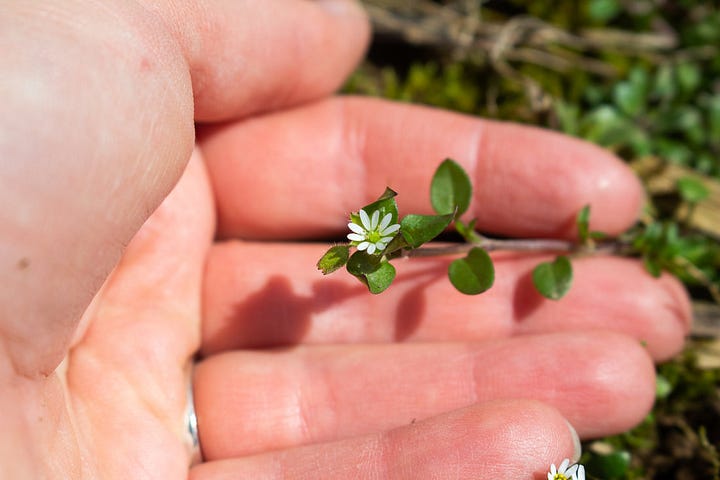
I came across a little white flower. Well, more than one little white flower, great clusters of little white flowers filling the median between the planted field and the fencerow. I let myself sit with them, feeling their leaves, tracing their petals with my eyes. The longer I sat the more variety I found. This wasn’t one great cluster of the same plant, it was four different species all opening their little white flowers to the warm sun!
When observing flowers this season, take a little extra time to look closer.
How many petals does it have?
What shape are the leaves?
Is any part of it fuzzy?
Are there multiple flowers on one stalk?


As spring wakes up the woods, and hiking/outdoor season really begins, I’d like to bring up a few basic guidelines to ensure you and your fellow hikers will have a great time outside.
The old saying “Take only photos, leave only footprints” holds true:
don’t litter
do clean up your doggy’s do do
leash your dog, while your dog may be great, you never know how it’ll respond to another dog or how that dog will respond to it
don’t pick the wildflowers, let everyone on the trails see their beauty
don’t play loud music
do stay on the marked trails to help prevent erosion and damaging delicate plant life
do walk through muddy puddles, walking around them widens the trail and erodes the land around
do take lots of photos and keep wonderful memories

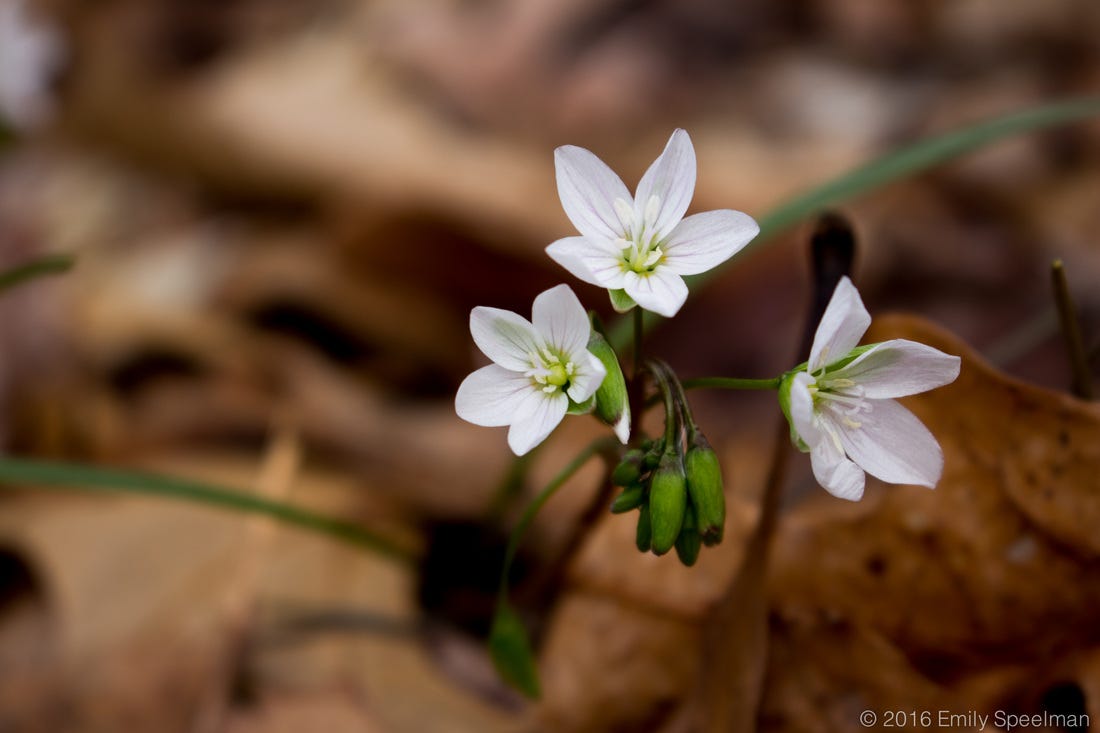
Spring Beauty (claytonia virginica)
The spring beauty (claytonia virginica) is a low-growing plant with broad, linear leaves which distinguishes is from the very similar (claytonia caroliniana) which has broad, ovate leaves. The small flowers which grow in bunches can be distinguished by their light pink/white petals striped with a darker pink. These flowers grow from underground tubers and can be found in large clusters. Where there’s one grouping, you’re sure to find another close by.
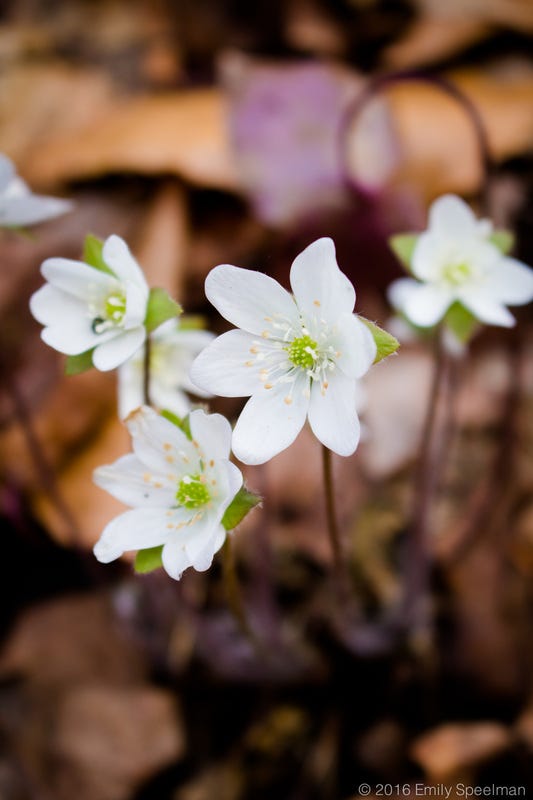
Sharp Lobed Hepatica
There are only two species of hepatica in North America, both live in the same area: the sharp-lobed and the round-lobed hepatica. Both species look the same except for the three deeply lanceolate lobed leaves are either pointed at the end or rounded. Each plant has several slender, hairy stalks that lead to a pretty flower of five to nine petal-like sepals. Fun fact- there are no true petals on these flowers, instead they’re classified as sepals: “Usually green, sepals typically function as protection for the flower in bud, and often as support for the petals when in bloom.” These flowers come in a variety of colors - white, pink, purple, and blue!
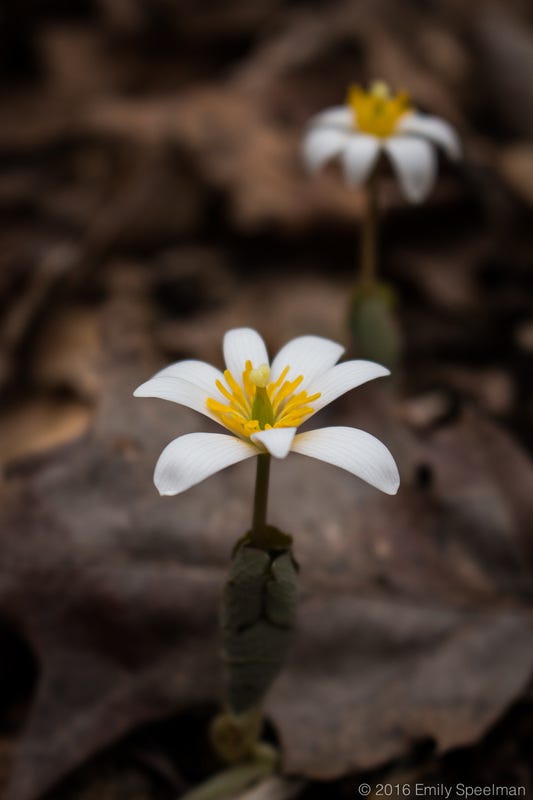
Bloodroot (Sanguinaria canadensis)
The bloodroot, along stream edges and in damp woodland areas. They can be identified by their beautifully symmetrical 8-10 petaled stark white flowers with a bright golden sometimes orange center. What’s most unique about this flower is the flower will rise up and bloom before its leaves unfurl. The flower, once blooming, only lasts a few short days, closing at night and on cloudy days.
The name bloodroot comes from the red fluid from the underground stem; native americans once used the dye from this plant to color baskets, clothing, and to use as war paint and insect repellant.
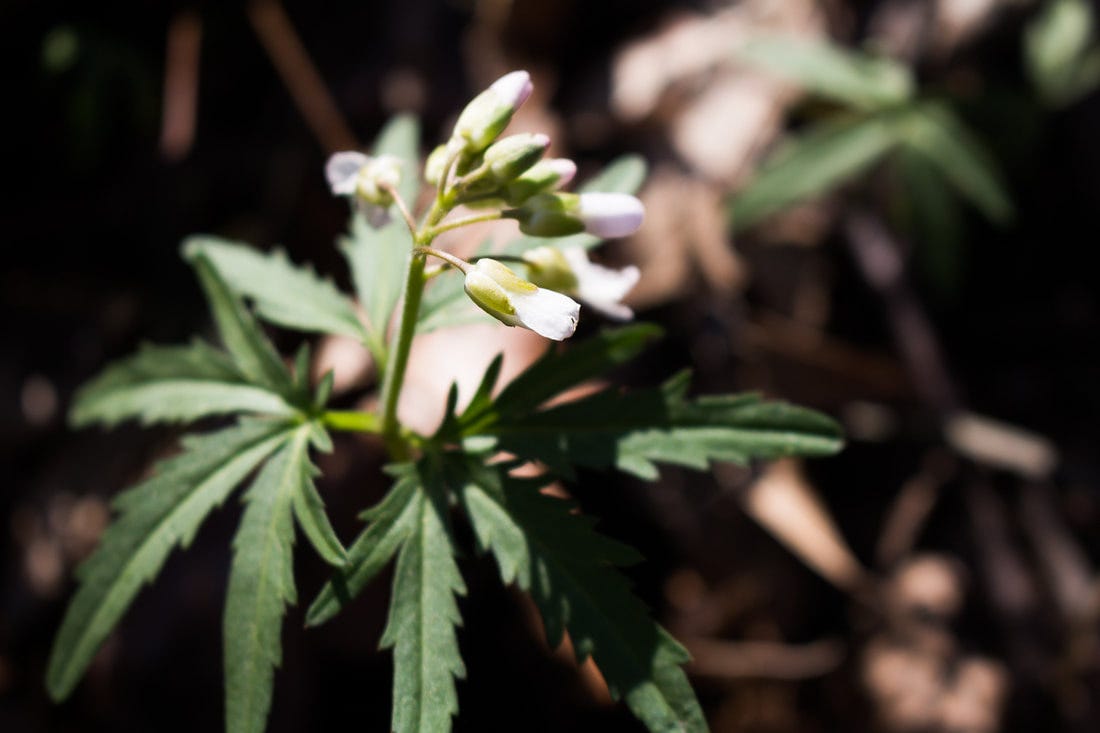
Cutleaf Toothwort
(Cardamine concatenata)
Found primarily in moist woodlands, flowering from April - June, it can be properly identified by the sharply-toothed, deeply-lobed leaves. Flowers bloom in clusters, four petals per flower generally white, but can be white tinged with pinks or purples. The leaves and rhizomes are both edible, raw or cooked. Supposedly the taste is peppery -reminiscent of horseradish but remember it’s illegal to take any part of plants from public parks or nature preserves.
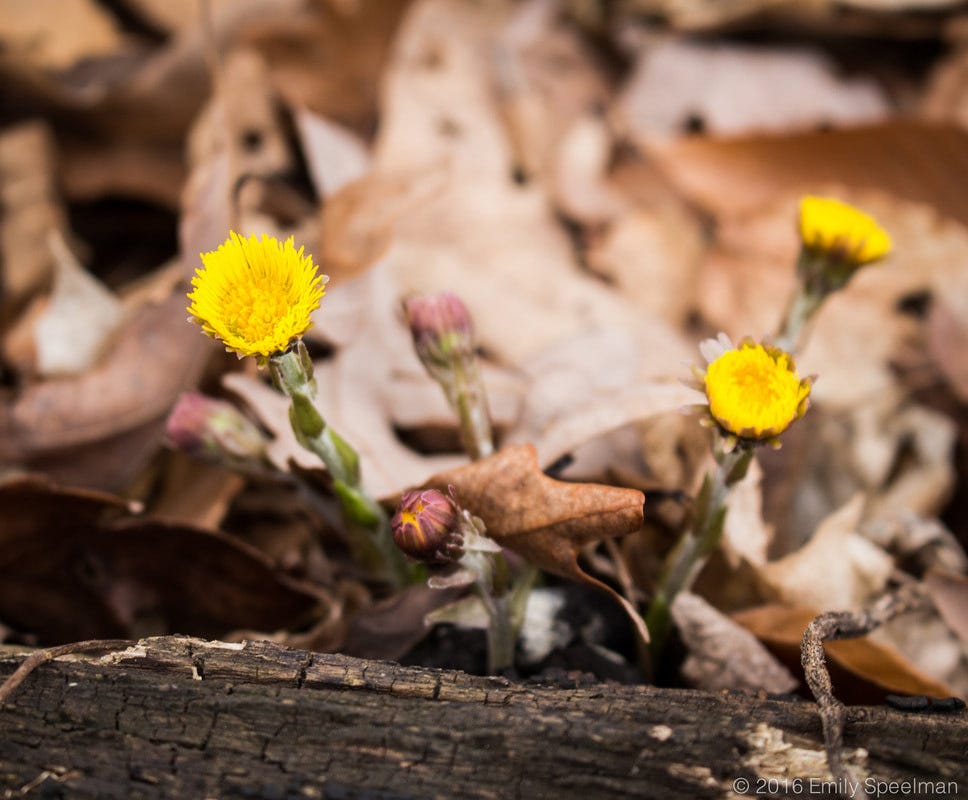
Coltsfoot (Tussilago farfara)
Coltsfoot goes by various other names, coughwort, hallfoot, horsehoof, foalswort, fieldhove, bullsfoot, donnhove, and in France Pas d’âne.
One of the earliest flowers to bloom, coltsfoot’s flowers superficially resemble the dandelion, upon further inspection you will clearly be able to tell the difference by size (flowers are much smaller) the stem (much thicker, scaly, and taller) and the leaves are either nonexistent when blooming or the full round leaves (resembling a colt’s foot) where as the dandelion have oblong sharp lobed leaves. Flowers can be found blooming February - June along roadsides and other waste places.
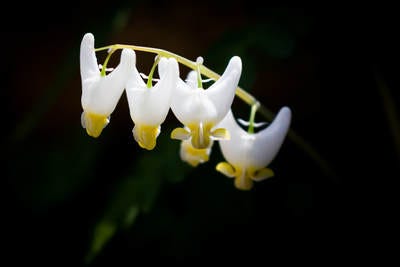
Dutchman’s Breeches (Dicentra cucullaria (L.) Bernh.)
A native wildflower to the Eastern US which produces blooms March - May in rich and rocky deciduous woods and ravines. A long stem emerges from the fern-like foliage to bloom pantaloon-resembling flowers (hence the name). These can be differentiated from the similar looking ‘squirrel corn’ by the sharp spurs and yellow bases of the ‘breeches’ where as the ‘squirrel corn’ has more of a round heart shape and does not have the yellow base. Both the squirrel corn and the dutchman’s breeches are of the ‘bleeding heart’ family and as with the bleeding hearts are highly toxic and can cause irritation even to the touch (unless you’re a bumblebee). This plant is an important source of pollen and nutrients to early awakening bees.
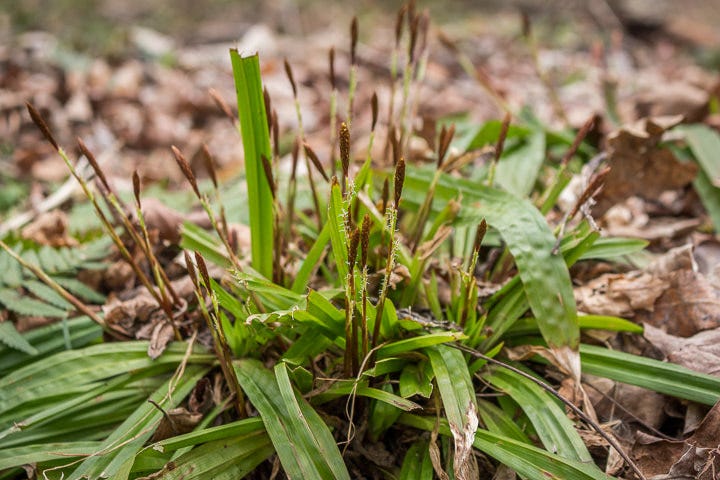
Plantain Leaved Sedge (Carex plantaginea)
This woodland sedge also goes by the name seersucker sedge. It is a native evergreen that can be found across the eastern half of the United States, however it is on the endangered plants list for New Jersey and Minnesota. It grows best in shady areas from rich, moist soils. At its base you can find a reddish-purple coloring. Late spring it will begin to produce seeds.
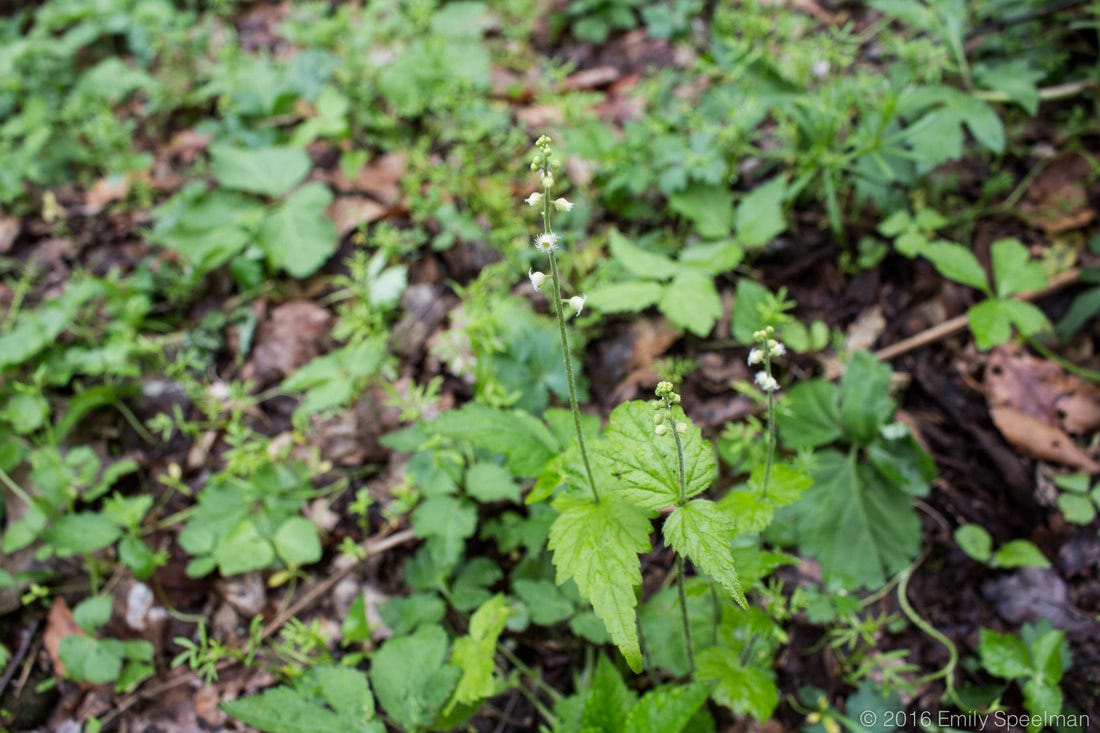
Bishop’s Cap (Mitella diphylla)
Rising up 8-12 inches tall you wouldn’t think it’d be easy to miss this spring wildflower, but the fine stalk lined with delicate tiny cluster of flowers is easy to pass by.. Found mainly in wet, muddy, areas the Bishop’s Cap (also known as twoleaf miterwort) rises on a sturdy, unbranched stem with two identical leaves halfway up. “Each white flower is a less than than ¼” across; it consists of 5 white petals, 10 yellow stamens, a pair of styles, a greenish white calyx with 5 short lobes, and a single-celled ovary.” The petals are deeply pinnatifid, which provides them with a snowflake-like appearance.
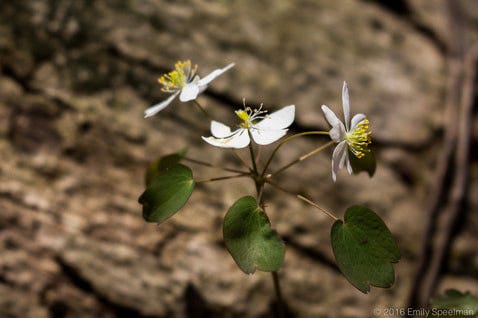
Rue-anemone (Thalictrum thalictroides)
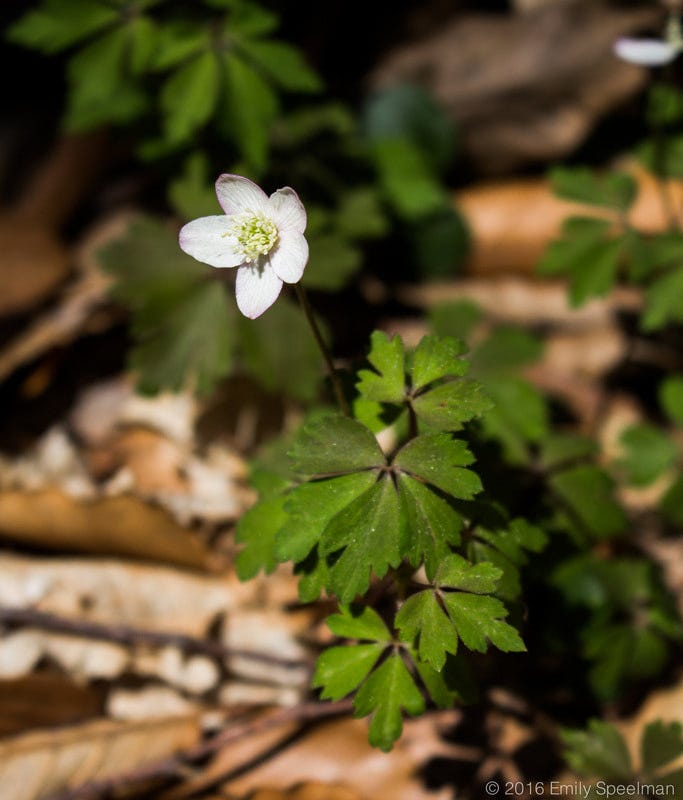
The Rue-anemone is a delicate woodland perennial, blooming between March and June in moist wooded areas. At the top of the stalk is a lacy whorl of 3-parted, dark-green leaves above which rises delicate, reddish-brown stems bearing pink or white blossoms. It is similar to Wood Anemone, except for the numerous flowers and rounded leaflets. The leaves of Rue Anemone are similar to those of the meadow-rues. There is also a False Rue-anemone which has similar flowers but is much taller and has three sets of deeply lobed (three fingered) leaves. Grows in large groups.
Wood Anemone (Anemone Quinquefolia)
A delicate spring wildflower rising up from a stalk which has basal leaves and a whorl of 3- to 5-parted leaves at its apex. With the flower sitting on top a long stalk, it has a tendency to tremble in the breeze giving it the secondary name “Wind Flower”. Blooming April - June in wet ‘mucky soil’ forests.
Giant Red Velvet Mite
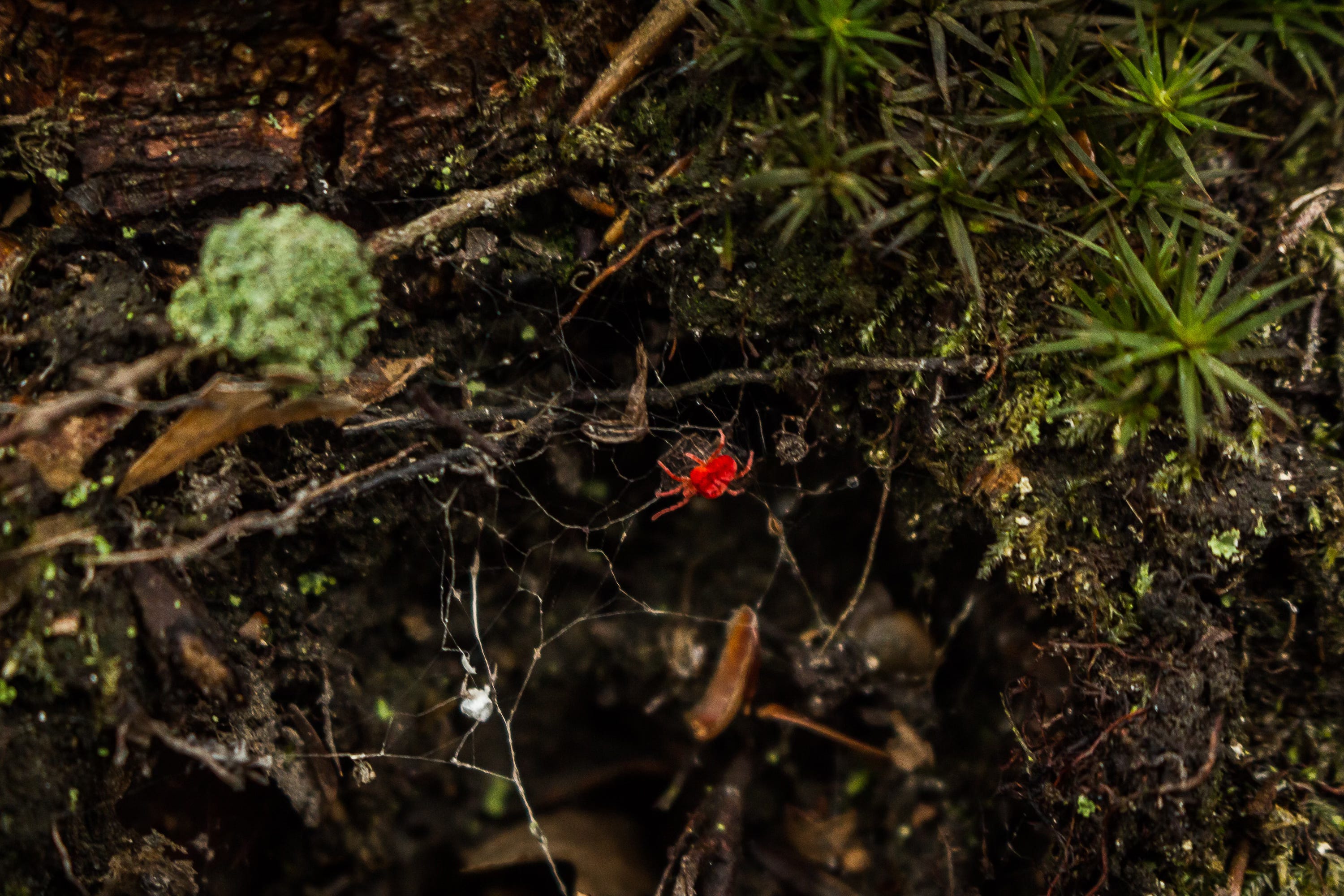
The Giant Red Velvet Mite can be found ins early spring eating the insects that eat the bacteria that decomposes leaves - that was a mouthful, what does that mean? That means the bacteria and fungi can get the forest leaf litter out of the way so the plants and flowers can bloom and grow. An important thing to note about these giants of the tiny world is that they will not bite humans or pets, they’re not out to suck your blood or give you crazy diseases so please leave them alone to do their jobs!
We will see you next month with Mid Spring inspiration, identification and activities.
Until then, Happy Hiking!
Thanks for reading Through The Woods! If you like what you just read feel free to share it.
“Live in each season as it passes; breathe the air, drink the drink, taste the fruit, and resign yourself to the influence of the earth.” - Henry David Thoreau
Comments
Nothing yet. Say the first thing.
Sign in to join the conversation.