
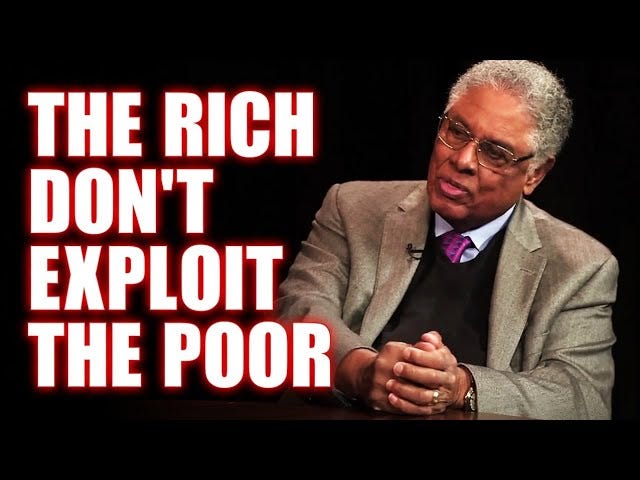
Thomas Sowell has been making the same argument for over fifty years, and it has never once gone out of date.
Price controls don’t lower costs.
They just move the cost somewhere you can’t see it as easily, usually onto quality, availability, or a waiting list.
In Basic Economics, Sowell put it about as plainly as an economist ever puts anything: treating high prices in struggling neighborhoods as greed to be punished, rather than a signal to be read, “only ensures that even less will be supplied to people living in low-income neighborhoods thereafter.”
Watch the video above to hear from the man himself.
New York City just decided to find out the hard way.
Mayor Zohran Mamdani, a self-described democratic socialist, campaigned on freezing rent for a million stabilized apartments and is now rolling out five city-owned grocery stores, one per borough, promising a core basket of goods priced 30 percent below what private stores charge. The city will cover the rent, the property taxes, and the construction costs on those stores.
Mamdani says the discount is simply meant to undo food inflation since 2019. It sounds generous. It sounds fair. It is also, almost word for word, the scenario Sowell spent his career explaining.
Here’s the mechanism, in Sowell’s own terms. A price ceiling doesn’t make a good cheaper to produce. It just makes it illegal to charge what it actually costs to produce and sell. Sowell traced this pattern across continents and decades — gas lines in 1973 that started before the Arab oil embargo even hit, because price controls came first. Rent-controlled apartments that quietly rot for lack of maintenance money, while housing investment flows toward the luxury units that were exempt from the law all along.
As Sowell wrote, a policy sold as help for the poor ends up “shifting resources toward housing affordable only by the affluent or the rich.”
Can a government really sell groceries below cost forever without someone, somewhere, eating the difference?
Mamdani’s own numbers suggest the answer is no. Grocery margins run a few percentage points on a good year. A 30 percent discount isn’t a rounding error you absorb through efficiency — it’s a subsidy, full stop, and taxpayers are the ones writing the check. Even sympathetic reporting on the plan has had to acknowledge the city is footing tens of millions in capital costs just to open the doors, before a single discounted egg gets sold.
Critics didn’t take long to reach for a familiar word.
The Republican National Committee called it a “communist fantasy.” Fox contributor Buck Sexton compared the five stores to Soviet-style outlets. Whether “communist” is the precise label or just the loudest one available, the underlying mechanism is the one Sowell spent his life diagramming: a small number of planners deciding what people should pay, instead of millions of buyers and sellers figuring it out themselves.
That’s really the whole disagreement in one sentence.
Sowell never denied that prices sting. He denied that hiding them solves anything. Rent freezes don’t build a single new apartment. Grocery subsidies don’t grow a single new head of lettuce. They just decide, by government fiat, who eats the cost of pretending the underlying scarcity isn’t there — and Sowell’s answer, unfashionable in 1987 and unfashionable today, was that reality always sends the bill eventually. New York is about to find out who it’s addressed to.
No posts
Comments
Nothing yet. Say the first thing.
Sign in to join the conversation.