
CARNEGIE ENDOWMENT FOR INTERNATIONAL PEACE: The Changing Military Balance in the Black Sea: A Ukrainian Perspective
SECURITY AND DEFENCE QUARTERLY: Technological Maturity for Jeune École: The Case of Ukraine’s Naval Strategy
LOWY INSTITUTE: Uncrewed and Untested: The Wrong Lessons for a Hybrid Navy
AUSTRALIAN ARMY RESEARCH CENTRE: Drones in Modern Warfare (2024–2026)
LOWY INSTITUTE: Modern War and the Systemic Learning Deficit in Western Military Institutions
ENGELSBERG IDEAS: Ukraine Is Mastering 21st-Century Warfare
BREAKING DEFENSE: Everyone Is Learning the Wrong Lessons From Ukraine’s Drone War
MODERN WAR INSTITUTE AT WEST POINT: Build at Scale, Innovate at the Edge, Close the Feedback Loop Fast: Transforming Acquisition for the Drone Age
IRREGULAR WARFARE CENTER: Six Key Lessons From Ukraine’s Drone War
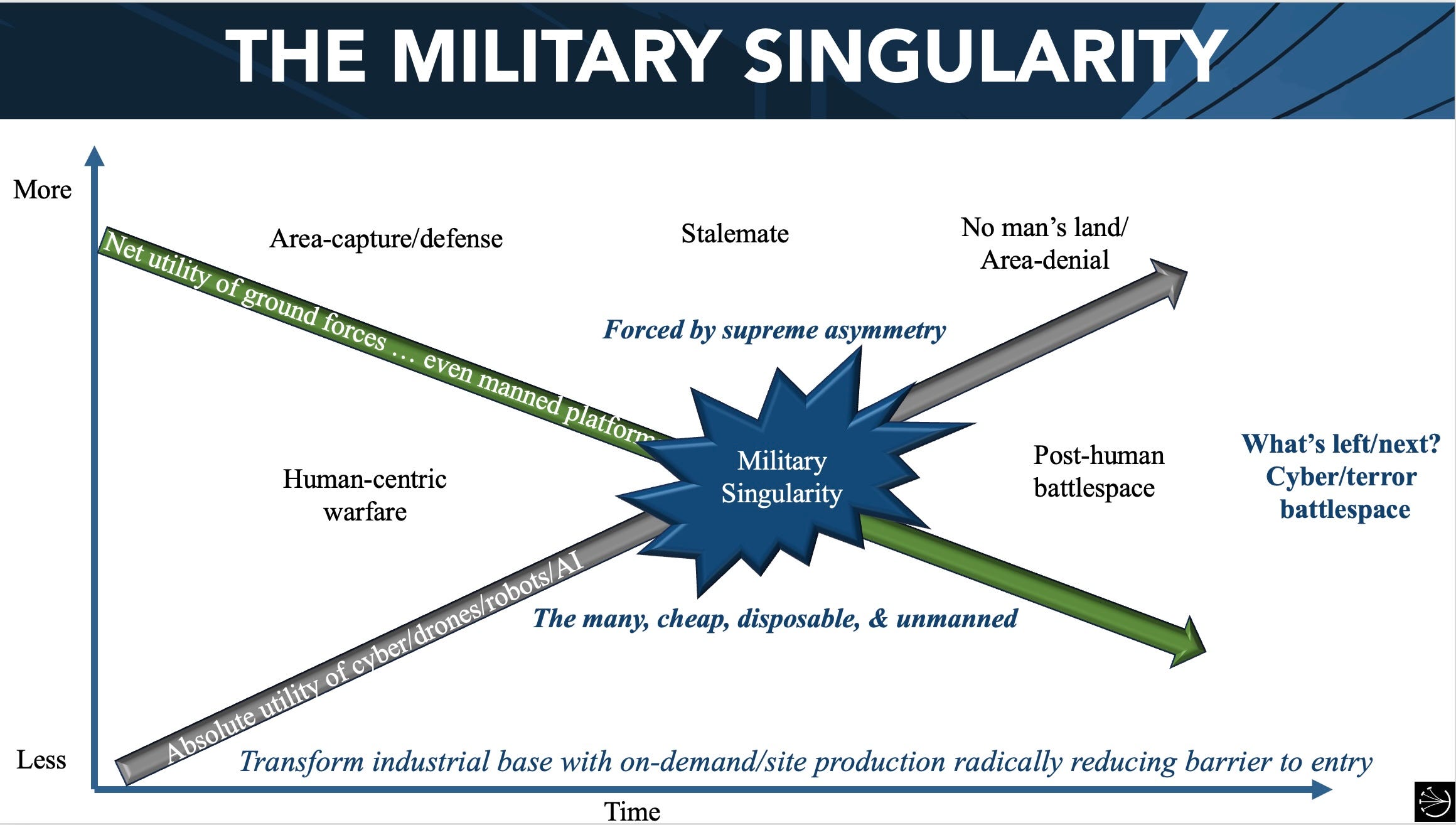
The Military Singularity is not a future event waiting somewhere beyond the horizon. It is the accelerating point at which machines sense, target, decide, strike, learn, and regenerate combat power faster than legacy military institutions can define requirements, authorize action, train personnel, or replace losses.
Scared? We all should be.
Ukraine has supplied the most sustained battlefield laboratory. Iran has supplied the broader strategic test: massed one-way attack drones and missiles, air-defense magazine depletion, regional escalation, and the difficulty of defending complex societies against persistent low-cost attack. Together, they suggest that the central unit of military power is no longer the individual ship, tank, fighter, or artillery piece. It is the adaptive, networked, industrially replenishable kill web.
This is not an argument that humans disappear from war—not totally. It is an argument that humans are being pushed upward and outward. Here are twelve emerging lessons, as I collect them.
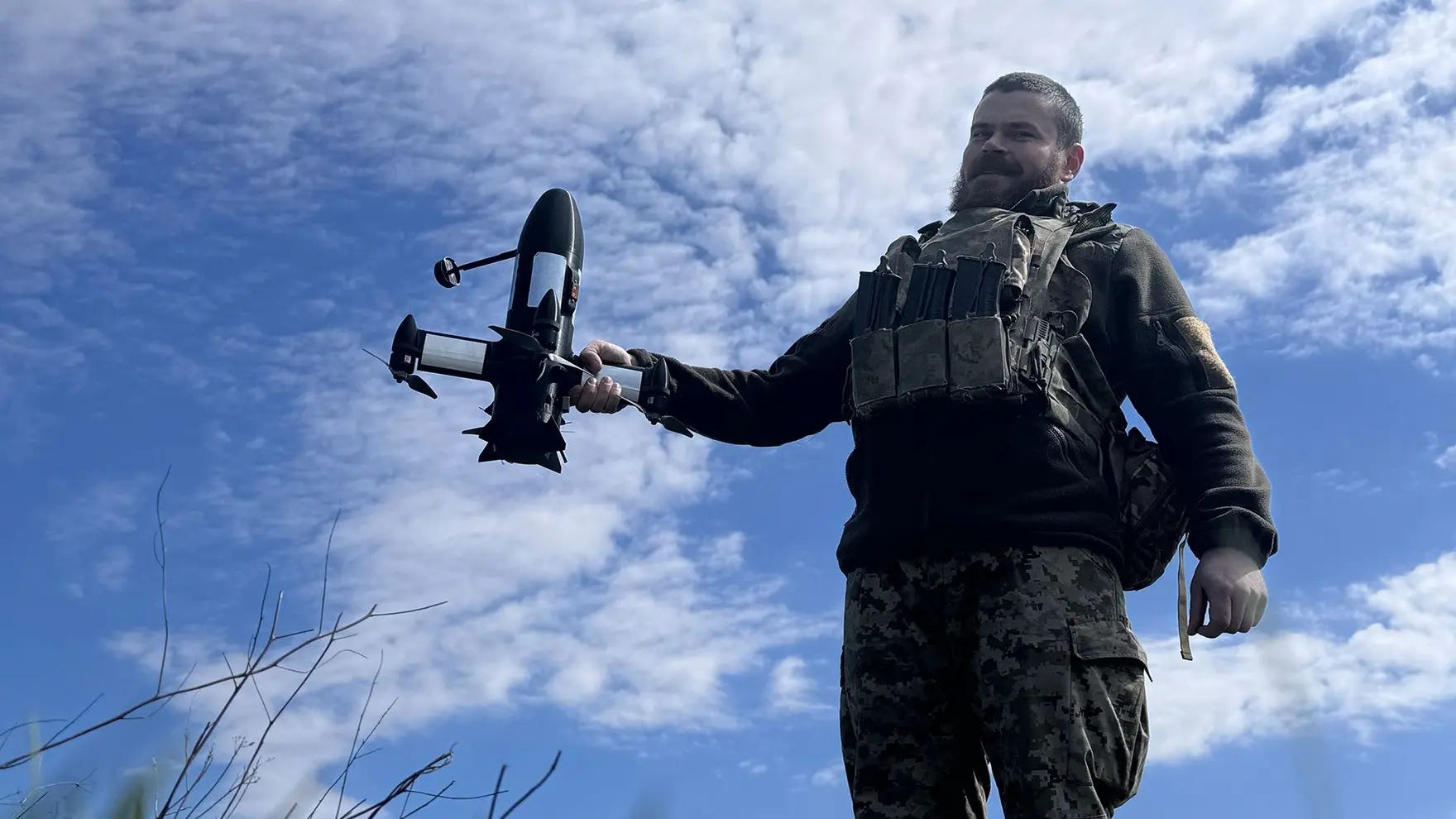
A single exquisite manned platform is no longer the natural center of combat power; it is increasingly a vulnerable node inside a broader network of sensors, decoys, unmanned scouts, electronic-warfare systems, munitions, autonomous strike vehicles.
Ukraine’s Black Sea campaign makes the point beautifully: it did not acquire a conventional fleet to challenge Russia’s Black Sea Fleet ship for ship. Instead, it assembled a kill web of long-range missiles, intelligence, maritime drones, and precision strike that severely constrained Russian naval operations—hell, driving them to the far side of the Black Sea. Platforms still count; they’ve just lost their centrality when it comes to decisive military effect.
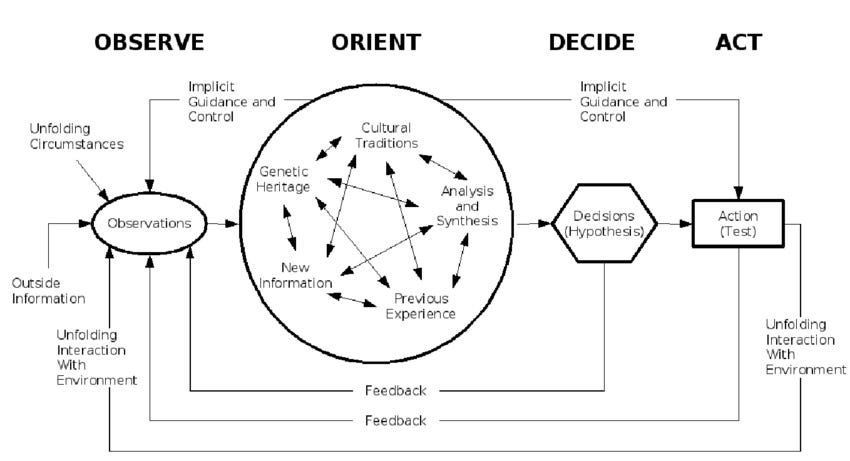
The winning military is the one that shortens the loop between battlefield observation, software revision, manufacturing adjustment, fielding, and operator feedback. That’s the new OODA loop.
Ukraine’s remarkable advantage is not any particular drone model; they’re largely inter-changeable. It is their ability to maintain continuous connection among combat units, engineers, manufacturers, software developers, and procurement officials, allowing revised systems to return to the front in days or weeks rather than after a traditional Western acquisition cycle measured in years. What Ukraine has built is a self-learning military organism.
Ukraine grabs the Holy Grail!
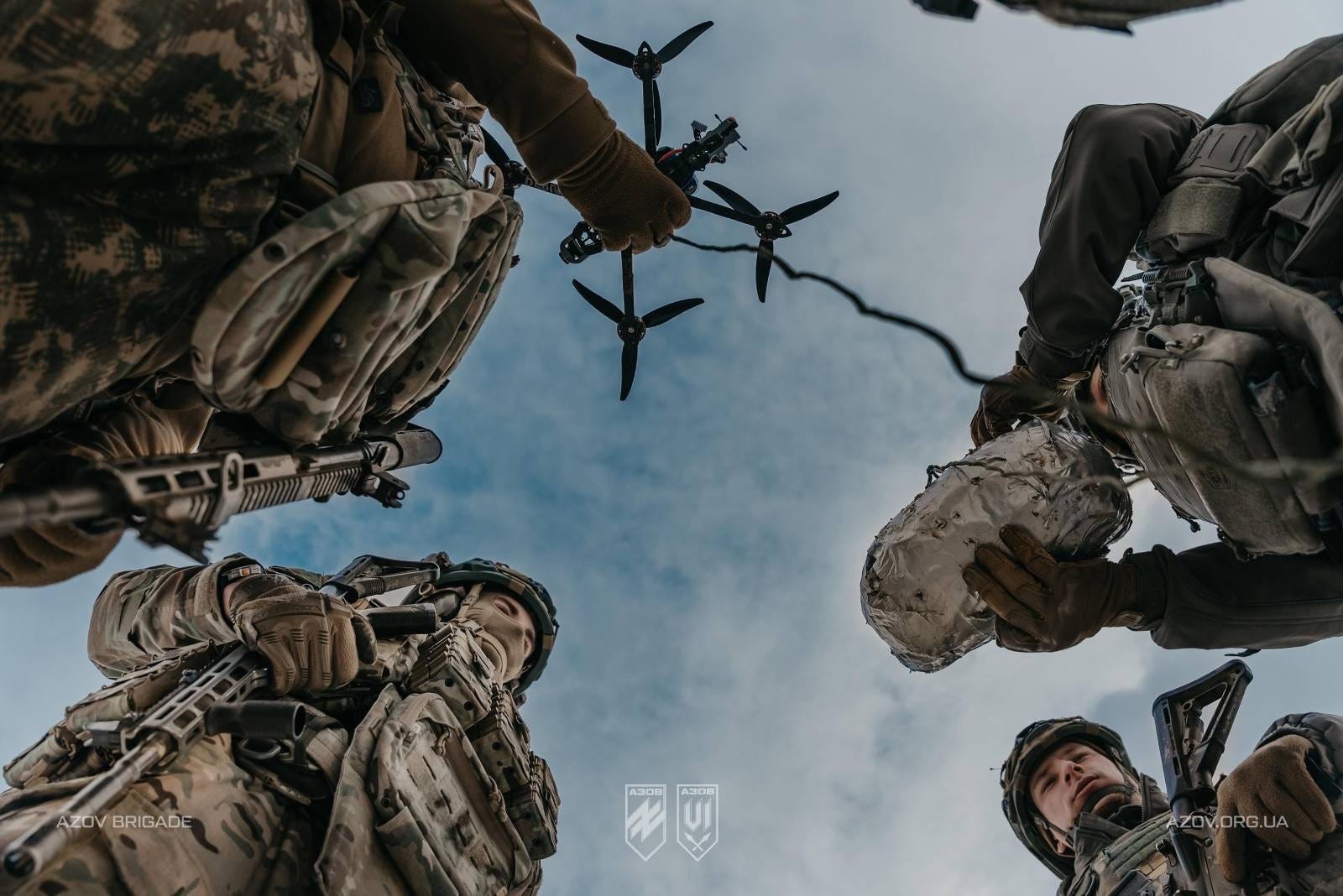
The old relationship between cost and military effect is breaking down when cheap, proliferated drones can force defenders to expend scarce, expensive, and slowly replaceable interceptors. This is the lesson the Pentagon is learning right now with Iran.
Iran’s drone-and-missile model is built around that logic: mix inexpensive one-way systems with more sophisticated missiles, complicate target identification and engagement, compel an adversary to spend premium defensive weapons against lower-cost threats. Even when the defender succeeds tactically, it can still lose the strategic exchange by exhausting magazines faster than they can be rebuilt.
That is asymmetrical warfare at its finest.
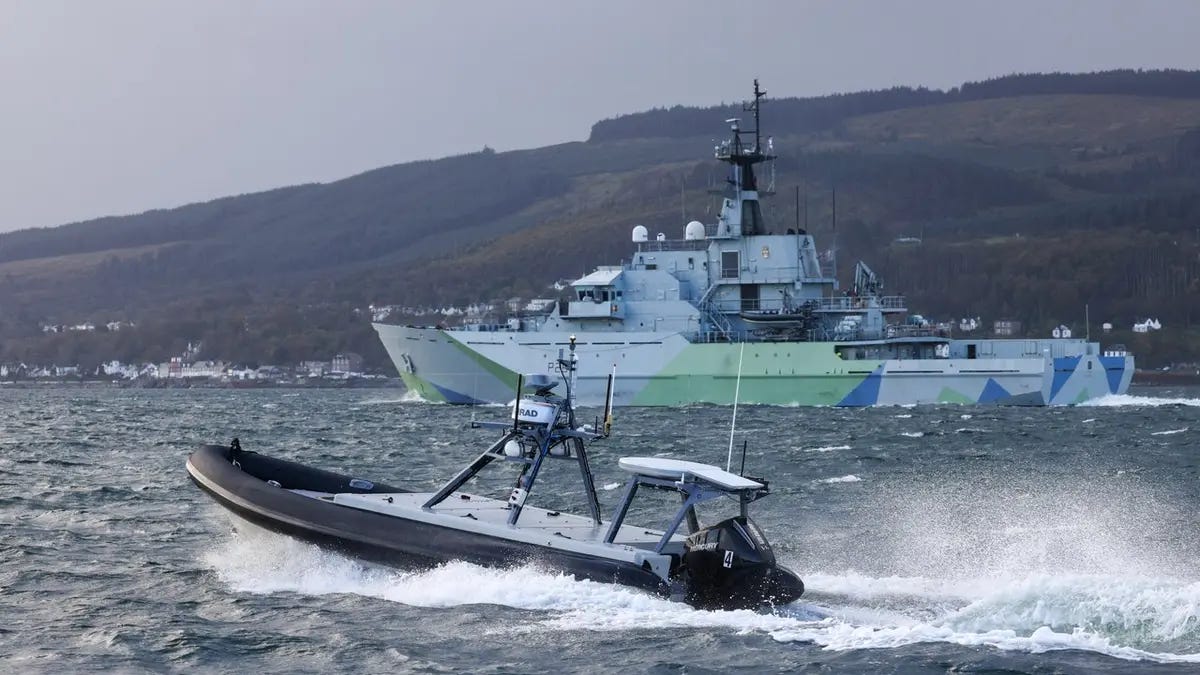
The drone age makes battlefield presence increasingly visible, and visibility makes concentration increasingly dangerous. Armored formations, logistics convoys, artillery batteries, command posts, ammunition dumps, air-defense radars—even ships at port(!) all face an expanding surveillance-strike problem. The side that emits, moves predictably, concentrates physically, or depends on fixed infrastructure becomes discoverable—and eventually targetable—by a vastly growing constellation of cheap sensors.
The counter? Dispersion paired with rapid networking, mobility, concealment, deception, redundant communications. In sum, a shitload of effort.
Ukraine’s drone war shows that unmanned systems are transforming tactics and force structures precisely because they make detection and targeting pervasive. Understand: for most of modern history, the detection and targeting part was hugely difficult and time/resource-consuming. Now it’s whoop! There it is!

A nation’s military strength increasingly lies not in its peacetime inventory but in its ability to manufacture, repair, modify, and surge autonomous systems during a war—just-in-time production.
Ukraine’s drone-industrial expansion violates every known Pentagon rule: its drone-manufacturer base grew from seven firms in 2022 to at least 500 by 2026, while projected annual production capacity rose from roughly 5,000 systems to seven million.
It all comes down to the industrial architecture behind those numbers—distributed firms, commercial components, competitive design, constant combat feedback. This is what the American neo-primes like Anduril want to achieve over here.
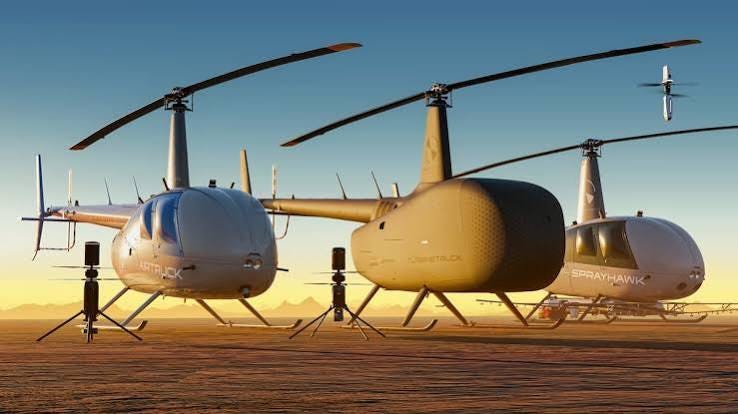
The future force must assume that many systems will be lost and design for replacement rather than worship survivability to the point of unaffordability. That doesn’t mean every weapon should be cheap, disposable, or technically primitive. It does mean a force optimized around a handful of irreplaceable trophies will eventually be outnumbered, out-scouted, and strategically paralyzed by the prospect of losing them.
Unmanned systems offer mass because they can be accepted as expendable in ways that an aircraft carrier, fifth-generation fighter, crewed tank, or highly trained pilot cannot. Ukraine’s use of armed maritime drones shows how quickly an expendable vehicle can climb the capability ladder.
Meanwhile, the Trump administration wants to build gold-plated battleships.
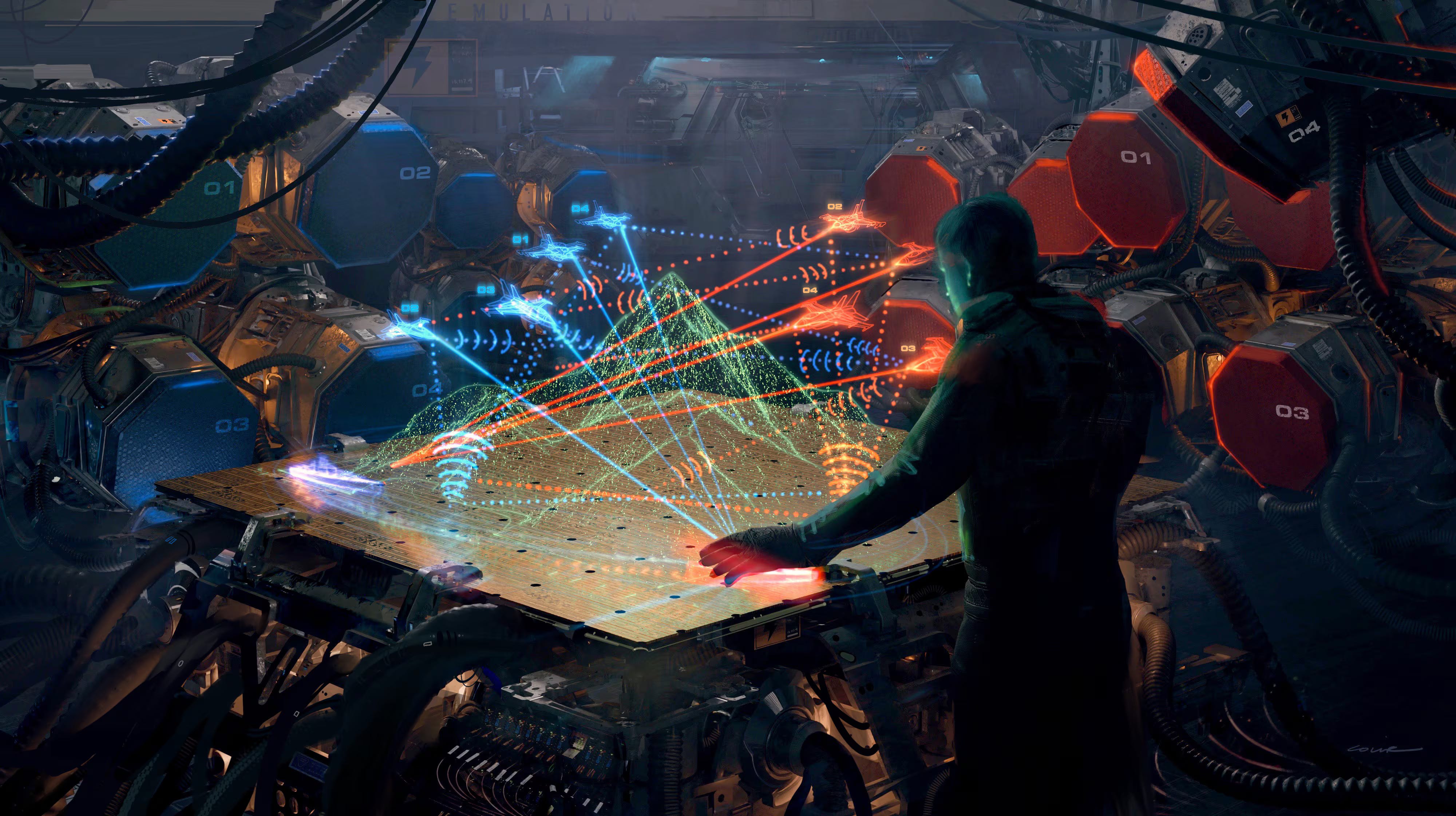
Electronic warfare accelerates the demand for systems able to navigate, identify, coordinate, and complete missions with degraded or absent communications. The battlefield contest now runs through jamming, spoofing, cyber disruption, satellite-navigation denial, fiber-optic control links, autonomous terminal guidance, relay drones, rapidly changing software. This is where “human in the loop” becomes self-limiting. In a heavily contested EW environment, humans can establish mission intent but then are going to end up submitting to machine execution under tactical conditions evolving too rapidly for human intervention. Ukraine’s experience has made EW, autonomy, and rapid adaptation inseparable elements of one system.
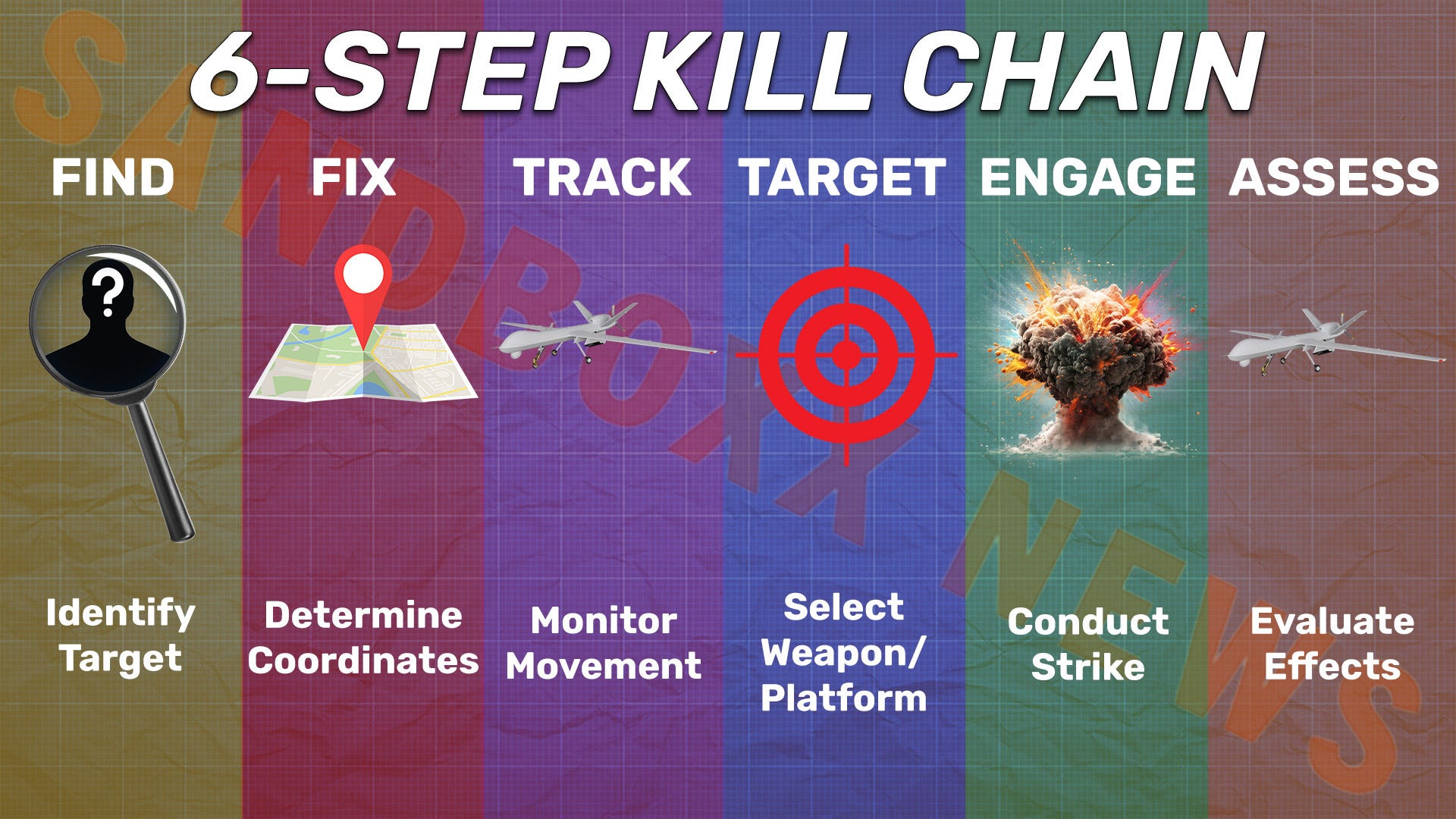
The drone is just the final visible component of a much larger architecture of detection, classification, communication, targeting, electronic attack, interception, battle-damage assessment, replenishment.
Ukraine’s increasingly integrated drone families make the point: reconnaissance drones find targets; relay drones extend communications; electronic-warfare systems disrupt defenses; interceptor drones counter incoming threats; strike drones attack; and assessment drones verify results.
In other words, tomorrow’s military competition is not drone versus tank or drone versus ship—it is adaptive system versus adaptive system—as in, drone-on-drone action.

Frankly, this one is a stunner.
Start with Ukraine, which has demonstrated that a state lacking a traditional navy can nevertheless contest an entire sea, drive a stronger fleet away from key waters, and protect vital commerce—all through an integrated asymmetric campaign. That is a profound warning to every navy built around the premise that maritime combat power resides principally in big, crewed, capital-intensive hulls—a lesson Trump’s Pentagon doesn’t seem to be picking up.
Ukraine’s success comes from coupling maritime drones with shore-based missiles and intelligence, forcing Russian warships to operate differently and reducing their freedom of maneuver. Iran’s long-standing strategy in and around the Strait of Hormuz offers an earlier, if less combat-proven, version of the same basic logic: use missiles, mines, fast attack craft, drones, and geographic chokepoints to threaten a materially superior navy and place globally consequential commercial traffic at risk.
An important caveat": neither case proves that small unmanned craft alone can deliver global sea control, sustained escort, undersea dominance, or transoceanic logistics. The Military Singularity, for now, applies to sea denial but not sea control; it can produce and sustain a negative but not a positive.
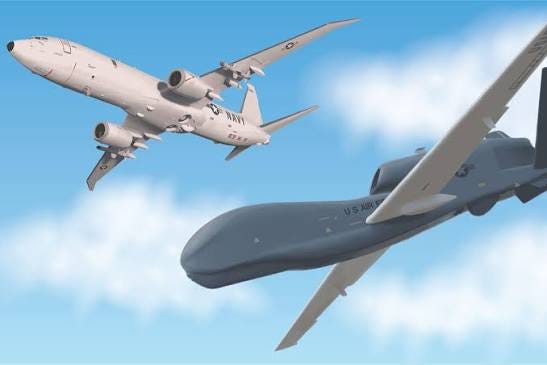
The question is no longer whether manned platforms persist, but what uniquely valuable function justifies their cost, concentration of risk, human exposure. The answer ain’t “because that’s where the shooter sits.”
Crewed aircraft, ships, submarines, and land formations remain important as high-power sensors, command hubs, arsenal ships, undersea persistence platforms, long-range logistics bases, repair centers, political instruments of presence and assurance.
But here’s the new requirement: all these platform must derive their value from the robotic formations they generate, sustain, coordinate, recover. The old force structure model is thereby flipped on its head: a small number of hardened manned nodes support a much larger autonomous periphery, meaning almost nobody is on the front-line anymore.
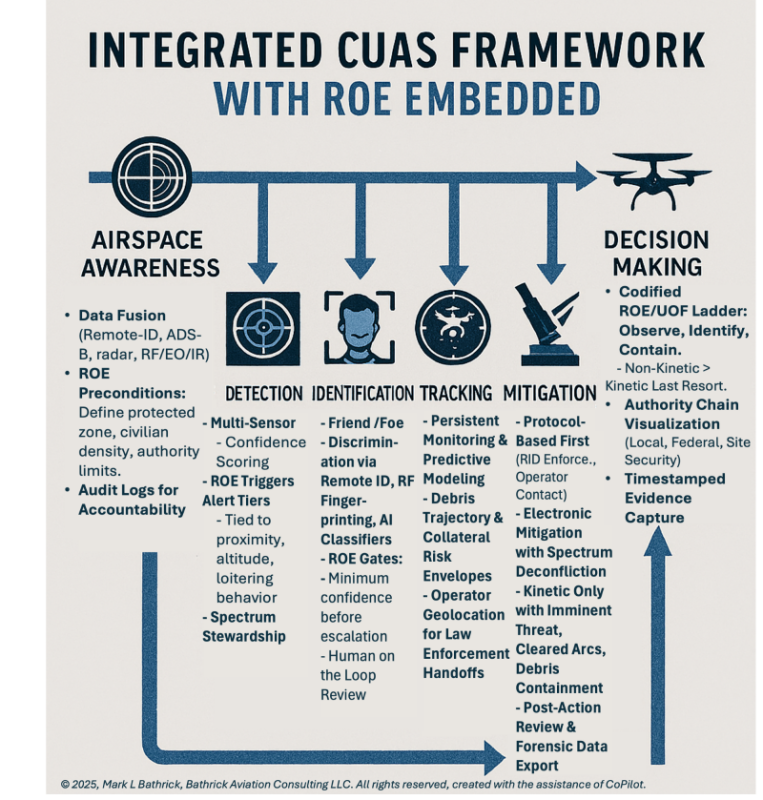
The more autonomous combat becomes, the more essential human control becomes at the level of political authority, escalation management, rules of engagement, accountability. Notice the lack of actual triggers in any of those domains.
Machines can perform increasingly sophisticated tasks but they cannot legitimately decide a nation’s political aims, balance escalation risks between nuclear-armed adversaries, administer occupied populations, negotiate surrender, bear moral/fiscal responsibility for a campaign.
On that score, my old Leviathan-SysAdmin distinction becomes more relevant: machines make the Leviathan function faster, but no amount of autonomous killing generates the legitimate order, recovery, and governance associated with the SysAdmin task. There is no consequence-free warfare, as Trump seems to think.

The true Military Singularity appears when battlefield technology changes faster than militaries can reform their doctrine, procurement, promotion systems, command authorities, and force structures.
Which would be right around now.
This is the core challenge we face: Ukraine has not merely revealed a technology gap; it’s exposed a learning gap among institutions conditioned to reward process compliance and slow, centralized acquisition. The danger is we keep prioritizing familiar competencies over new solutions despite access to unprecedented real-time evidence from Ukraine and Iran.
To which I say, THANK YOU FOR YOUR ATTENTION TO THIS WAR!
America and our allies now face two futures: preserve the old hierarchy with platforms central and drones peripheral; or build a distributed military ecosystem featuring massive stocks of expendable autonomous systems alongside a decidedly reduced-but-hardened layer of manned platforms that exists to command, sustain, repair, rearm, and politically control that machine force.
Ukraine has shown that the future of war belongs to the side that learns and regenerates fastest. Iran has shown that low-cost, persistent attack can impose unsustainable burdens on even the most advanced defensive systems. The Military Singularity therefore does not vanish humans from the battlefield.
But it does mark the point in history when militaries that still think in terms of platforms discover they are fighting an ecosystem—and losing to it.
Here’s to avoiding learning that lesson the hard way.
Share Thomas P.M. Barnett’s Global Throughlines


Comments
Nothing yet. Say the first thing.
Sign in to join the conversation.