
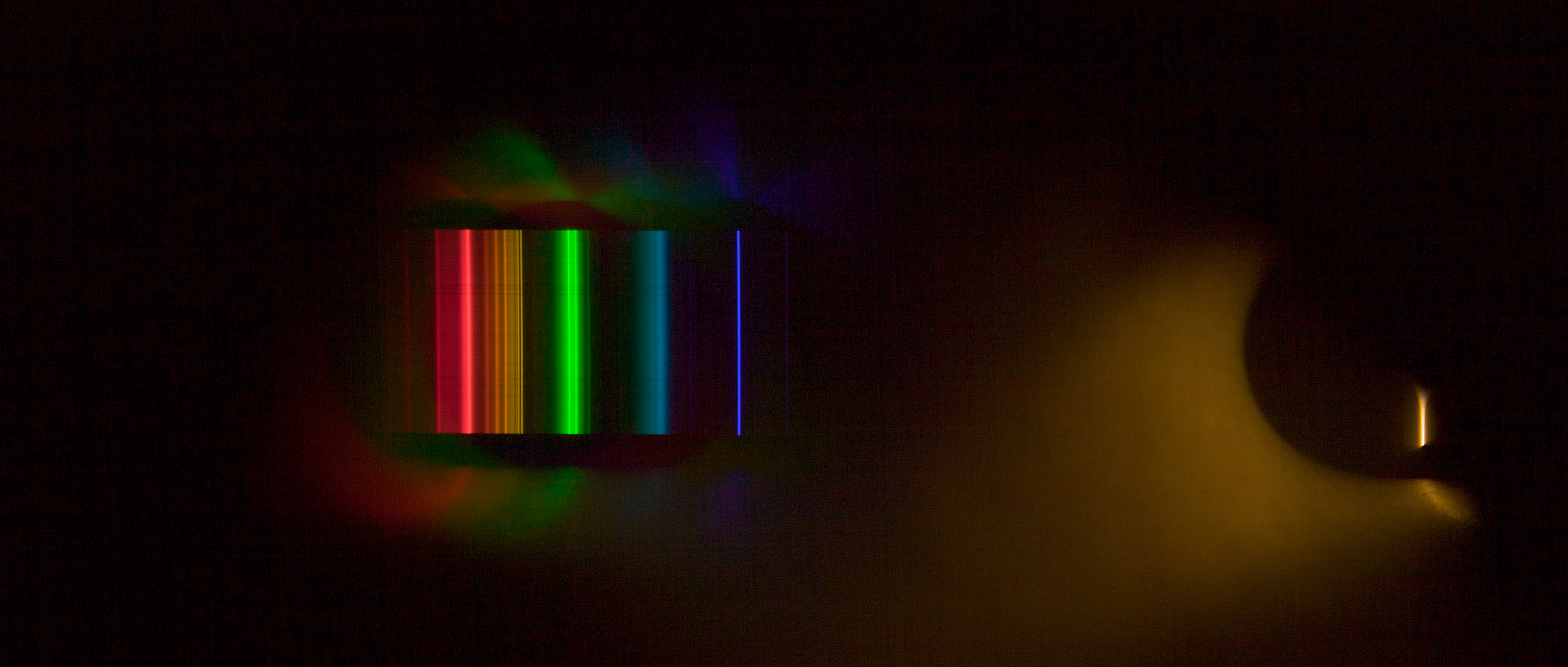
Recently I have been working quite extensively on Colour Science related stuff, my API is coming along although it is not yet ready for prime time, I hope sometime this summer.
While surfing for informations regarding Spectrophotometers, I have seen quite a few interesting websites like Spectral Workbench and a few others describing how to build a spectroscope from a CD and a screwdriver.
I found Simon Quellen Field's website and his spectrograph tutorial and decided to do the same! While very similar to Simon's spectrograph, I incorporated some build variations that's why I will describe the steps I followed.
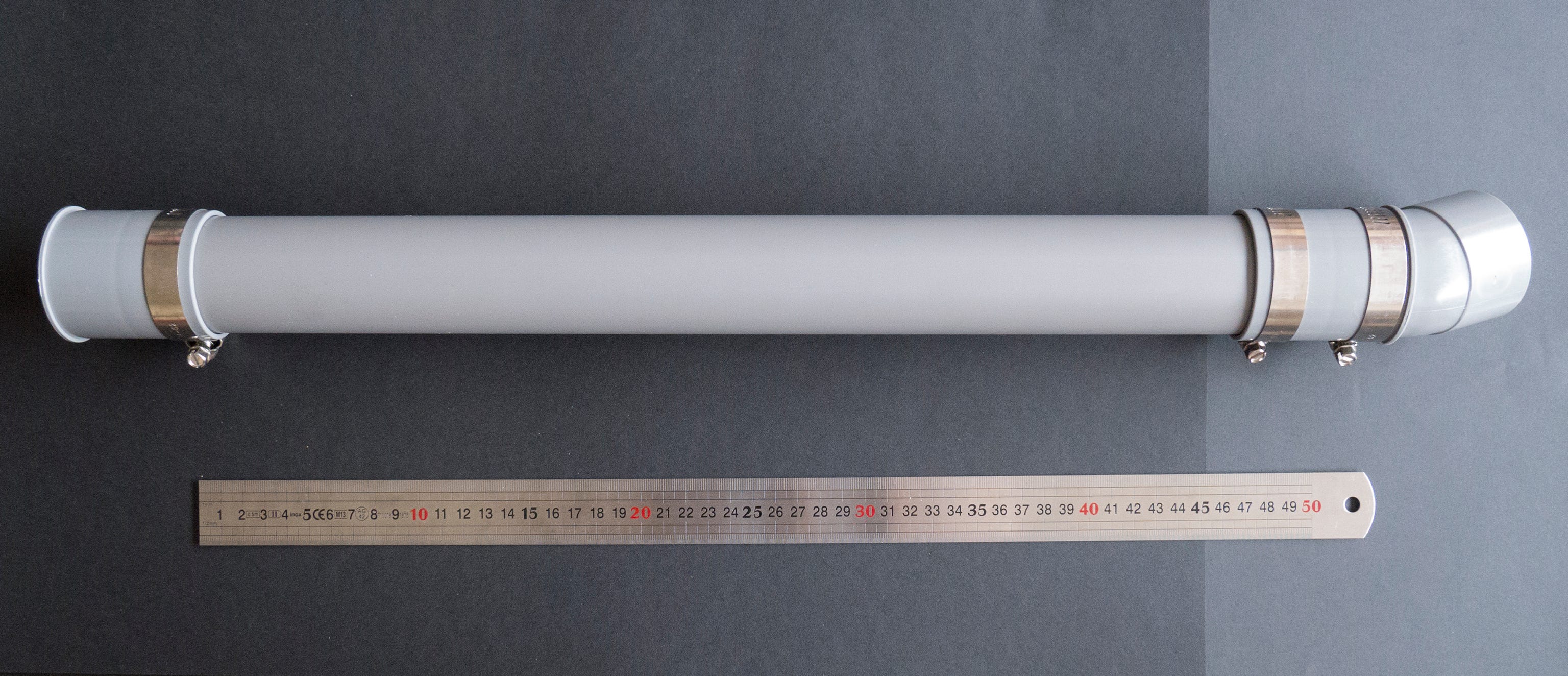
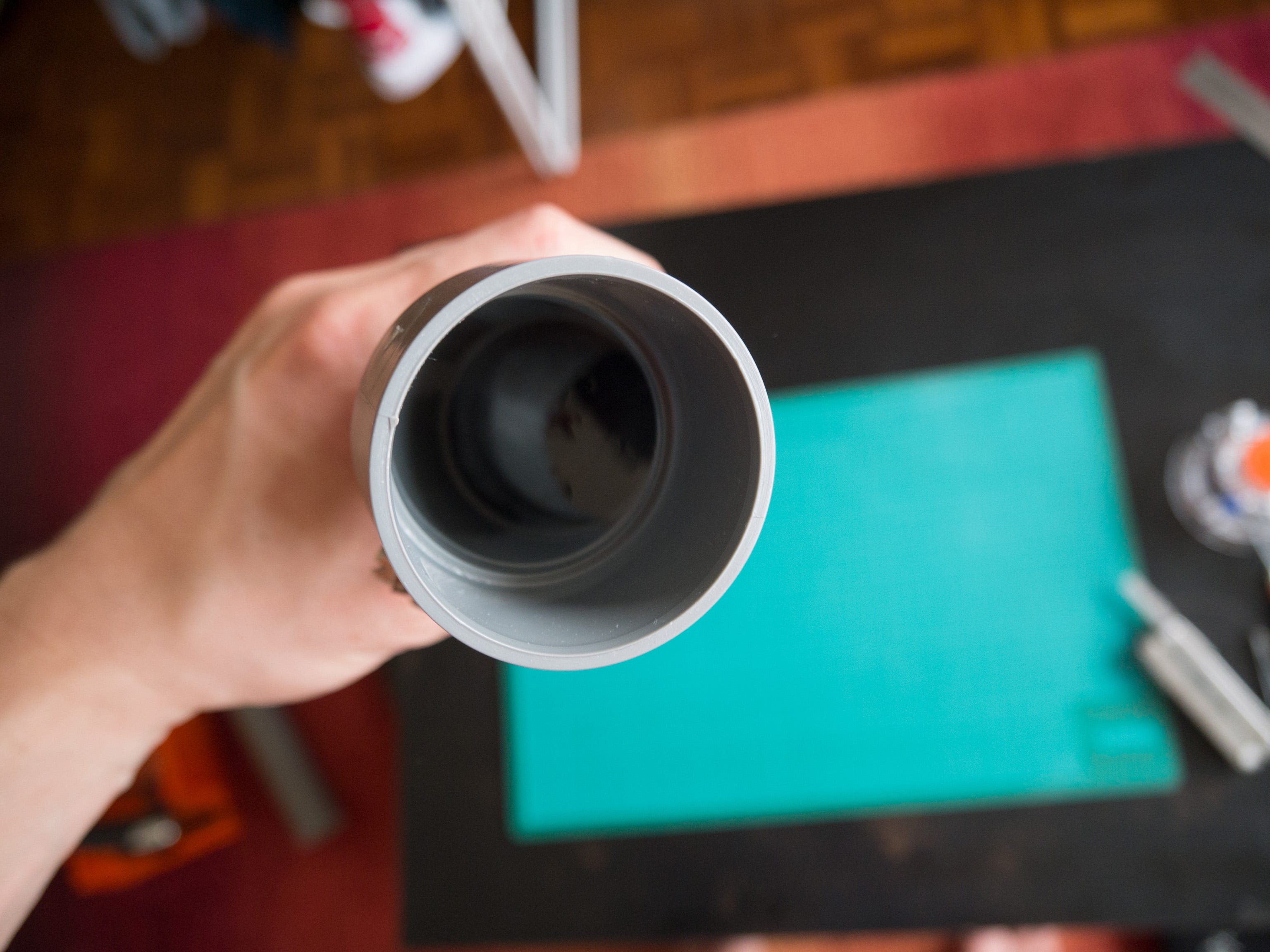
First here is a picture of the spectroscope I built yesterday (Essentially a PVC pipe :)):
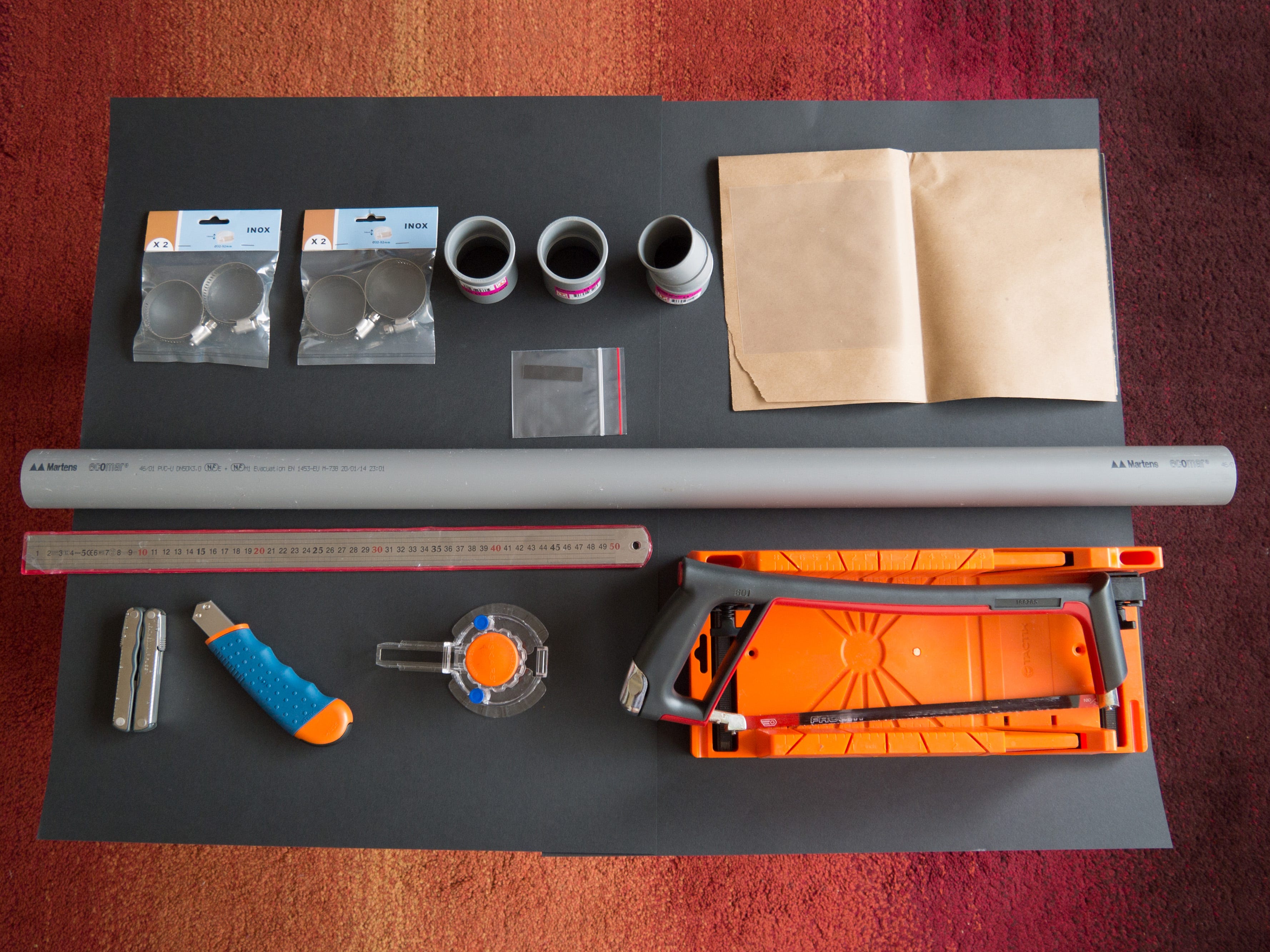
You will need the following material list, I have sourced pretty much everything from a french hardware store:
1x 1m and 50mm diameter sewage disposal PVC tube (I would have preferred black pipes but they didn't have any and it's mainly a stlye issue.
1x 22.5 degree 50mm diameter male female PVC angled pipe coupling
3x 32-52mm metal collars (I didn't wanted to glue anything)
1x 50x65cm 120gr sheet of black Canson paper
1x Super glue tube
Here are the tools I used:
1x Ruler
1x Metal cutting saw
1x Cutter
1x Mechanical pencil
The goal is to create a 50cm tube with the acetate collimation slit at one end and the holographic diffraction grating film at the opposite end. They will be respectively maintained by a connecting sleeve. The black Canson paper sheet will be rolled into the tube to limit internal reflections. The angled pipe coupling is where the observer will see the spectrum right after the holographic diffraction grating film.
Start by cutting the 1m sewage disposal PVC tube at the 50cm length and clean the cut with the cutter.
Then cut 2x 49mm diameter circles: One into the sheet of black Canson paper and another one into the holographic diffraction grating film with the circle cutter (I actually ended up cutting more than that because of trial and error). You need to ensure that the circles diameter is a bit less than the PVC tube diameter, otherwise they will bend and distort when you sandwich them between the connecting sleeves and the PVC tube.
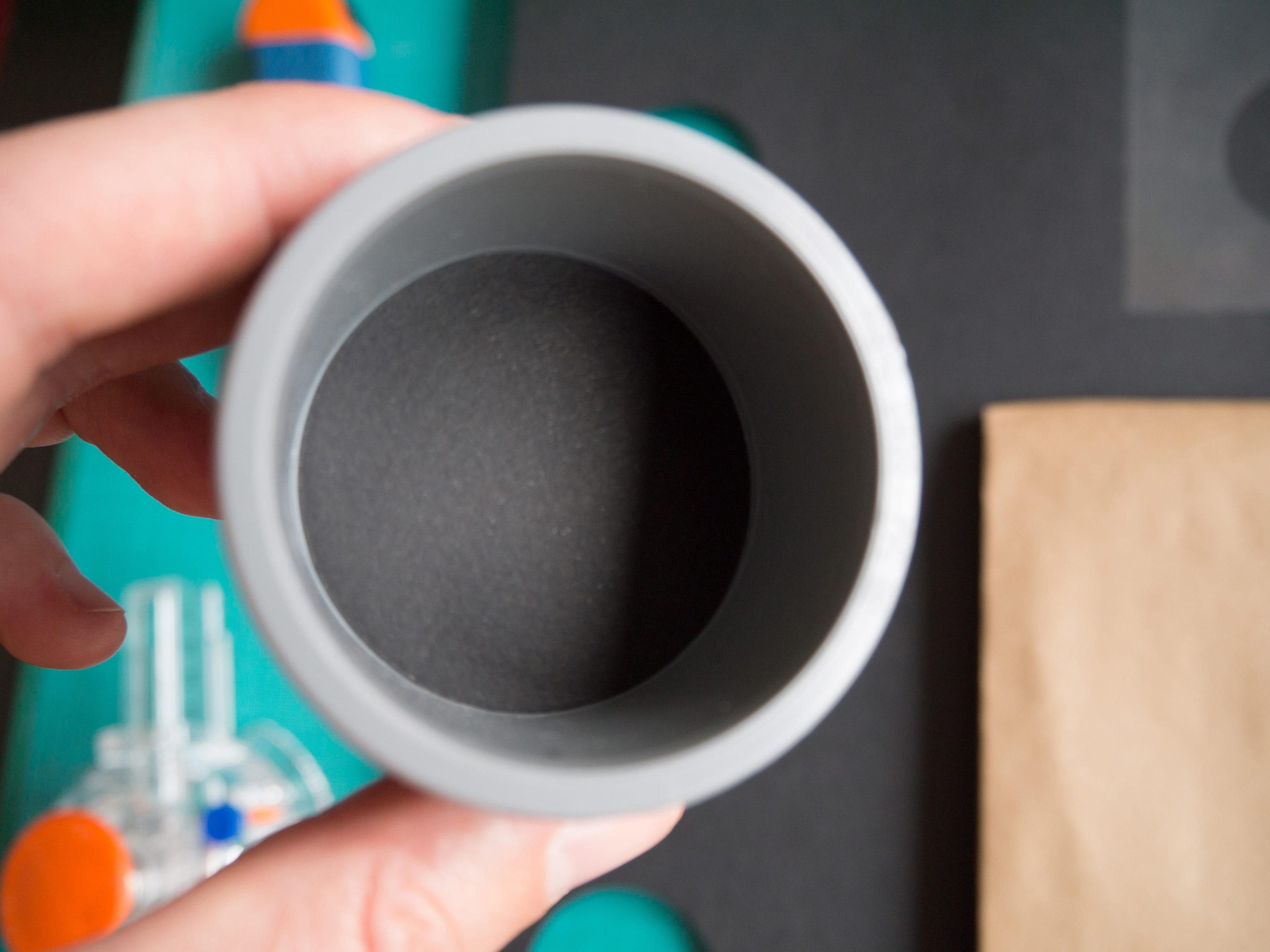
Trim a hole for the acetate collimation slit into the black Canson paper circle, with enough border so that you can glue the slit onto it.
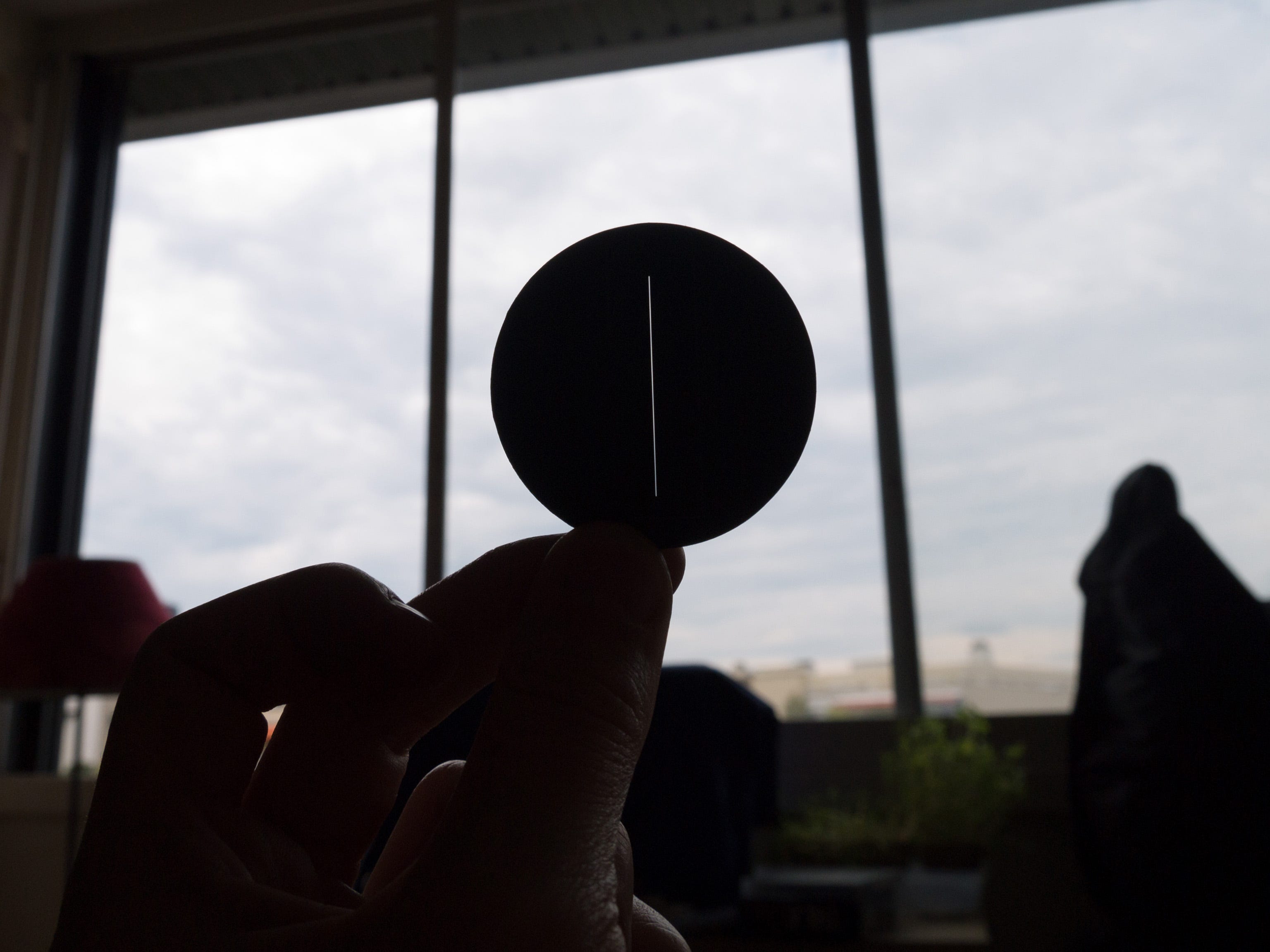
Insert the acetate collimation slit into one of the connecting sleeves and then insert the PVC tube into the connecting sleeve so that the acetate collimation slit is sandwiched between the two. Ensure the connecting sleeve and the PVC tube are hold together by using a metallic collar. I oriented the collar screw so that it was roughly inline with the acetate collimation slit direction, it will be a good indicator for later usage.
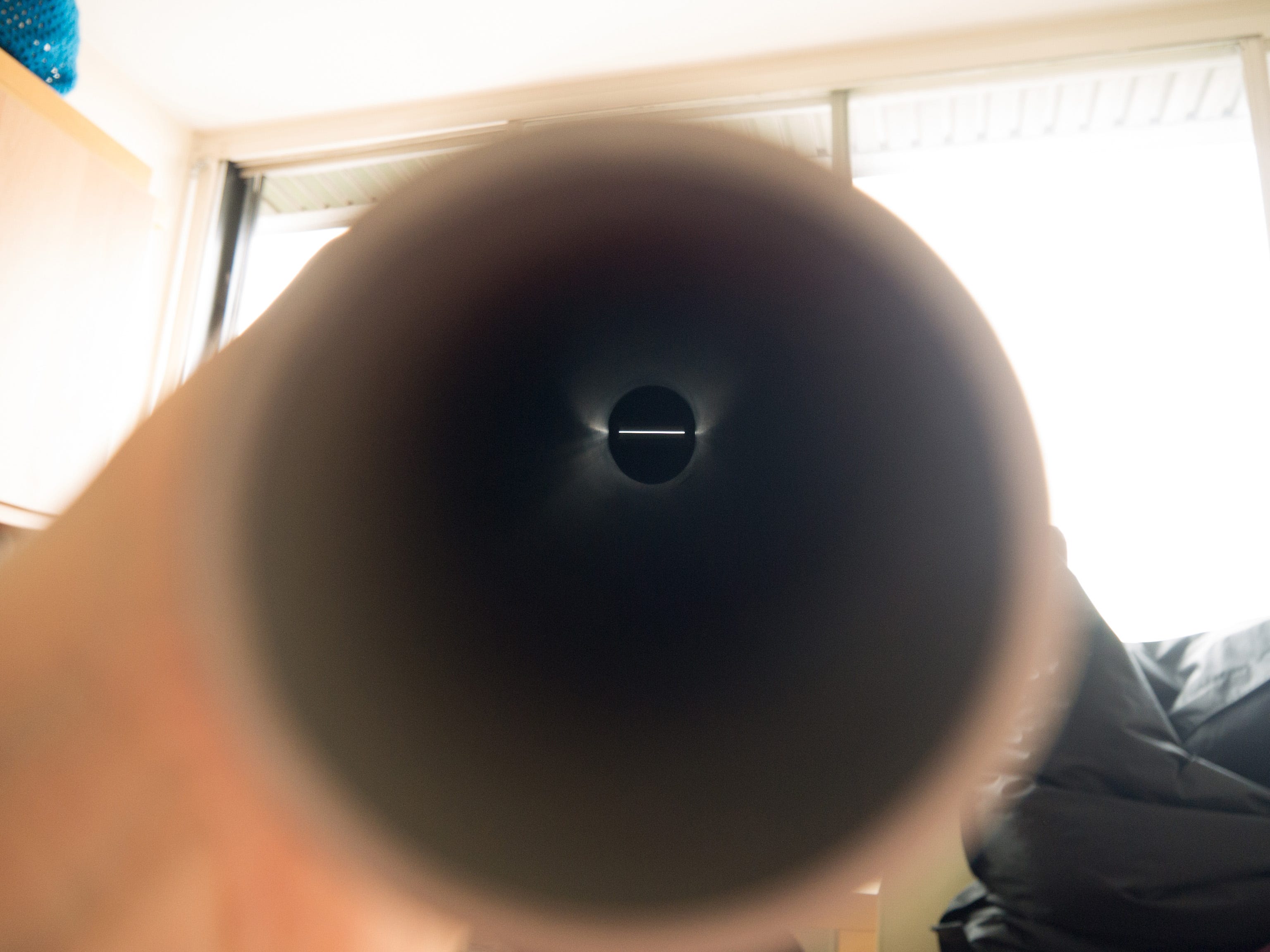
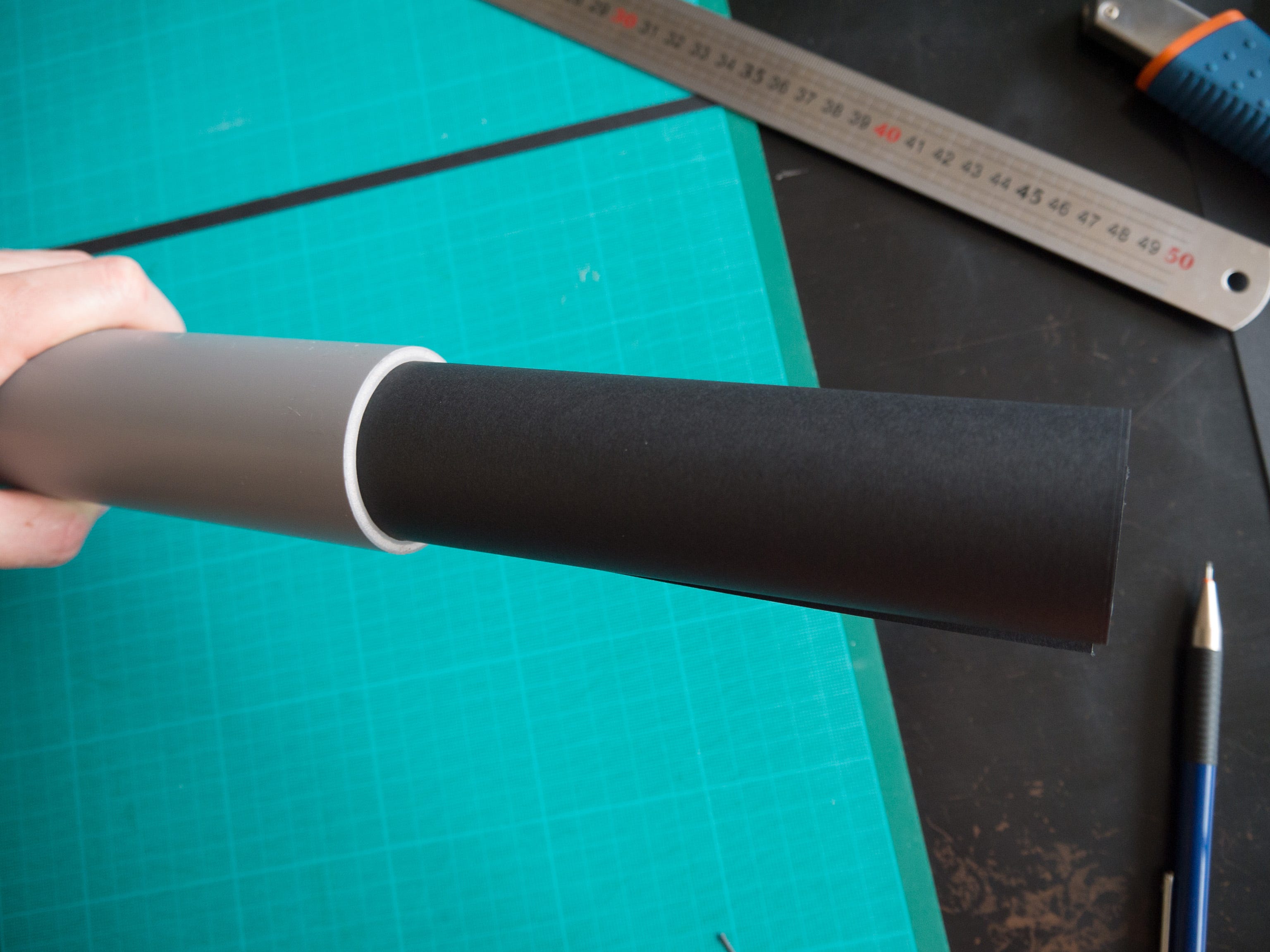
Cut a ± 50x20cm band of the black Canson paper and roll it inside the tube, be careful at which side of the paper is the less reflective and that it perfectly fit inside the tube without overreaching the open end because you will have to put the holographic diffraction grating film circle there.
Same than Step 4 but with the holographic diffraction grating film circle this time. I suggest that you look through the film to determine the horizontal axis. Rotate it in front of one of your eyes until the diffraction spectrums generated are horizontal, then when you sandwich it against the PVC tube, ensure that the spectrums horizontal direction is perpendicular to the acetate collimation slit direction.
My film was a bit dirty and filled with finger prints, I cleaned it with some dish-washing liquid (Not sure if it affects the optical quality, we are not doing high precision work anyway).
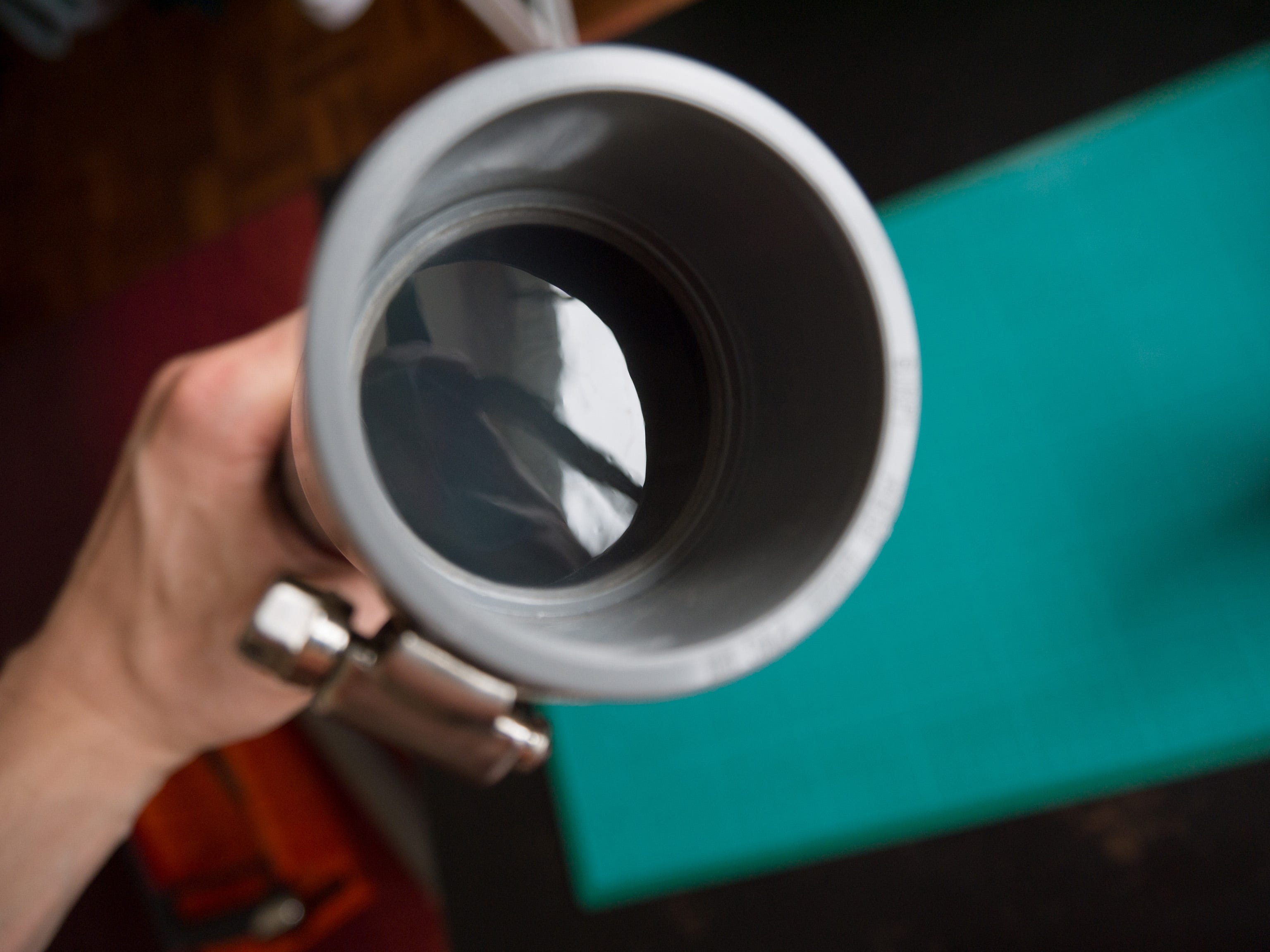
Finally, put the PVC angled pipe coupling at the holographic diffraction grating film end, ensure everything is tight with a third metallic collar. You can rotate the connecting sleeve until the generated spectrum doesn't exhibit any shearing.
Congratulations! You are done :)
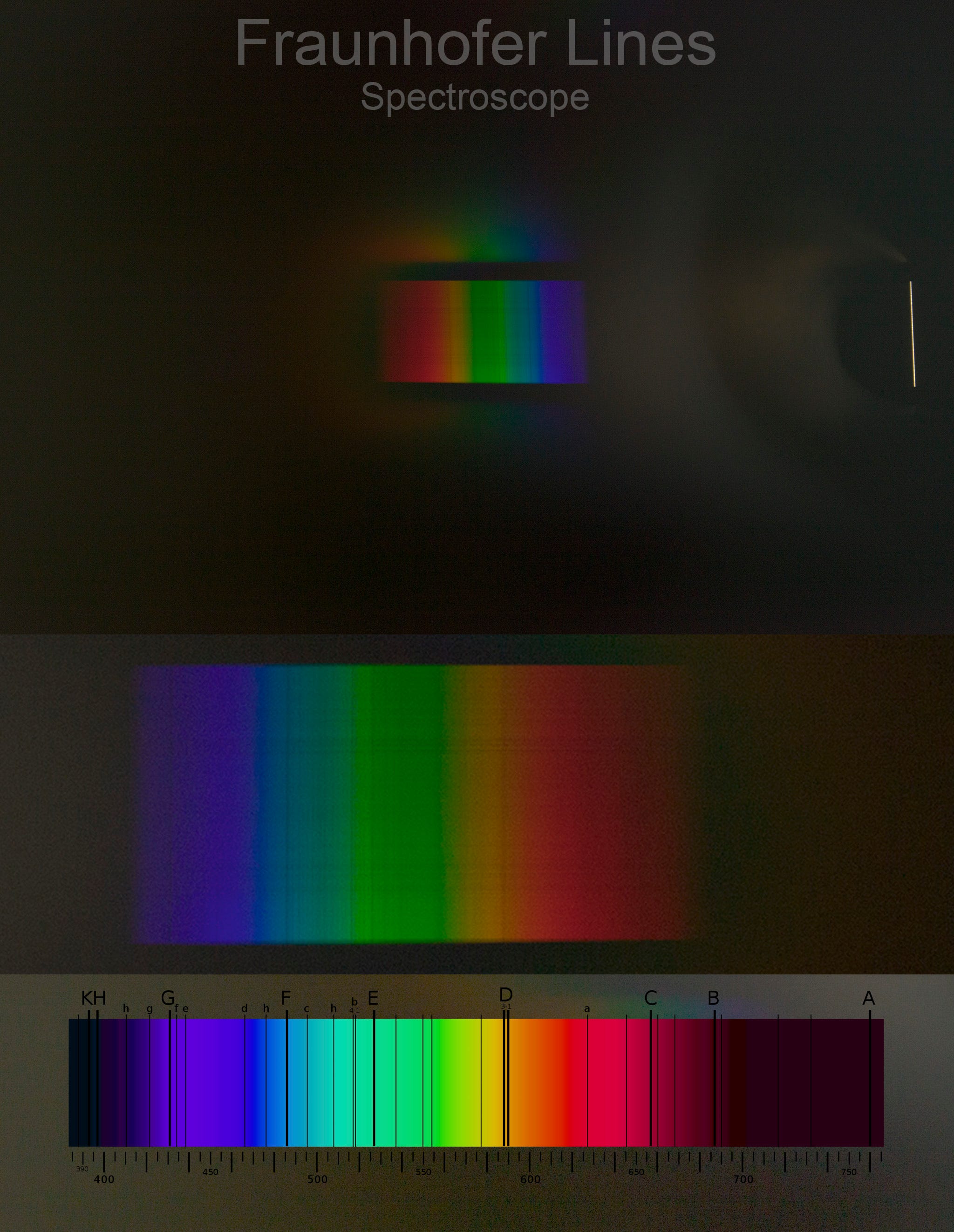
The first thing I "measured" was the Sun spectrum although it was evening and I didn't managed to get a noise free image (I will reshoot it later when he decides to appear). Even with low condition the Fraunhofer lines are quite visible as you can see on the following image:
There will be certainly one or a few follow up posts so stay tuned!
Comments
Nothing yet. Say the first thing.
Sign in to join the conversation.