
This article is based on a talk I gave at the Product at Heart conference in Hamburg, on 26 June 2026. Thanks again to Petra and Arne for inviting me to speak!
Last February, I was sitting in my office, staring blankly at my screen. And thinking,
“I feel completely lost. I’ve been in product for ten years now, I’m good at what I do. But now I feel like an imposter. Can I still do product in this AI world?”
I was having an AI-dentity crisis.
Today I will share with you the story of this mental journey, and how I overcame it. In the end, I realised that the PM job is all about bringing conviction. It always was, but especially now.
However, there’s good conviction, and there’s bad conviction. We will talk about the difference.
Let’s start at the beginning.
Last January I started a new project with Celebrate, the mother company of Kartenmacherei. Their product suite includes designing custom Christmas and wedding invites, as well as photobooks. They have digital products to design the order, as well as the printing facilities to create and ship them.
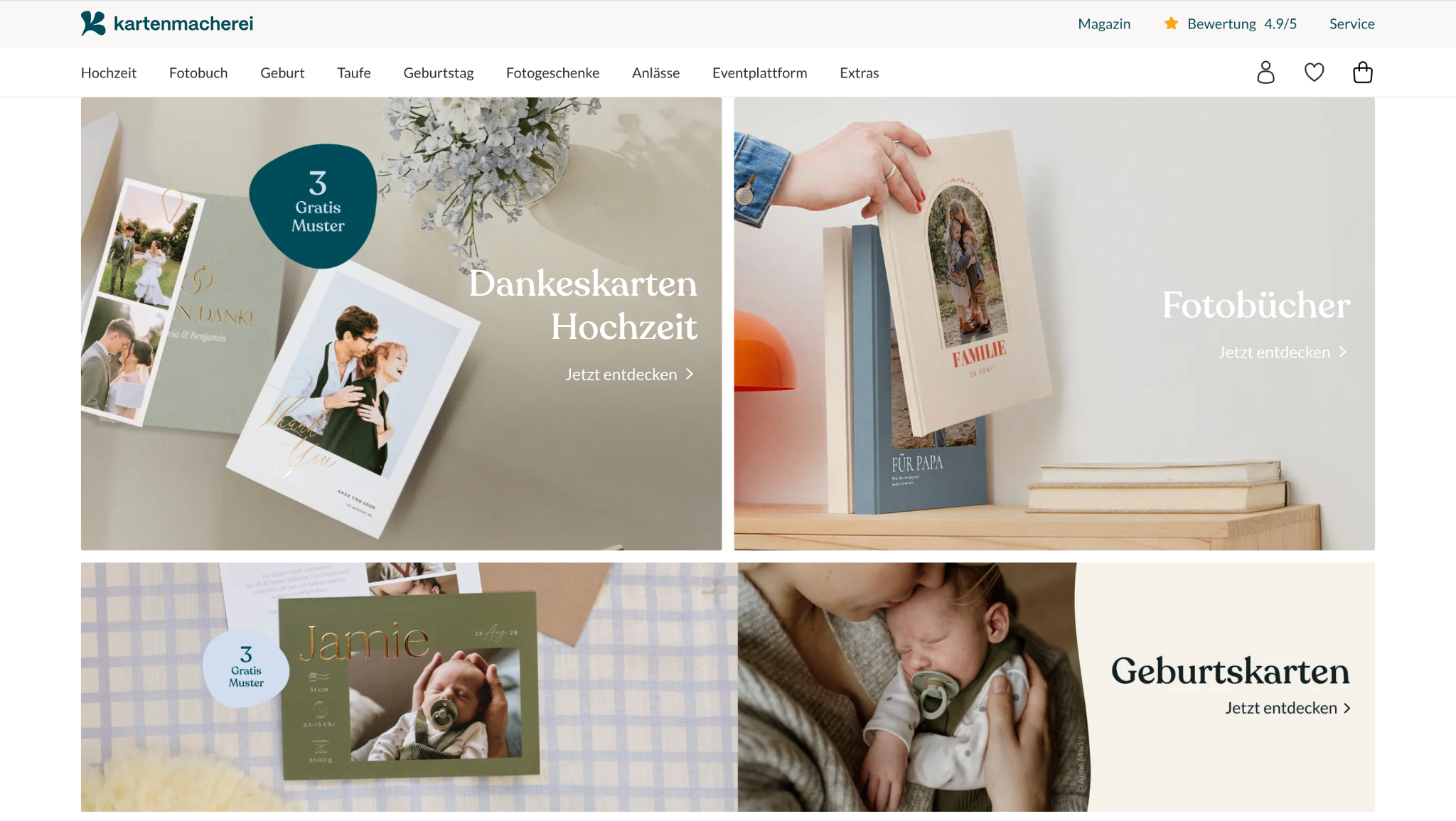
I was brought in as the product manager for a new tiger team, with the goal of making it way easier to select photos for a photobook. When you’re making one, you first have to dig through lots of photos to pick the best ones, and then you go to Kartenmacherei (or another competitor) to design your photobook.
This second step is mostly solved, and customers love putting their photobook together. But the first step always happens off-platform. People use Google Photos or iPhotos to select their favourite pictures, but it takes over 10 hours to do this for a yearbook, going through thousands of photos.
So the CEO came and said: let’s make an app that makes photo selection fun. Our ICP is parents, they don’t have a lot of time, so make an app that lets users build a habit out of selecting photos, assisted by AI and ML analysing and pre-selecting photos.
Here I already saw a form of conviction. We strongly believe this problem exists, it’s a big business opportunity, and we know what we should build to solve it. But was it the right type of conviction? We didn’t know, yet.
As we started working on the product - me, a designer, an app developer, and ML engineer - we took out the old playbook. We talked to customers, tested some early ideas and assumptions with prototypes, gradually painting the MVP we wanted to build, and then planned to build it in a month or two. So far so good. Things should move fast, but we also have time to figure out the solution and validate assumptions.
But one day the CTO and CEO came to us and said, “Why are you still doing things manually? We should do everything agentically. Throw out the old playbook!”
Interviews. Prototypes. Assumptions. Designs. Linear tickets. Coding. Testing.
Everything AI first.
The goal: release a new version of the app every single day. Interview in the morning, build in the afternoon. Release by the next morning. Learn at hyperspeed. And in the future, maybe we just have a single full-stack-builder who does everything.
And I know what you’re thinking. Classic hype. But they were right to push us and have us try new ways of working. They had strong conviction that we could do things better and faster. And we had to at least try.
So we started setting up the agentic workflows for all aspects of product development, first in Cursor and later moving to Claude Code. We stored all the interview transcripts, project context, designs, and code into a Github repo, and created skills and workflows for each of the normal product-design-dev flows.
These could then be triggered to extract gains/losses, generate hypotheses, write Linear tickets, make designs, plan the coding, write the code, create the PR, review the PR, release the new app version. Everyone is happy!
I remember feeling a mixture of excitement and existential angst. If I have these workflows and agents doing this work for me, what is my role still going to be? Am I just reviewing the output from time to time? Should I be the one improving and maintaining the workflows and agents? Or am I out of a job entirely?

There were days where I sat staring blankly at my computer and felt completely unproductive. I felt like an imposter. I felt lost. Everything was painful. I wasn’t sure if I was creating value.
One day, during a weekly mini-retro with the team, I brought this up. And it turned out - we all felt the same. We were in a state of anxious excitement. But mostly anxious.
There were three problems we ran into with this AI-first way of working.
Firstly, AI will create quantity regardless of quality. It’s easy to produce more with AI, but that doesn’t mean the quality remains good enough.
If development costs go down, if design is 5x faster, if you can tackle 10 problems at the same time, we thought we could do so many things at once. In every interview we identified 5-10 improvements and new ideas. We could do them all!
Except that we couldn’t. Over time, our Linear got chaotic, our codebase worse, and we felt like we didn’t have a clear direction.
One part is that the quality of what was produced often wasn’t good enough. The other part is that, by doing many things at once, we often don’t have a crisp formulation of the problem we are solving and the value proposition we are delivering. As a result, we do a lot of things - but also the wrong things. We easily get distracted by things that don’t matter.
The second big challenge is what our CTO likes to call “snacking”. The team consisted of really strong ICs, who have made a living out of being good at what they do. And it’s really hard to get away from that.
When you are dieting, and things get hard, you go back to snacking - eating crisps, ice cream. The old way. And we did the same. Instead of really focusing on building out the AI workflows, improving them, figuring out how to get the quality gates in place so that what AI produces is good enough, I kept reverting to “let me just write this ticket by hand” or “let me just work around the AI workflow now to get this improvement done”.
We were constantly snacking. Because change is hard!
The final reason why the new AI way of working was hard is that we had two competing priorities at once. On the one hand we wanted to quickly deliver this new app experience.
On the other hand, we had to figure out this new agentic way of working and build the “shipyard” that makes it faster to develop new products. And we will come back to this shipyard analogy later.
In theory they complement each other - improve the system, and app development becomes way faster. In practice, if you spend a week working on the system, no app changes will be made that week. And the leadership team wanted progress every week. So we went back to snacking.
We were facing these three huge problems. And it felt like there wasn’t a way out of it. I had this deep rooted uncertainty about what my role was supposed to be in the team, and how to do my job effectively.
I ended up reflecting on what had made me successful in past product roles, and what I thought was needed to face these three challenges.
The insight I ended up on was that the role I could play was about bringing conviction. The product role always was about conviction. But it is even more important now.
What does conviction mean? It means “a firmly held belief or opinion”. Our job is to take a problem, and a potential solution. To gather data and information. To form an informed belief or opinion about the problem and solution, to facilitate this discussion in the company, to then deliver on it effectively, while testing and pivoting as needed.
AI doesn’t change that; it just exposes it more clearly when we don’t have conviction. Because we end up building products we don’t believe in - and neither do our customers.
In the old world, engineering being expensive was a good thing. It forced us to first build a lot of conviction, because the cost of being wrong was so high.
Now the cost is low, but if we don’t end up building conviction, we will end up building the wrong things anyway. Just faster.
The risk here is that we end up being lazy, don’t build conviction, ship a lot of things, and still make no progress towards solving a problem for our users and business.
Now, you may hear the word “conviction” and imagine a CEO coming in with yet again another idea they strongly believe in, but with little to no evidence. And everyone has to drop everything they’re working on, right now. That is a form of conviction, but not a good one.
So let’s be more precise and talk about three different aspects of conviction. Two of them are good, one is bad.

Let’s start with the good.
Firstly, there is building conviction. This is the process of gathering evidence, determining what problems we should focus on, and what the solution should look like. In other words, it includes discovery. Our job at that point is to decide which direction we should go into, and build confidence.
Questions I ask myself for this are:
Is this problem worth solving?
Do we believe we can reach a solution?
What’s the opportunity cost?
What are the biggest existential risks and assumptions?
What do we need to tackle now, and what can we solve later?
What are two-way doors vs one-way doors?
Things that you can do that help build conviction here are the classics: deeply understanding the business, talking to customers, mapping out critical assumptions, testing prototypes, running A/B tests. And using that to make decisions.
As an example for the Kartenmacherei app, we needed to determine if users wanted to do photo selection as they go through the year, and build a habit out of using the app; or for completed years, and do the selection in one go. This scope decision fundamentally changes the app.
Originally we thought we should do the former. But after talking to users and testing prototypes, we pivoted and went for the latter. We discovered, we built conviction.
And then we made a human decision.
The second type of good conviction is sharing conviction. This is about inspiring your team about your users, their problems, and why what you are working on will make the user’s lives (and your business) better. This is all about inspiration and focus.
This means regularly sharing the vision and strategy with the team and beyond. Sharing insights from customers, how painful their lives are now, and how our product is starting to make their lives better. Making decisions on what we do vs don’t focus on right now.
This is a very human job. It’s not just about sharing updates, which AI can do well - it’s about reading the room, understanding what motivates your team, and sharing the right information accordingly.
In my case, I had regular coffee chats with all members of the team. To get to know them better, to understand their motivations, and to quickly identify what they were worried about. This gave me the trust and connection to inspire, to share insights from our customers, to share my conviction.
The last form of conviction is negative.
It’s one I’m sure we have all experienced sometime. It’s when conviction is forced, or imposed. For example, a CEO’s next crazy idea. No foundation, no evidence, just a gut feeling. However much evidence we share with them, they will not adjust their plans, and conviction remains static in the face of evidence - they are not building conviction.
This is a bad form of conviction.
I have experienced this on past projects that came from upper leadership. The team could tell there wasn’t enough foundation. They got pushed - by leadership, by me - but did not really believe in the direction. After a few weeks, motivation drops; stress levels rise.
That being said, there is a tricky balance between forcing and sharing conviction. Sometimes you do need someone to come in with a strong plan or idea, that there may not be a lot of evidence for yet. This can push and inspire the team.
A good example is the agentic way of working. It terrified us. We didn’t believe in it 100%. But by being forced, we did try, and we found the areas where it worked, and what the limits were. We needed someone to push us out of our comfort zones.
So were we inspired, or were we forced? I think the balance lies in whether the conviction and the plan remain static when faced with new information, or whether it can change.
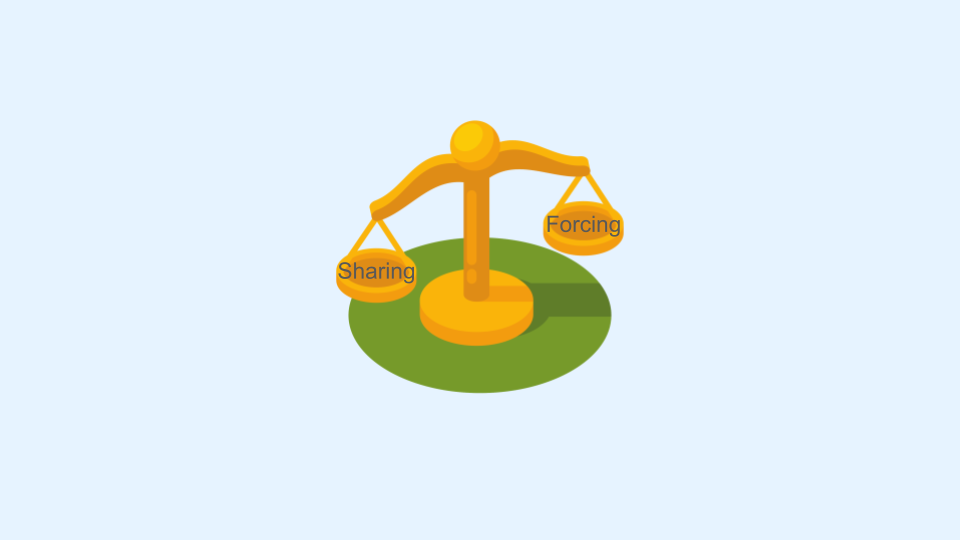
What we are looking for is strong beliefs, loosely held. We are willing to make big plans and try them, but we are also willing to change our mind and pivot.
So I try to find that balance of focusing and inspiring the team, but also clearly communicating that these are hypotheses, and we can change our minds if we try and fail.
So how did I apply my conviction mindset to the three challenges we faced?
What I realised is that we urgently needed three things.
Firstly, I had to bring focus. Instead of tackling 10 problems at the same time, we needed to focus on just one or two problems at a time, and really get them right. This allowed us to build conviction more strongly and quickly.
Secondly, I needed to bring conviction about quality. As mentioned before, AI tends to produce quantity regardless of quality. And this led to a lot of chaos and bad outputs.
When is what we produce (ourselves, or with AI), good enough? How will we know or test this? How can we structurally improve our systems? The answer is that we, as humans, need to set the bar for quality, and ruthlessly reject things that are not good enough.
And along the way, build conviction about what our systems can do, and when our systems are good enough.
Here’s what worked for us:
For the agentic workflows, our job is not to take its output and modify it. It’s to see the output, retrospect on what went wrong, and then fix the agentic workflow (rather than the output).
We built a retrospective skill to do that. Just like humans doing retros. If during an AI session we don’t like the output, instead of manually fixing it, we trigger the retrospective skill to identify why it went wrong, and how to change the system to improve it. We as humans then approve or reject those changes.
We then need to figure out where in the workflow the humans gatekeep quality. What are the checkpoints we need to add, where we either approve or run the retrospective?
We started barely doing checkpoints, and this led to really poor quality. Because any mistake early in the workflow snowballs into huge issues with scope and functionality. So we focus now on many checkpoints especially early in the process.
Finally, we needed clear guidelines about building ships versus building a shipyard. A lack of clarity here led to the snacking we talked about before.
What do I mean with a shipyard? Petra talks about the shipyard in the context of product leadership and management, but it also applies to agentic ways of working.
In the old job, we had to build great ships: the product features. Now, with AI, our jobs are shifting towards building a better shipyard - the agentic workflows, faster product development.
As mentioned earlier, we do this using checkpoints and the retrospective skill. But: improving the shipyard takes a LOT of time and effort.
Without a time allocation expectation, we felt bad when we were snacking and not improving the shipyard, but we also felt bad when we worked on the shipyard but had no ships to show for it!
The team was confused - we couldn’t spend time building conviction without feeling guilty or unproductive.
The solution was to have a time allocation expectation. For example, spend 50% of the week on developing the app, and 50% on improving the agentic setup. That made it easier for us to know: when is it okay to snack, and when should we focus on the shipyard?
Now, you may say: can’t AI just bring conviction for me? And it can make certain things faster, such as building prototypes to then build conviction. But in my experience, without a human in the loop - meaning YOU! - the AI will
Lack a lot of context - it’s almost impossible to codify all it needs to know about the business, product, teams, technology
Tackle too many problems at the same time, and forget about past decisions easily
Produce things that aren’t good enough - that’s the “quantity regardless of quality” aspect we talked about before.
Who knows what the future holds - but right now I strongly believe we need to be there as humans in the loop to gatekeep quality and bring conviction.
Wrapping it all up. Let’s come back to our role as PMs in the age of AI:
I believe the strongest PMs have always focused on bringing conviction. And it’s more important now than ever.
Instead of blindly taking an initiative from the leadership team, they try to understand how it fits into the larger company, what the main underlying motivations and assumptions are, break it down into manageable pieces we can build conviction on and test, ensure everything we test and the evidence we gather is the right quality signal. In other words, they are building conviction.
Those PMs are also motivating. They convince those around them that they are working on the right problem, in the right way. The team feels like their work matters, and they are making progress. They are also sharing conviction.
But they are careful not to force conviction.
And if you are facing your own challenges around quantity over quality, and changing your ways of working, think about focus, AI retros and checkpoints, as well as a clear time allocation between creating ships and improving the shipyard.
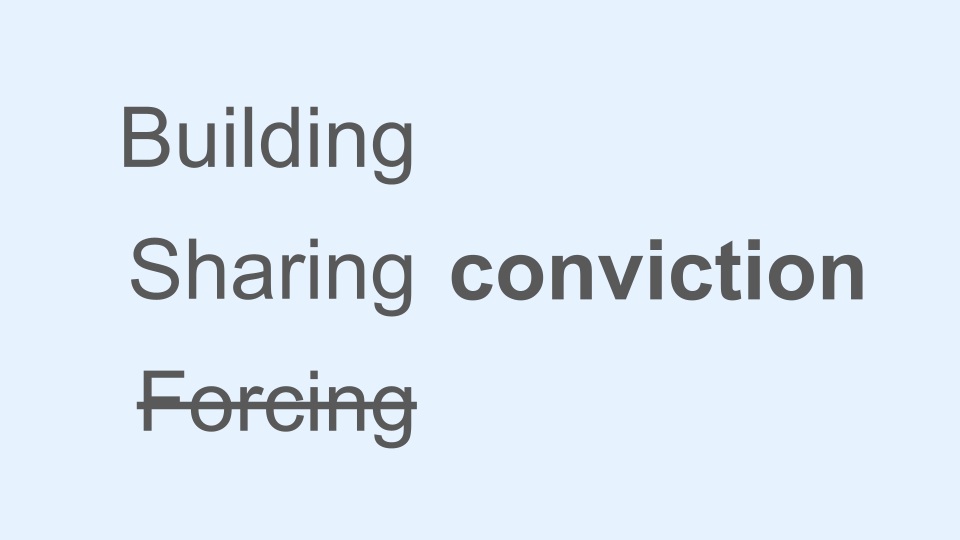
Our jobs are changing with AI, but I believe in a world where we can do things 10x faster, the core of what remains is conviction.
I hope you’re now all convinced.
No posts
Comments
Nothing yet. Say the first thing.
Sign in to join the conversation.