
As a precursor to my upcoming long read on synthetic sociopaths I wanted to share my thoughts on what will happen when anyone can create a virtual influencer. Let me know if you like this format so I can decide whether to do more of these in the future!
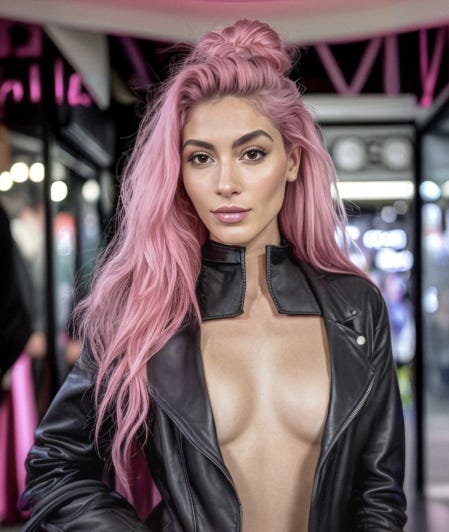
The internet is about to become overrun by synthetic sociopaths. These are influencers manufactured using AI, who create algorithmically optimised content with little-to-no human intervention.
They will be trained on consumer data and more apt at going viral than even Mr Beast. They will not just target niche subcultures but bring them into being with the singular goal of extracting all commercial value and moving on.
In a world where clout precedes capital it’s no shock that 57% of Gen Z aspire to be influencers. They were held back by the opportunity cost of creating and a ‘cringe-paralysis’ so strong that Nike changed its slogan to ‘Why Do It?’. But no more.
Under the visor of AI-anonymity, with a host of new influencer generation tools, gen-z will manufacture synthetic sociopaths en-masse to capitalise on the window of opportunity.
Startups like 1337.AI and Clueless.AI who offer end-to-end synthetic sociopath creation. They will suck value from trad-talent agencies like CAA and micro-agencies like Popular Pays (prev. Zyper), at least in the short term.
Companies who provide the ingredients for synthetic sociopathy — social analytics and performance tools (Sprout Social, Brandwatch, Keyhole); AI-image/video generators (Sora, MidJourney); AI for voice/ AI chatbots (CharacterAI, ElevenLabs); startups that allow AI-influencers to dynamically adapt to their audiences (Nativ)
Creator commercialisation has levied critique since the OG ‘mommy bloggers’ started selling ads. At best a capitalising creator is seen as disingenuous, at worst insidious. Where the rescue-remedy of humanity/ trust is nonexistent outrage will spread like a virus. This can already be seen in the proliferation of anti-AI-slurs on social platforms.
Fans, newly-savvy to the influx of synthetic sociopaths whose sole purpose is to mine capital through content, will rage-quit the platforms where they see the outbreaks as most prevalent. (Meta, here’s looking at you)
While these platforms struggle to moderate what is/ is not synthetic (currently a challenge, even for Meta), many human creators will suffer from trickle-down mistrust. Those without the long-term fan relationships that serve as proof-of-humanity will find it impossible to grow. As a result their livelihoods will suffer.
Legacy creators who have the long-term trust of their audiences.
During the short window where synthetic sociopathy succeeds, human creators will boycott social platforms supporting the shift. They will retreat to sites where the algorithm rewards humanity and those that financialise direct-to-fan relationships.
Additionally, as their big social incomes suffer, creators will seek spin-off revenue sources. Think merch, direct-to-fan-interactions, education and teaching.
‘Hyper-authentic’/‘human’ social platforms (Perfectly Imperfect, Be Real, Lekondo)
Platforms that facilitate direct-to-creator monetisation (Substack, Zora, Only Fans, Vibely)
Companies that further social media adjacent sources of creator revenue (Patreon, Cameo, SkillShare, Sartor)
In response to the creator/fan retreat from big social brands will frantically reevaluate how they connect with consumers. At the start they’ll follow creators to the new social platforms, but over time they’ll turn to novel experiences that bake-in proof of humanity (e.g. IRL events)
The brands who do remain on big social will demand new metrics to analyse the success of their campaigns. The current metrics (engagement, watch time, shares etc.) will be perceived as redundant under the new status quo whereby synthetic sociopath slop is optimised for algorithmic ‘performance’ yet sparks negative consumer sentiment.
Alt-influencer agencies that support podcasters, substackers etc. (Jungle Creations)
‘Proof-of-humanity’ experience facilitators (Partiful)
In response to the mass exodus big social platforms will double down on ‘proof of humanity’. This will look like bifurcated feeds — one for human-produced content, one for synthetic sharing — most likely with differing algorithms. While the slop feeds push for virality the human feeds will regress to the chronologically ordered, friend-driven dynamics of OG social.
However, no matter how quickly big social puts these split feeds into place they will not be able to avoid the outcrop of ‘human centric’ social startups capturing market share from disenfranchised consumers/ creators.
As these platforms vie to be the most human we might see a fetishisation of the banal (think food pics…) as a counter response to AI-sensationalism.
Human-centric big social alternatives + avatar first social sites that do not allow AI-users (Roblox, Soul, CoverStar)
Deep fake detection softwares to be integrated into social platforms to prove humanity (Pindrop)
The rise of synthetic sociopaths could shed light on how big tech collects and leverages user data within a consumer group who previously blind-ticked the T&C’s.
As big social platforms reorient, data hungry brands may turn towards platforms that allow consumers to consensually capitalise on sharing their data such as Gener8.
TO BE CONTINUED…
This Outfit Does Not Exist is a newsletter on the future of creativity, commerce and culture. To join 1602 weekly readers why not
Comments
Nothing yet. Say the first thing.
Sign in to join the conversation.