
Once you move past just fruit, water, and sugar in winemaking, you’ll start to see recipes (like my mango wine) that include things like Campden tablets, acid blend, or potassium sorbate. These can sound a little intimidating, but they’re actually simple tools that help your wine stay safe, taste better, and age well.
In this post, I’ll break down the main ones I use—what they do, when you might need them, and some natural alternatives if you want to keep things even simpler.
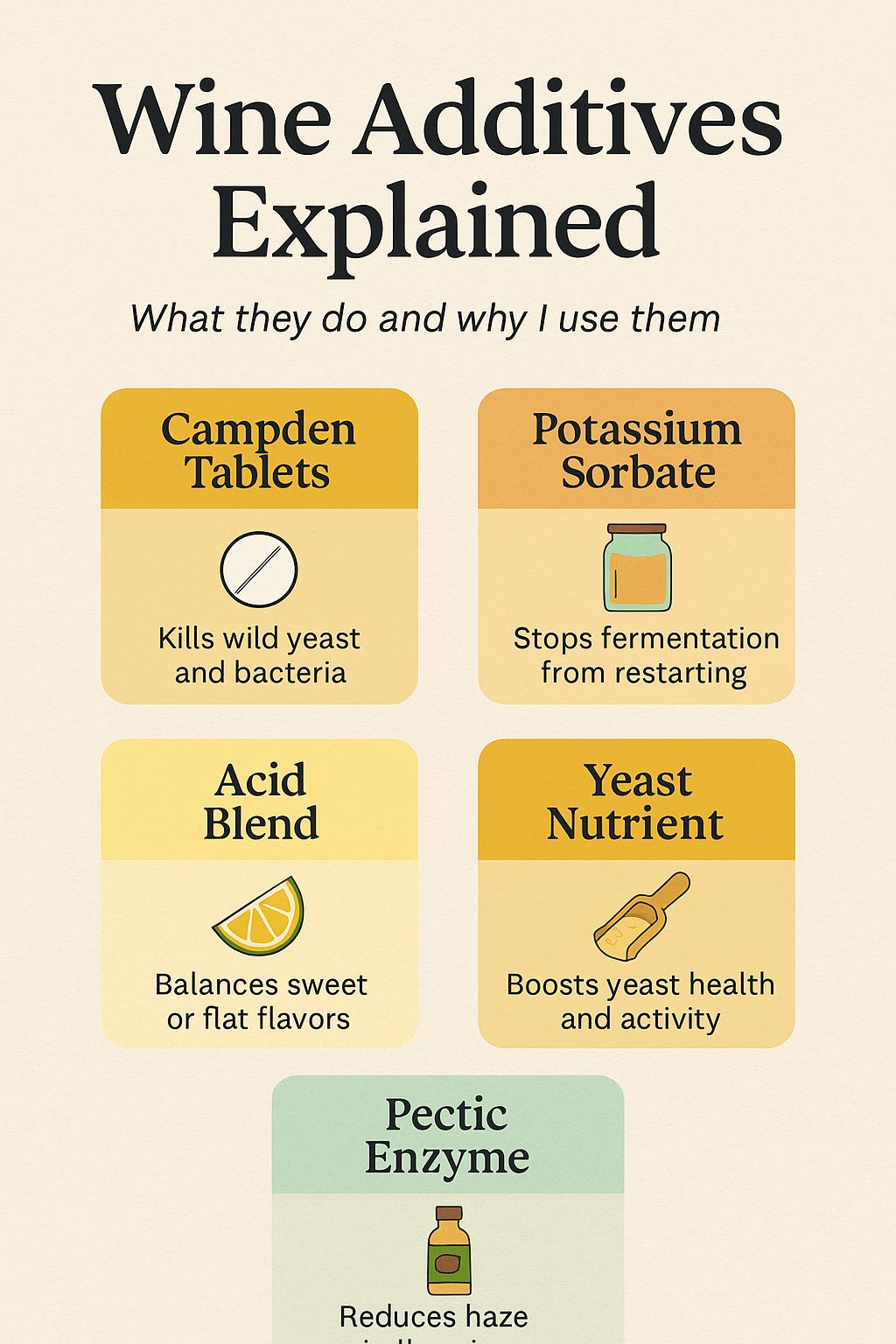
What it is: A sulfur-based tablet that kills off wild yeast and bacteria.
Why I use it: I use this after fermentation and before bottling, especially if I’ve added more sugar. It helps prevent spoilage.
Do you need it? Not always. But it adds a layer of protection if you’re storing wine longer or sweetening it.
Natural alternative: A strong, sterilizing boil isn’t quite the same but can reduce microbial risk. However, Campden is more precise.
What it is: A stabilizer that stops yeast from waking up again.
Why I use it: When I back-sweeten my wine (like adding sugar syrup to mango wine), this keeps fermentation from restarting in the bottle.
Do you need it? Yes, especially if you’re sweetening after fermentation.
Natural alternative: There’s no exact natural sub, but if you skip back-sweetening, you likely don’t need this.
What it is: A mix of citric, malic, and tartaric acid that balances overly sweet or flat fruit wines.
Why I use it: Mango is super sweet but lacks acidity. This helps round out the flavor and adds brightness.
Natural alternative: Lime juice or lemon juice work well and give a nice citrus note too.
What it is: A mix of minerals and nitrogen that helps yeast stay active and healthy.
Why I use it: Some fruits (like mango) are low in nutrients yeast need to thrive. This gives the fermentation a boost.
Do you need it? Optional—but it helps avoid slow or stuck fermentations.
Natural alternative: A small amount of boiled raisins or banana peel tea can offer nutrients too.
What it is: Helps break down pectin in fruit, which can cause haze in the final wine.
Why I use it (when I do): For fruits with a lot of pulp or fiber—like mango or guava—it can help clear the wine.
Natural alternative: Lime juice has a similar effect in many cases, and I often use that instead for simplicity.
These additives might sound complicated, but most of them are just there to help your wine taste better, store better, and stay safe. If you're just starting out, you don’t have to use all of them—but it’s good to know what they do so you can make confident choices.
Tried any of these? Let me know! I’d love to hear how you're building your own winemaking toolkit.
I’ll also keep this list updated as I experiment with new ingredients or techniques along the way.
Comments
Nothing yet. Say the first thing.
Sign in to join the conversation.