
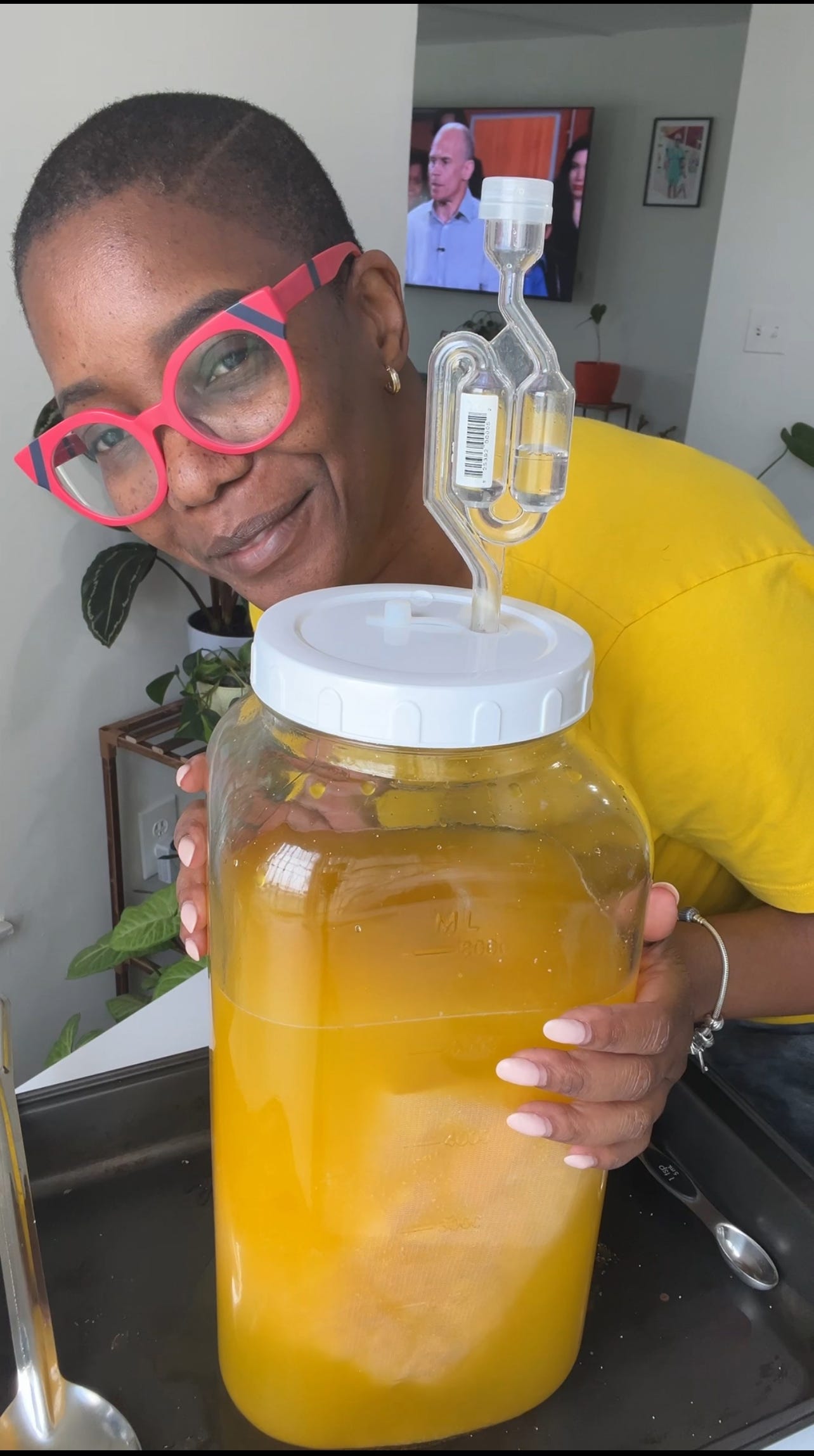
Mango season means one thing in my kitchen: wine. Sweet, ripe, full-bodied mango wine with that Caribbean sunshine in every sip. This recipe is designed to be beginner-friendly, no fancy tricks—just bold tropical flavor and a nice light buzz (around 7.6% ABV).
If you’ve got access to very ripe mangoes and a little patience, this one’s a winner.
3 lbs 10 oz mango pulp – Use soft, very ripe mangoes. The juicier and sweeter, the better.
1 lb 4 oz sugar – Gives the yeast something to feed on and helps hit that 7.6% ABV.
1 tsp yeast nutrient – Optional, but helps fermentation along.
1 gallon water – Clean, not distilled. Some of it will be used to dissolve the sugar.
1 tsp acid blend + 3 tsp lime juice – Balances the natural sweetness and adds brightness.
1 pack Lalvin yeast – EC-1118 or D47 both work great here.
For sweetening and stabilizing after fermentation:
½ cup sugar + ½ cup water – To sweeten the final wine to your taste.
1 crushed Campden tablet – Helps prevent spoilage.
½ tsp potassium sorbate – Prevents re-fermentation.
Check out my equipment list: My Wine Equipment
Step 1: Dissolve Your Sugar
Add half of your water to a clean 1-gallon jug or larger. Pour in the sugar and stir until fully dissolved.
Step 2: Add Remaining Water + Mango Pulp
Top off with the remaining water to bring it to 1 gallon. Add your mango pulp (in a mesh bag if you have one), yeast nutrient, lime juice, and acid blend. Mix everything gently.
Step 3: Start Fermentation
Cover the jug with a clean cloth or attach your airlock. Let it ferment in a warm, dark spot. You’ll see bubbles in the airlock—when that stops, fermentation is mostly done.
Step 4: Rack to Secondary
Transfer the wine to a clean jug, leaving behind the mango solids and sediment.
Step 5: Check ABV + Sweeten (Optional)
Taste your wine. If you’re aiming for sweet (like I was), mix ¼ cup sugar with ¼ cup water and add gradually. Stop when you’re happy with the flavor.
Use a hydrometer here to calculate ABV—I was aiming for ~7.6%.
Step 6: Stabilize and Store
Crush 1 Campden tablet and add to the jug with ½ tsp potassium sorbate. Mix gently. Cover again with an airlock or tight-fitting lid and store in a cool, dark place to rest.
Aging for 1–3 months will mellow out the flavors even more.
Always sanitize your tools and bottles before touching the wine.
Mango pulp can clog things up—strain well before secondary fermentation.
This one’s sweet, tropical, and makes a perfect chilled wine for the warm months. Let me know if you try it—or what fruit you want to see in the next recipe!
Comments
Nothing yet. Say the first thing.
Sign in to join the conversation.