
ThirdSpace BUZZ is an edgy newsletter on whatever the fuck I want.
When law enforcement agencies deploy confidential informants into civilian communities, the boundaries of statutory authority often blur.
To extract actionable intelligence, handlers permit covert sources to construct elaborate artificial personas, ranging from devout spiritual converts to wealthy financial backers.
However, without strict oversight and transparent accounting, these engineered covers frequently enable unchecked criminal behavior.
Informants exploit their protected operational status, committing severe abuses while assuming they remain entirely immune to future systemic legal consequences.
🍌

Sponsored by:
Help us grow by sponsoring our newsletter and reaching an engaged community.

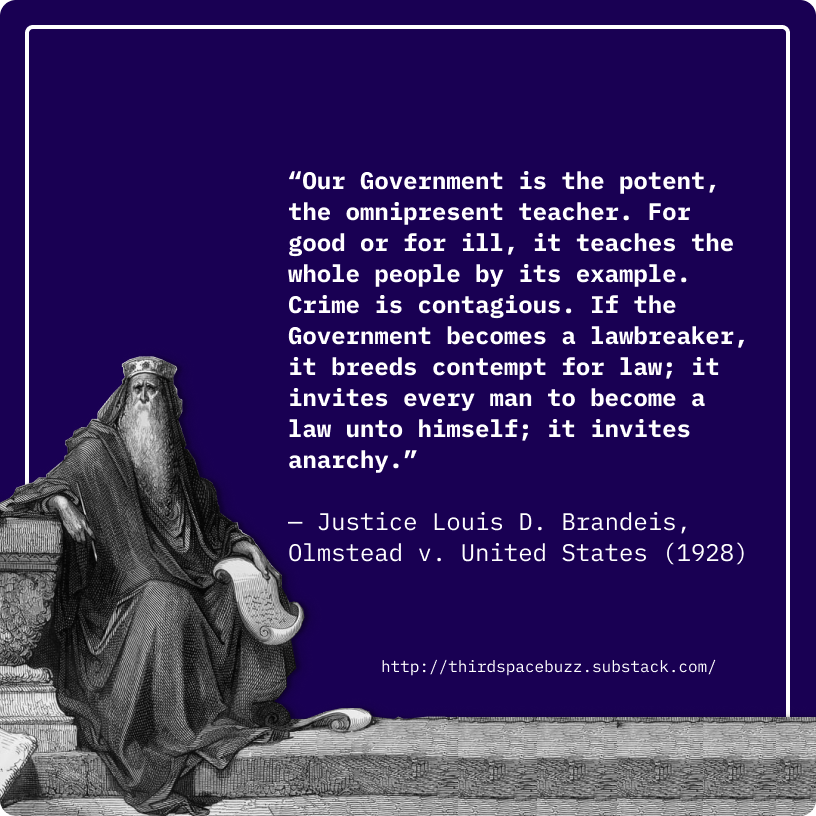
“Our Government is the potent, the omnipresent teacher. For good or for ill, it teaches the whole people by its example. Crime is contagious. If the Government becomes a lawbreaker, it breeds contempt for law; it invites every man to become a law unto himself; it invites anarchy.”
— Justice Louis D. Brandeis, Olmstead v. United States (1928)

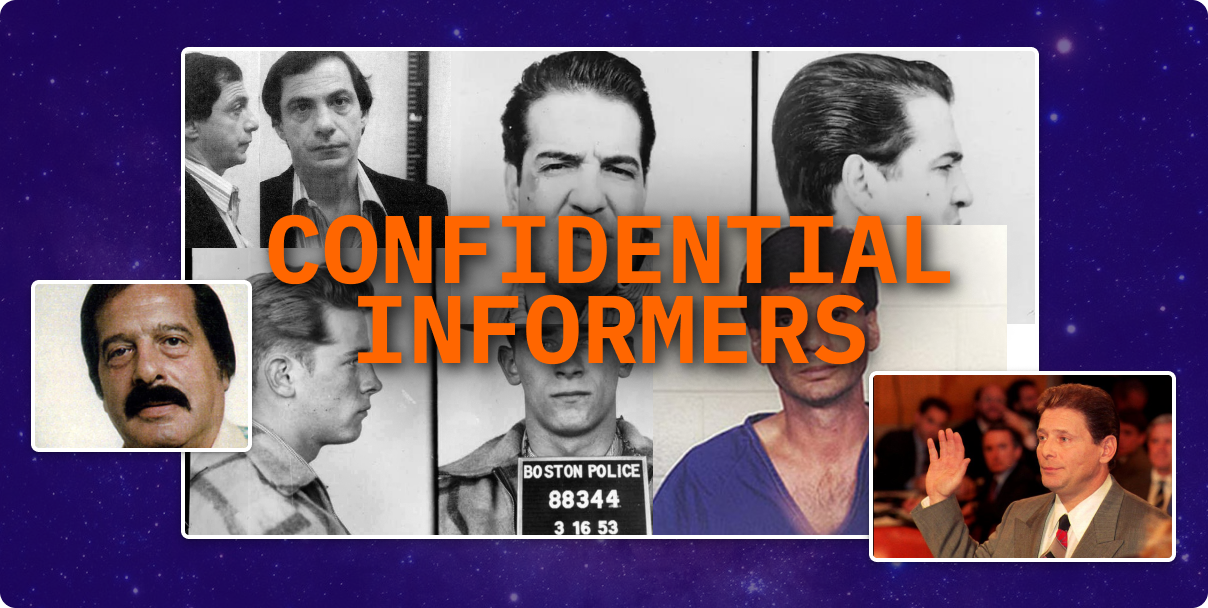
Behind the scenes of modern law enforcement, confidential informants occupy a fraught legal gray zone where state authorization frequently devolves into unchecked power abuse. By constructing engineered personas these covert assets gain intimate access to vulnerable communities and criminal networks alike. Yet, as handlers push the boundaries informants routinely exploit their status to run unauthorized criminal enterprises, operating under the illusion that government protection makes them permanently untouchable.
While Otherwise Illegal Activity (OIA) authorizes strictly monitored criminal conduct during undercover operations, agents can exploit structural loopholes, procedural gray zones, and oversight gaps in several other ways. Agents obtain investigative leads using secret, warrantless, or restricted surveillance tools (such as NSA intercepts, cell-site simulators, or foreign intelligence feeds).
Instead of disclosing the true origin of the evidence in court, agents construct a separate, “clean” evidentiary trail—such as a staged traffic stop or a routine canine search—to conceal the original source from judges and defense attorneys.Rather than infiltrating existing criminal organizations, agents or confidential human sources (CHSs) engineer the conspiracy themselves.
Handlers provide the idea, weapons, financing, and logistics, repeatedly pressuring vulnerable or reluctant targets until they agree to participate, essentially creating crime that would not have occurred independently. Handlers shield key informants who commit unauthorized crimes—including extortion, violence, or drug trafficking—by burying local police reports, withholding criminal histories from prosecutors, or failing to report unauthorized illegal activity internally.
In extreme cases, agents tip off informants about impending local arrest warrants or rival gang actions to protect the operational utility of the source. Misusing closed or secret court proceedings, such as Foreign Intelligence Surveillance Act (FISA) applications, where defense counsel is absent. Agents may omit exculpatory evidence, inflate informant credibility, or run unauthorized “raw queries” on domestic citizens within national security databases without required predicate justification.
Issuing National Security Letters (NSLs) or administrative subpoenas that bypass neutral judicial oversight to collect bulk financial, phone, and internet metadata. Running preliminary inquiries indefinitely without formal authorization to maintain dragnet intelligence gathering on individuals who do not meet probable cause thresholds.
Cross-jurisdictional power abuse relies on exploiting structural gaps between national legal systems, leveraging foreign partners to bypass domestic constitutional limits, and operating outside traditional extradition frameworks. Agencies bypass domestic laws prohibiting targeted surveillance on their own citizens by tasking foreign intelligence partners (such as a Five Eyes member like GCHQ or NSA) to collect the data on their behalf.
The foreign agency then feeds the raw intelligence back through inter-agency sharing agreements, laundering illegally obtained domestic communications under the banner of foreign intelligence collection. Formal cross-border evidence collection requires an MLAT, which involves judicial review in both countries and leaves an audit trail subject to defense discovery in court.
Agents routinely bypass MLATs by using informal “liaison channels” or intelligence-sharing networks to swap bank records, phone logs, and travel data off the record, later using parallel construction to legitimize the evidence domestically. Operatives circumvent judicial extradition processes, habeas corpus, and anti-torture laws by extrajudicially detaining suspects in host countries without local consent.
Suspects are transported across borders to third-party countries with permissive human rights standards or to covert interrogation facilities (”black sites”) maintained outside any sovereign legal system’s jurisdiction. Intelligence services strategically stage cyber infrastructure, tap undersea cables, or register shell entities in foreign nations where privacy laws are weak or local oversight is non-existent.
This allows agents to execute surveillance or data-exfiltration operations that would require strict judicial warrants if conducted within their own borders. Agents deployed under official diplomatic status conduct illegal intelligence collection, bribery, or targeted operations on foreign soil with structural immunity from local criminal prosecution.
If exposed by host-country law enforcement, the worst immediate legal consequence for the agent is being declared persona non grata and expelled, preventing local courts from holding them accountable. State intelligence services deploy covert operatives or proxy criminal organizations into foreign jurisdictions to harass, track, forcibly repatriate, or assassinate dissidents and political refugees.
These operations deliberately violate host-nation sovereignty and local laws while relying on state backstops to extract agents if an operation burns.
When law enforcement agents or confidential informants (CIs) cross the line from sanctioned operations into power abuse, they move from protected government activity into specific federal and state criminal statutory violations.
Constitutional & Civil Rights Crimes (Agents)
Deprivation of Rights Under Color of Law (18 U.S.C. § 242)
Conspiracy Against Rights (18 U.S.C. § 241)
Judicial & Integrity Crimes (Agents & Informants)
False Statements & Perjury (18 U.S.C. § 1001 & § 1621)
Obstruction of Justice & Evidence Tampering (18 U.S.C. § 1503 / § 1519)
Illegal Wiretapping (18 U.S.C. § 2511)
Substantive Criminal Violations (Informants & Rogue Handlers)
Unapproved Narcotics & Financial Crimes
The Hobbs Act & Extortion (18 U.S.C. § 1951)
Conversion & Theft of Government Property (18 U.S.C. § 641)
Major historical scandals involving confidential informants reveal how oversight failures allow illegal activity to escalate from tactical compromise into systemic criminality.
The FBI Boston Office & James “Whitey” Bulger (1975–1990s)
FBI Special Agent John Connolly recruited Boston mob boss James “Whitey” Bulger and Stephen Flemmi as high-level CIs to bring down the New England Italian Mafia. In exchange for intelligence, Connolly and his supervisors shielded Bulger’s Winter Hill Gang for decades. Bulger was tipped off to pending federal indictments, rival gang actions, and secret wiretaps—allowing his organization to commit extortion, drug trafficking, and at least 19 murders with government protection. Connolly was eventually convicted of racketeering and murder.
The “House of Death” Scandal (2003–2004)
U.S. Immigration and Customs Enforcement (ICE) and the DEA managed a Mexican cartel operative, Guillermo Eduardo Ramírez Peyton, as a paid informant inside the Vicente Carrillo Fuentes organization. While actively on the U.S. government payroll, the informant directly participated in the torture and murder of at least 12 people at a residence in Juárez, Mexico. U.S. handlers were aware of the killings as they took place but allowed the operation to continue to protect the CI’s cover, withholding information from Mexican law enforcement.
Ku Klux Klan Infiltration & Gary Thomas Rowe Jr. (1960s)
The FBI recruited Rowe as an undercover CI inside the Eastview Klan unit in Alabama during the Civil Rights Movement. Rowe actively participated in violent Klan attacks against Freedom Riders in 1961 and was in the vehicle during the 1965 drive-by shooting that killed civil rights worker Viola Liuzzo. The FBI repeatedly protected Rowe from state criminal prosecution, paid him bonuses, and shielded him from grand jury testimony to keep the informant relationship hidden.
LAPD Rampart Division Scandal (Late 1990s)
Officers in the LAPD’s anti-gang CRASH unit managed anti-gang informants off the record. Officers collaborated with CIs to plant weapons and narcotics, frame non-violent residents, beat suspects, and steal impounded drugs for personal sale. Compromised informant testimony and fabricated records ultimately led to the overturning of over 100 felony convictions.
The Ciro Mancuso Drug Network (1980s–1990s)
Mancuso operated a international cocaine smuggling ring generating over $100 million before becoming an FBI informant. Federal prosecutors allowed Mancuso to retain tens of millions of dollars in illegal drug assets and secure a drastically reduced prison sentence in exchange for testifying against lower-level accomplices, highlighting how high-level CIs can leverage insider knowledge to purchase functional immunity for massive commercial crimes.
Gregory Scarpa (”The Grim Reaper”) & The Colombo War (1980s–1990s)
Scarpa was a ruthless capo in the Colombo crime family who served as an FBI “Top Echelon” informant for over 30 years while continuing his mob career. Scarpa committed dozens of murders while on the FBI payroll. During the bloody 1991–1993 Colombo civil war, his FBI handler allegedly supplied him with confidential law enforcement intelligence regarding the locations and routines of rival mobsters. Scarpa used this government-provided intel to carry out assassinations while the FBI turned a blind eye to maintain his status as a source.
Joe “The Animal” Barboza & The Deegan Frame-Up (1960s)
A feared hitman for New England’s Patriarca crime family who became one of the earliest high-profile mobsters to testify for the government. To protect himself and his friend—fellow informant Vincent Flemmi—Barboza falsely testified that four men were responsible for the 1965 murder of Teddy Deegan. FBI handlers knew Barboza was perjuring himself but permitted the prosecution to proceed anyway. Two of the framed men died in prison, and two spent over 30 years behind bars before being fully exonerated, eventually leading to a $100 million federal civil judgment against the government.
Sammy “The Bull” Gravano & The Arizona Narcotics Ring (1990s)
Underboss of the Gambino crime family who flipped on boss John Gotti, admitting to 19 murders in exchange for a drastically reduced sentence and entry into the Federal Witness Protection Program (WITSEC). After receiving a light sentence and a new identity in Arizona, Gravano leveraged his protected status and state-assisted relocation to set up a massive, multi-million-dollar ecstasy trafficking ring. He imported hundreds of thousands of pills before federal and local authorities finally busted the operation in 2000.
Henry Hill & Post-WITSEC Trafficking (1980s)
Lucchese family associate whose testimony brought down key mob figures following the 1978 Lufthansa heist. While living under federal witness protection on the government’s dime, Hill repeatedly breached his immunity agreement by continuing to buy, sell, and distribute narcotics, relying on his relocated status as a shield against local law enforcement suspicion until he was ultimately kicked out of WITSEC.
David Headley & the 2008 Mumbai Attacks
A convicted heroin smuggler recruited as a DEA confidential informant in the late 1990s. Headley leveraged his protected status as an active U.S. government asset to travel freely between the U.S., Pakistan, and India without triggering law enforcement watchlists. He used this operational freedom to perform extensive video reconnaissance for Lashkar-e-Taiba, directly enabling the 2008 Mumbai terrorist attacks that killed over 160 people.
Ali Mohamed (Al-Qaeda Double Agent)
A former Egyptian army officer who served as a U.S. Army Special Warfare instructor and an FBI informant throughout the late 1980s and 1990s. Mohamed exploited his military clearances and FBI informant shield to steal classified counterterrorism manuals, train Al-Qaeda operatives in surveillance and explosives, and conduct target scouting for the 1998 U.S. Embassy bombings in East Africa while repeatedly deflecting federal suspicion.
ATF Operation Fast and Furious Gun-Walkers (2009–2011)
Key confidential informants, including straw-purchasers tied to Mexican drug cartels, managed by the ATF in Arizona. Informants used their government-sanctioned protection to purchase over 2,000 military-style firearms without fear of local arrest. Instead of leading federal agents to cartel kingpins, the CIs trafficked the weapons straight into Sinaloa Cartel hands, resulting in hundreds of homicides in Mexico and the death of U.S. Border Patrol Agent Brian Terry.
Shahed Hussain (FBI Counterterrorism Informant)
A convicted fraudster turned paid FBI informant deployed in high-profile post-9/11 counterterrorism sting operations (such as the “Newburgh Four”). Hussain used massive FBI payouts to display lavish wealth (luxury cars and cash) to coerce financially desperate targets into artificial terror plots. Concurrently, he used his federal protection to shield his side businesses from local safety enforcement—including an unlicensed limousine service that later caused the 2018 Schoharie crash, killing 20 people.
Atlanta Police Narcotics CIs & Manufactured Warrant Buys (2006)
Street-level narcotics informants working with the Atlanta Police Department’s street enforcement unit. Informants regularly collaborated with officers to falsify drug transactions on paper, providing quick “probable cause” for search warrants in exchange for cash or immunity from personal drug charges. This system collapsed after officers used a fake CI buy to secure a no-knock warrant on the home of 92-year-old Kathryn Johnston, who was shot to death by police during the botched raid.
Confidential informants (CIs) often operate under the false assumption that their relationship with federal or local handlers grants them blanket immunity. In reality, the strict administrative machinery required to manage CIs—contact logs, formal authorizations, and financial accounting—creates an immutable audit trail that traps informants the moment they step outside authorized boundaries.
Federal guidelines require handlers to formally document and pre-approve any criminal conduct a CI is permitted to commit during an operation. Unapproved side crimes are legally non-exempt. If a CI participates in a drug transaction or extortion scheme that was not explicitly detailed in an advance OIA authorization form (such as FBI Form FD-1087), the paper trail proves the crime was unauthorized, depriving the CI of any “public authority” defense in court.
After every meeting, phone call, or operational debrief, handlers are required to generate official investigative records (such as FBI Form FD-302s or DEA Form 6s).
If a CI commits a crime during an operation and fails to immediately disclose it during their post-operation debrief, the handler’s written report registers that omission. When independent investigators or local police uncover the crime later, the absence of the event in the handler’s official logs proves the CI was hiding illegal activity from the government rather than assisting them.
Checking in with handlers establishes hard temporal boundaries. Informants must account for their whereabouts, phone calls, and meetings to justify operational expenses or secure protection.
When local law enforcement investigates a side crime—a robbery, assault, or rogue drug deal—investigators cross-reference the crime’s timestamp against the CI’s handler check-in logs. Discrepancies between where the CI claimed to be in official check-in reports and where cell tower pings or physical surveillance place them expose the crime immediately.
Handlers maintain strict ledgers tracking confidential funds, marked buy-money serial numbers, and informant payout vouchers. Informants who attempt to skim buy-money, take unauthorized kickbacks from targets, or sell confiscated contraband leave financial footprints. Serial numbers on recovered cash or unvouched funds during internal audits instantly link back to the CI’s official ledger.
When external agencies, internal affairs, or grand juries investigate abuse, law enforcement agencies prioritize institutional self-preservation. Handlers hand over the official paper file, using the CI’s own check-in records and lack of written OIA authorization to prove the informant was acting as a rogue criminal rather than a sanctioned agent of the state.
Over a 40-year operational lifespan, a confidential informant’s relationship with the state often decays into extreme hubris. Protected by handlers from local busts and federal indictments, the informant begins treating the government as an unshakeable corporate umbrella—leading to unchecked money laundering, massive tax evasion, and a fatal habit of keeping detailed record books.
The 40-Year Illusion of Immunity
Over decades, the CI accumulates millions through illegal rackets, skimming, or kickbacks. Assuming federal protection shields their entire existence, they funnel illicit cash into real estate, front businesses, and offshore accounts without declaring income to the IRS. Handlers focused strictly on high-level operational targets intentionally ignore the CI’s lavish lifestyle and hidden assets, reinforcing the CI’s false belief that their tax evasion and money laundering carry tacit government approval.
As the criminal enterprise scales, the CI faces a dilemma: operating a complex multi-million-dollar laundering scheme requires precise accounting, while surviving four decades in the underworld breeds intense paranoia. The CI begins meticulously documenting their crimes for two reasons:
Financial Accounting
Blackmail Insurance
The downfall occurs when external oversight—such as IRS Criminal Investigation (IRS-CI), an independent grand jury, or a special prosecutor—targets the CI’s wealth independently of their handler’s division.
When investigators execute search warrants and seize the shadow ledgers, the CI’s documentation proves their money laundering was structured, deliberate, and entirely unapproved by official Otherwise Illegal Activity (OIA) authorization forms. The records destroy any “public authority” or “good-faith reliance” defense, providing bulletproof evidence of willful tax evasion (26 U.S.C. § 7201) and money laundering (18 U.S.C. § 1956). The CI’s four-decade illusion of immunity shatters, landing them back in prison on the strength of their own handwriting.
When covert informants conceal records or operate in cash-heavy illicit markets, IRS Criminal Investigation (IRS-CI) uses indirect methods of proof to reconstruct income by examining what the individual spent or accumulated rather than what they reported. Established under the Supreme Court precedent Holland v. United States (348 U.S. 121), these forensic accounting techniques mathematically prove tax evasion (26 U.S.C. § 7201).
The Net Worth Method (Asset Accumulation)
Used when an informant accumulates tangible assets—such as real estate, vehicles, secret bank accounts, or corporate shares—over time. Special agents establish a baseline of the informant’s net worth at the start of the target tax year. Agents calculate the net worth at the end of the year and subtract the opening baseline to determine the net worth increase.
Non-deductible personal living expenses (housing, luxury goods, travel, private schooling) are added back to the net worth increase. Non-taxable receipts—such as documented government informant payouts, gifts, inheritances, or verified loans—are subtracted. If Corrected Taxable Income substantially exceeds reported income on the informant’s Form 1040, tax evasion is inferred.
The Expenditures Method (Cash Outflow)
Used when an informant spends cash rapidly on perishable lifestyle choices (gambling, dining, cash transactions) rather than accumulating tangible assets. Agents aggregate every dollar spent by the informant during the tax year. They subtract all documented, legitimate income sources (reported earnings, official handler expense vouchers, verified loans). Any remaining excess expenditure represents unaccounted-for taxable income.
How IRS-CI Neutralizes Common Informant Defenses
“It was official government money”
Subpoenas handler payout vouchers and agency ledgers to separate sanctioned federal disbursements from unapproved illicit income.
“I had a pre-existing cash hoard”
Uses past financial records (prior bankruptcies, credit applications, older tax returns) to prove the informant lacked a secret cash baseline prior to the audit.
“The funds were non-taxable loans/gifts”
Audits the alleged donor/lender’s financial records; uncorroborated third-party claims fail to rebut the government’s mathematical evidence.
By proving a multi-year pattern of substantial, unexplained wealth accumulation alongside concealed records, IRS-CI establishes the element of willfulness required for felony criminal convictions.
Confidential informants (CIs) use engineered social covers—known in intelligence tradecraft as “legend building”—to lower psychological defenses, exploit trust, and extract actionable intelligence. By adopting roles that project moral authority, shared identity, or economic power, informants exploit vulnerabilities that law enforcement agents in uniform cannot reach.
The “Reformed Sinner” / Devout Convert
Posing as a converted criminal, newly pious believer, or seeker of spiritual redemption. This persona weaponizes a community’s ethical obligation to extend forgiveness, spiritual counsel, or sanctuary. In 2006, the FBI deployed informant Craig Monteilh under the alias “Farouk al-Aziz” in Southern California mosques. Posing as a zealous Muslim convert seeking spiritual growth, Monteilh built close relationships with imams and congregants, using hidden key-fob microphones to record private counseling sessions and prayer hall conversations.
Informants during COINTELPRO and modern anti-gang operations frequently adopted “reformed street head” or “local deacon” personas to infiltrate urban activist groups, claiming to steer youth away from crime while monitoring political organizers.
The “Zealous True Believer” / Radical Firebrand
Adopting an extreme, militant posture to test a target’s loyalty or provoke them into illegal acts. Because the CI acts more radical than others in the group, they establish an aggressive baseline that normalizes illegal conduct. In the late 1960s, O’Neal was recruited by the FBI following a car theft arrest and instructed to infiltrate the Chicago Black Panther Party. Posing as a dedicated revolutionary, he rose to become Chief of Security and Fred Hampton’s personal bodyguard, ultimately providing the FBI with a detailed floor plan of Hampton’s apartment prior to the 1969 police raid.
Infiltrating activist groups prior to the 2008 Republican National Convention, Darby adopted a hardened, militant mentor persona, ultimately encouraging two younger activists to manufacture Molotov cocktails.
The “Wealthy Benefactor” / Big-Money Financier
Posing as a rich patron willing to supply cash, vehicles, or logistics for a plot. This persona targets economically vulnerable individuals who lack the resources to execute crimes independently. A paid counterterrorism informant who drove luxury cars and posed as a wealthy Pakistani businessman. Hussain offered cash, vehicles, and inert weaponry to impoverished targets in upstate New York to build the “Newburgh Four” sting operation.
In the 1970s and 1980s, FBI operatives and informants established “Abdul Enterprises,” posing as wealthy Middle Eastern sheikhs offering bribes to public officials, resulting in the conviction of a U.S. Senator and several Representatives.
The “Disillusioned Insider” / Victim of the System
Posing as a disgraced former military or law enforcement officer who was “wronged by the state” to establish immediate credibility with anti-government or militia groups. In operations targeting sovereign citizens and antigovernment groups throughout the 1990s and 2000s, informants routinely used fake military credentials or fabricated records of government persecution to gain access to private tactical trainings and illegal weapons caches.
Why These Personas Work
Spiritual covers exploit a group’s duty to heal and forgive, making targets hesitant to question suspicious behavior. Wealthy personas turn vague rhetoric into actionable plots by providing otherwise unattainable funding. Posing as an experienced elder or devout believer allows the informant to validate dangerous ideas that targets would otherwise reject.
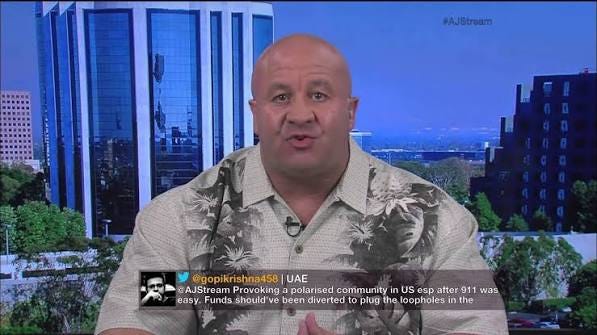
Inside the Informant Industry: Former FBI Informant Craig Monteilh
Ultimately, the illusion of total operational immunity shatters against reality. While engineered legends and government protection offer brief cover for rogue activities, mandatory handler debriefs, financial audits, and unapproved criminal logs construct an unyielding paper trail. When prosecutors investigate these unchecked power abuses, informants learn that meticulously documenting their secret crimes provides the exact evidentiary chain required to convict them.
A curated selection of landmark legal cases, foundational books, and academic research offers deeper insight into confidential informant management, federal oversight, and systemic abuse of power.
Landmark Judicial Decisions
Olmstead v. United States, 277 U.S. 438 (1928)
Bivens v. Six Unknown Named Agents, 403 U.S. 388 (1971)
Holland v. United States, 348 U.S. 121 (1954)
Pearson v. Callahan, 555 U.S. 223 (2009)
Essential Investigative Books
Snitching: Criminal Informants and the Erosion of American Justice (2nd ed., 2022) by Alexandra Natapoff
Speaking Truth to Power: Confidential Informants and Police Investigations (2016) by Dean A. Dabney and Richard Tewksbury
Black Mass: Whitey Bulger, the FBI, and a Devil’s Deal (2000) by Dick Lehr and Gerard O’Neill
References
Zimmerman, C. (2018). Toward a New Vision of Informants: A History of Abuses and Suggestions for Reform. SSRN Electronic Journal.
Confidential informants (CIs) remain private citizens under the law and possess no general immunity; any criminal conduct outside explicit, written Otherwise Illegal Activity (OIA) authorization violates federal and state statutes.
General Criminal Statutes
The Attorney General’s Guidelines Regarding the Use of CHSs
18 U.S.C. § 1001 (Duty of Truthfulness)
Internal Revenue Code (26 U.S.C.)
21 U.S.C. § 841 (Narcotics Distribution & Possession)
18 U.S.C. § 1001 & § 1621 (False Statements & Perjury)
18 U.S.C. § 1956 & § 1957 (Money Laundering)
26 U.S.C. § 7201 (Tax Evasion)
18 U.S.C. § 1503 & § 1512 (Obstruction of Justice & Witness Intimidation)
18 U.S.C. § 1951 (Hobbs Act Extortion)

Help us grow by advertising your business in our newsletter and reaching an engaged community.

Comments
Nothing yet. Say the first thing.
Sign in to join the conversation.