
ThirdSpace BUZZ is an edgy newsletter on whatever the fuck I want.
Learn how systemic legal mechanisms—ranging from Federal Rule 6(e) grand jury secrecy and Otherwise Illegal Activity (OIA) authorizations to probate court avoidance and national security privileges—can be leveraged to commit financial fraud, isolate victims, and neutralize oversight.
⚡

Sponsored by:
Help us grow by sponsoring our newsletter and reaching an engaged community.


“If the Government becomes a lawbreaker, it breeds contempt for law; it invites every man to become a law unto himself; it invites anarchy.”
— Justice Louis D. Brandeis, Olmstead v. United States (1928)

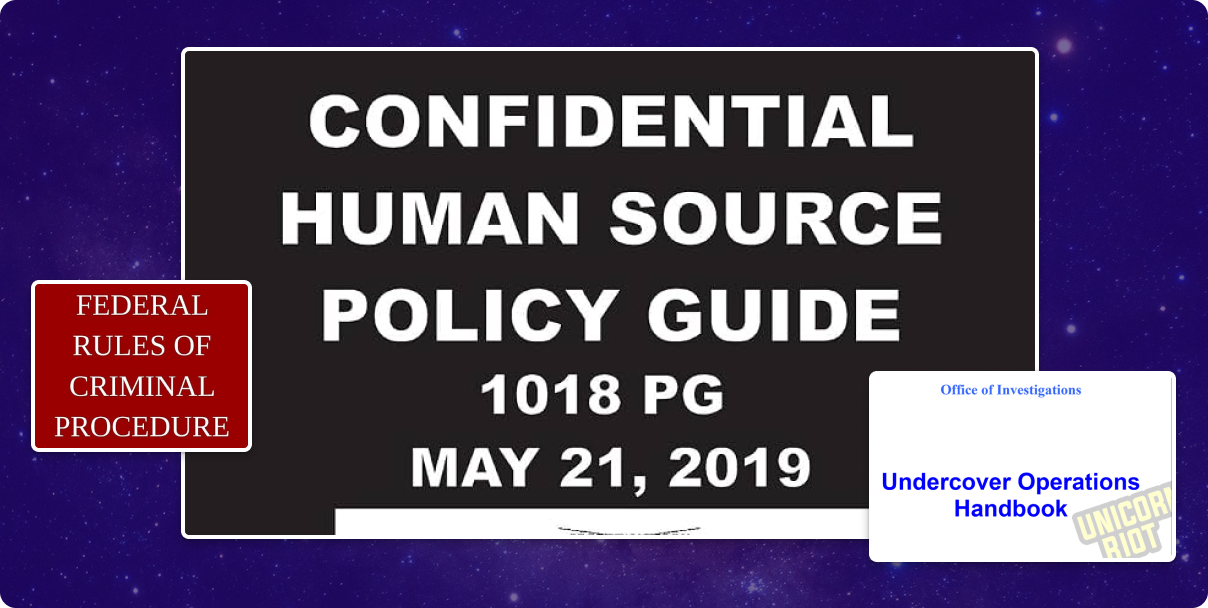
The modern legal apparatus, designed to investigate transnational crime and protect national security, possesses inherent vulnerabilities when its procedures are weaponized by bad-faith actors. When legal firewalls, statutory secrecy mandates, confidential human source (CHS) frameworks, and inter-agency compartmentalization are deliberately manipulated, they form an almost impenetrable structure of legal abuse.
The foundation of modern multi-agency operations relies on strict statutory compartmentalization. While intended to protect investigative integrity and Constitutional rights, these operational walls can be exploited to isolate targets and conceal improper conduct behind procedural barriers.
Federal Rule of Criminal Procedure 6(e) governs the secrecy of grand jury proceedings. It strictly prohibits attorneys, agents, and support personnel from disclosing “matters occurring before the grand jury.”
In multi-agency task forces, this mandate is frequently used to justify the selective exclusion of specific personnel, contractors, or foreign liaisons from financial briefings.
Lead investigators control the designated 6(e) disclosure list. By selectively placing certain operatives on or off this list, bad-faith actors can control who sees financial subpoenas, bank ledgers, and wire transfer logs.
Legitimate task force members who raise questions about asset allocation or financial anomalies can be systematically excused from briefings under the guise of Rule 6(e) compliance, preventing them from connecting financial evidence to illicit operational behavior.
Grand jury secrecy prevents non-designated agents from discovering that financial records contradict the narrative being presented in field intelligence reports.
The statutory separation between domestic criminal prosecution (Title 18 of the U.S. Code) and foreign intelligence collection (Title 50) creates structural blind spots.
Authority DomainPrimary Governing FrameworkOperational FocusEvidentiary StandardPublic Discovery RiskTitle 18 (Criminal Law)Federal Rules of Criminal Procedure; BSADomestic prosecution, asset forfeiture, wire fraudBeyond a reasonable doubt; Brady/Giglio rulesHigh (Mandatory defense disclosures)Title 50 (Intelligence)National Security Act; Foreign Intelligence Surveillance Act (FISA)Clandestine collection, counterintelligenceExecutive authorization; FISA Court standardsExtremely Low (Protected by State Secrets Privilege)
When an operation bridges both domains, bad-faith handlers exploit this bifurcated structure:
Evidentiary Firewalling: Financial evidence is strictly contained within Title 18 criminal channels, while communication tradecraft and tactical operations are insulated under Title 50.
Prevention of Discovery: By keeping tactical handlers completely separate from financial discussions, the syndicate ensures that operational personnel can truthfully testify in court that they have no knowledge of financial improprieties, maintaining clean plausible deniability.
Protection of Technical Tradecraft: It prevents defense attorneys from invoking Brady or Giglio rights to demand the disclosure of intelligence collection methods, as those methods are shielded behind Title 50 national security classifications.
Financial extrusion schemes targeting individual assets frequently rely on combining high-level federal compartmentalization with low-level domestic probate manipulation. By exploiting legal guardianship and estate mechanics, bad-faith actors establish fiduciary control over targeted inheritances and trusts.
Legal guardians occupy a position of strict fiduciary trust. Under state probate codes, guardians are legally obligated to manage estate assets solely in the best interest of the beneficiary. However, this legal status can be converted into an extraction vector:
Unfettered Document Access: Guardianship grants legal authority to request, review, and control trust instruments, bank records, tax filings, and insurance beneficiary designations.
Seed Capital Manipulation: Legitimate inheritance disbursements or trust yields can be commingled with illicit funds. By routing off-book capital through custodial estate accounts, bad-faith actors obscure the origin of laundered assets, dressing illicit money in the appearance of legitimate inheritance growth.
Encumbering Underlying Collateral: Guardians can execute unauthorized loans, pledge trust assets as collateral for off-market financial transactions, or systematically undervalue estate assets to prepare them for private acquisition.
A critical indicator of structural estate fraud is the deliberate refusal to consult estate planning attorneys or establish formal revocable living trusts. While living trusts are widely recognized as standard mechanisms to avoid the expense and delays of probate court, bad-faith fiduciaries deliberately avoid them for specific operational reasons:
Forced Asset Inventory Suppression
Creating a living trust or executing formal estate planning requires a comprehensive, sworn schedule of assets. Documenting commingled funds, altered account titling, or missing trust capital for an independent estate attorney creates an immediate paper trail that invites tax audits and legal scrutiny.
Bypassing Attorney Due Diligence
Estate attorneys are bound by professional ethical canons and Know-Your-Customer (KYC) requirements. An independent review of guardianship books by estate counsel risks exposing breached fiduciary duties, missing dividends, or unauthorized account restructuring.
Exploiting Intestate Probate Delays
Forcing an estate into traditional intestate probate upon death creates protracted judicial lag. State probate proceedings frequently drag on for months or years. This structural delay buys operators the necessary time to:
Liquidate unmonitored off-book financial accounts.
Transfer private cryptocurrency encryption keys.
Re-route liquid assets through offshore layer structures before a court-appointed independent executor completes a formal inventory.
The Attorney General’s Guidelines for Domestic FBI Operations and Confidential Human Source (CHS) policy dictate how federal law enforcement utilizes informants. A central component of these guidelines is the authorization of Otherwise Illegal Activity (OIA), a mechanism intended to allow informants to penetrate criminal syndicates, but one that is vulnerable to severe weaponization.
Under federal guidelines, opening a full or preliminary investigation requires a “factual predicate”—a reasonable articulation of facts indicating potential criminal activity. Bad-faith informants manipulate this requirement through strategic disinformation:
Targeted Misdirection: The informant submits fabricated tips or exaggerated intelligence alleging that the victim is engaged in sophisticated financial crimes, cryptocurrency money laundering, or illegal market manipulation.
Institutional Obligation: Bound by administrative guidelines, handling agents log the intelligence and open an investigative file. This formal administrative action establishes the necessary factual predicate to justify active surveillance, financial probing, and operational engagement.
Once an investigative file is open, handling agents can approve Tier 1 or Tier 2 Otherwise Illegal Activity (OIA) for the informant. This approval grants written authority for the informant to engage in actions that would otherwise constitute state or federal crimes (e.g., wire fraud, handling illicit funds, or accessing private financial systems) under the umbrella of a government-sanctioned undercover operation.
When weaponized, the OIA authorization functions as a legal cover for asset diversion:
Pre-Sanctioned Illicit Contact: Actions taken by the informant to probe, access, or manipulate the victim’s financial accounts are classified on paper as “authorized investigative touchpoints.”
Suppression of Local Law Enforcement (De-Confliction): If the victim notices missing funds or altered records and reports the crime to local police, state prosecutors, or regulatory oversight bodies, the federal agency intervenes. Utilizing standard de-confliction protocols, federal handlers issue a formal “stand-down” order to local authorities, citing an active, highly sensitive federal investigation. This effectively shuts down independent inquiries and freezes state court intervention.
Exploiting Handling Agent Blind Spots: Informants routinely operate in the space between Authorized OIA and Unauthorized Illegal Activity (UIA). By providing handling agents with calculated, partial progress reports, the informant maintains the illusion of an active sting operation, while using the OIA shield to execute unapproved financial thefts in the background.
To ensure that domestic judicial bodies cannot easily audit financial conversions, bad-faith actors often expand the operational footprint across international borders. By introducing foreign intelligence services into the loop, the syndicate creates a multi-jurisdictional web that paralyzes domestic legal remedies.
Foreign intelligence services (such as the UK Secret Intelligence Service / MI6) operate under statutory frameworks distinct from domestic U.S. law enforcement. When foreign actors feed fabricated intelligence to foreign agencies, they set off an international administrative chain reaction.
A foreign operative flags the domestic victim or their financial entities as a potential trans-national security risk, offshore laundering threat, or foreign intelligence target.
Under multilateral intelligence-sharing agreements (such as the UKUSA / Five Eyes alliance), this foreign intelligence alert is formally passed back to U.S. national security agencies.
The incoming foreign intelligence warning creates a high-priority national security flag within domestic systems. This foreign flag takes precedence over standard domestic civil or criminal matters, effectively superseding local court jurisdiction.
To complete the financial transformation, extracted capital must be moved into hard assets across multiple jurisdictions.
On-Chain Obfuscation
Liquidated probate assets or diverted capital are immediately moved into digital asset networks. Utilizing privacy tokens, unhosted wallet rotations, and cross-chain bridges, operators disrupt straight-line blockchain analysis.
Offshore OTC Settlement
Large digital asset blocks are converted into fiat through specialized Over-The-Counter (OTC) desks operating in jurisdictions with favorable banking privacy regimes.
Real Estate Integration
Capital is integrated into physical assets by acquiring high-value real estate through offshore corporate structures or institutional property funds.
Because foreign real estate acquisitions are frequently framed as operational intelligence fronts or monitoring posts, foreign security agencies view the asset transfers as legitimate tactical activities rather than domestic financial crimes.
When a victim attempts to expose structural financial abuse through civil litigation—such as filing suit for breach of fiduciary duty, conversion, or fraud—the syndicate invokes sovereign legal privileges to collapse the judicial proceeding.
The integration of private defense contractors and classified assets into financial networks creates a layer of legal immunity:
Contractor Mobility: Contractors operating under classified defense or intelligence procurements move seamlessly between commercial corporate entities and government programs. This enables them to route financial transactions under the veil of “classified logistics.”
Asset Insulation: Non-employee assets operate with tactical distance. Because they do not appear on official government payrolls, their involvement can be acknowledged or denied based entirely on operational convenience.
If a civil court issues subpoenas for financial ledgers, corporate communications, or trust records connected to these operatives, the federal government can intervene to freeze discovery.
The government files a formal motion stating that forcing the disclosure of the requested records would reveal national security methods, clandestine identities, or classified operational logistics. Once properly invoked, the State Secrets Privilege absolute-bars the evidence from being presented in court, frequently compelling judges to dismiss the civil suit entirely.
In response to Freedom of Information Act (FOIA) requests or civil discovery demands, federal agencies issue a standardized Glomar refusal—stating they can “neither confirm nor deny” the existence of records, investigations, or operational relationships regarding the individuals involved.
State probate courts and civil dockets are formally sealed or transferred to specialized federal dockets, stripping the victim of public judicial forums and preventing independent audits of the contested accounts.
To maintain this protection over time, high-level political alignment is required to suppress administrative and legislative checks:
Committee Influence: Political brokers with jurisdiction over intelligence appropriations or legislative oversight committees can steer legislative inquiries away from specific contractor firms or proprietary front companies.
Inspector General Interception: Whistleblower complaints or requests for Inspector General (OIG) audits can be intercepted, delayed, or classified, ensuring that administrative reviews remain contained within redacted internal channels.
A critical aspect of long-term legal abuse is narrative control. To prevent law enforcement, regulatory bodies, or public auditors from investigating real-world ledger entries, the syndicate constructs elaborate public narratives that distract from the underlying financial transactions.
The creation of curated memoirs, media projects, and sensationalized public lore serves a direct structural purpose in financial crimes:
Recasting Criminal Conduct as Legacy Lore: Unlawful conversions, historic informant activities, and financial disputes are translated into public entertainment products or sensational memoirs. This transforms illicit operational histories into protected commercial media products.
Manufactured Public Records: By publishing specific versions of events through books, documentaries, or news outlets, the network establishes a dominant public narrative. Future investigators who research the entities involved encounter a wall of pre-packaged public lore rather than raw financial audit trails.
Forensic accountants rely on clear, uncorrupted context to track capital movement. By flooding the public domain with competing narratives, complex historical rivalries, and media controversy, the syndicate creates an environment of operational noise.
Investigators attempting to untangle a diverted inheritance hit an overwhelming wall of competing files, media stories, and intelligence alerts.
The target of the financial extrusion is placed at a profound disadvantage. Attempting to explain a complex, multi-agency conspiracy involving public lore, intelligence agency overrides, and probate theft often sounds improbable to traditional local law enforcement, causing agencies to dismiss the victim’s complaints without reviewing the underlying financial records.
Despite the resilience of this legal abuse model, its reliance on strict procedures creates specific structural vulnerabilities. Because every step of the scheme requires manipulating legal and administrative frameworks, it leaves permanent, un-erasable paper trails across multiple institutional systems.
The entire federal operational shield relies on the initial legal validity of the informant’s predicate. If the predicate was established through knowingly false tips, the legal foundation collapses.
Under federal guidelines, providing false material information to handling agents invalidates confidential human source agreements. Demonstrating that an informant knowingly fabricated initial tips retroactively strips the informant of OIA protection.
Once OIA cover is revoked, actions taken by the informant—such as accessing private accounts, misrepresenting facts to courts, or transferring property—cease to be “authorized undercover activities” and are reclassified as federal crimes (e.g., wire fraud under 18 U.S.C. § 1343 and money laundering under 18 U.S.C. § 1956).
While federal agencies can invoke national security privileges to block civil subpoenas, state probate courts maintain independent statutory authority over fiduciary accountings.
Probate judges possess statutory authority to compel guardians to submit complete, unredacted accounting schedules under penalty of perjury.
Proving a breach of fiduciary duty allows probate courts to issue personal surcharge judgments against corrupt guardians, un-freezing domestic assets and invalidating unauthorized property transfers without needing to access classified federal intelligence files.
Local field offices can be bypassed by submitting formal administrative complaints directly to federal oversight bodies, specifically the Department of Justice Office of the Inspector General (DOJ OIG).
The OIG possesses full security clearances to inspect closed confidential human source files, internal field office emails, and OIA logging records.
When the OIG compares the informant’s authorized written OIA parameters against actual bank transfers and probate records, any discrepancy exposes handling agent negligence and informant misconduct, dismantling the institutional shield.
By systematically isolating each layer—separating state probate mandates from federal intelligence claims, auditing informant predicate files, and tracing digital asset movements—the network’s structural reliance on legal loopholes is transformed into its primary point of exposure.

Help us grow by advertising your business in our newsletter and reaching an engaged community.

Comments
Nothing yet. Say the first thing.
Sign in to join the conversation.