
For some time, I’ve been carving a new role for artists in fields outside of entertainment. The role is Creative Investigator and it centers around artists embedding back into the world (Legendeer with Adam Paquette) and introducing creative pipelines and cutting-edge entertainment technology into fields of healthcare, engineering and science (Applied Arts Lab with Jason Bennett at VCU).
This weekend, I had a chance to speak about the importance of artists as more than just entertainers at TEDxVCU.
The VCU student organizers of the event provided workshops and insightful feedback during mentor sessions. Sharing the stage with fellow speakers Yossera Bouchita, Maya Shah, Leslie Jarvis, Gretchen Neigh, Daniel Custódio and Alexandria Davis was a joy and an honor.
I had the privilege of closing the show.
My written document and slides are included below. I’m feeling very grateful to have the opportunity to share an idea, I feel is worth spreading.
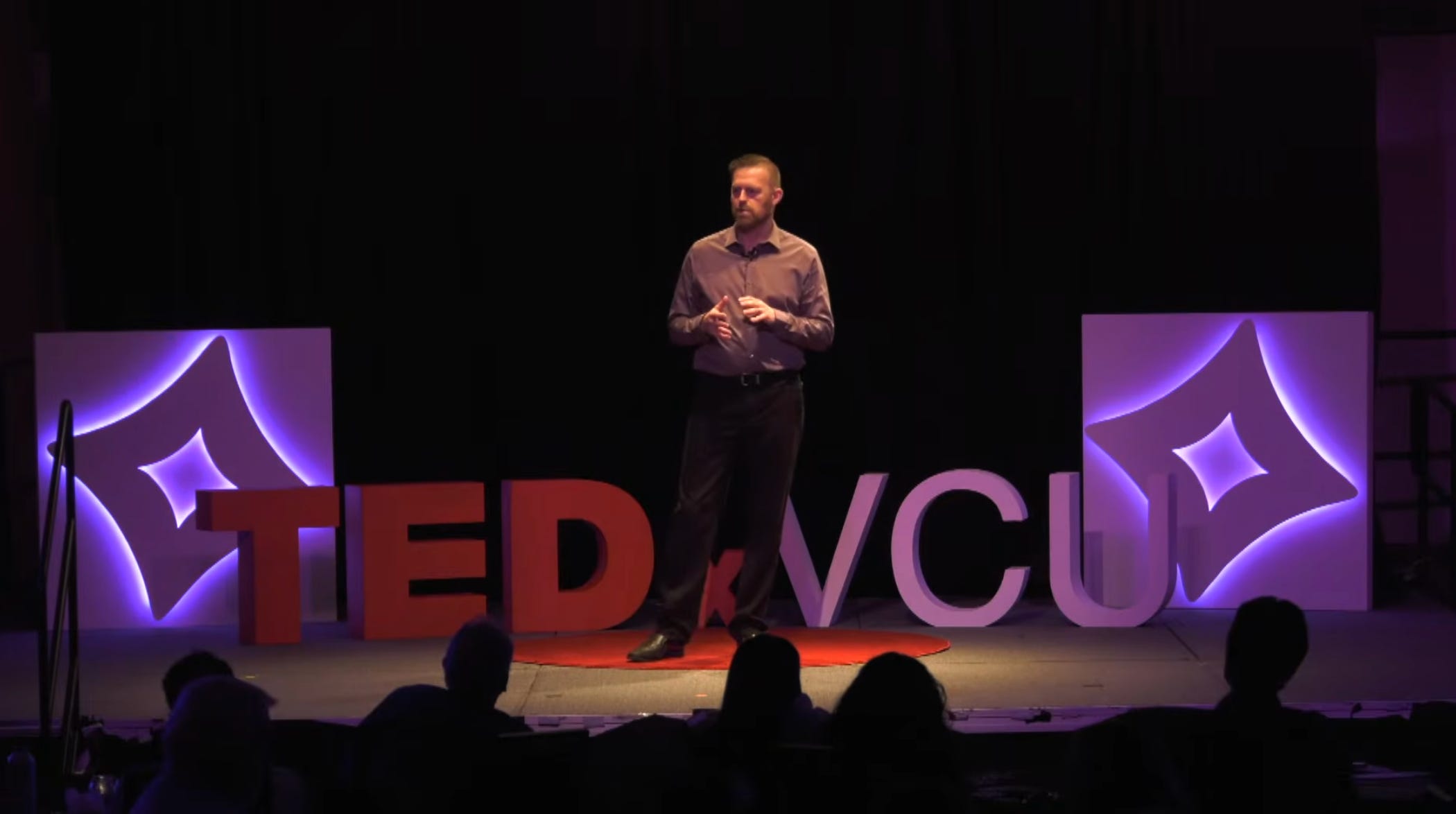
I don’t belong here.
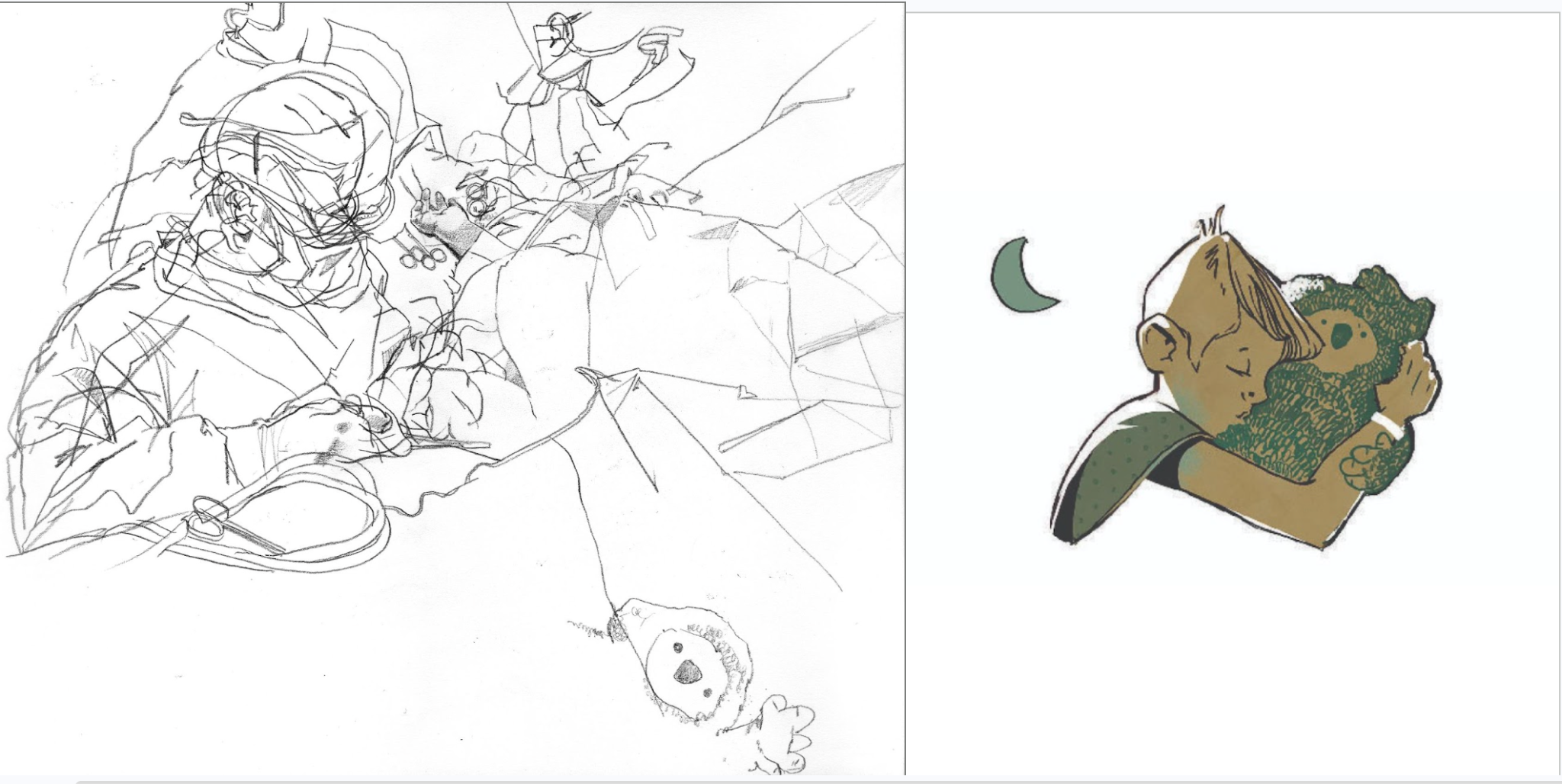
Sweating beneath the bright lights, my back pressed against the white tiled wall of a windowless hospital room, wearing blue scrubs. But, I was neither doctor nor patient. As the first embedded artist at VCUHealth’s Department of Surgery, I was what they called a “non-critical observer”. With pencil and sketchbook in hand, I stand in the corner and draw as the surgeon meets with his patients and their families. But the news, well, the news isn’t always good. At 6’3”, 210 pounds, I can’t make myself small enough during those intensely personal conversations to hide.
For months, I shadowed surgeons in the cardiothoracic and burn centers through surgeries and clinicals. With no medical training, I was the only person in the operating room without a job. To my untrained eye, the operating room was a theater of chaos.
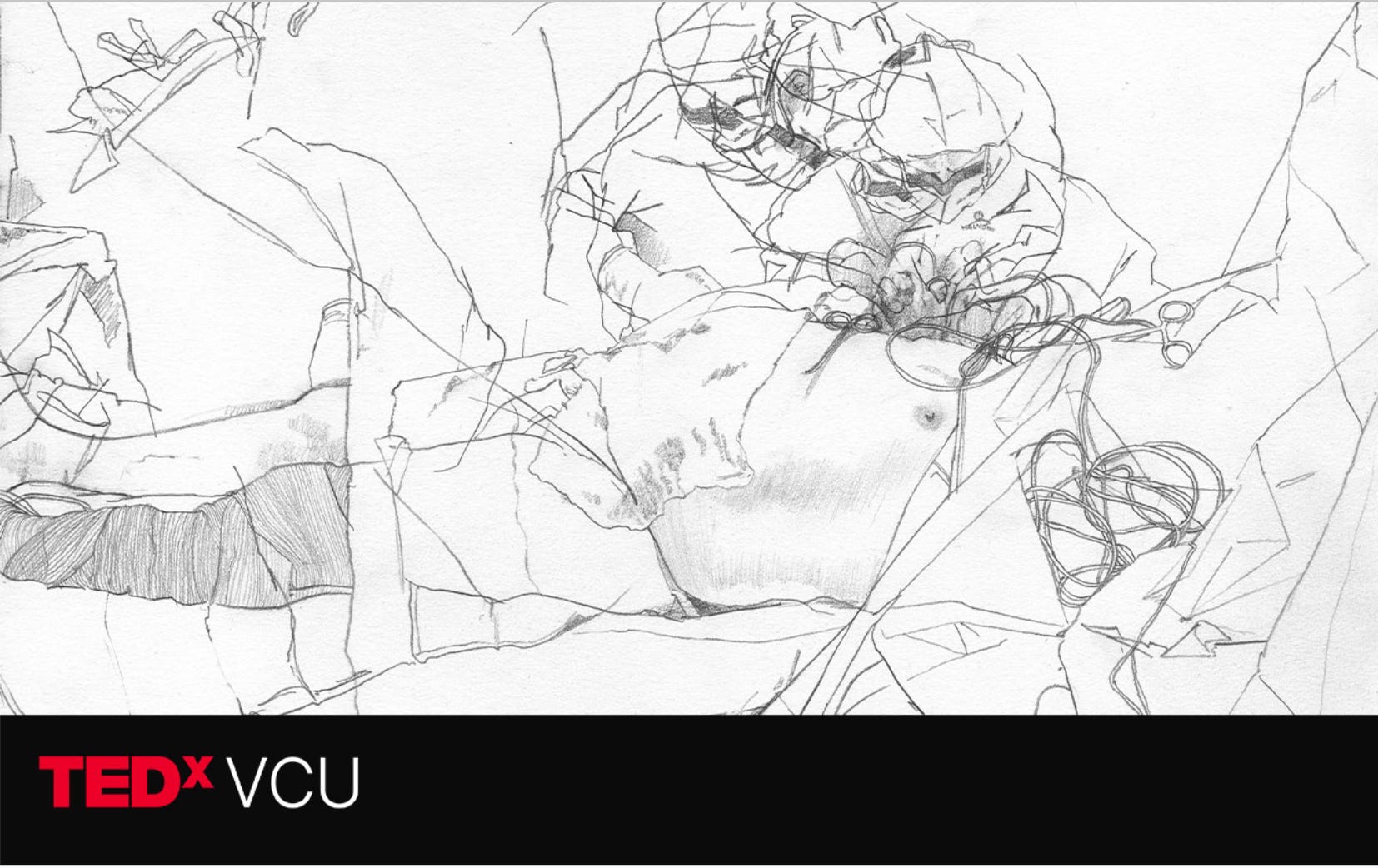
Alien devices. Unknown procedures. Masked strangers in intensely intimate moments that would change their lives forever. As I filled my pages with drawings, I was filled with a deep guilt for taking too much and giving back nothing.
Drawing there felt pointless. Worse, it felt selfish. I was a bystander, surrounded by people who were suffering with no way to help them.
As I look back over my sketchbook from that year, I remember just how out of place I felt.
Everything about this screamed “you don’t belong here.”
But, on this day, three months into my residency, everything would change. As I drew a young girl in one of the clinicals, I noticed something…
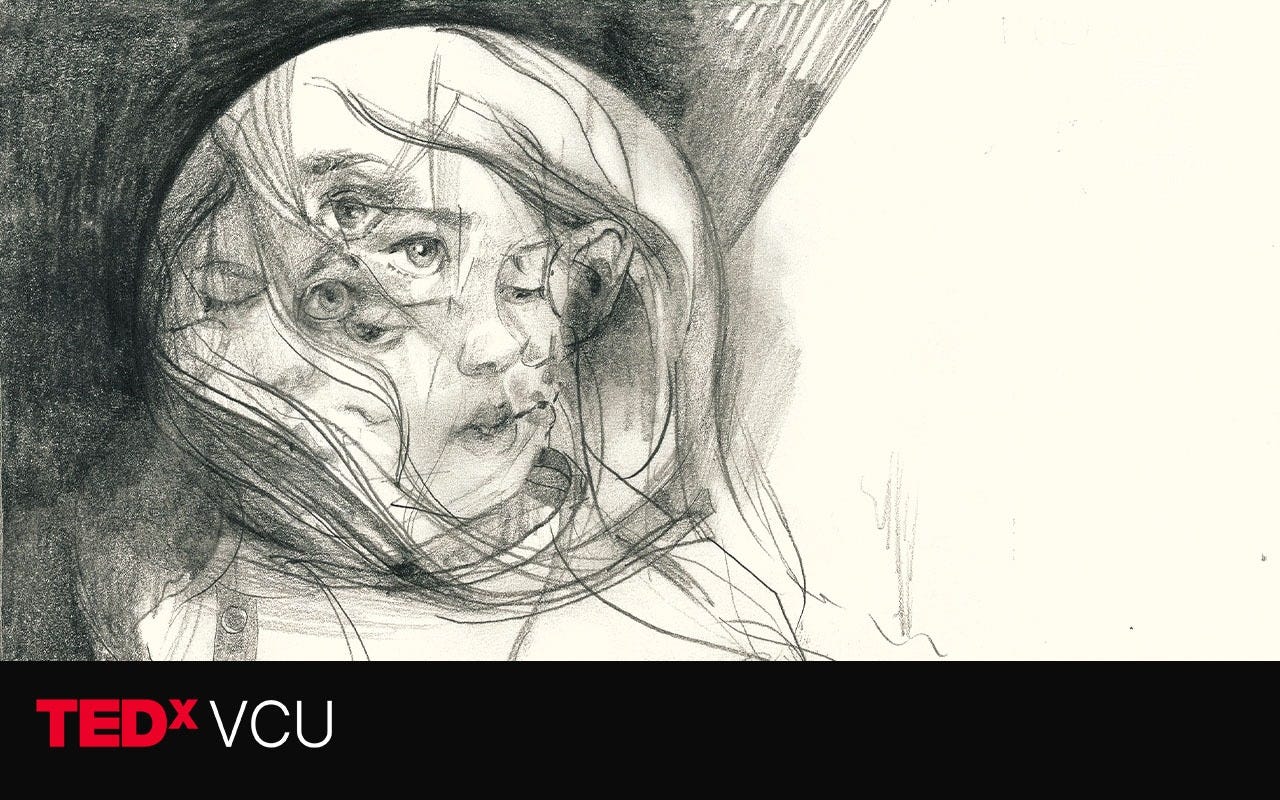
You see, drawing isn’t an idle practice. When you draw, your body is still, but your mind moves. Unlike a quick snapshot, drawings take time. We don’t take a picture, we make a picture. When you make a picture, you are part of it. If you sit still long enough, you become invisible, as the world continues to turn around you. In those moments of intense focus, you start to notice subtleties and patterns. The chaos becomes ordered. The more you look, the more you see.
We draw for many reasons. Yes, we draw for beauty. But we also draw to understand. We draw to be present. We draw to communicate.
But it would turn out that I wasn’t drawing to see, I was drawing to listen.
As we stepped from that small hospital room into the hall, I asked my host, Dr. Feldman:
“What was that device on her ear?”
“Oh.. that’s a compression plate used to reduce scarring. The patient can wear them for weeks or months as they heal.”
What I had noticed was a large bulky device made of two clear circular acrylic plates, roughly two inches in length, the thickness of my knuckle, clamped together on her ear with two long black screws.
“Where does it come from?”
“Well, we identify what the patient needs and have them order something on Etsy.”
“Etsy?”
This wasn’t a streamlined medical device. This was a novel D-I-Y solution for a one-of-a-kind problem. This was applied creativity to ease the suffering of a single person. Medicine doesn’t usually work this way. Medicine solved big problems for large groups of people. This was different.
Something clicked.
“What if…
What if… we could scan her ear, draw a new design for a compression plate that looks like an earring and 3D print it?”
Dr. Feldman turned to me and asked- “You can do that?”
“Yeah, I think we can do that.”
Now…You want to hear that this story has a happy ending. You want to hear that I drew and scanned this patient’s ear, modeled a beautiful piece of jewelry and it all ended up just the way I imagined. No one is more disappointed than me to share that I wasn’t able to help that young girl, or any other patients in the hospital. Innovation in healthcare and budgets in universities move slow and pandemics move fast. As a non-critical observer with no medical training, I was the first person sent home when COVID came calling.
In the weeks that followed, I revisited the drawings in my sketchbook.
The drawings were a record of my time in the hospital. Drawing was a reminder. They felt important; profound even.
But my drawings were also a reminder that I had failed that young girl.
I mean, what if that were my daughter? I thought of school. I thought of sports- softball specifically. I thought missed dances. l thought of the cruelty of young kids when someone is different.
Something had shifted inside of me and I knew that I needed to use my drawing and creativity to help people.
As an illustrator, I’m hired to draw pictures that speak louder than words. But, Illustration is an isolated endeavor requiring long hours in the studio. If I’m being honest, in a room full of strangers, I don’t know if a single picture I’ve ever made has actually helped anyone. But that’s not the point.
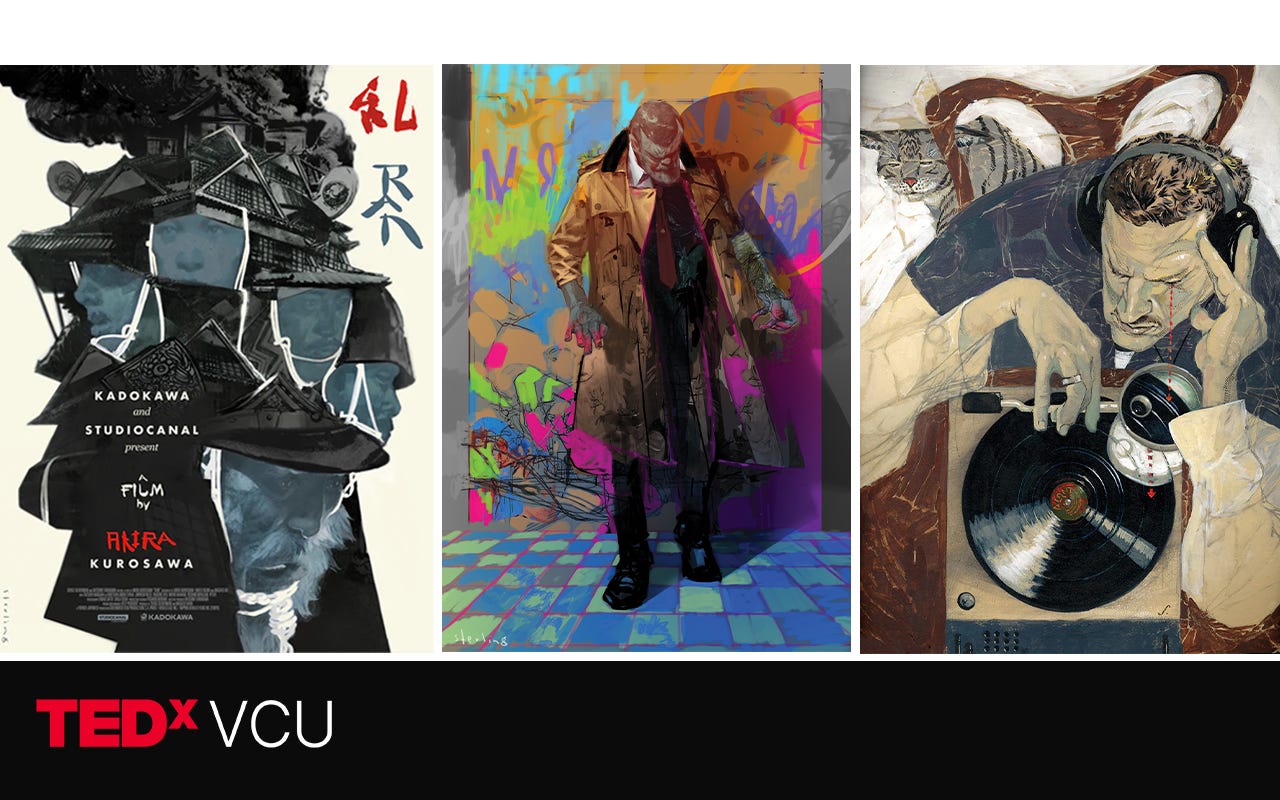
Illustration is seen as movie posters, video game art, book covers and animations to tell stories and to entertain.
But, What if… What if… artists can be more than entertainers?
What if the creative process and cutting-edge technologies found in Hollywood productions and video game studios over there could be used to ease human suffering right here?
I spent years as an illustrator waiting for others to hire me to solve their problems. But, as a Creative Investigator, I could embed back in the world to find one-of-a-kind solutions for problems people didn’t know existed. As a Creative Investigator, I could use the creative process and cutting edge technologies from the world of entertainment to solve real world problems. As a Creative Investigator, I can become an advocate for more empathy in healthcare, science and engineering and more empiricism in art.
A Creative Investigator…, well it all sounds made up, doesn’t it?
It is. But just because I made it up doesn’t mean that the idea is any less relevant.
Drawing lets us get the ideas that live in our heads and the emotions that live in our hearts down on the page. When it’s down on the page, we can arrive at consensus. When it’s down on the page, we can get to hard no’s and hard yess’s.
Drawing is many things, but maybe most importantly-
Drawing is Thinking Out Loud.
What started with a simple pencil and marks on a page was an idea that grew into something more.
On Friday afternoons in a small, windowless room, in a one story building on the edge of campus, dozens of undergraduate art and engineering student researchers meet at VCU’s Applied Arts Lab. Professor Jason Bennett and I co-founded the Applied Arts Lab to leverage creative thinking, storytelling and advanced entertainment-technology pipelines in the fields of health, science and engineering to foster human connection and to relieve human suffering.
We’ve stood in front of a room of NASA scientists, pilots and engineers and drawn, where they’ve told us “we’ve never thought of it that way before.”
We’ve drawn storyboards for neuro-divergent and non-verbal children at the Evans-Haynes burn center to describe complex medical procedures where words alone fail to bring comfort and clarity.
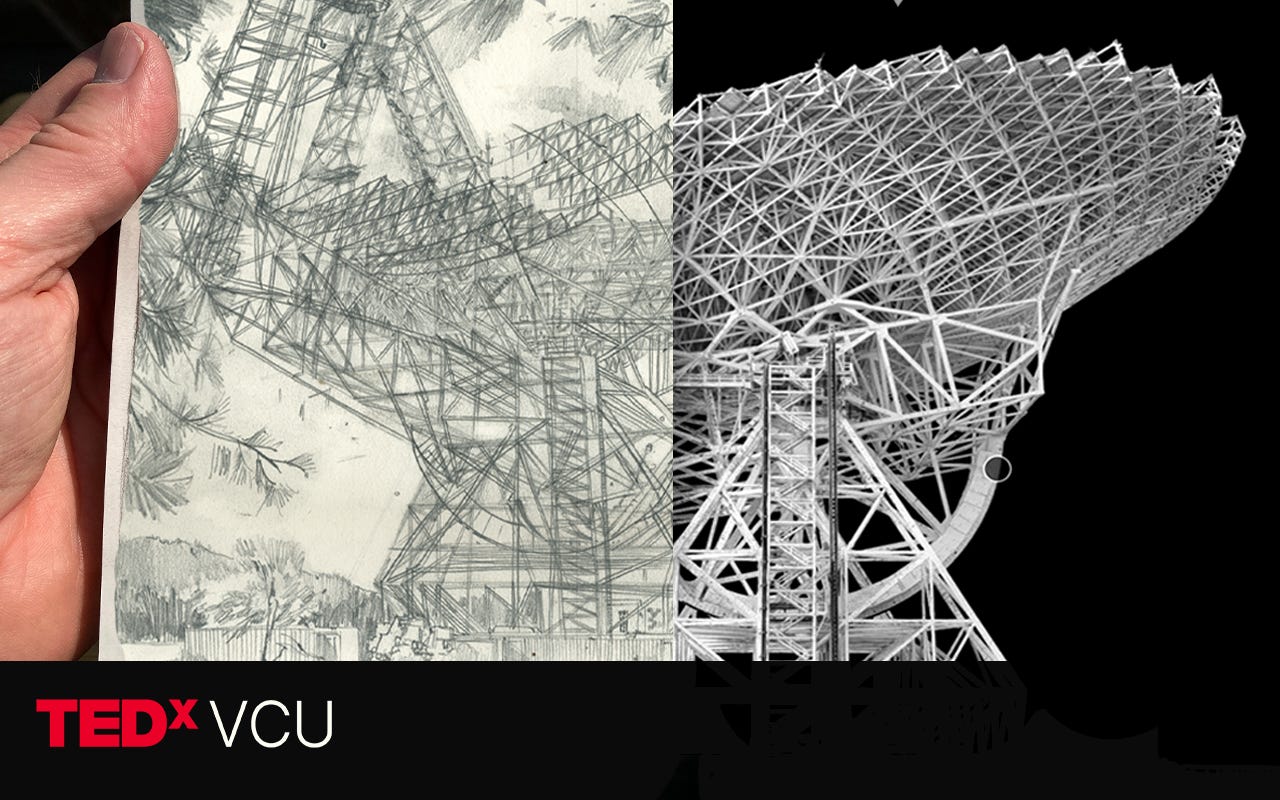
We’ve stood in the shadow of the world’s largest mobile radio telescope and drawn where no cameras are allowed, collaborating with CoStar Group to develop an impossibly intricate 3D model of the Green Bank Telescope using drones, photogrammetry and LIDAR.
Our student researchers are developing a sturgeon tracker, a burn center mascot and Infrared Visualization using video game engines.
And students like Lily Gordon, my MC tonight have stepped into the role of Creative Investigator, where she is shadowing surgeons at VCUHealth to find ways to use 3D technology to scan burn patients and print one-of-a-kind prosthetics.
Flakes. Weirdos. Space-cadets. The world has a lot of names for artists and people they don’t understand.
But what we are is dreamers who see the world through a different lens. Artists are the Authors, designers and storytellers that imagine possible futures.
Science fiction is nothing more than creative prediction.
Now more than ever, the world needs brilliant creative minds to untangle wicked problems. To an artist, creativity isn’t magic. It’s logic. Technology- just a tool we use to move an idea from low-res into high-res. Design: our attempt to bring the wonders of the Heavens into human scale and understanding.
Artists belong here…
Artists belong here at the table with the doctors, the engineers, the scientists, the programmers, the politicians and the policy-makers. Artists can bring chaos into order. Artists make the unseen seen. Artists have the ability to make the abstract real. Artists make the unseen seen. Artists can help us design the future we imagine.
I realize that creativity alone can’t solve all of the world’s problems, but picking up a pencil is a great place to start.
Thank you.
Comments
Nothing yet. Say the first thing.
Sign in to join the conversation.