
There were days where I felt like I was living an alternate version of “Catch Me If You Can.” I’m no Dicaprio, but all at once, I had a security pass to access NASA Langley, I was embedded in the Hospital in the Department of Surgery and working as a Professor and Artist at VCU. This was on the heals of my best attempt to be a real life Indiana Jones through my company Legendeer with summer hiking, climbing and outdoor adventures in Yosemite, Zion, Banff, New River Gorge, Bogota and Oslo. A Spielbergian life, perhaps.
On the medical campus, they insisted on introducing me as Dr. Hundley. After correcting them dozens of times, I stopped and just enjoyed the very good coffee where the doctors and surgeons gathered. Hell, I don’t even have a Masters degree.
It’s funny how all these little independent vignettes begin to weave and align if you just live long enough. Here I am looking at 50 this year and I feel like I’ve made a fool of myself enough to understand what failure looks like. I’ve always been willing to fail in order to succeed.
I’m in a place now where I share the Applied Arts Lab that I co-founded with Jason Bennett, where our conversations often start with- what is the coolest **** we could do? And there is a lot of cool **** happening all around. It’s a sandbox and things get very interesting when you can align cool things with helfpul things. Every once in a while, you stumble into something profound, interesting and just flat out needed in the world.
From there- strategy; what value can we bring to a new project, venue or experience? Who do we know? What do we need? What can I do for them?
There’s a process to creating opportunities and I know with certainty that I couldn’t have done what I’m doing now twenty years ago.
As I shared in my last post, I gave a TEDx talk on being a Creative Investigator. Totally made up. Made up, but necessary.
As a skeptic of Academia and Academics, in general (remember- I am one), I’ve always been dubious of the overly tedious and counter-intuitive grant application process. You see, in this process, you take on the title of Principal Investigator (PI). It requires that you have a clear budget, clearly defined goals, timeline, justification, etc. All good, for sure, but the application process is so self-indulgent that it hinders progress. You work hard to convince people that your research (your idea) might produce something of value.
As an industry guy first- why not make something and put it out into the world? If it has value, people will let you know.
This is all said tongue-in-cheek, but there’s truth to it, too.
Universities are microcosms of the larger culture; larger world. Seemingly infinite resources with siloed access and localized genius. Localized genius with their own specific language. The role of Creative Investigator that I’ve created lives above; no- precedes the PI. A CI embeds in a place and finds the unseen connections between known things. Like I’ve written so many times before, if you build the bridge, you get to collect the tolls. This is the birth of an idea. The birth of opportunities.
We’re doing this outside of academia, too. Partnerships with CoStar Group, NASA, the Airforce and independent companies and institutions, too. The input changes and the outcomes are unique, but the creative pipeline is the same.
Artists, look for the opportunities around you. Be creative in how you see the world, align resources and carve a space for yourself that only you can occupy.
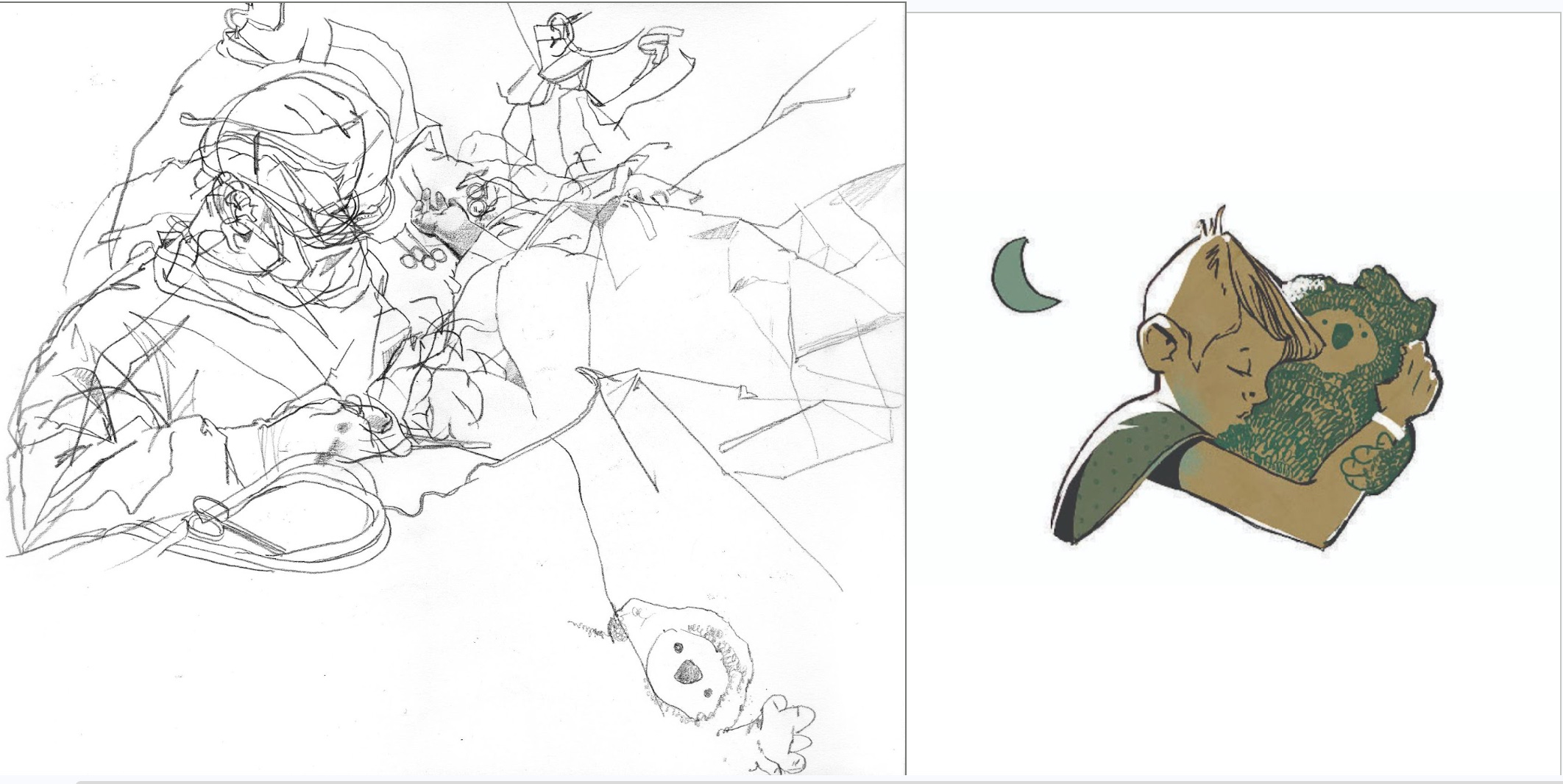
Next post, I’ll share the work we’re doing for neurodivergent and non-verbal children in the Burn Center. Feels cool and important, and it all started with a simple observation in a completely unexpected place.
Comments
Nothing yet. Say the first thing.
Sign in to join the conversation.