
AI does not need another committee. It needs accountable leadership. That should, for most big organisations, be a CAIO. Smaller businesses should have a fractional CAIO.
BUT - the center of gravity for CAIO skills is all wrong.
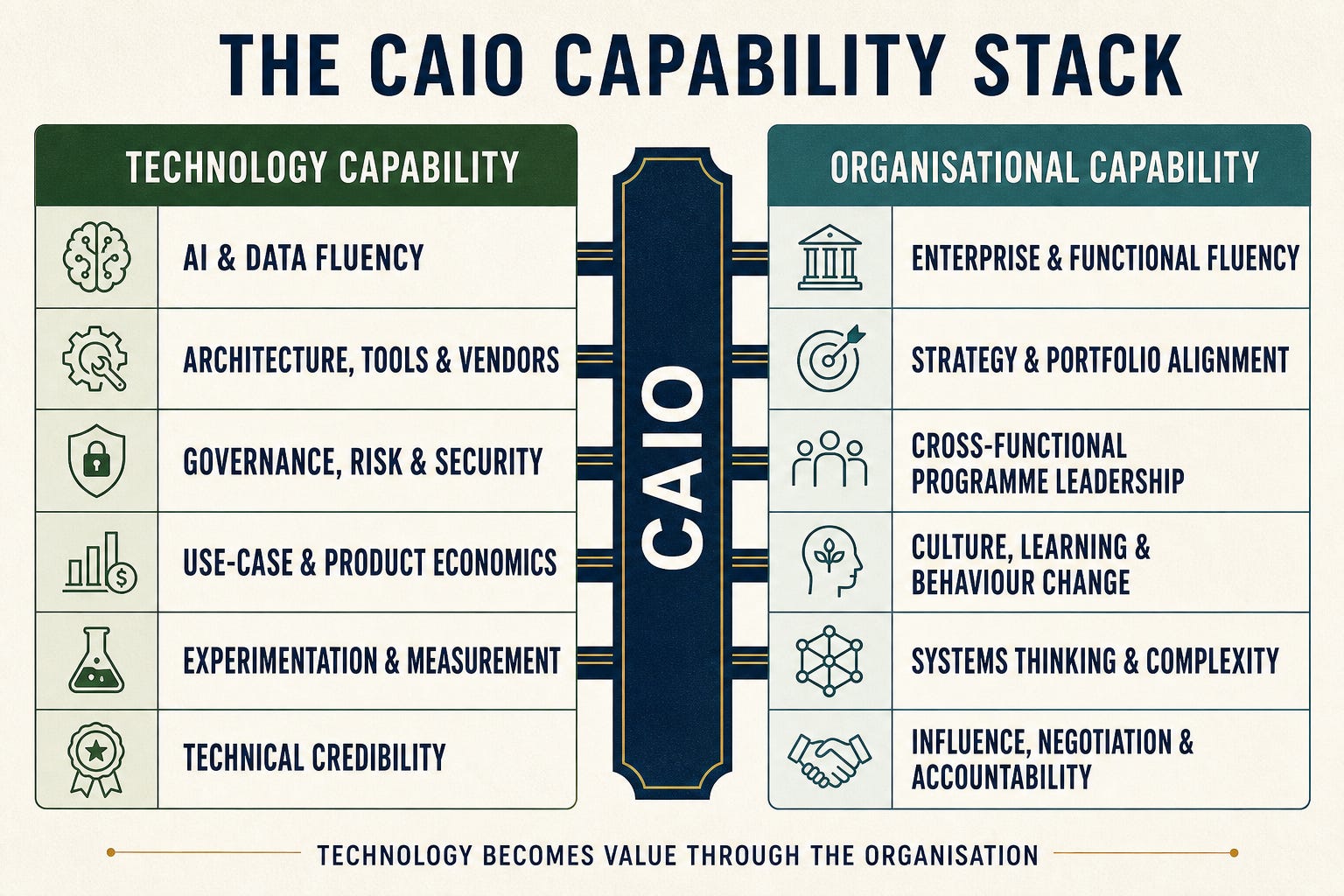
In 2020, there were no Chief AI Officers. In Adopting AI (2025) - though the role had grown some, I argued this was a huge mistake.
Now there are a lot of CAIOs - but I wonder whether the way the role is conceived of is correct.
Where you position a role matters hugely. When (a decade ago), I was advising boards on ESG-Sustainability, the head of ESG was generally buried somewhere.
That is awful symbolically - leaders saying HEY - sustainability matters and is central to our strategy - but OH, it reports through legal, 3 layers down.
I recall the head of sustainability for an airline trotting off to report their findings to a country head and being tossed out of the meeting - a physical exit - but most leaders were more subtle - they’d read the sustainability recommendations and then (as I believe the miliary say) - grin f*#k the guy.
AI is complex at every level - unartfully captured below.
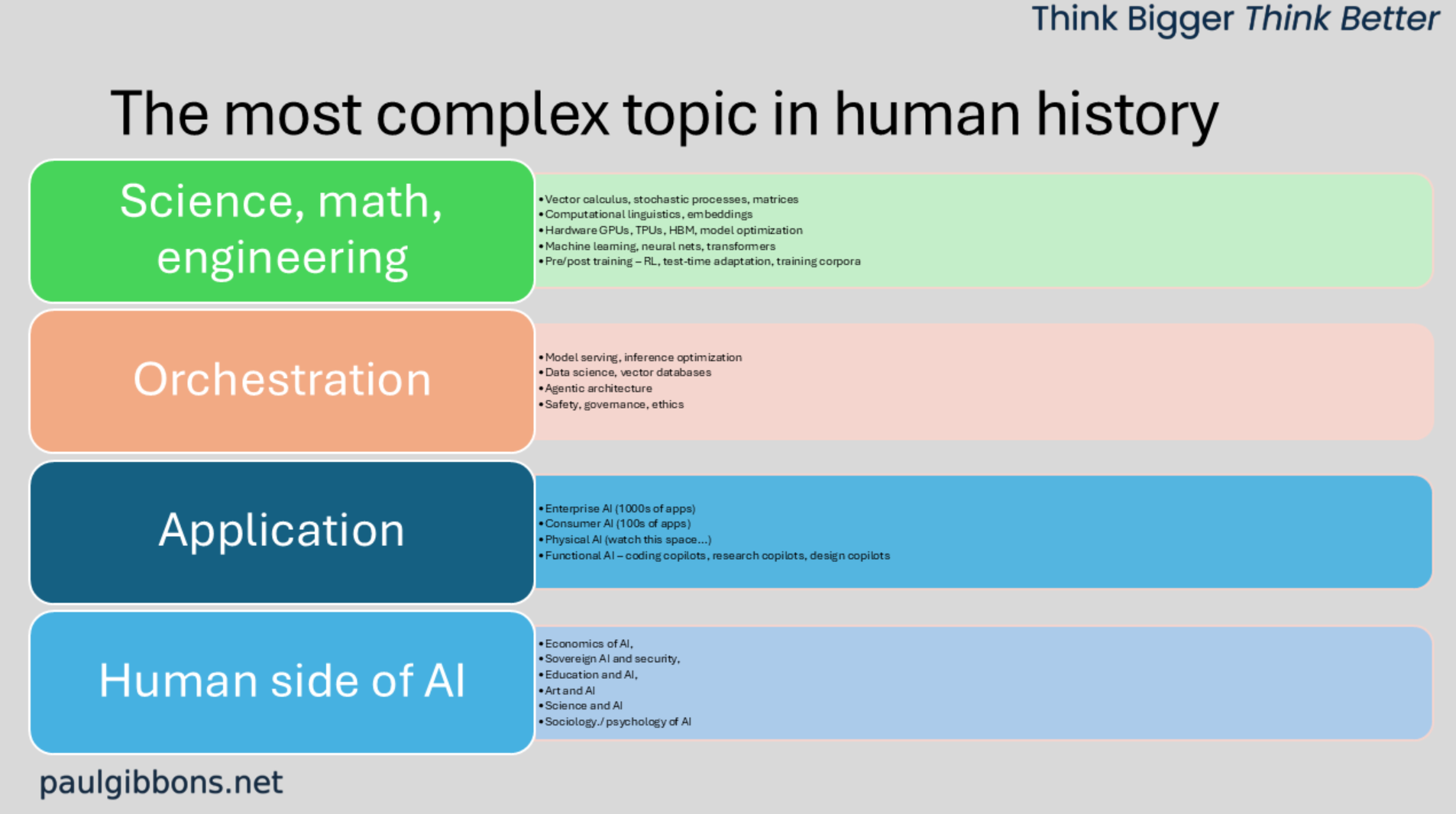
But that isn’t the half of it - because that is “static” - and what becomes really tricky is when that stack interacts with human systems:
existing tech
organizational structure and politics
human cultures
human intelligences
So, the CAIO needs to be full stack - and MOREOVER, able to manage the interaction between layers of the stack AND the interaction with the existing org.
But we don’t choose CAIOs that way.
The CTO gets AI because it sounds technical. The CIO gets AI because it touches infrastructure. The CDO gets AI because models need evidence.
Each answer seems sensible until it meets the business.
AI adoption is not a technology deployment problem with a bit of human clean-up attached. It is organisational transformation with a technical core. That distinction matters because the hard constraints are increasingly human: adoption, trust, workflow redesign, governance, ethics, culture, and executive accountability.
The 2026 Data & AI Leadership Executive Benchmark Survey puts the point bluntly: 93.2% of AI adoption impediments are human issues.
If the binding constraint is human, then handing AI to a purely technical function is not strategy. It is category error.
The case for a Chief AI Officer is not “AI is important, so create another C-suite title.”
The case is that AI now crosses too many domains to be safely absorbed by one existing silo:
- AI strategy and prioritisation
- Governance and risk
- Human capital and adoption
- Culture and ethics
Consultants can help. Vendors can help. Committees can coordinate.
None of them supplies accountable leadership.
I have published a discussion document making the full case: why the CTO/CDO/CIO absorption pattern fails, why consulting-led AI strategy often stalls, why vendor governance is not enough, and why a fractional CAIO model may be the practical path for mid-market firms.
Full whitepaper for Substack subscribers:
Understand the frontier of AI leadership - get the whitepaper
Comments
Nothing yet. Say the first thing.
Sign in to join the conversation.