
While not flashy-looking, this project has been one I have been most excited for, which is why I chose to release the article in April (my birthday month). I have seen a lot of new subscribers over the last couple of months, and I would like to take this time to remind you all that my BOOK is available on Amazon in both Kindle and print form. It is a collection of all my articles from last year, along with some bonus material. If you already have a copy, please consider leaving a positive review on Amazon. It helps more than anything to spread the word. If you are the kind of person who likes content that you can hold in your hand and put on a shelf, I would appreciate your business.
People like to talk about their Grail guns, as in the Holy Grail. What gun have you been questing for your whole life? Well, I have quite a list of guns that are always on my mind when searching for deals, but the gun I genuinely want the most doesn’t exist, and while not impossible to make, it would be challenging. For those of you who have read my articles before, you know that one of my all-time favorite guns is my Smith & Wesson Model 317. The 317 is an all-aluminum .22 Long Rifle, built on a J-Frame, with a 3-inch barrel and adjustable sights.
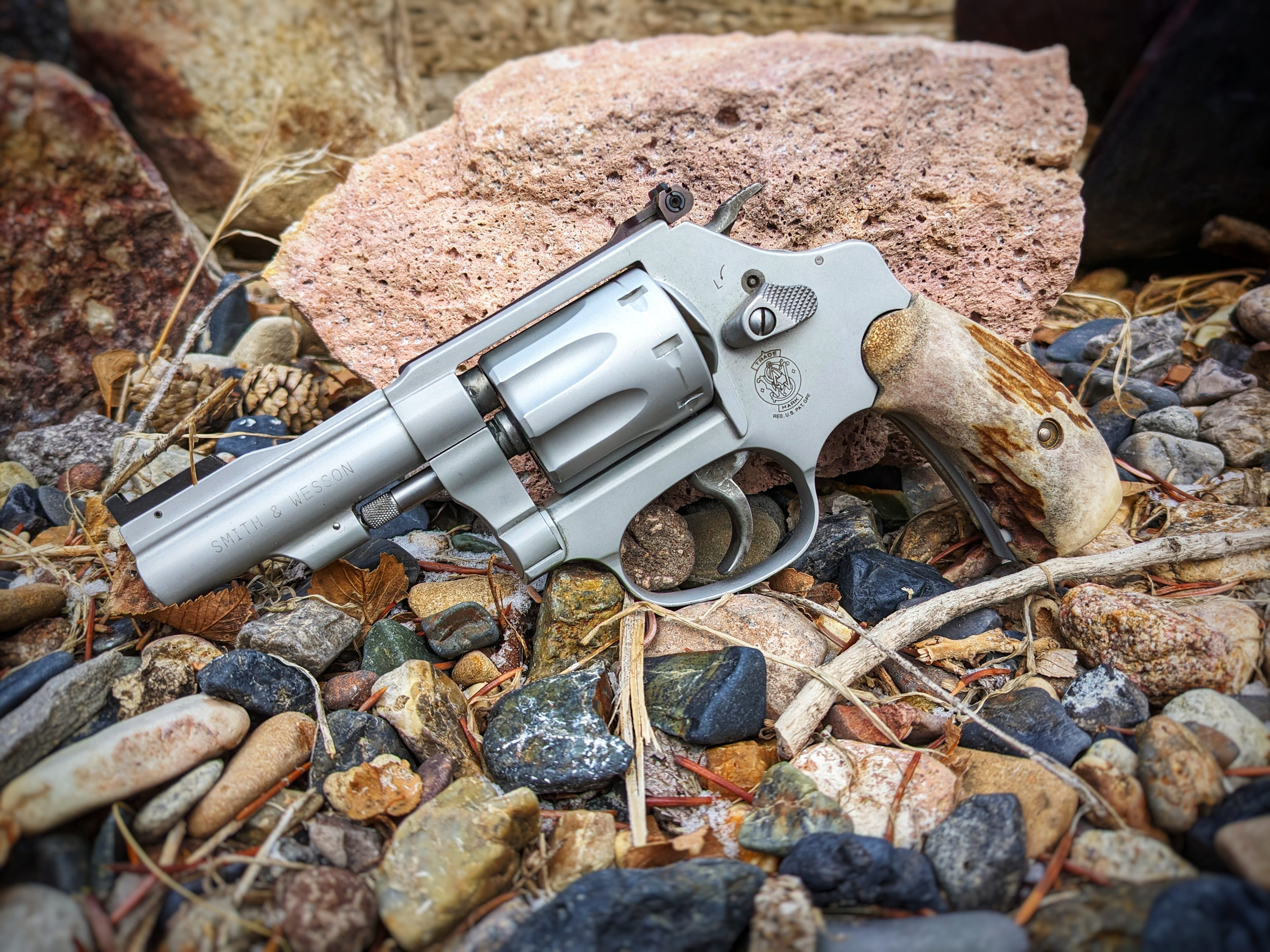
I want Smith & Wesson to create a 331. I want the same gun in .32 Magnum or, better yet, 327 Federal. Either would be fine; mine would probably see mostly .32 Mags anyway. Why that gun? It would be the perfect trail gun, large enough to handle most problems in the Nevada desert, but in as small a package as possible for easy packing.
So, what’s a guy to do when his dream gun doesn’t exist? Smith did make two very similar guns, and currently produces one that is almost there. The first is the Model 631, typically seen as a standard stainless-steel J-frame snubby in .32 Magnum. They did make a variant, however, that had a 4-inch barrel and adjustable sights. This gun has been on my list of needs for quite some time. Unfortunately, when they do appear on auction sites, they often sell for more than $1500. That’s more than I usually have sitting in my fun money. Smith & Wesson also made the Model 632, which came in a 3-inch-barrel variant chambered in 327 Federal. My father has one of these in his collection, and while it’s close to what I want, Smith geared it toward combat, so it has a compensated port drilled in the barrel and a bull barrel with a half-tapered underlug. It’s a very cool gun, but just not quite what I’m looking for. Plus, it generally sells for more than the 631 when seen at auction. Smith has also made several scandium and aluminum-framed .32 Magnum revolvers, but none have had proper adjustable sights, and all have been snubbies. They are so close in so many ways, but can’t cross the finish line.
The final question is, Matt, you are a gunsmith, can’t you just make your Grail gun? Well, yes, I probably could, but it would be tough, especially in the parts-finding category. First, I would have to procure a scandium or aluminum J-frame with sights. I would need to find a titanium cylinder chambered in at least .32 Magnum, along with the hand to turn it if possible, although I might be able to modify and get along without it. This is one of the hangups; finding this cylinder just floating around is tough since the guns were not that common to begin with, and the scandium versions are pretty new, so not that many scrapped guns are floating around.
Last but not least, the barrel. A three- or 4-inch scandium barrel has never been made to the best of my knowledge. It might be possible to use one of the shrouded barrels and create a new .32-caliber barrel insert for it, but I have never worked with those before, so I’m not sure how difficult it would be to recreate one. Long story short, it’s possible but not probable. What is more probable, on the other hand, is a stainless steel version similar to the Model 631 I mentioned earlier. That’s where this story begins.
A Lucky find
As is usually the case, I have many saved searches on GunBroker. One of those searches is for the Model 631 I mentioned earlier. Well, one fateful day, a parts kit showed up for a 2-inch model. Well, now, that’s something I could work with! After a few rounds of bidding, I managed to get the kit for $225. This worked out well because the kit included everything except the frame, which meant the hand was included as well. This isn’t always necessary. Sometimes I can modify whatever hand I have to make it work, but it makes my life a lot easier if I can get the hand that is meant for that cylinder. For those of you who don’t know, the hand is the part of a revolver’s mechanism that pushes up on the cylinder and rotates it to the next chamber. It’s a critical part of the timing on a revolver, and it needs to be just right for everything to work together.
Now I needed a gun to convert. You will remember that my criteria for this gun required an adjustable rear sight. So just any ol’ snubby wouldn’t do. I began searching for a 3-inch Model 60. The 3-inch Model 60 comes with adjustable sights, and since it was already a 3-inch gun, my desired length, I figured it would get me going in that regard. How wrong I was, but more on that later. After some searching on GunBroker, I found a water-damaged Model 60-4. This particular gun had several things going for it that I liked. The first being the water damage. Undoubtedly, that would keep the price low, and since I was rebuilding it anyway, it would be no problem to clean up a little damage. The second thing I liked about this gun is that it was an older model, so it had what they consider a wide target hammer and trigger (for a J frame), with the hammer still retaining a firing pin. I prefer that for aesthetic reasons. I honestly don’t know why Smith abandoned the hammer-mounted firing pin. It’s just as safe as the frame-mounted one and far easier to repair should it break. This firearm also lacked a lock—a completely unnecessary contraption designed to appease lawyers more than protect people. I actually don’t mind the lock, but if I can get a gun without it, then all the better. Luckily, Smith & Wesson has come to their senses thanks to the distributor Lipseys and has seen fit to start making guns without a lock again. Hopefully, the lock will be gone from the entire line of revolvers in the future. The damaged Model 60 was bid on and purchased for $542. I am, of course, including taxes, fees, and shipping in all of these prices, and at the end, we will see whether I would have been better off buying the desirable Model 631 outright.
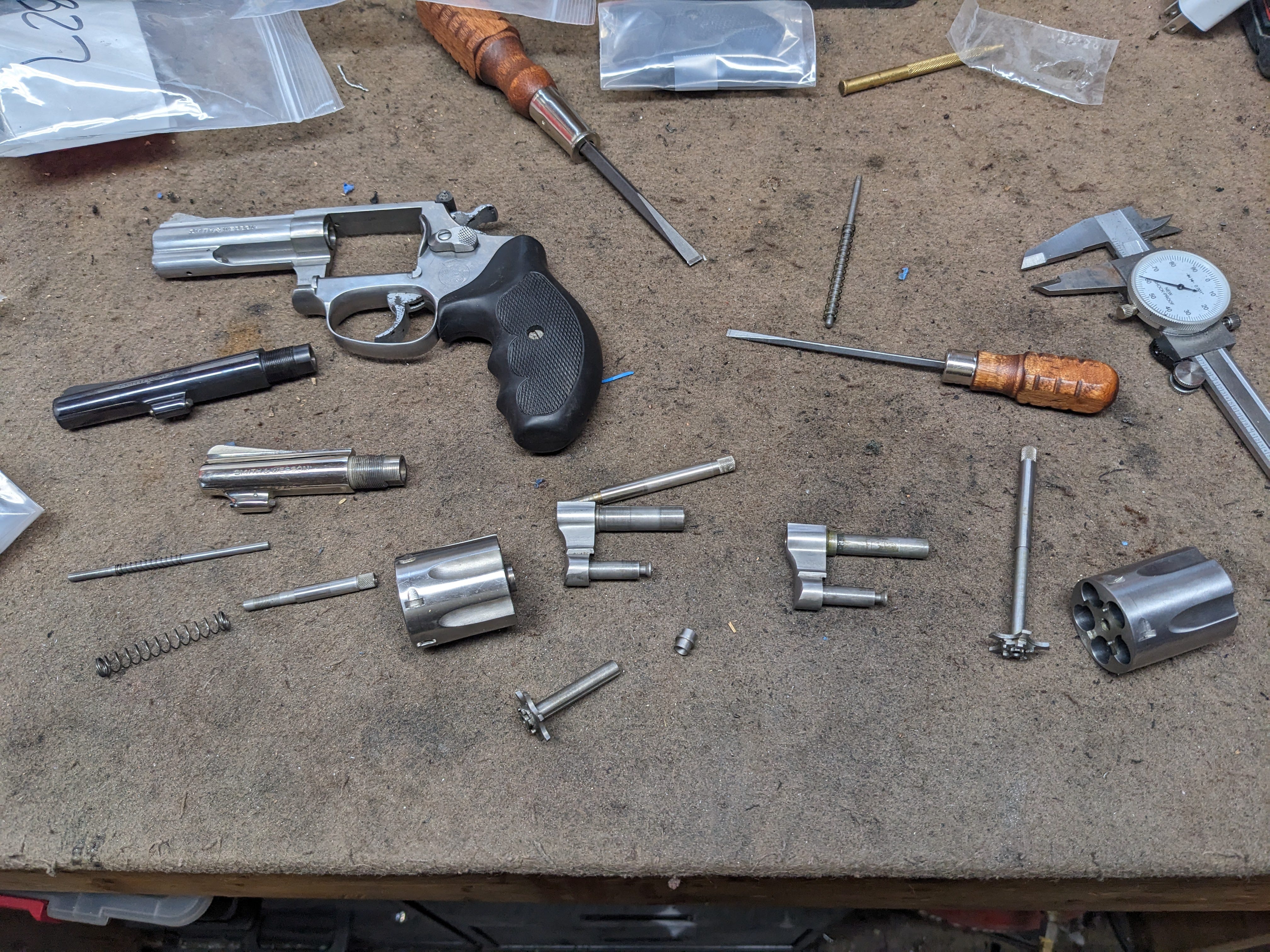
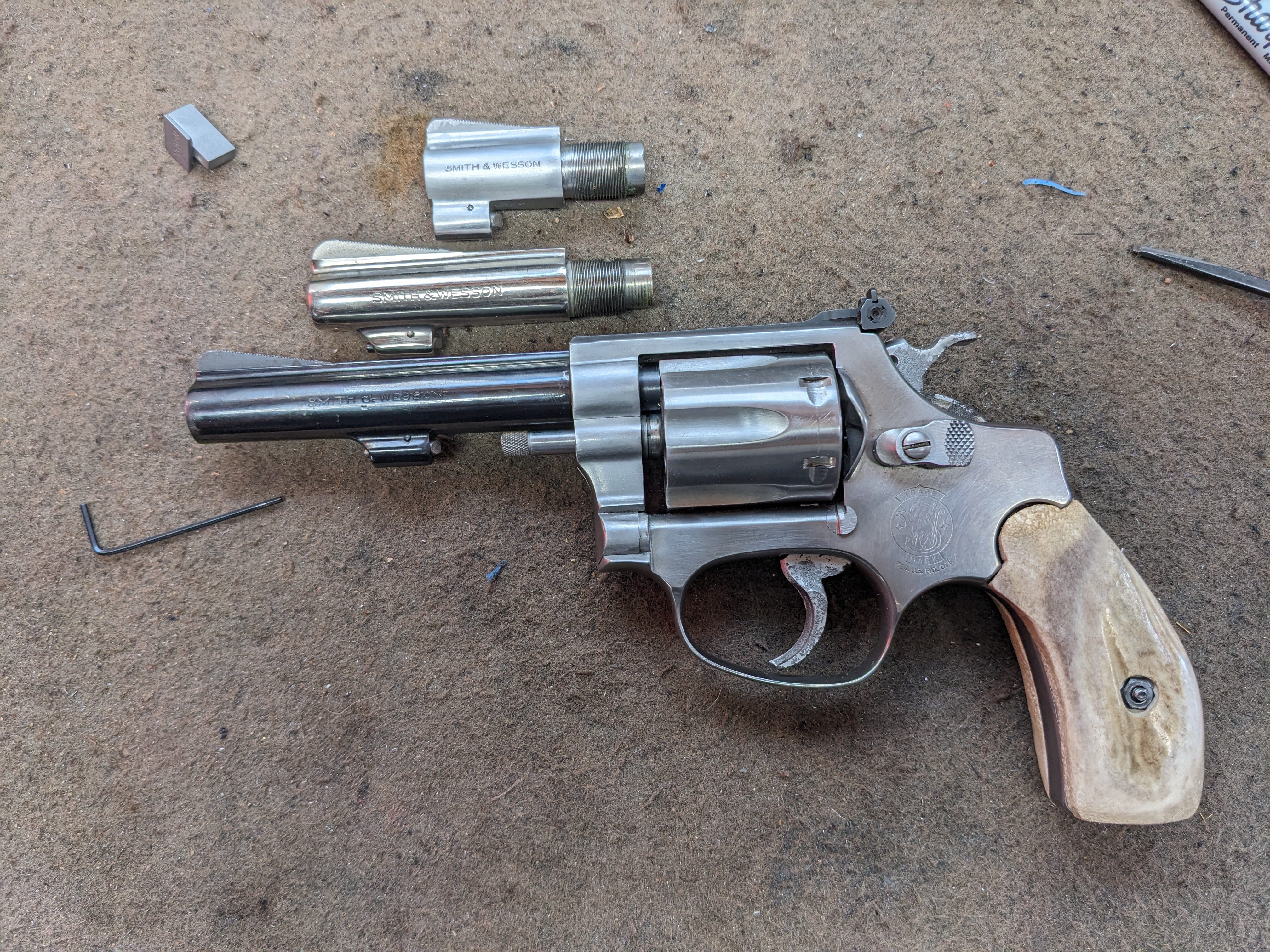
Now I needed a barrel, or maybe a few. An eBay search led me to two Model 30 barrels. A Model 30 is not chambered in .32 Magnum but instead .32 Long, but for my purposes, the bore diameter is the same and should work just fine. I purchased one nickel-plated, three inches long, and one blued, four inches long. At the time, I still wasn’t sure which barrel length I wanted. The total for both barrels was $150.
Oh, the problems.
Once all the parts arrived in the mail, I began the task of assembling them. That’s when I ran into my first problem. Unbeknownst to me, the 3-inch Model 60s use a different ejector rod than most other Smith revolvers. That means the 3-inch or greater barrels would not work unless I could find the correct ejector rod. Back to eBay I went, and finally, after some searching, I found and ordered for $20 what I hoped would be the correct ejector rod. Unfortunately, I would have to wait for it to arrive.
Since I was waiting for the ejector rod to arrive, I decided to fit the 2-inch barrel that came with the cylinder, just for fun. I got lucky, and it clocked up just right with the sights straight up and down, and the cylinder gap came out very acceptable. This left me with one problem—the sight height. Most small Smith revolvers of this size use a gutter or trough sight, basically a slot milled through the top of the frame, and the front sight is relatively short to accommodate that. Now, I have chosen a model with an adjustable rear sight, which raises the sight plane considerably. So, I will need to raise the front sight accordingly to get the revolver to shoot on target. I began by milling the front sight off the 2-inch barrel, then I dovetailed it for a Novak blank. A Novak sight is what you would commonly see on a modern 1911. I then shaped the Novak sight and serrated it. Now that I had a completed gun, I checked the cylinder alignment and, finding it acceptable, decided to go out and shoot it. Results were mixed.
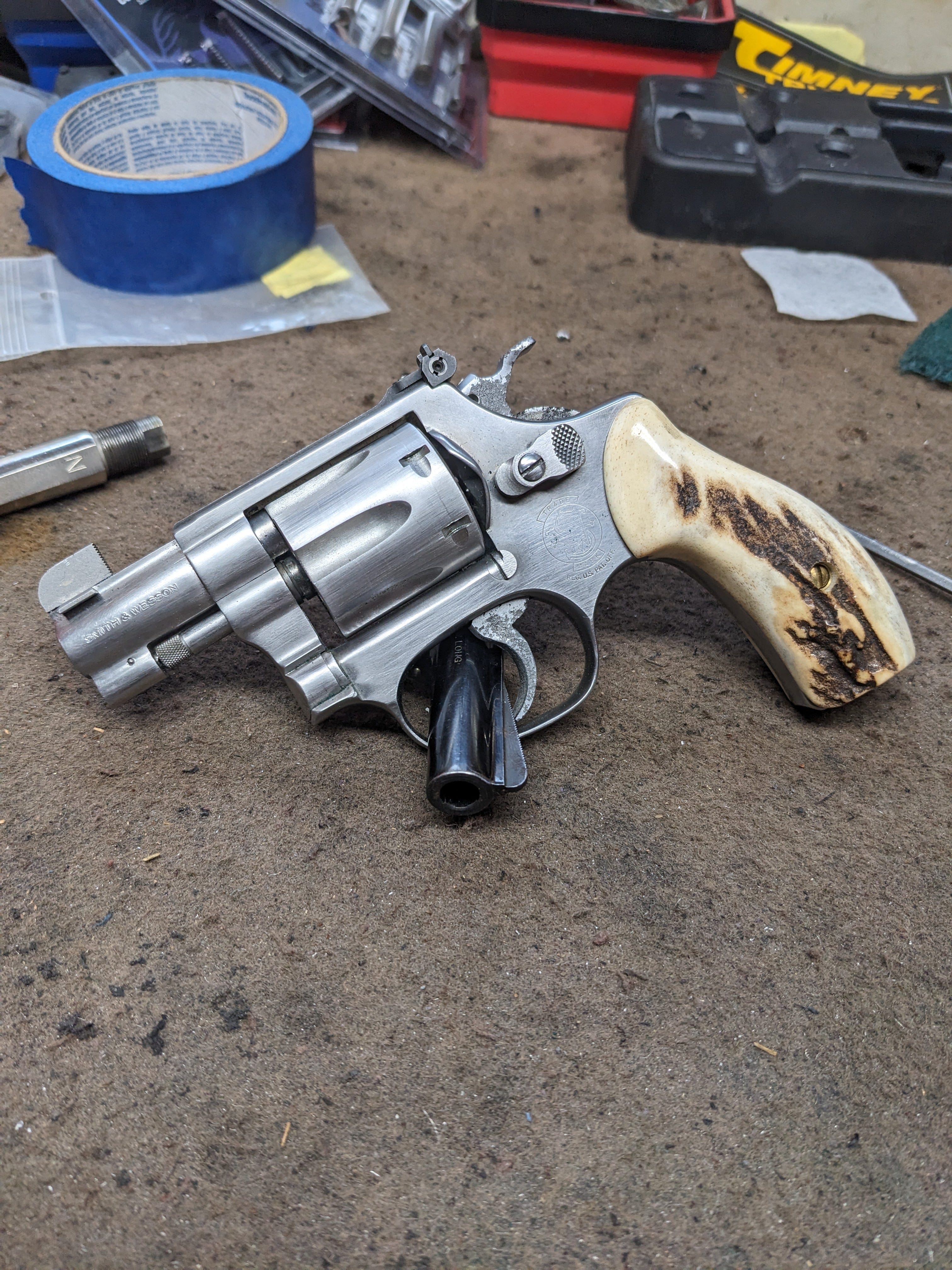
To begin with, the front sight was still too low, so I had to shoot at the bottom of my sight window, which was not suitable for testing accuracy, but it was acceptable at 15 yards. I pushed the target back to 25 yards, and the groups opened up considerably, which was not acceptable. Remember this is a trail gun, it needs to be at least accurate enough to take a cottontail at 25 yards, or better yet, 50. As I suspected, I was asking too much of a 2-inch barrel, or maybe I should say, asking too much of my skill with a 2-inch barrel. Let’s not give up on the 2-inch barrel just yet. Back at the shop, I decided to recut the forcing cone and recrown the barrel.
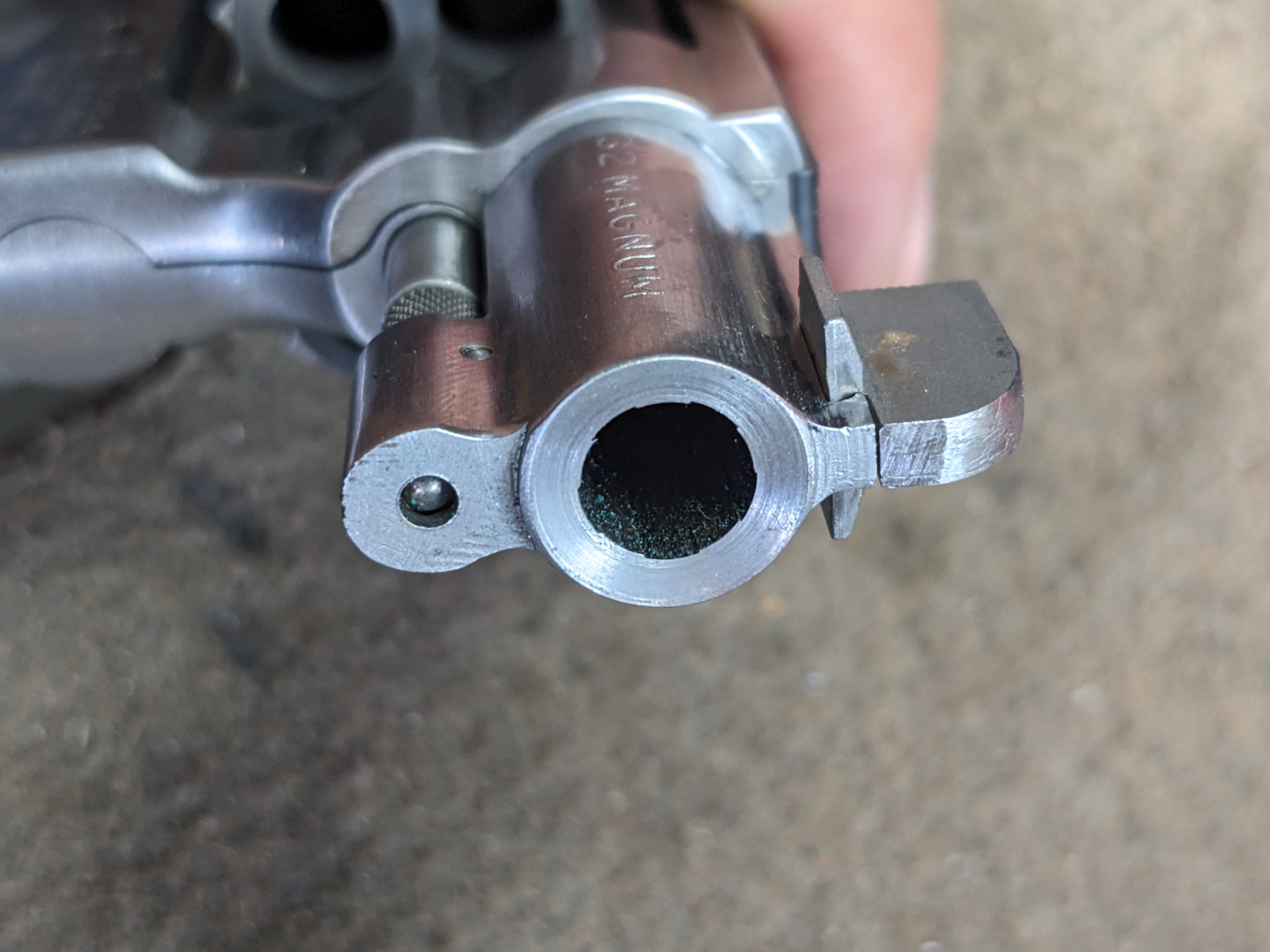
On a revolver, these are two of the most critical areas when it comes to accuracy. Time to shoot again…or so I thought.
Stay tuned! Same bat time, same bat channel.
What a fun project this has been, and it is my Grail gun, so I can’t just write it up in one simple article. The next time I see you, I will have the exciting conclusion, along with plenty of pictures of the finished gun. I hope you are enjoying this one as much as I am. See you next time.
No posts
Comments
Nothing yet. Say the first thing.
Sign in to join the conversation.