
Burnout is surging. Are we going to do anything about it?
“We used to talk about flourishing. Now, we’re just trying to prevent people from breaking down so badly that their health forces them to quit.”
That was one leader’s reaction in a recent conversation about burnout, spurred by a lot of recent research and stories like Thinking Machines cofounder Lilian Weng stepping down because “the amount of consistent stress and workload have pushed me beyond what my health can sustain physically.”

She’s not alone. About 67% of US employers, and 74% of large ones, report a rise in mental-health-related leaves over the past year, according to a survey from employment law firm Littler Mendelson. One of the firm’s attorneys called the number of absences “skyrocketing,” and told Bloomberg it’s “a sustained shift, not a temporary disruption.”
It’s people like Kendall McGill, who’s among the 92% of workers who’ve seen their responsibilities increase in the last year. She was handed the workload of two people, and describes sitting at a window and breathing until the dread passed before every one-on-one with her manager. When the breathing stopped working, she took six weeks off under the Family and Medical Leave Act (FMLA) and spent it on her porch, coloring and playing with her son. “It was the reset that I needed,” she told Bloomberg. “I feel like my baseline was restored.”
McGill isn’t an outlier, based on my conversations. In tech, she might even be close to the norm. But too few employers are looking for a fix, and too many are reacting with irritation at the leave. Spring Health, which runs mental health benefits for large companies, says one in three of its inbound client conversations is now about how to limit leave requests. The Bloomberg headline put it flatly: more workers are taking mental health leave, and bosses aren’t happy.
They’re getting mad at the smoke alarm.

The obvious question is why now, in an era when AI was supposed to take work off our plates. The answer is that so far it’s doing the opposite.
Burnout among tech workers jumped eleven points in a single year, from 45% to 56% in Lenny Rachitsky and Noam Segal’s 2026 workforce survey. The top fear? Being expected to do more for the same pay, and being trapped in an unsustainable pace. AI makes starting any task frictionless, so people fill the old gaps, the walk to lunch, the wait for a file, with another burst of output. The speed gets plowed straight back into expectations for doing more, with less.
It’s also wearing people down cognitively. Many of us, myself included, have experienced “AI brain fry,” the mental fatigue that comes from overseeing more AI than your head can hold. The documented costs are more critical errors, decision fatigue, and a higher intent to quit. Workday’s Human Connection Workplace Index points at a quieter loss on top of it: the workplace relationships that used to absorb some of this strain are thinning out as more of the day runs through a machine.
Every workweek with no recovery built into it runs up a kind of boundary debt. Rising mental health leave is the balance coming due.
Manoush Zomorodi, host of NPR’s TED Radio Hour, an excellent Substack, and author of the new book Body Electric, sharpened my thinking on this when she joined a Charter Forum session. We file topics like boundaries, breaks and mental health under wellness when it was always about leadership and team norms. That’s the same point Melissa Painter of Breakthru made when I wrote about breaks last fall: a meditation app doesn’t fix a calendar with no white space in it. Boundaries do, and boundaries don’t set themselves.

Manoush Zomorodi, who has a great Substack btw
Manoush leads here for a reason: she has proof that recovery is not indulgence, and the easiest place to start is physical. Her reframe is critical: stop calling physical movement fitness or wellness, which makes people defensive, and call it what it is: a cognitive intervention. Knowledge workers are information athletes, and athletes need recovery to perform.
“When I start to think of it as a cognitive intervention, that feels more neutral, and like, of course I want to do my best work.”
She’s got the data to back it up, as co-author of a new peer-reviewed study with Columbia physiologist Dr. Keith Diaz, built from a citizen-science experiment with 23,000 people. Five-minute walking breaks, roughly two miles per hour, cut fatigue by up to 28%. And productivity went up, not down. “Their productivity actually rose slightly, as opposed to what one might think, which is that taking breaks means you get less work done,” she said. “That actually was not the case.”
She’d tested it on herself first, wired up in Diaz’s lab. On the day she took the walking breaks, her glucose was cut in half and her blood pressure dropped five points. She rated her focus and her mood higher.
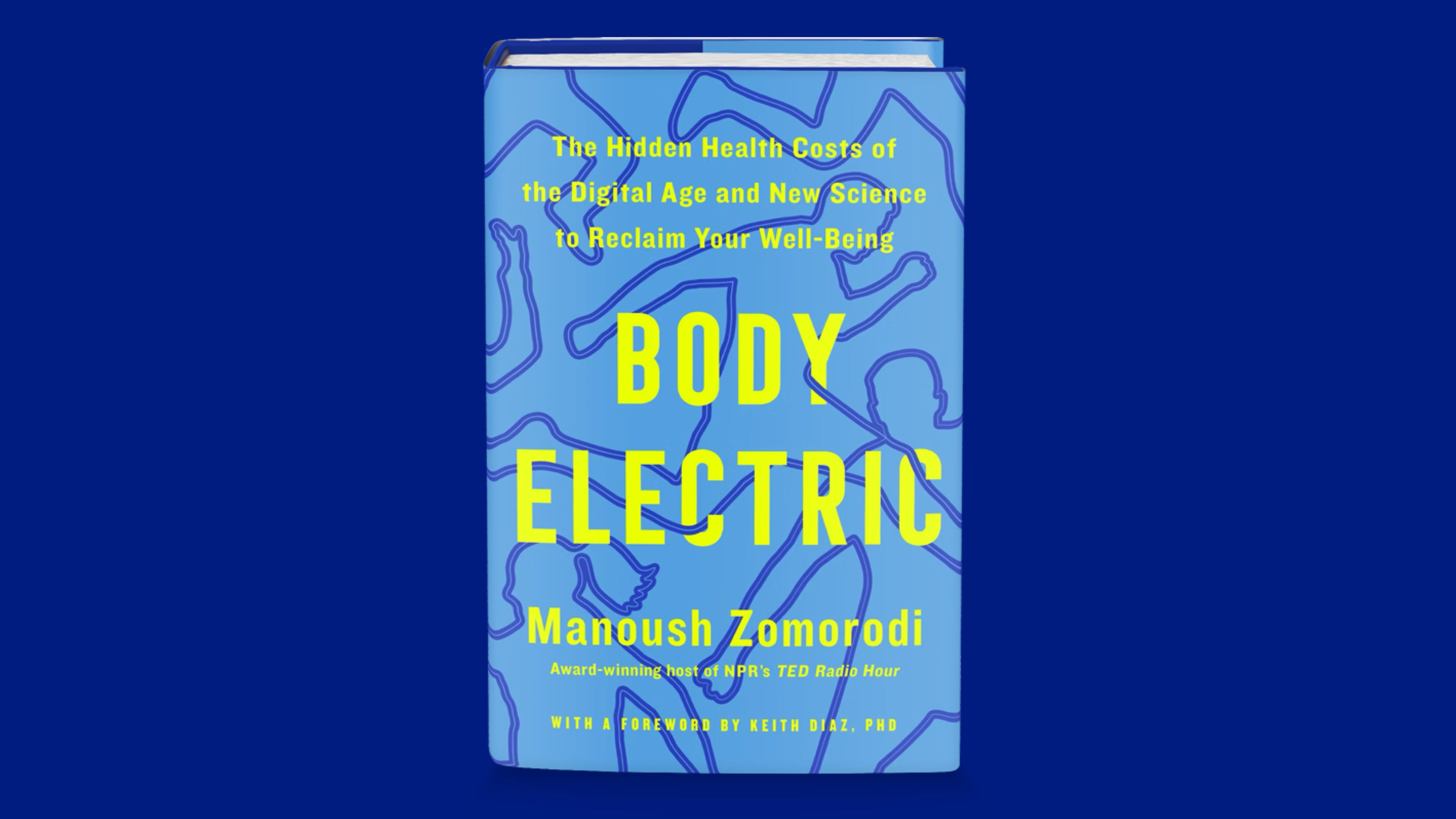
Body Electric
None of this is new to anyone who takes breaks seriously. When Slack ran its own break-taking experiment, workers who took regular breaks were more productive, and the ones who didn’t were 1.7 times more likely to burn out. The catch is that the same movement breaks lose about half their effect when employees don’t believe their manager approves. If the team watches you sit for eight straight hours, they’ll sit too.
What Manoush found actually works is small and personal. “One of the easiest ways to make this change was when the boss said, ‘I’m trying this for the next two weeks. You’re welcome to join me if you want to.’” A demonstration of action by a leader, combined with an invitation to join them, always beats a mandate or corporate-speak memo.
Manoush and I will be at the Charter Workplace Summit on October 21st in NYC. The lineup gets better every week! She’ll also be talking with DJ DiDonna from HBS and The Sabbatical Project.
Save $100 if you sign up if you sign up before August 1st with the code JULY!
Movement is where I’d start because it’s concrete. The harder boundaries are the digital ones. Cal Newport’s work, like A World without Email, blames technology. But the responsibility lies at the feet of leaders. And I contributed to the problem for many years.
I ran my teams the way I ran myself, all out, all the time. Late at night I’d fire off Slack messages and email, tacking on “no need to read this until morning,” as if that made me a better human. Two of the people I trusted most, Helen and Sheela, finally set me straight. “You know that doesn’t work, right? I read it because I’m also catching up. And then I either have to respond to get it off my mind, or I lie awake thinking about it all night.”
A note from the boss carries weight, and the boss doesn’t see it. The theory that everyone’s an adult who can switch off dies the moment your name lights up their phone at 9pm.
The fixes were mundane, and they mattered.
I started using scheduled send: if it can wait until morning, it goes in the morning.
My teams and I wrote down what counts as urgent (the speaker for tomorrow’s event just canceled) and the one channel I’d use when it happened (a text) so everyone could turn off Slack, email, and every other notification-blaring tool off-hours with a clear conscience.
We also let each person choose the shape of their one-on-ones: in person, on camera, or on the phone while they walk around the block.
That last one does double duty: you’re providing an opportunity to take a break and handing people back some control over their day. Dropbox saw the benefits when they were piloting walking meetings: movement satisfaction rose and Zoom fatigue fell.
This is not “soft” leadership. In that same tech-workforce survey, manager quality was the single biggest driver of burnout, bigger than role, company size, or how someone felt about AI. Workers with a highly effective manager reported about 65% higher job enjoyment. Only a quarter of tech workers said they had one.
The most powerful lever you have over whether your team burns out is your behavior.
There’s a lot more to be talked about here. What follows are a few starting points, and then a bigger ask of all of you.
Run the two-week experiment on yourself. Take Manoush’s advice: Tell your team you’re taking a few five-minute movement breaks a day, that it’s voluntary, and make it visible. Schedule “restoration” breaks on your calendar. Find a way to model it.
Use scheduled send. Your 9pm message is a 9pm message no matter how you position it. If it can wait until morning, freaking send it then. Scheduled send is your friend.
Put “urgent” in writing. Agree as a team on what justifies an off-hours ping and the single channel you’ll use, so people can silence everything else without worrying they’ll miss the one thing that’s real.
Let people choose the shape. Give them a say in how they take meetings with you. A walking one-on-one can be awesome.
Set realistic loads. People can go above and beyond occasionally, they can even learn from it. Doing so continually is a recipe for mistakes and business failures.
Rising mental health leave is the alarm going off. It will keep sounding, and burnout will keep rising, as long as we expect people to match the pace of machines.
One case to take to your own leadership: information athletes need recovery to perform, and only their leaders can make taking it feel allowed. Model it, or keep paying in leave, turnover, and critical mistakes.
Even while drafting this column, I’ve been in a lot of conversations, almost daily, with people struggling with burnout across the board, some of the worst signs showing up in the most dedicated workers. Everyone from individuals to C-suite executives. So if you have experiences or ideas, drop me a line.
What are you experiencing?
What interventions have worked for you?
I’m brian@workforward.com, and all input is confidential unless you give me permission to use it.
Please like ❤️, subscribe 📨, and share 🔄 — it’s always free!
Comments
Nothing yet. Say the first thing.
Sign in to join the conversation.