
When I was 11 years old, Grateful Dead T-shirts were all the rage. Boxy, tie-dyed, tucked in and poofing out of overpriced cut-off jean shorts. They were bright with cuddly bears—I didn’t know yet they were born from acid-dipped journeys—and dark with skulls wearing flower crowns. The boys wore them. The girls wore them. And I wanted one.
Sleeping over at a friend’s house, I told her I wanted to get a Grateful Dead t-shirt. Curled in a sleeping bag on her floor, looking up at her ceiling solar system of glow-in-the-dark stars, I expected her endorsement with a pre-teen “Yeah, totally, me too” stamp of approval.
But that didn’t happen.
“Name one song,” she challenged me.
I can still feel how dry my throat went, how small and silly I felt in the dark, eyes darting left to right, searching for an answer. Oh, I remember thinking—feeling both embarrassed and surprised by the question that I would later recognize as critical thinking.
“I don’t know any,” I confessed.
“Well, then, why would you want a T-shirt of a band whose music you don’t know? Only posers do that.”
It was an excellent point, one I took to heart because who in 1992 wanted to be a poser? Not me. I ended up not getting the shirt. It would take me ten years to finally earn it—ten years to know the music so deeply it wasn’t just a shirt I wanted, but belonging to something bigger. Still, fellow music lovers are often surprised to learn how much I love the Grateful Dead. At best it’s curiosity; at worst a sneer, because for some the Dead represent something they can’t stand. What exactly? I don’t know. I never dig deeper, protecting the band that has brought me nothing but light, joy, and an emotional anchor to my growing anxiety.
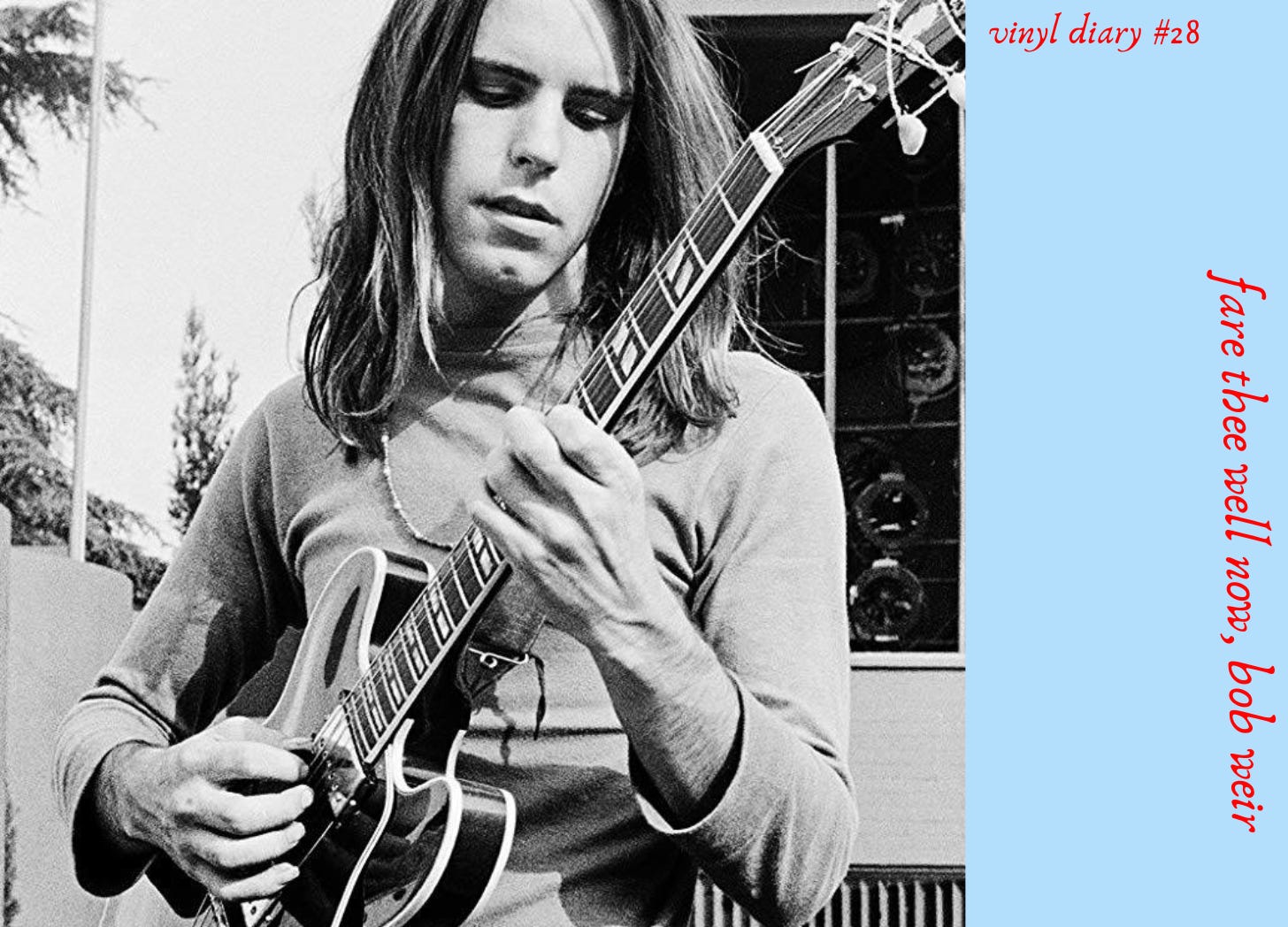
I thought I had used up all my tears on Kurt Cobain’s passing; age and time had taught me that I didn’t know these people and that their music would live on regardless. But when the news of Bob Weir’s passing broke over the weekend, it was the first time in decades I cried for a musician. For years I’d taken strange comfort in the fact that he was still alive, because his music—his songs specifically—had given me so much solace.
While my appreciation spans many albums and live performances, I feel a special kinship with his songs, which feel more grounded than Jerry’s swirly-eyed romanticism and psychedelic daydreams—rooted instead in road stories, lovers’ tales, and everyday longing. If Jerry brings me to an enchanted forest dipped in moonlight, then Weir has me driving southbound on I-5 outside Barstow, on a hundred-degree day with someone I’m not sure I still want to be in a relationship with, and we need to stop soon for gas.
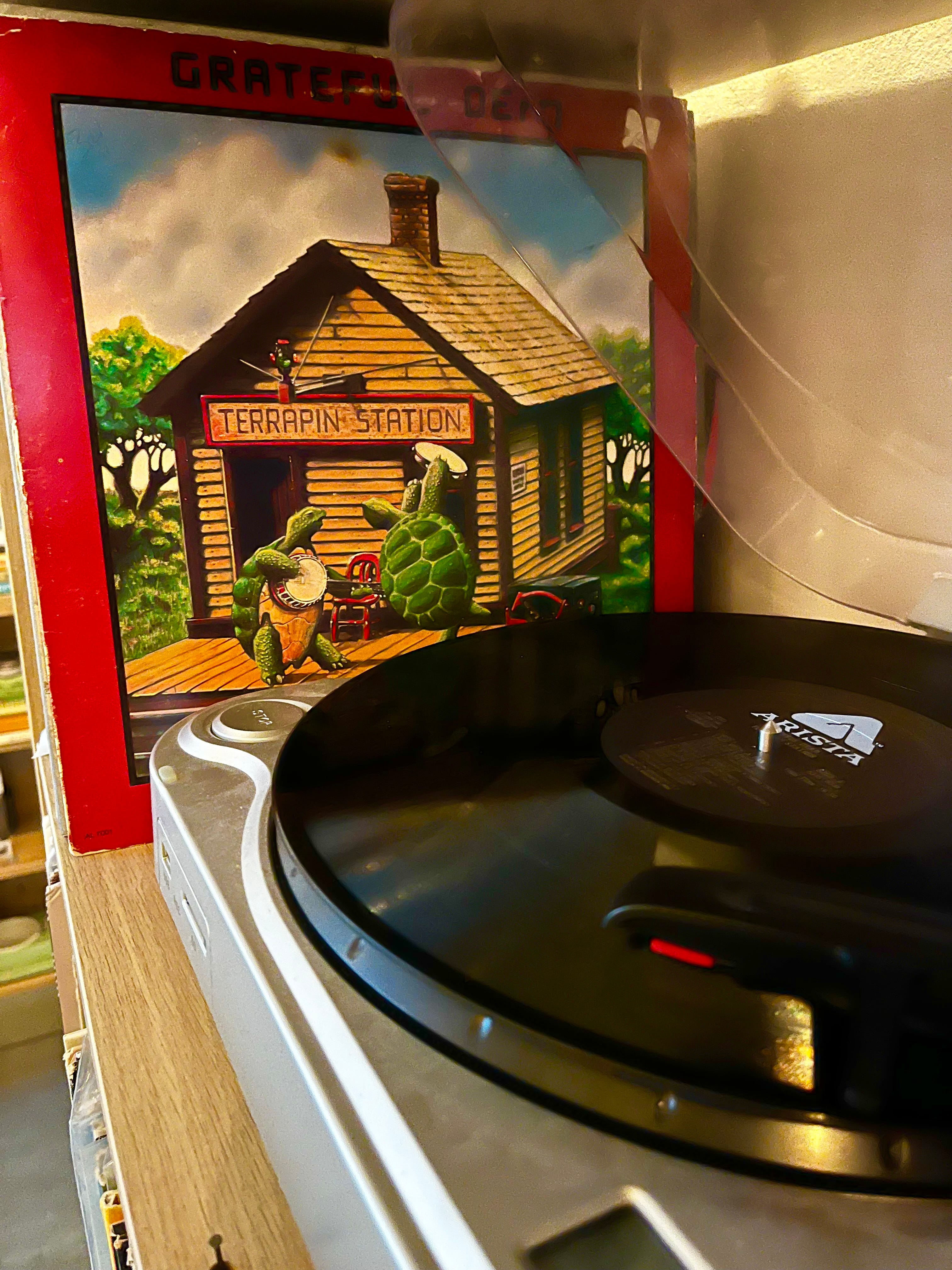
That same road he often sings about shows up in my own memories—like listening to Terrapin Station’s album opener “Estimated Prophet” on the Long Island Expressway, envisioning my life on the West Coast and making a cameo twenty years later in my novel Somewhere in Hollywood:
My morning commute kicked off with the reggae-inspired syncopation of “Estimated Prophet”. The song’s themes addressed ideas of grandeur while grappling with isolation and skepticism in a sunny setting. “California,” the chorus sang, sounding like both a warning and a promise.
I made that life on the West Coast with the music of the Dead guiding me through the good and the weird—lost days with my minted California driver’s license, driving down the Pacific Coast Highway hoping my car doesn’t putter out while enjoying the view and the freedom. But there’s always been one song I turn to when daylight seems too short, when I fear things like the future, or when family-of-origin chaos terrorizes me despite my attempts at peace. During these emotional struggle sessions, I would find safety in the song “Cassidy.” This song quietly soothed an overactive nervous system almost like the sonic equivalent of putting my legs up the wall, or any other restorative yin yoga pose that whispered, “Everything is going to be okay.”
I discovered the song on a mix tape one snowy winter on Long Island, back when I worked at a New Age shop called Dream’s East. Working there felt like a first taste of the California lifestyle I’d soon rub elbows with. I assisted customers with sage for their home cleansing and Birkenstock fittings. I sold books that encouraged spirit-expanding and open-minded thinking—from the occult to Buddhism. There were weekly tarot card readings and henna tattoo artists, a co-worker who looked like Jerry Garcia (RIP Bob George), and a boss who let me play whatever music I wanted.
“Cassidy” very much lived with me during this transitional time when I had come back from Olympia, WA, a place where hippies rubbed elbows with hipsters. I’d bop about at a Sleater-Kinney show downtown before coming back to the dorms to rip bong hits with my floormates while listening to Live Dead tapes—the smell of wet wool and dirty hair forever etched in my sensory memory. I loved the culture clash, and found that I could never identify with one ideology because music is music and we don’t have to look like what we listen to.
Returning home for a stint before California soon alerted me that family dysfunction was going to follow me well into adulthood. At 19, I realized I couldn’t change the deep denial around the toxicity, the addictions at its root, and the relentless blame-shifting that cast me as the family’s reliable easy target—so once again, I turned to music to mute the madness.
And with that, I had “Cassidy.”
Written by Weir and Dead songwriter John Perry Barlow, the song carries a beautiful duality: it was inspired by the birth of Cassidy Law (daughter of Dead crew member Rex Jackson and Weir’s housemate Eileen Law), but the lyrics also nod to 1950s bisexual icon Neal Cassady—the legendary Beat figure who inspired the Dean Moriarty character in Jack Kerouac’s On the Road. Lines like “lost now on the country miles in his Cadillac” evoke Cassady’s mythic road life, driving endlessly with restless energy and freedom. Yet the song’s gentle, rolling groove and Weir’s warm delivery turn it into something tender and forward-moving—“Fare thee well now, let your life proceed by its own design.”
Taking long drives down country roads myself, I’d let the lyrics pull me in until I felt like a child of countless trees, a child of boundless seas. In my mind’s eye I could see the flight of the seabirds and feel myself scattered like lost words. The song has found me at my best and at my worst, with Weir’s signature no-nonsense baritone guiding me toward calmer thoughts. His masterful rhythm guitar—with his inventive chording that’s sometimes a bitch to cover—gives the song the weight my soul craves, while the embroidered guitarwork layers on another quiet warmth. Hearing it evokes the smell of sunlight soaking into wood, the feeling of being pulled into a hug, and the reassurance that this too shall pass.
When I heard that Bob had passed away this weekend, all the feelings this song has ever brought me bubbled over like a simmering pot of emotions. From the girl I was when I first heard this song to the woman I am today who is stronger, but still affected by insanity—this song has given me permission to keep going, no matter the weight. While the music doesn’t erase the struggle, it’s always there to pick up the pieces when I can’t.
Rest in peace to a legend whose music gave me an escape, as I envisioned those country miles that I’d soon get lost on before finding home.

No posts
Comments
Nothing yet. Say the first thing.
Sign in to join the conversation.