
I recently stumbled onto the idea of a “creative itch,” shared in a writing class by writer and teacher Grant Faulkner. What a perfect way to describe the impulse that nudges so many of us to write, paint, sing, act, dance, build, or craft - anything that lets us create.
For some, of course, there is no itch. Or perhaps the itch is more of an ache. For others, it’s tied to the hope that creating will bring a sense of security—financial, emotional, or otherwise.
When I was a child, writing was the only way I had a voice in a family where there was far more talking than listening. My mother would ask, “How was your day, dear?” But before I could answer, she was already heading to another room, folding laundry, stirring a pot, or scraping goo off of something.
Did my mother have ADHD? Probably. But growing up in the late 1930s, she was born forty years too early for anyone to understand what her distraction meant. All I knew was that she wasn’t paying attention to me.
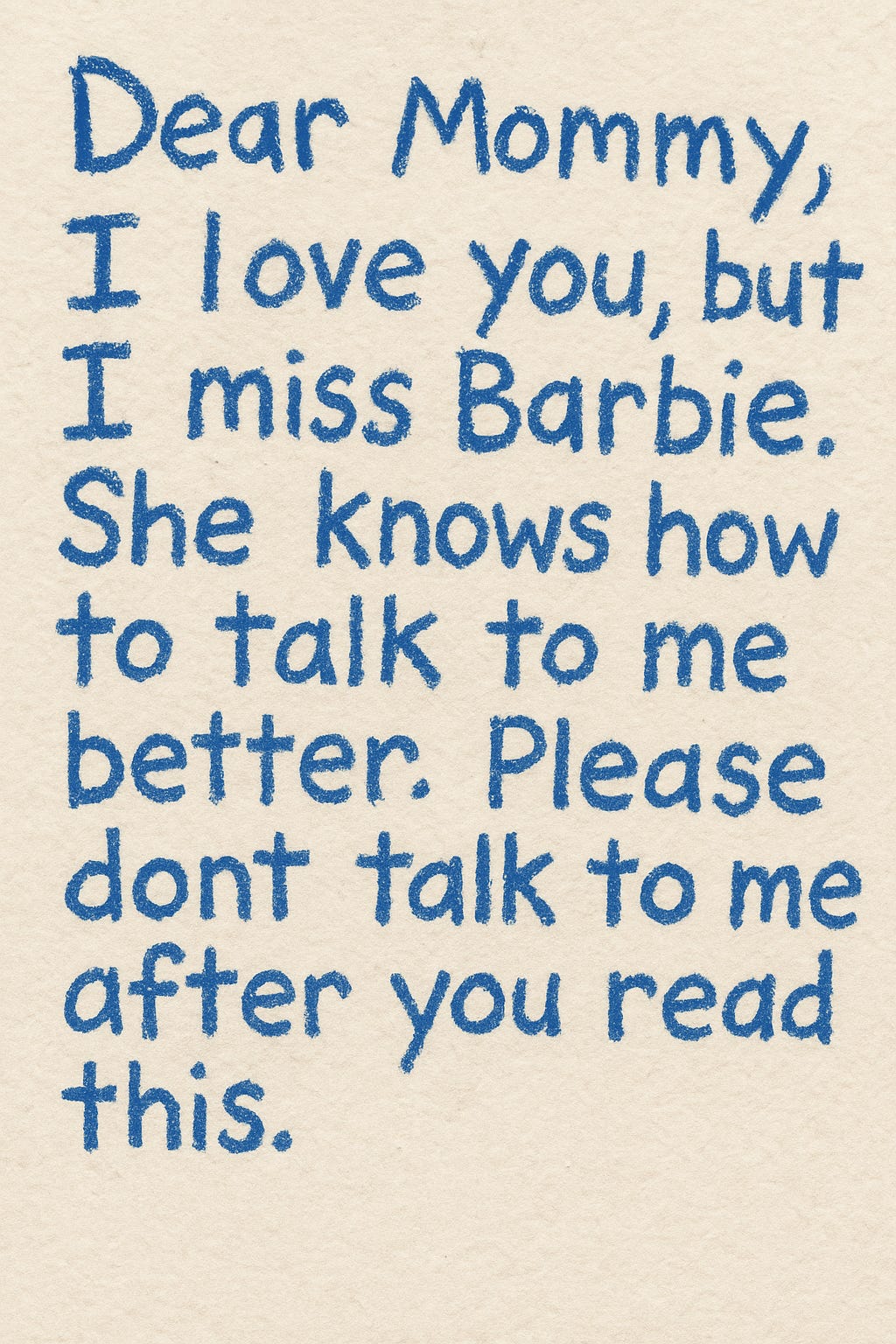
So, I started to write. One of my earliest efforts was a letter scribbled in crayon when I was six or seven, while sitting on the floor of my closet:
In high school, I began writing parodies of pop songs and Broadway show tunes. My drama friends would sing and act them out. It was playful, funny, and gave me the attention I craved but never got at home.
In college, my writing became a way to prove myself. I thought that being “a writer” would give me value. When my English papers came back with A’s, I felt exalted. One of my earliest papers was about the absurdity of television commercials. The line my professor loved most was:
“Women become panic-stricken when their rice comes out sticky.”
After graduation, I had a brief affair with that professor. He smoked like a chimney and tasted like an ashtray, but he liked my writing.
Later, I applied to graduate programs in creative writing, desperate for the kind of approval that would finally make me feel legitimate. My only acceptance was to the University of Houston. There, surrounded by other insecure writers all aching for recognition yet unable to offer it to one another, I floundered. After one year, I returned home defeated and depressed.
As painful as that failure was, it was exactly what I needed. I had been writing for the wrong reasons. Therapy helped me begin the long, difficult work of facing my childhood loneliness, the shame that I could not make my mother more interested in me, and the belief that I wasn't good enough to win her approval or anyone else else's, for that matter.
Slowly, I learned how to love myself. I began writing again, no longer needing to prove anything, but simply loving the experience of writing poetry.
The itch to write became like the itch to solve a puzzle—the puzzle of myself, the puzzle of life. In working toward solutions piece by piece, I was gifted with the delight of wordplay, stumbling onto phrases that were fun, surprising, and musical.
Writing for delight was liberating. With nothing to prove, even submitting work for publication no longer felt like laying my neck beneath a guillotine.
During quarantine, I tried drawing. YouTube tutorials showed me how to create fairly realistic images. While engaging, realistic drawing didn’t emerge from the same itch—except during Inktober, when I paired drawings with poetic captions. My inner poet and artist collaborated, and suddenly the work was fun.
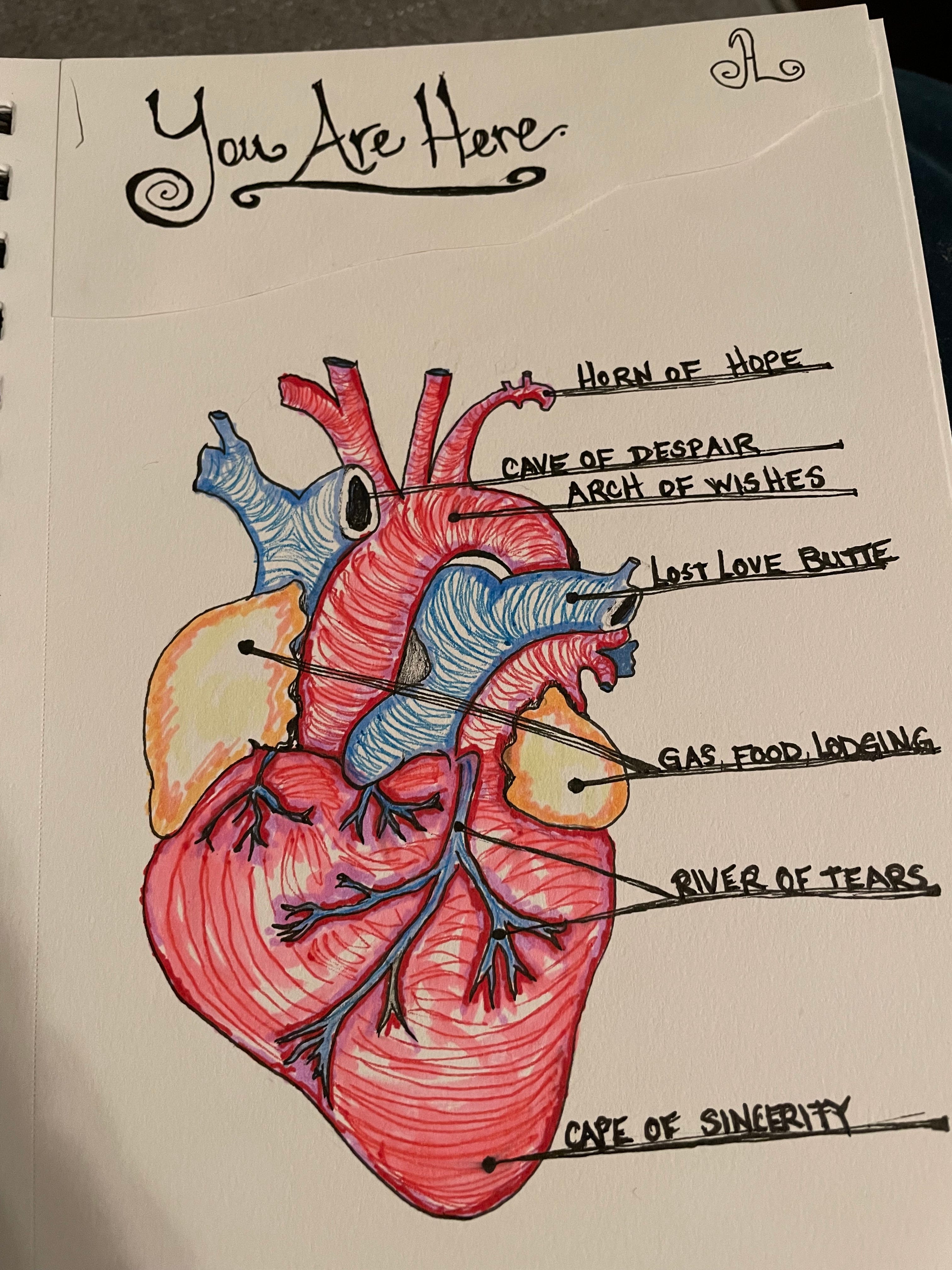
Still, the art that truly satisfies the itch is abstract drawing. I begin with a doodle—lines, swirls, and curves in black ink—and then let the page tell me what it wants next. It feels much like writing a poem: an image or line arrives, I capture it, and then let my inner narrator and artist guide me into what comes next.
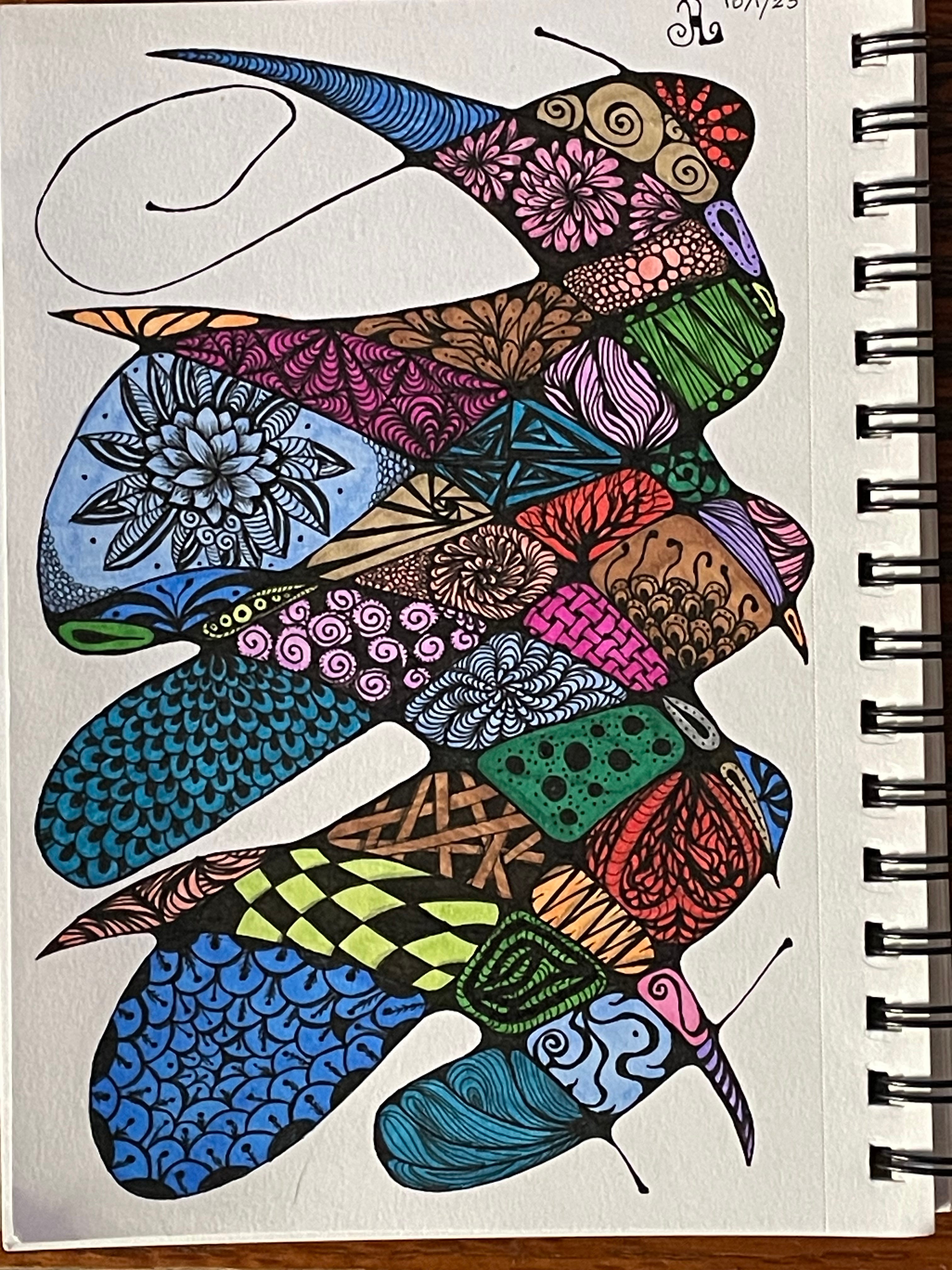
In both writing and art, my first drafts are usually shaky. But I trust the process. If I keep working, I can smooth the edges. My inner editor helps me shape something raw into something beautiful.
This is the essence of the creative itch: it invites us to begin something imperfectly, trusting that the work itself will show us where to go next.
The idea of a creative itch answers the question, “Why do you write?” For me, the answer has changed over time. Today, I write because I want to bring people hope, joy, and laughter. Like the girl I was in high school, I want to make my friends laugh, and I want to laugh with them.
It’s hard to be a human being—especially in these times of fear, uncertainty, climate change, political division, human rights under siege, and rising authoritarianism. We need laughter. We need awe.
Many creatives I know worry that AI will replace them. And, while that may be true in the commercial world, nothing can replace the lived experience of creating or the wonder of witnessing what others create.
Creativity is built into our DNA. Sometimes we create because we need a voice, even if we are the only ones listening. Sometimes we create because it helps us understand who we are and how life works. Sometimes we create because there’s a puzzle inside us that needs solving.
When we solve those puzzles and share what we discover, we help others understand themselves too. Creativity connects us.
And connection is everything.
This essay was edited lightly for grammar, flow, and SEO by ChatGPT.
As a therapist, coach, and fellow creative, I support creators in learning how to nurture themselves, overcome blocks, and shift the beliefs that lead to imposter syndrome.
Comments
Nothing yet. Say the first thing.
Sign in to join the conversation.