
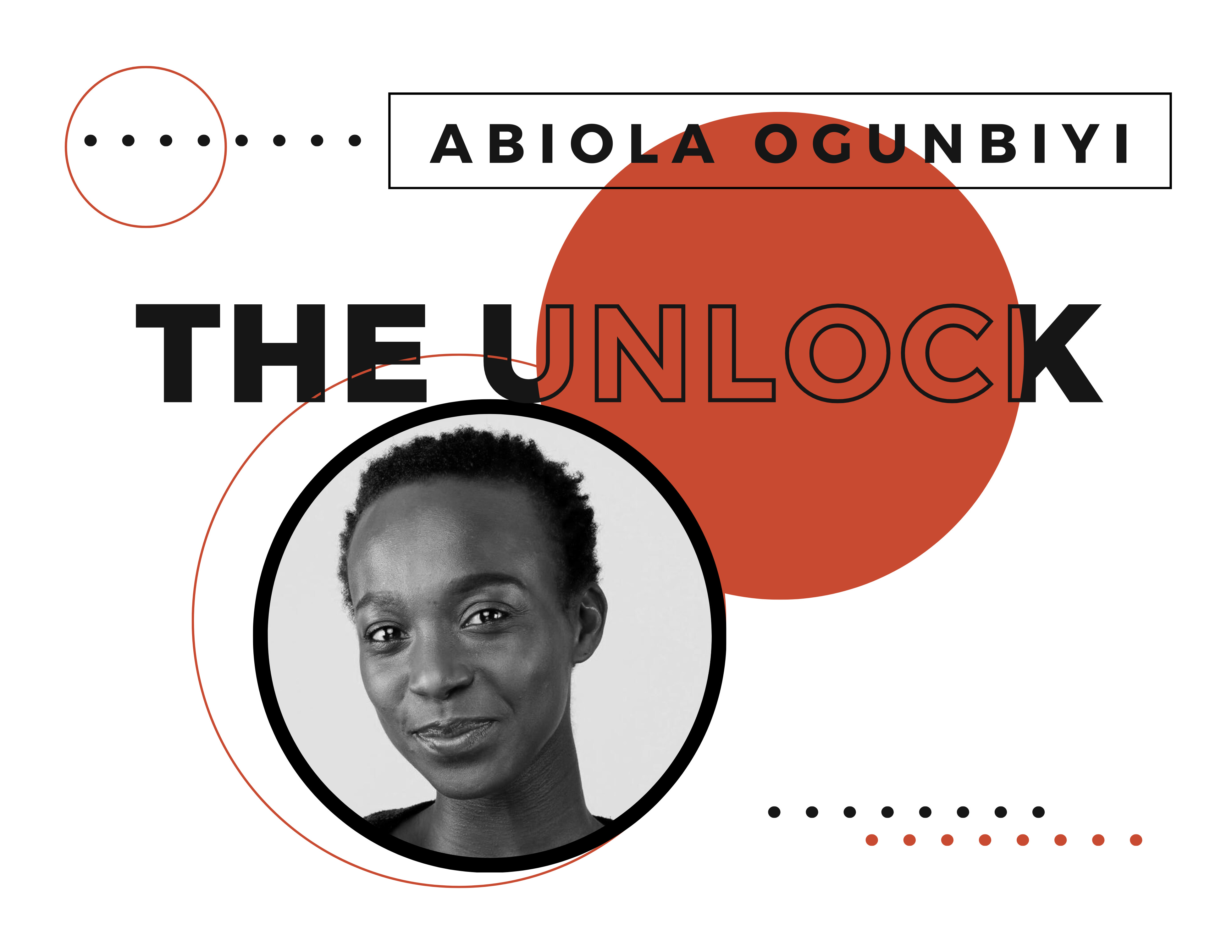
Welcome to The Unlock! If you’re new here, I usually share my own writing on leadership, growth, and resilience. In the off weeks, I’ve started something new: short, meaningful interviews with people who have deeply influenced my thinking and approach to life.
Today’s interview is with Abiola Ogunbiyi, an actress and screenwriter who deeply understands the psychology of collaboration. Moving from acting to screenwriting, she’s now leading major film projects, balancing creative vision with the realities of production, and learning how to navigate the intense feedback loops that come with building something at scale.
In this conversation, we dive into what makes a great collaborator, how leaders can handle creative tension productively, and what storytelling can teach us about personal growth. If you’ve ever had to bring a bold vision to life while working with strong personalities—or navigate the challenges of leading creative, high-stakes collaborations—this one’s for you.
ABIOLA OGUNBIYI is an acclaimed screenwriter and actress, with almost two decades experience in the arts and entertainment industries. Within an extensive performing career on stage and screen, she has appeared in the West End production of Mamma Mia!, the feature film ‘A Boy Called Christmas,’ and the TV series ‘Deadline’ and ‘Jamestown.’ In 2021, Abiola turned her hand to screenwriting and is currently developing a feature film with Idris Elba's 22 Summers & EbonyLife for Netflix. Abiola is an alumna of the BBC Scripted programme, and this year was selected for the prestigious TorinoFilmLab’s SeriesLab 2024, and was one of two recipients of the SeriesLab Development Award for her original supernatural drama thriller ‘The Heir’. www.abiolaogunbiyi.com
Interview:
In a way, making a film seems like running a company—you have a vision but also need to navigate other people’s opinions and ideas. As a writer in that company dynamic, when you’re collaborating with so many personalities, are there certain parts of your psychology that you have to keep in check?
Absolutely. You only have to watch a film’s end credits to see just how many people are involved in its making, and thus how important it is to have a respectful, constructive -and fun!- collaborative process. And crucial to that is coming to the table knowing how you can contribute positively to the realization of a film’s vision, as well as what could impede that process.
As a screenwriter, I have to be a really open channel; open to receiving ideas and inspiration from my mind, my research, and the world around me, as well as open to the offers, notes, and feedback from my producer(s), director, script editor, and other executives I’ll work with in the development and production process. Something I’ve had to learn is that, whilst I am the one who’ll bring the story to life through words, it’s not my job to have all the answers figured out. I’ve had to surrender my “fixer” archetype to enable me to call on the support of those I’m working with. As a writer, you’re also constantly receiving notes, so it’s vital to develop practices to uphold one's self-concept and sense of self-efficacy as you work to get a script in the best shape possible. Regularly affirming my skills and value ensures that I don’t allow negative beliefs to stall my creative process.
I’m in the process of writing a book and would love to know about your writing journey! Are there any rituals or approaches you swear by when it comes to getting words on the page? How do you stay connected to your creative vision, especially on those tougher writing days? What does your writing schedule look like?
Storytelling has been at the forefront of my life from a young age, but for most of my life, it was centered around performing. It’s been incredible to discover that writing is something I’ve been interested in all along. My time as an actor on the TV series Jamestown was an intensive course in TV production and gave me the experience of reading longer TV scripts that I would later need when I started writing professionally.
Since becoming a full-time writer, all ideas of the ‘best time to write’ have gone out of the window: the best time to write is when I have time to write! So now, my approach is more centered around how I make time to write. To that end, self-care has been a vital part of my approach and practice. Non-negotiable sleep hours. Positive connections. A nighttime routine. Nourishing whole foods. Stamina is crucial so that even when motivation is having an off day, focus can take over and do the work. I usually work in three blocks: a few hours first thing in the morning; a longer session through to a late lunch; and then, deadline-depending, some work in the evening.
In terms of the craft, I find outlining work first to be crucial to staying on track. I also, once I have an outline, create an Excel document where I color code a scene based on its progress (the gradually increasing number of green cubes is a wholesome dopamine hit!). On tougher days, I make sure to take more breaks, and will often change locations to help my brain feel a sense of refreshment. I’ve learned these tools recently and am excited to see how these approaches develop.
As you’re working on this new Netflix project, what do you think makes someone a great collaborator? Are there approaches to teamwork in film that you think leaders in other industries could learn from?
A great collaborator, for me, is someone who finds value in the minds of everyone in the room and can simultaneously appreciate the ideas of those minds and, when needed, respectfully challenge or present a contrasting approach.
The roles in film production are so distinct, but what unites all of us is our desire to make a strong piece of work that audiences will enjoy. Film production is a harsh terrain, and the development of an idea doesn’t guarantee it will be bought, produced, made, or released.
I think the recognition of a common, shared goal is a vital and transferable practice. Having clear discussions around individual responsibilities is also very important, as well as understanding individual working styles. During my brief stint in the advertising industry, I completed an Insights test that revealed my working style and needs and whilst I don’t announce them in every writing environment, it’s incredibly useful for me in the context of my boundaries and communication.
There are so many people out there working on writing projects, but not everyone reaches the milestones you have. Looking back on your journey, what do you think helped you bring your vision to life? What advice would you give to someone who’s dreaming of a similar path but may feel like the odds are stacked against them?
That’s so kind! It’s been a very unique cocktail of experiences that have brought me here, all rooted in the knowledge that storytelling is the only thing that’s consistently brought me the perfect balance of joy and challenge that my brain and my heart enjoy.
Specifically, I’m grateful to have had extremely passionate teachers in music, dance, and drama in my youth, and parents who supported my arts-centred hobbies. I became an avid reader of personal development and high-performance books in my early 20s, and a lot of my learnings there have informed how I approach my career goals.
And my coaches! I worked with a coach, who’s now become more of a friend and mentor, from 2013-2022, who held me highly accountable for my professional goals. And then, if I can say so, your coaching support across 2022 was a formative experience as I was making a transition from acting to screenwriting. Your work around a razor-sharp focus on my wants allowed me to tap into new levels of action.
I find that working so closely with my clients often teaches me something about myself, just by being so immersed in their journeys. I imagine that must be true for you with your characters, too. How do you learn through the characters you develop, especially as you dive into their archetypes and unique traits? Are there certain themes that keep coming up for you that have influenced your growth or perspective?
My characters definitely reveal my broader interests and inner thoughts. Sometimes they’re things I’m very aware of myself, and then other times as I’m building the story I’m uncovering a level of curiosity I wasn’t previously aware of. I’ve noticed intergenerationality coming through as a theme in my work, which is perhaps coming through as I become more aware of my similarities with my own parents.
It’s often said as a writer that every character you write is some version or piece of you—I see that as an invitation to be more curious both as an artist and a person as I mature, and let that curiosity create richer characters and narratives.
For each character, I have to cultivate an understanding of how they might be driven to behave in a certain way; how moments of their lives have shaped them, and how the weight and meaning they carry towards that event shapes them, for better or for worse.
That cultivation of understanding has been a useful practice to apply in my own life, reflecting on past experiences, but also being proactive about how I want future experiences to shape me. A lot of my personal projects are about characters who go through non-traditional routes to achieve their goals, which I feel in some parts is similar to my journey. A character who stays determined despite the odds is as inspiring to a writer as it can be to an audience (I cry most at sports films for this very reason!)
No posts
Comments
Nothing yet. Say the first thing.
Sign in to join the conversation.