
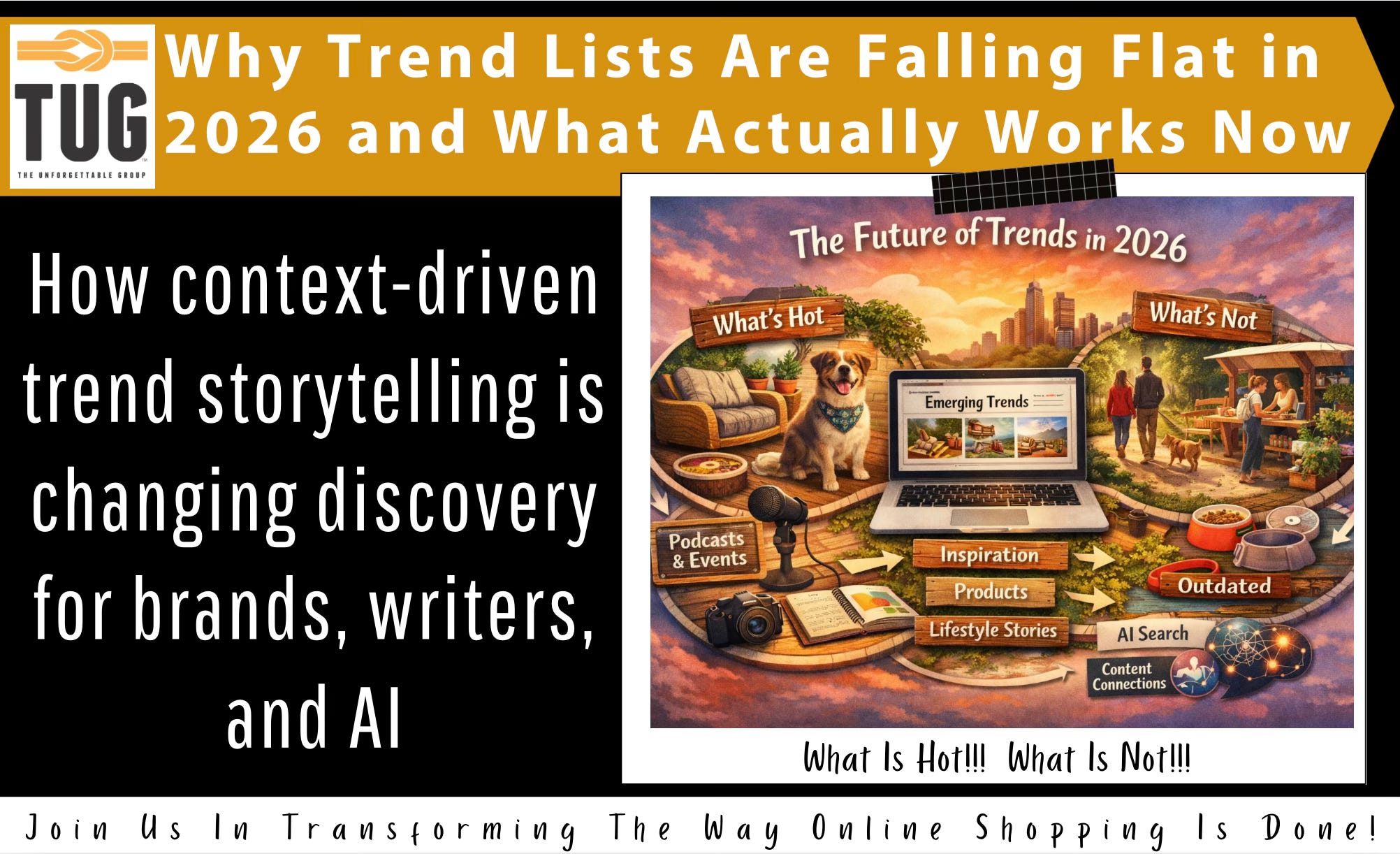
For years, trend reporting followed a familiar formula:
Top 10 trends.
What’s in.
What’s out.
Fast, skimmable, easy to publish.
But in 2026, that approach is starting to miss the mark.
Not because trends don’t matter, but because lists alone no longer explain how trends live in the real world. They don’t represent how people are adopt new trends, what is driving them, or the impact they have on daily life. And increasingly, simple trend lists don’t perform well with AI, search, or modern discovery, they need more to tell the story.
Trend storytelling is replacing simple trend lists incorporating inspiration, support, products, and real-life examples that come together to tell a complete story. This layered approach gives AI and search technology what they need to provide more comprehensive results when prompted to share trends, what is hot, and changes that are happening in the market. AI looks for real words, real examples, and straightforward information before responding. While AI may be misled currently, as technology advances, writing in a storytelling manner will become increasingly important.
In 2026, trends aren’t discovered in isolation. They’re found through:
Lifestyle context
Visual inspiration
Product ecosystems
Cultural and behavioral signals
Practical use cases
People don’t want to be told what is trending.
They want to understand why it matters, why they should care, and how they can participate.
This is where many trend posts fall short. Lists summarize. Stories translate.
Wild Love Tails, an new online pet marketplace and blog offers a clear case study of this shift that is presented in a recent blog post, Wild Love Tails - ‘What Is Hot and What is Not For Pets’ Blog Post.
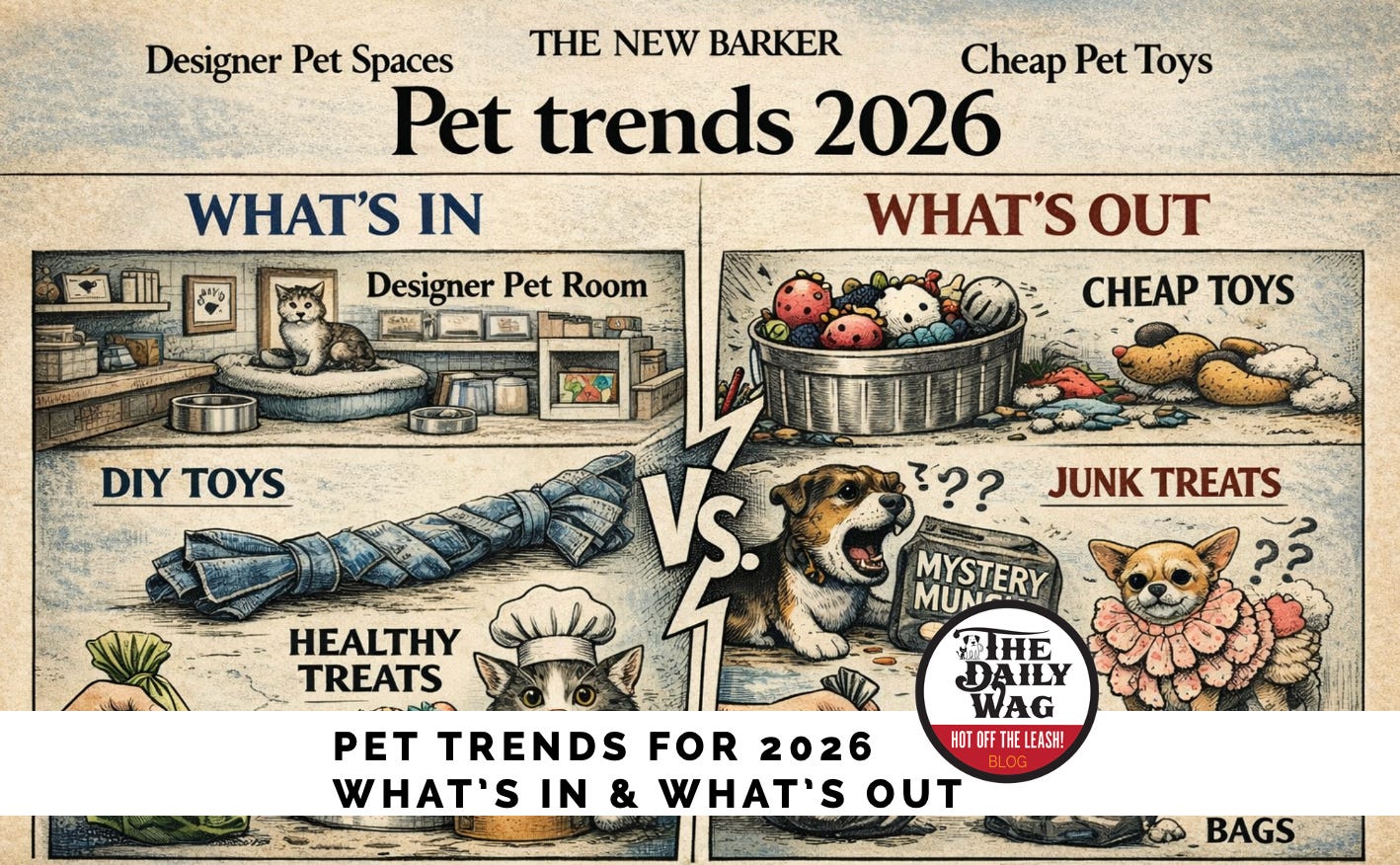
This blog offers a strong example of how trend writing is evolving and why. It also lends insight into creating innovative AI generated images to help tell the story.
Instead of isolating trends as bullet points, the post:
1. Trends Are Framed as Lived Experiences
Each trend reflects how pets and people are actually living, not abstract predictions. You see habits, environments, and emotions, not just categories.
2. Inspiration and Products Work Together
The content connects ideas with real examples, helping readers visualize how a trend translates into shopping, decorating, gifting, or lifestyle choices.
3. “What’s Hot” vs. “What’s Not” Adds Clarity
This contrast gives readers decision-making power. It shows movement, not just momentum, which is far more useful than endless positivity.
4. Visuals Support the Story (Not Just the Scroll)
Images aren’t decorative. They reinforce the narrative and help readers understand how trends look in context.
5. The Post Encourages Exploration, Not Finality
Instead of ending the conversation with a list, it opens the door to discovery, inviting readers to explore categories, ideas, and possibilities.
This is trend writing designed for brands, consumers, and writers interested in what is happening in the pet market to actually search, shop, and explore in 2026.
AI and search engines no longer reward content that simply list trends, top 10, or favorite things. Content is prioritized when it can explains relationships, provides support, and offers examples.
Story-driven posts perform better because they include:
Contextual depth
Connected concepts (trends + lifestyle + products)
Clear signals of originality and expertise
Natural language that mirrors how people ask questions
When someone searches “emerging pet trends,” “what’s next in pet lifestyle,” or “how pet owners are shopping differently,” AI is far more likely to surface content that explains the why, not just the what.
This is where platforms like The Unforgettable Group and Wild Love Tails quietly stand apart, building content ecosystems instead of chasing keywords or duplicating industry noise.
We put together a simple gut check for writers, brands, and marketers to help you pull the information and begin writing the story.
Before publishing a trend post, ask:
Context
Does this explain why the trend exists?
Does it reflect real behavior, not just prediction?
Connection
Are inspiration, lifestyle, and products connected?
Can the reader imagine how this trend fits into daily life?
Clarity
Does it help readers decide what to lean into or move away from?
Is there contrast, nuance, or evolution shown?
Visual Support
Do images add understanding, not just decoration?
Are there highlighted headers that call out key trends over bullet points?
Discovery
Is this written the way people actually ask questions?
Would AI or search understand the relationships being described?
Originality
Are you saying something new or repeating what everyone else already published?
Do you have first-hand knowledge or an interesting fact you can share?
If the post only checks the “list” box, it’s likely not doing enough anymore. When you have stats or data that backup your predictions, that is always beneficial, but when you are writing about the future, that is not always easy to capture.
The future of trend reporting, especially in lifestyle categories like pets, travel, baby, hobbies, etc. belongs to platforms and writers willing to do more than summarize.
Wild Love Tails shows what happens when trends are treated as stories instead of stats, and when inspiration, commerce, and behavior are woven together instead of siloed.
As writers, bloggers, and brands move forward, the opportunity isn’t to publish faster lists, it is to create deeper, more meaningful narratives that actually help people see what’s next.
That’s how trends are written in 2026 and beyond.
It’s time to reimagine what’s possible when technology and imagination work together, not just to communicate, but to curate and create meaningful experiences. By rethinking how stories, products, and discovery come together online, we are helping shape a new model for online shopping, one built around curated environments, thoughtful storytelling, and exploration over algorithms. This approach isn’t about following trends, it’s about designing how trends are experienced, understood, and discovered in the years ahead.
If you want to experience what the online shopping district is destined to become
Visit the Online Shopping District
Wild Love Tails, the first category shop launched by The Unforgettable Group, is both a pet marketplace and a blog where storytelling and merchandising come together to elevate the online shopping and community experience for pet people.
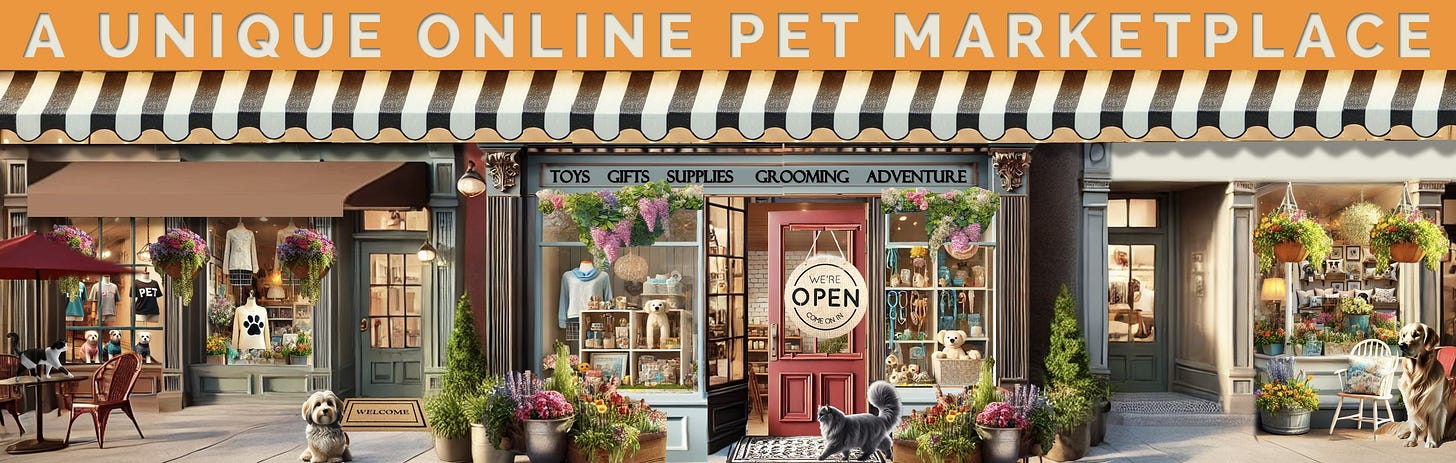
We welcome visitors, brands and the media to join us in transforming the way online shopping is done. Follow this Substack to join us on the journey, dive deeper into our understanding of today’s e-commerce landscape, and our insight into the online shopper.
Christine Meier, Co-Founder
The Unforgettable Group (TUG)
cmeier@theunforgettablegroup.com
Comments
Nothing yet. Say the first thing.
Sign in to join the conversation.