
I’ve spent years listening to people who have dedicated their lives to exploring one question: what should be questioned?
Teachers. Practitioners. Artists, doctors, farmers, monks and entrepreneurs.
They’re all returning to the same questions.
What helps us become more ourselves rather than more like everyone else?
What does it really mean to take responsibility for the life we’re creating?
After listening to these conversations—and to the stories of hundreds of people who have come through The Transmission School—I keep noticing the same pattern.
Most of us don’t struggle because we lack information.
We struggle because we’ve become used to handing over responsibility for our own lives.
It rarely happens all at once. Most of us hand over responsibility gradually, often without even noticing.
We let other people tell us what success looks like.
What kind of work is worth doing.
What a healthy body should look like.
How relationships are supposed to unfold.
What deserves our attention.
What it means to be “doing well.”
By the time we start questioning those ideas, many of them feel like our own.
But are they really ours?
And once we begin asking that question, it’s easy to swing to the opposite extreme—to assume that everything we’ve inherited must be wrong.
I don’t think that’s the answer either.
Rejecting every belief simply because it came from your family, your culture or society doesn’t make you free.
It simply replaces one kind of dependence with another.
Think about it.
One person says, “Society expects this of me, so I’ll do it.”
Another says, “Society expects this of me, so I’ll do the opposite.”
At first, the second person seems freer.
But are they?
Their choices are still being shaped by the same authority. They’re simply reacting to it instead of complying with it. If the expectations had been different, their choices would probably have been different too.
Then there’s a third possibility.
You notice what you’ve inherited—from your family, your culture, your education, the people you admire. You don’t accept it automatically, and you don’t reject it automatically either.
You become curious.
You ask where those ideas came from.
You test them against your own experience.
You listen to other perspectives.
And only then do you decide what you want to carry forward.
To me, that's what discernment looks like.
Not agreement.
Not rebellion.
But the willingness to understand before choosing.
Whenever I think about this, I come back to a sentence by Viktor Frankl:
“Between stimulus and response there is a space. In that space is our power to choose our response.”
Self-determination begins in that space.
Not in saying yes.
Not in saying no.
But in becoming conscious enough to know why you’re saying either.
Who wrote the script I’m living by?
And if I didn’t write all of it...
Which parts would I choose to keep?
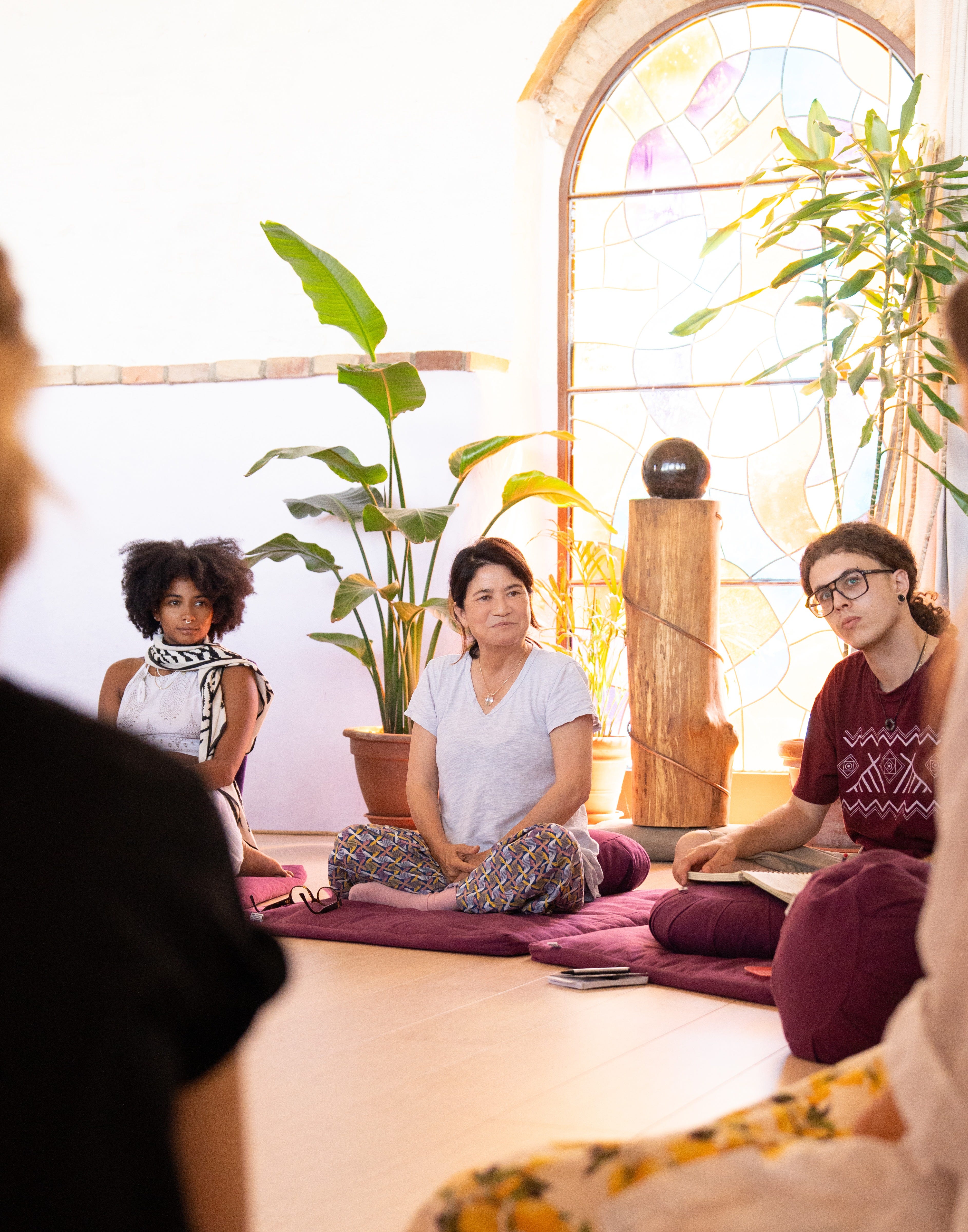
Every time we become aware of an assumption we’ve inherited, we recover a little more freedom to choose.
By recognising the invisible stories that shape the way we work, love, lead, learn and make decisions, we're adding another line to that story every day.
Some of those stories deserve to stay.
Others don’t.
No posts
Comments
Nothing yet. Say the first thing.
Sign in to join the conversation.