
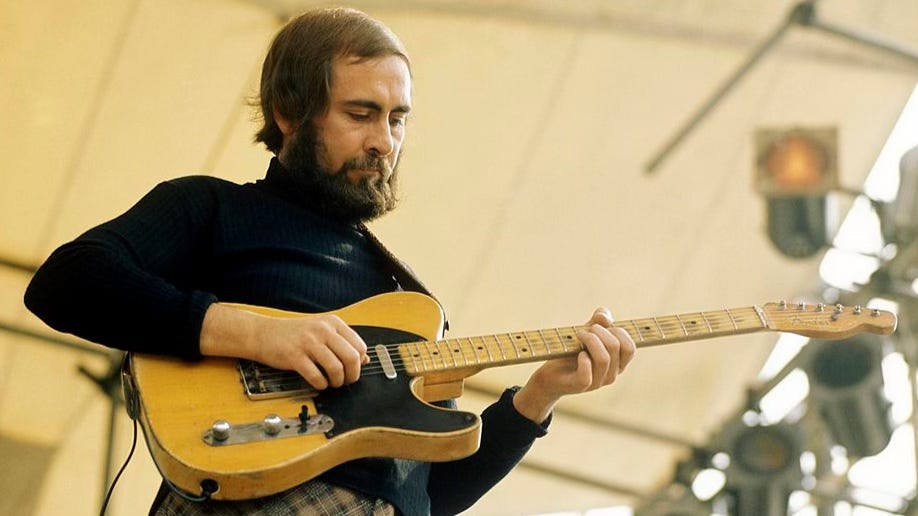
The first time I ever laid ears on a Roy Buchanan track was back in 2004, when I was deep in the middle of a custom signature amp project called the JW-40 with Jim Weider.
We ended up going down the rabbit hole chasing the elusive sound of an early ’50s Telecaster through a pushed Deluxe Reverb at manageable volume. A tall order. We came close with the help of Analog Mike Piera, who provided us with a small KOT-style boost circuit that I built directly into the front end of the amp.
But that’s another story for another day.
The real discovery for me was Roy.
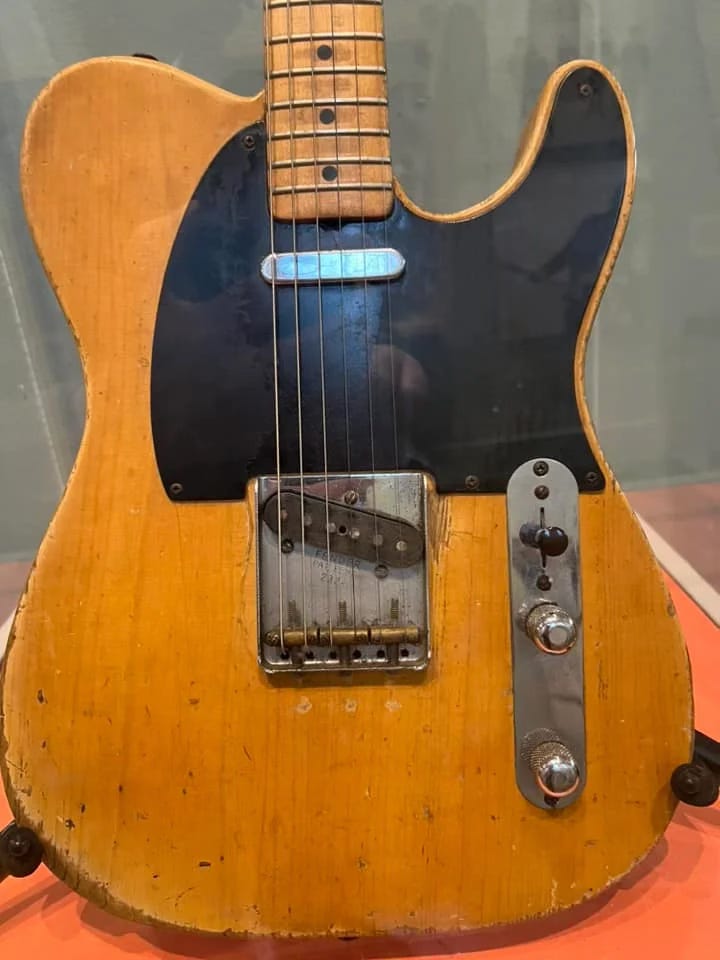
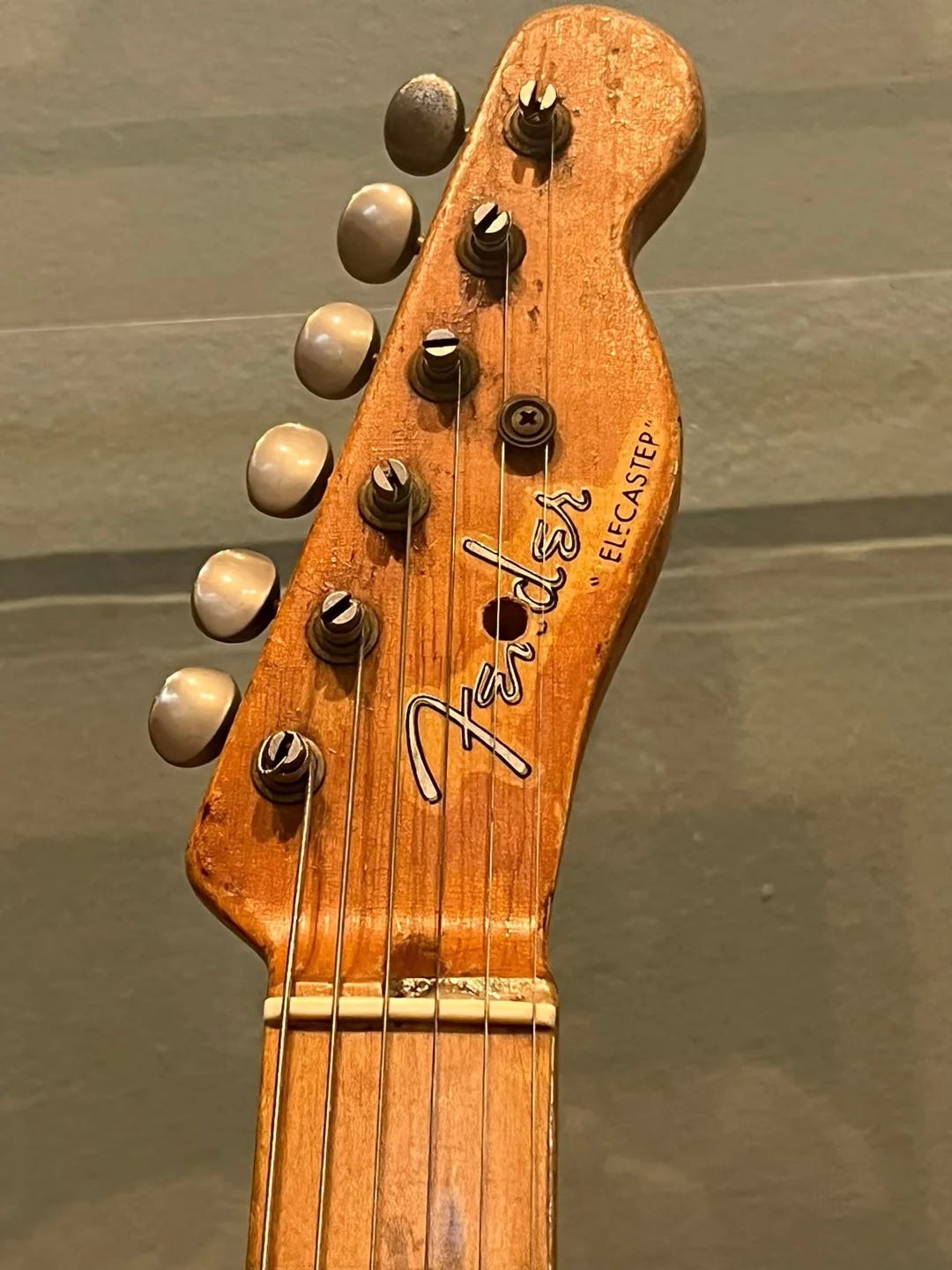
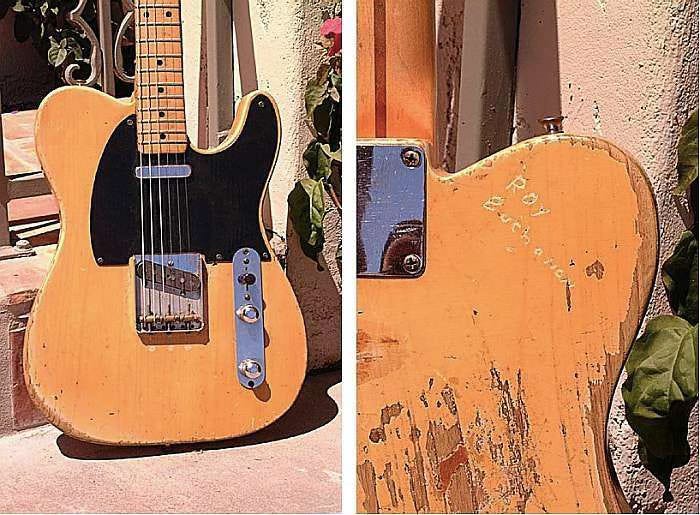
The effortless fluidity of his playing. The way every note arrived with complete purpose. The masterful command he had over Nancy, his legendary 1953 Fender Telecaster. It was one of those sounds that immediately stopped me from thinking about guitar as a collection of parts and started making me hear it as a voice.
His version of Sweet Dreams hit me like it came from another time and place. The notes felt ancient and futuristic at the same time. Ahead of his time, but somehow hidden in plain sight during ours.
That is the strange thing about Roy Buchanan.
Among guitar players, he is a legend. Outside of that world, he still feels underrated. Not because he lacked influence. Not because he lacked tone. Not because he lacked command.
If anything, it was the opposite.
Roy had so much command that he made the impossible sound casual. Volume swells. Pinch harmonics that jumped off the string like sparks. Steel-guitar bends from a Telecaster. Ghost notes. Controlled feedback. A whisper to a scream without it ever sounding like a trick. In lesser hands, that becomes a bag of tricks. With Roy, it sounded like language. He wasn’t trying to impress you with the guitar. He was trying to pull something out of it.
That is a very different thing.
The Instrument
Roy built his voice around one of the most unforgiving electric guitars ever made.
Nancy was an early-’50s blackguard Telecaster. Ash body, maple neck, simple single-coil pickups, basic controls. Nothing exotic on paper. But the Telecaster has always been brutally honest. It doesn’t smooth over weak touch. It doesn’t hide sloppy phrasing. It can be bright, thin, sharp, rude, nasal, percussive, beautiful, or vocal depending entirely on who is holding it.
Roy understood that completely.
He worked the volume and tone controls like they were part of the instrument. He could pull almost horn-like tones out of the bridge pickup without it turning ice-picky. He could roll the tone back and create vowel sounds that felt genuinely human. He played like a man who knew there was nowhere to hide, and didn’t want to be.
That’s what made Nancy so powerful in his hands. It wasn’t just a guitar. It was a direct line between his hands and the amplifier. Every bend, every attack, every slight move of the tone knob mattered. Roy played like he knew that.
Full-Tilt Vibrolux
This is where the Vibrolux conversation gets interesting.
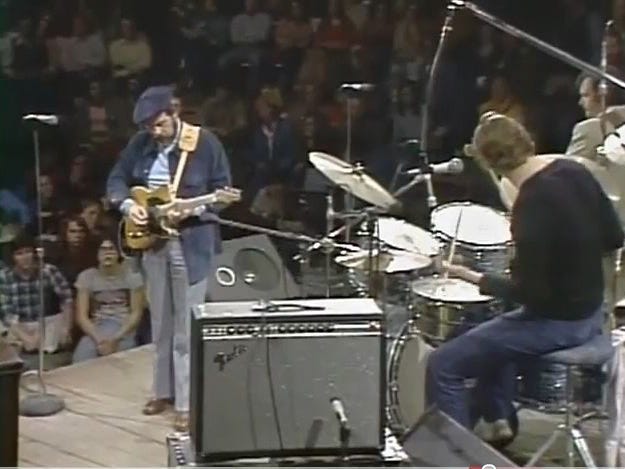
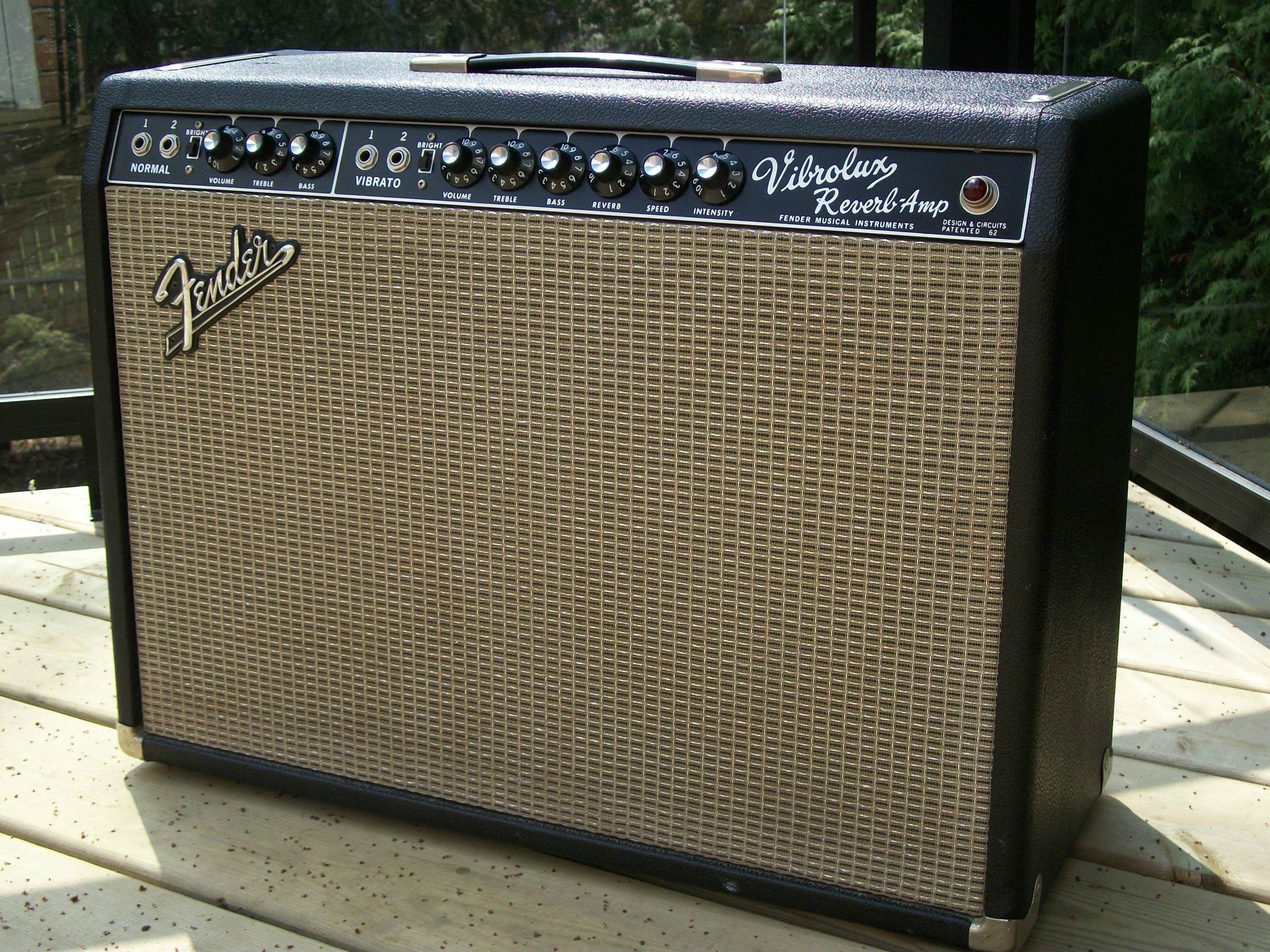
Roy’s most iconic tones are rooted in a pushed Fender Vibrolux Reverb. A blackface or silverface circuit that sits in that perfect middle ground between the smaller Deluxe and the headroom-heavy Twin. Not a bedroom amp. Not a clean machine with endless ceiling. A working amp that rewards a player who knows how to manage it from the guitar itself.
And that was Roy’s whole language.
He wasn’t riding a pedal board. He wasn’t dialing in a preset. He was working Nancy’s volume and tone controls the way a vocalist works breath and dynamics…constantly, instinctively, expressively. Roll the volume back and the amp cleans up and opens. Push it forward and the front end starts to give. Turn the tone down and the pickup becomes almost human. The amp was just a willing partner. Roy was always the one leading.
That is one of the hardest things to understand about his sound until you’ve actually tried to chase it. The Vibrolux-style circuit gives you clarity and consequence in equal measure. It doesn’t do the work for you. It waits for the player to bring something. Too much gain from the outside and you lose the dynamic range that made every note feel intentional. Too little and the whole thing just sits flat.
Roy found that place and lived there. Pushed hard enough to bloom. Controlled enough to breathe. The amp on the edge of giving up, and Roy deciding exactly when and how much to let it.
That’s not a setting. That’s a conversation.
Running With the Greats
Here’s the thing about Roy Buchanan that still gets me: the players who mattered all knew.
Eric Clapton called Roy one of the best guitarists in the world. Jeff Beck was a vocal admirer. When the serious students of the instrument were making lists of who to pay attention to, Roy’s name was on them. The Washington Post ran a television special on him in 1971 that kicked off a genuine rediscovery. The piece was called The Best Unknown Guitarist in the World, and for a moment, it looked like the wider audience might finally find him.
It never quite happened the way it should have.
Maybe it was because his music didn’t fit neatly into one lane. Too blues for rock, too country for blues, too raw to be polished into a radio product, too emotionally direct to be packaged cleanly. Or maybe Roy simply wasn’t built for that machinery. There’s something about his playing that feels almost too exposed for mass consumption. It doesn’t always resolve neatly. It sounds like a man wrestling something in real time.
And that may be exactly why it still matters.
The players who were paying close attention knew what they were hearing. Roy Buchanan was never far from the center of the conversation that counted.
A Final Thought
Some players build tone through complexity. Roy Buchanan built it through command.
A Telecaster, a Vibrolux pushed hard into that narrow living zone, and a player doing all the real work from the guitar’s own controls. That was enough. His sound is a reminder that the electric guitar doesn’t need to be complicated to be emotionally devastating. Sometimes the simplest rig is the most dangerous one — because it leaves everything exposed. The note either speaks or it doesn’t.
With Roy, it always spoke.
My full breakdown lives behind the scenes in The Tone Journal.
No posts
Comments
Nothing yet. Say the first thing.
Sign in to join the conversation.