
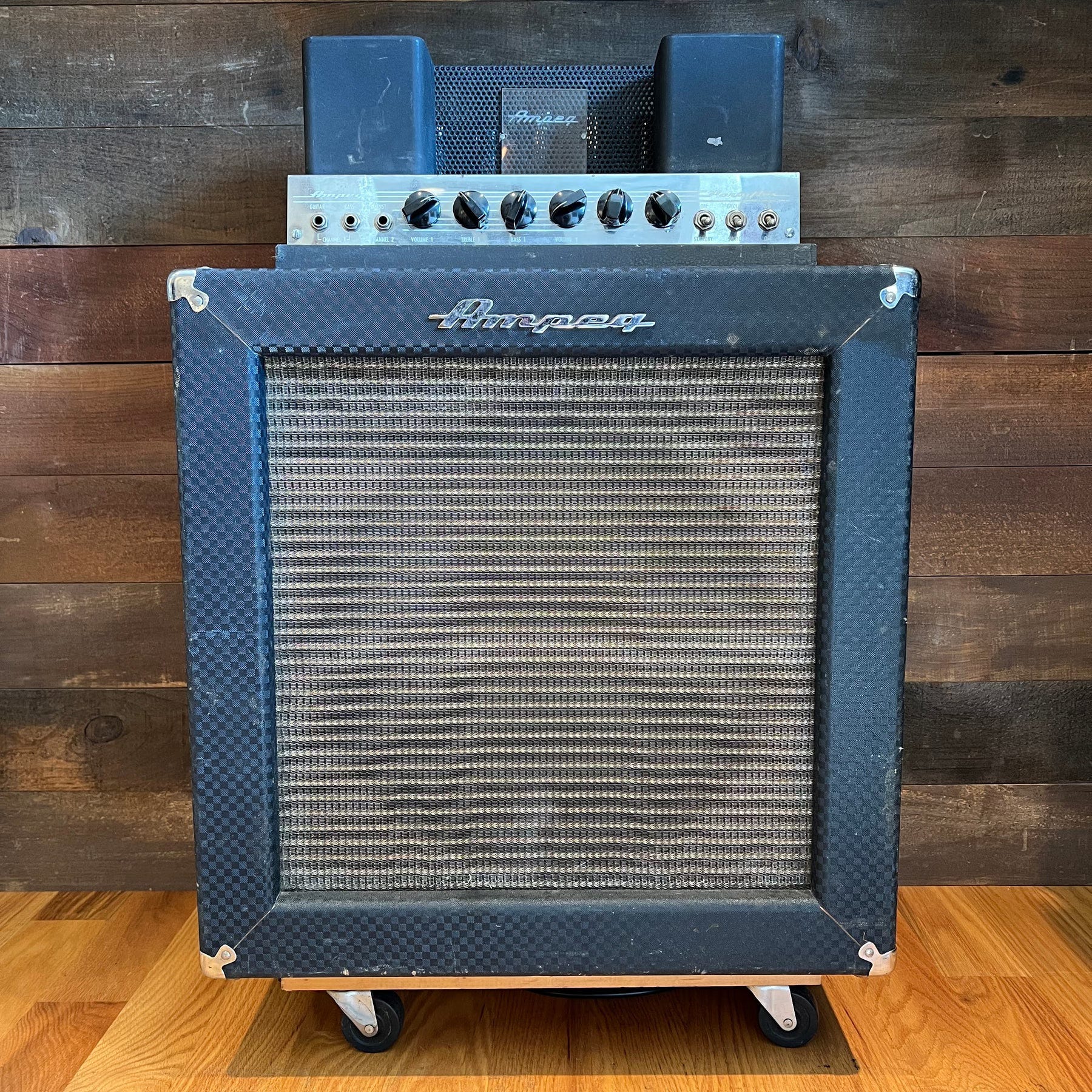
How could I forget the first time I had the pleasure of working on a flip-top — an Ampeg B-15 Portaflex.
The owner lived out in the Delta, on a boat along the Sacramento River. He’d used that amp for years. Told me it was the best and only bass amp he ever owned — and it never gave him a single problem.
Until it did.
When it finally made its way to my bench, the amp wouldn’t power on. After some time digging in, I found the issue: the original power transformer had a burnt open winding. Dead shorted. Gone.
This was before the days of endless boutique transformer options. No Heyboer on speed dial. No Mercury Magnetics offering a drop-in. If you wanted to keep something original, you had to hunt.
So I went searching. Scanning the used market, hoping something would surface — and somehow, pure luck, I tracked down an original NOS B-15 power transformer through Mojotone, back when they were still a small operation, not the juggernaut they are now. It was expensive even then. I can’t imagine what one would cost today.
The amp owner wasn’t thrilled about the pricy orginal PT replacement, but I told him straight: if you want to keep this amp right, this is the move.
I installed it. Brought the amp back up slowly on the Variac.
First power-on. No smoke. No noise. Just life.
I grabbed my Jazz-Special Fender Bass, hit a note…and there it was. That warm, fat, wide tone that only a B-15 gives you.
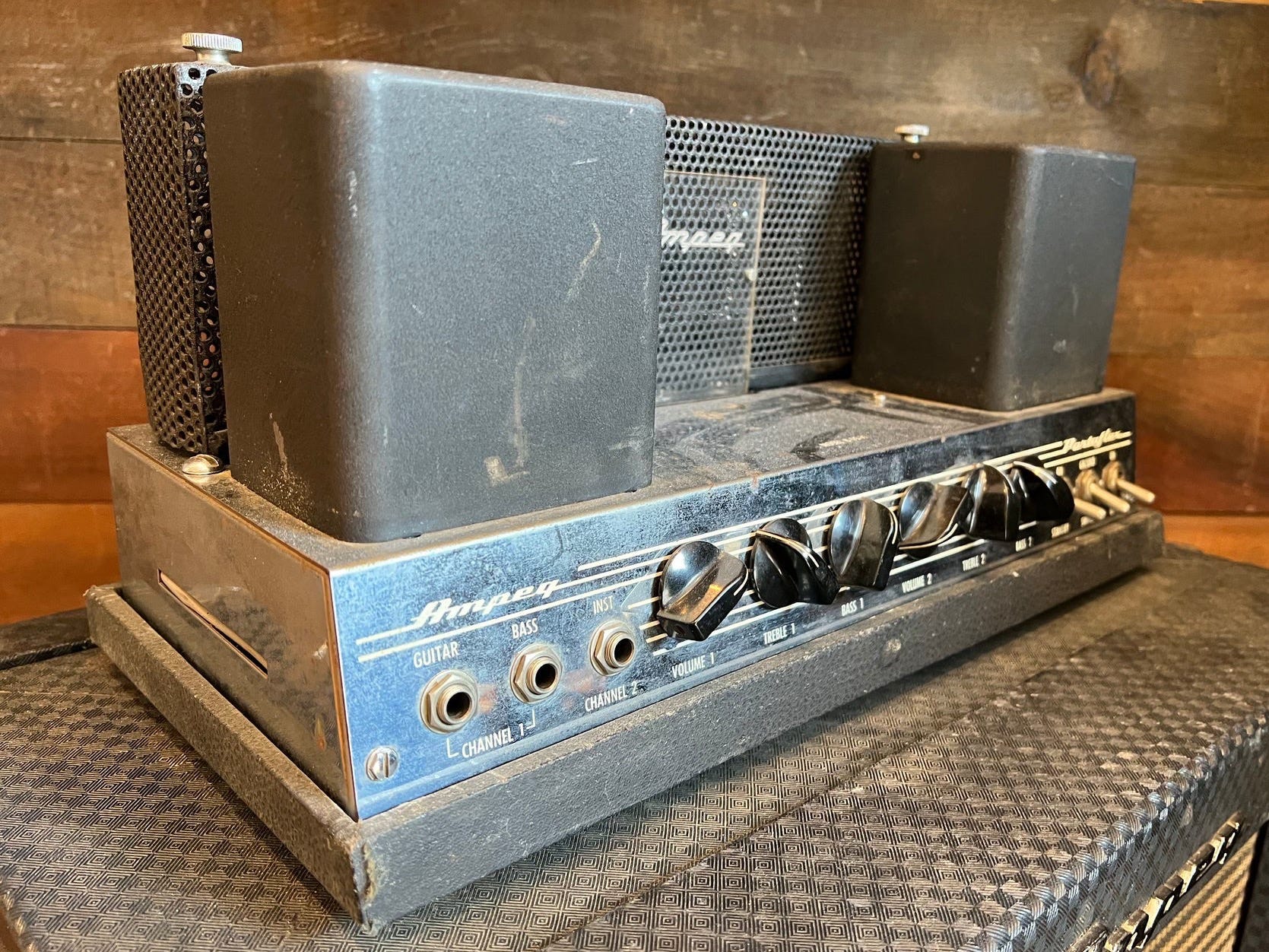
That amp stayed with me. Not just because of the repair, but because of what it was.
The design alone is brilliant. The entire chassis flips down into the cabinet. Self-contained, portable, protected. Built for working musicians who needed to get in and out of a session without babysitting a rack of gear. The “Portaflex” name wasn’t marketing, it was a genuine engineering solution.
And the tone. All tube. All depth. A 15-inch speaker in a sealed cabinet that gave bass exactly what it needed: control, punch, and that slightly thick low-mid warmth that’s almost impossible to dial in any other way.
Around the same period, I was deep in SVT repairs as well — those things are absolute monsters. Thunderous, heavy, unforgiving, and legendary in their own right. But the B-15 was different. It wasn’t about volume. It was about recorded tone. And those are two very different things.
Ampeg introduced the B-15 in 1960, designed by Jess Oliver. Over roughly two decades of production, it went through numerous revisions — the B-15N, the B-15NF, the B-15NC, and several others — each with small but significant circuit refinements. Early models used 6L6 output tubes, later versions switched to the 7027A (a higher plate voltage 6L6 variant that Ampeg favored), and some runs experimented with different transformer configurations and speaker loadings.
The flip-top enclosure was patented. The latch mechanism let the head literally flip up from the cab for servicing and storage, which was genuinely clever industrial design for the era. It also meant the speaker baffle and cabinet dimensions were carefully matched to the amp’s output — you weren’t just plunking any 15 into a random box.
Production officially wound down around 1980, though Ampeg has revisited it several times since.
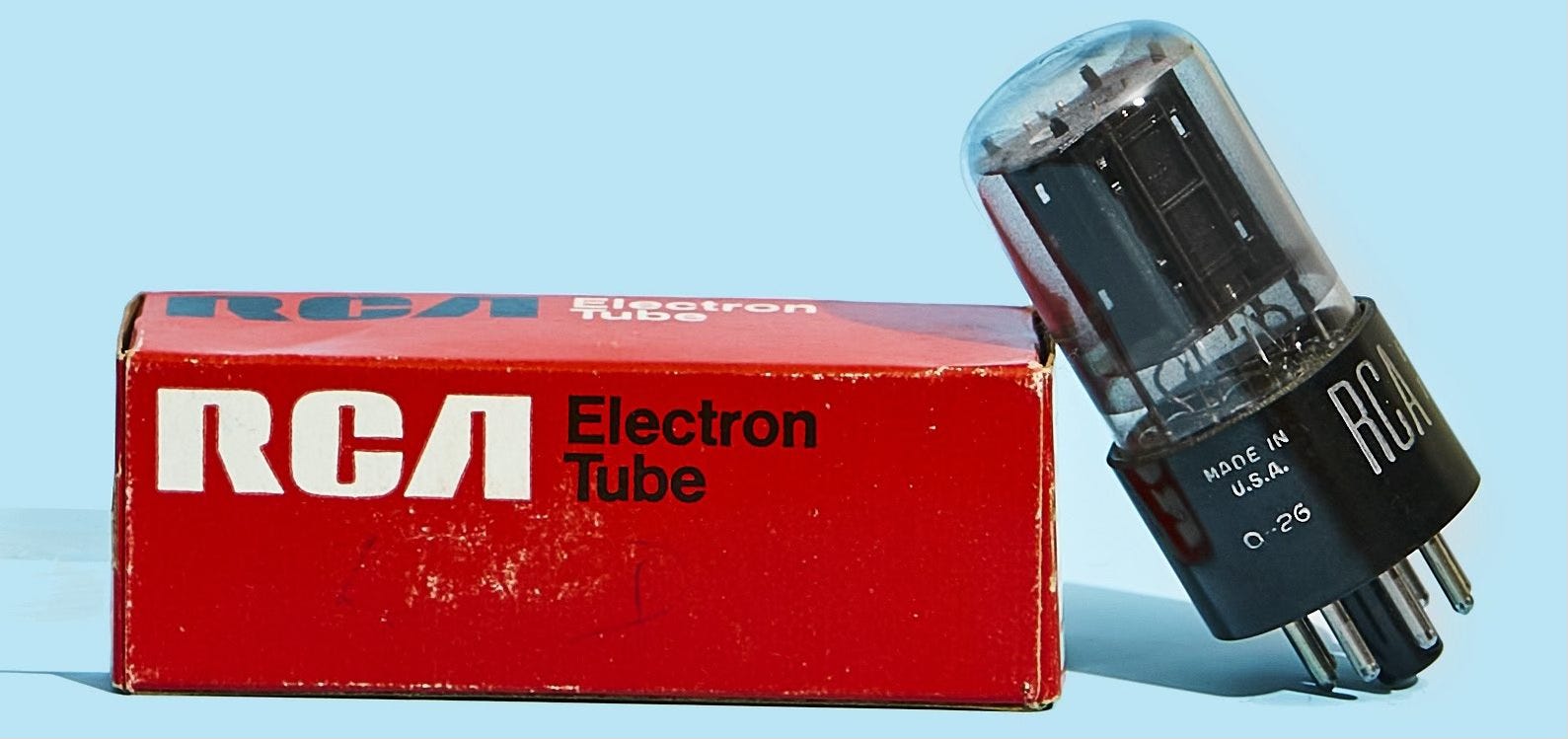
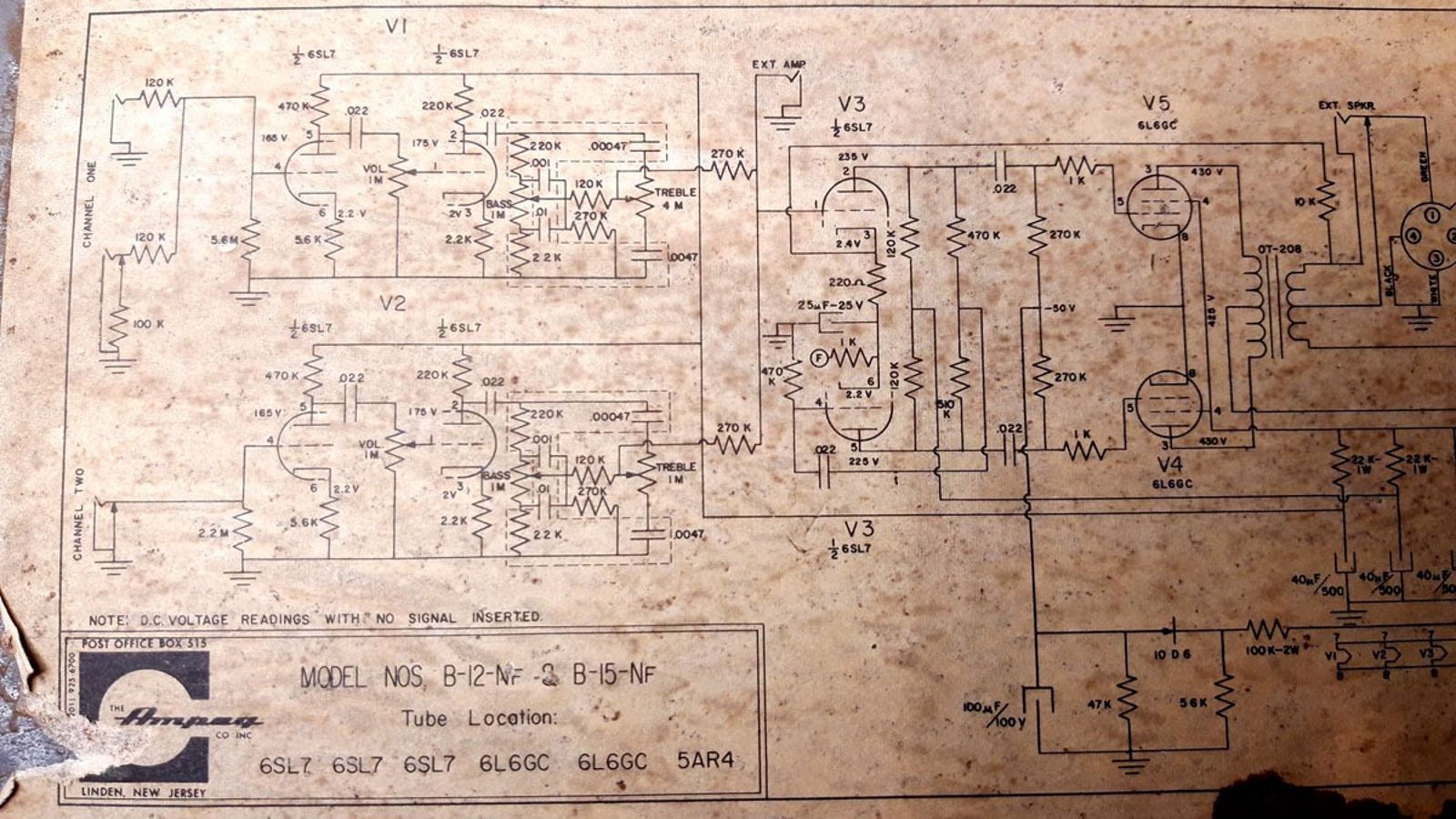
The B-15 was also the first time I really understood how powerful an octal preamp tube could be. Specifically, the 6SL7 — a dual triode in an octal base, with a mu of around 70, very similar to a 12AX7 in gain structure but completely different in feel.
Most guitar and bass work lives in the world of 12AX7s. Nine-pin noval base, tight, focused, familiar. The 6SL7 is a different animal. It has a bigger, wider note. More air around the fundamental. A softer edge but a deeper footprint — there’s a dimensionality to it that noval tubes just don’t quite replicate. Whether that’s plate capacitance, the physical size of the envelope, the way the cathode behaves at low current — honestly it’s probably all of those things together. Whatever the reason, it works.
Paired with the B-15’s passive tonestack — a fairly traditional bass/mid/treble arrangement, but voiced specifically to complement the 6SL7’s character — you get something that just sits perfectly in a mix. No fighting. No harshness. Just weight and clarity. The tone controls are almost more subtractive than additive, which is exactly the right approach for a recording amp.
The signal then goes into a split-load phase inverter feeding a push-pull pair of 6L6s (or 7027As in later models), all running cathode-biased. No fixed bias trimmer. No adjusting. The cathode resistor handles it, which keeps everything stable at the cost of a little efficiency.
Of course, the B-15 isn’t without its constraints.
Low power. Cathode-biased output section. Approximately 25 to 30 watts, depending on the version. You are not getting massive headroom here. Push it into a loud room and it compresses. Push it harder and it breaks up.
But that’s also the magic.
Cathode bias typically biases the output tubes hotter (higher idle current) due to self-biasing via the cathode resistor, whereas fixed bias allows for a cooler, more controlled idle setting. That means the amp compresses earlier and more naturally — it has a bloom to it, a softness at the onset of saturation that feels musical rather than harsh. Engineers loved this. When you’re recording bass, that natural compression gluing the attack to the sustain is exactly what makes a track sit right without heavy-handed limiting on the back end.
In a studio environment, you don’t need 300 watts. You need tone that translates. The B-15 delivered that every time.
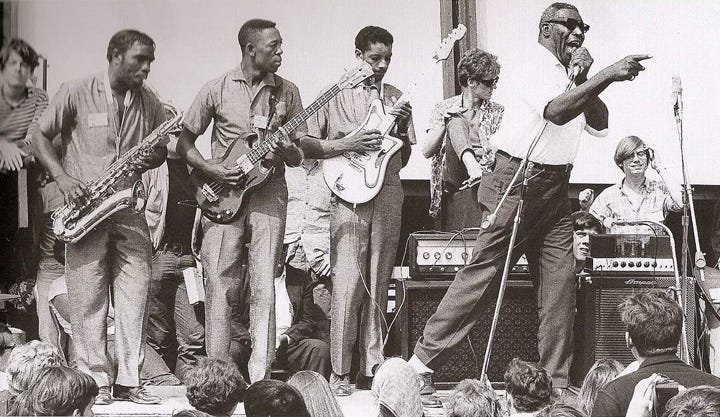
There’s a reason the B-15 shows up across decades of some of the most important recordings ever made.
James Jamerson at Motown is probably the defining example. His use of the B-15 — along with a ‘62 Fender Precision — produced bass lines that are still studied today. “What’s Going On,” “I Was Made to Love Her,” “Bernadette,” “Reach Out I’ll Be There” — that round, slightly compressed, harmonically dense bass tone that anchors every one of those records is a B-15 in a live room with a great engineer. Jamerson reportedly rarely moved the tone controls much; he let the amp’s natural character do the work.
Bob Babbitt, another Motown session stalwart, was also a B-15 player and continued to use one through countless Detroit and later Philadelphia sessions. His work on the Chi-Lites’ “Have You Seen Her” and Edwin Starr’s “War” carries that same fundamental B-15 character.
Duck Dunn at Stax in Memphis was another. His bass on Otis Redding sessions, Sam & Dave records, and later the Blues Brothers material has that same fat, controlled quality — a sealed 15-inch cabinet doing exactly what it’s supposed to do in a recording environment.
Outside of soul and R&B, Carol Kaye used a B-15 extensively through the ‘60s on countless West Coast sessions — she’s credited on an extraordinary number of Beach Boys, Monkees, and film score dates, and the B-15 was part of her standard kit during that period.
These weren’t flashy stage rigs. They were precision recording tools. Portable enough to take anywhere, consistent enough to trust every time.
Ampeg has come back to the B-15 concept several times over the years. The most notable modern version was the reissue they developed in collaboration with luthier extraordinaire Roger Sadowsky and others, attempting to faithfully recreate the NF-era circuit with correct transformer specifications and period-accurate components. It was a serious effort and by most accounts came very close.
More recently, Ampeg’s Heritage B-15N has been well received as a genuine high-fidelity recreation — using the 7027A output tubes, correct transformer spec, and the original flip-top cabinet format. Not cheap. But if you want the real thing and can’t find a clean original, it’s the right move.
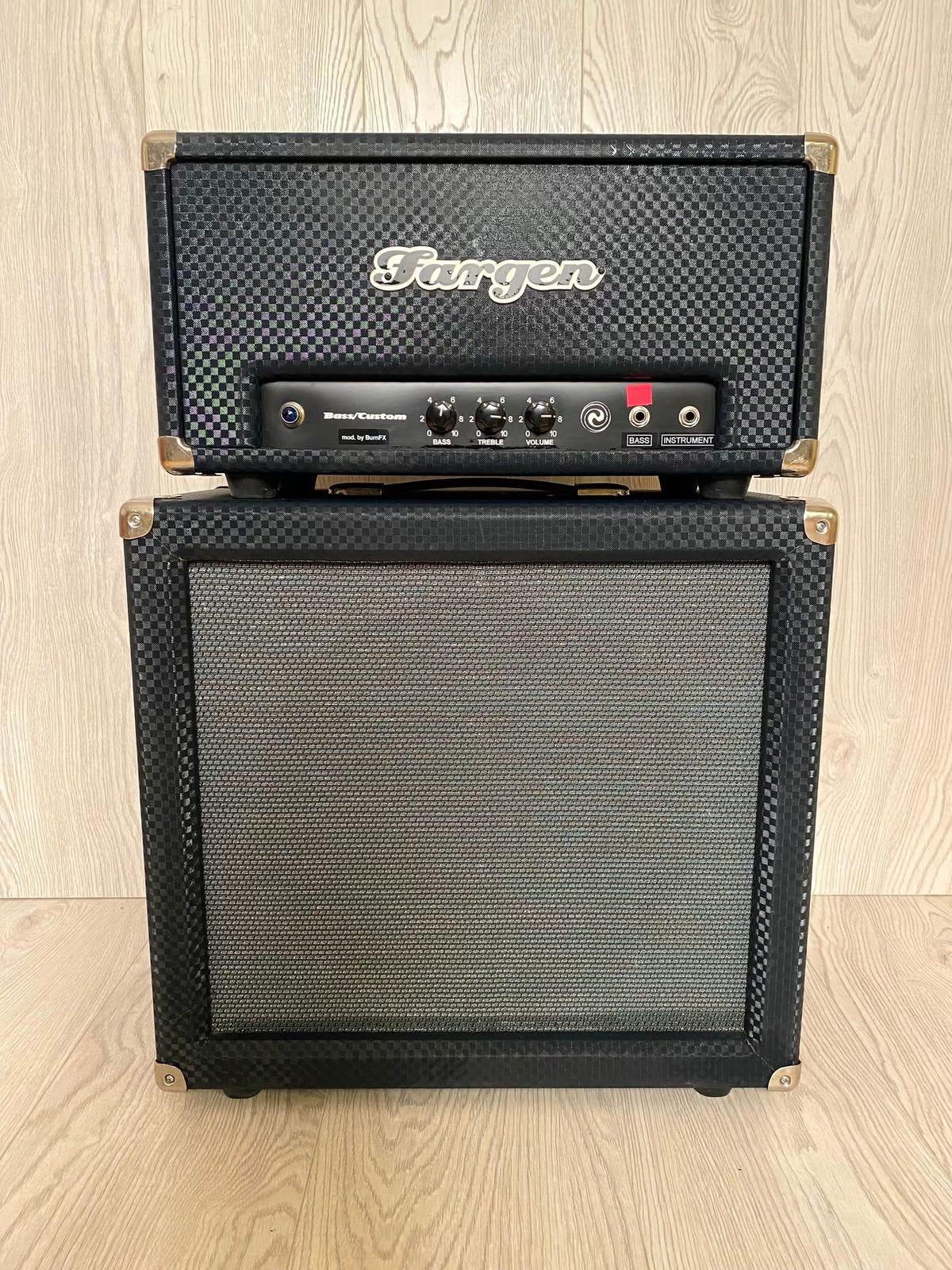
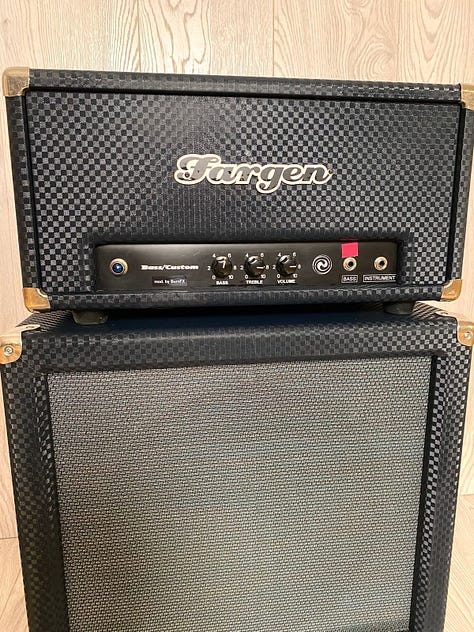
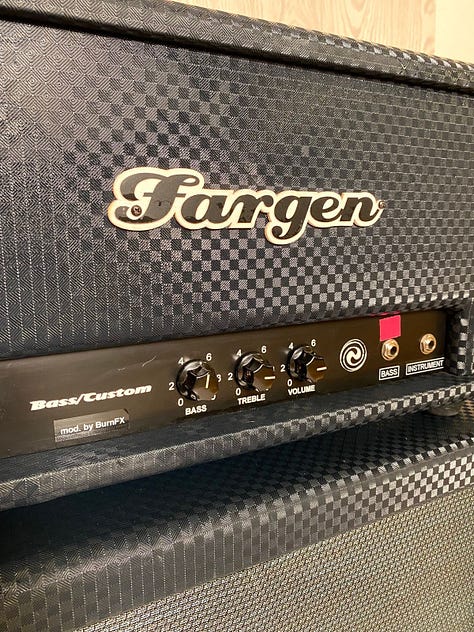
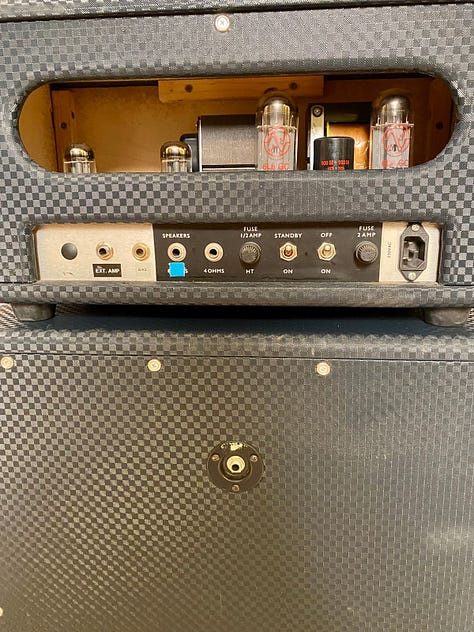
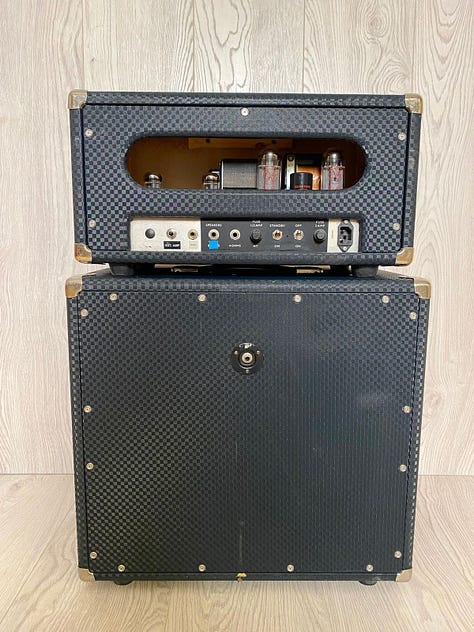
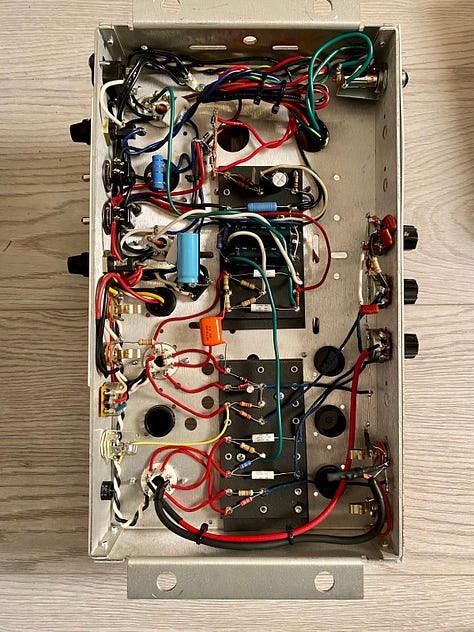
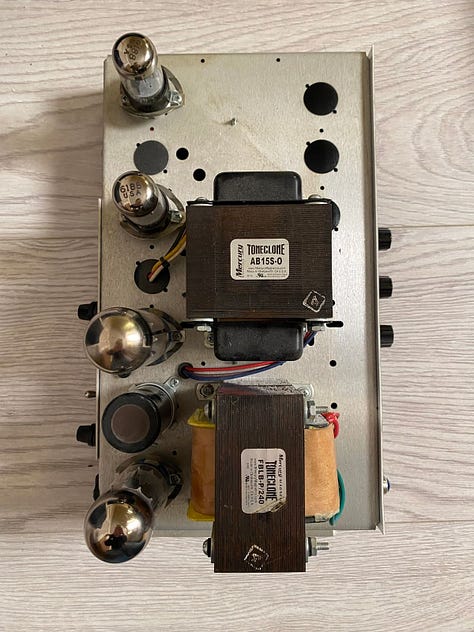
Even though Fargen Amps isn’t primarily known for a bass amp line, my brother and I ended up building quite a few variations of the B-15 over the years, and honestly some of those projects are among the most satisfying builds we ever did.
Some were traditional recreations — original-era cosmetics, NOS tolex and grill cloth when we could find it, matched transformer specs, period tubes. Real attention to the details that make the difference between a clone and a correct amp.
Others pushed the design further. We’d take the B-15 preamp section — the 6SL7 stage, the tonestack, the overall voicing — and pair it with larger, fixed-bias output sections for more headroom and stage volume. More flexibility without losing the fundamental character.
One of the builds I’m most fond of was a 4 X 6550 - 200 watt version I put together for Teddy Landau that went out on tour. Same core voice, same octal preamp warmth — just scaled for environments where 25 watts wasn’t going to cut it. Teddy needed that B-15 sound, but he also needed it at stage volume.
That’s always been the fun part. Respect the original. Understand why it works. Then don’t be afraid to evolve it.
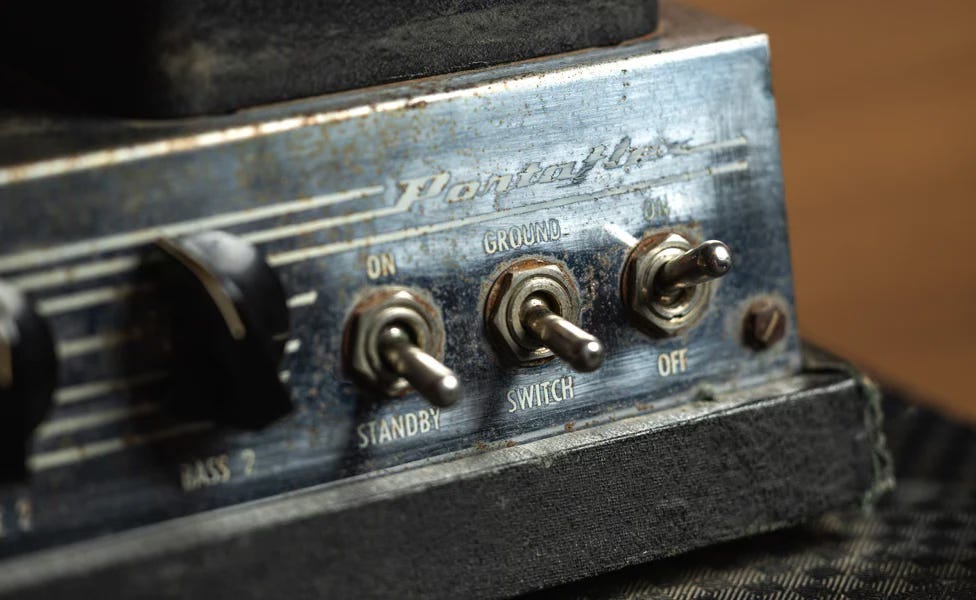
The B-15 always lived in the back of my mind — not because it was the loudest amp I ever worked on, or the most complex, or the most exotic. But because it got so many things fundamentally right.
The form factor. The circuit topology. The choice of the 6SL7 preamp tube. The sealed 15-inch cabinet. The intention behind all of it.
Everything about this amp was built for real-world use — especially the studio. And it became, without anyone really planning it that way, the instrument on some of the greatest bass performances ever recorded.
In many ways, that’s what I became known for over the years — taking classic designs like this and building something custom. Something tailored. Something that worked for professional players whether they were in a world-class studio or three weeks into a tour.
Not copies. Not clones.
Evolutions of something that was already great.
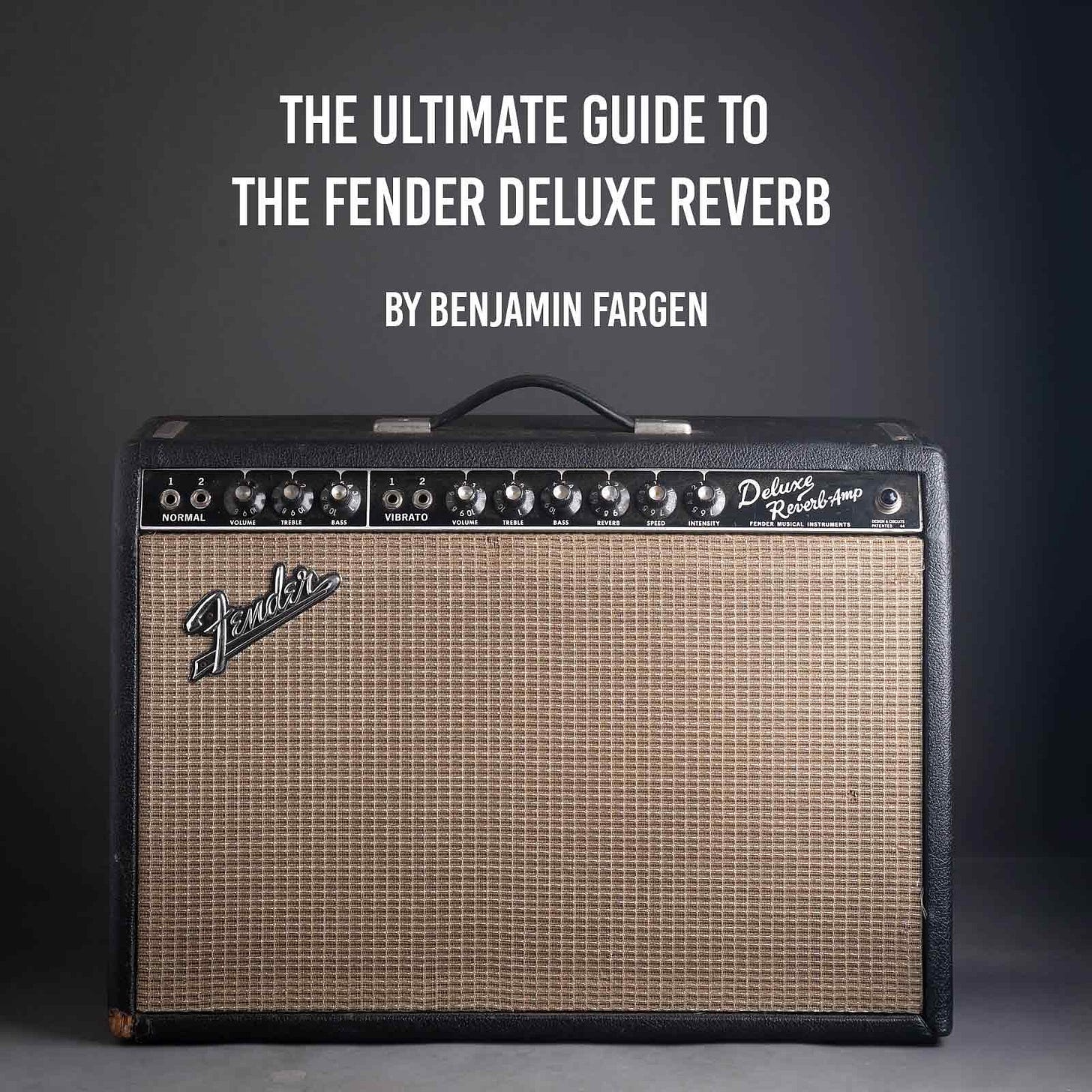
If you’re a Deluxe Reverb owner—or you’ve always wanted to unlock its full potential—my upcoming e-book is for you.
“The Ultimate Guide to the Fender Deluxe Reverb” breaks down everything you need to know about tube selection, speaker swaps, circuit differences, and tone-shaping secrets from decades of real-world experience. The Ultimate Deluxe Reverb Guide, is where I go deeper into circuit history, tube selection, maintenance, and four of my favorite tone mods from the past 25 years.
Available for Purchase Here: “The Ultimate Guide to the Fender Deluxe Reverb”
No posts
Comments
Nothing yet. Say the first thing.
Sign in to join the conversation.