
It’s 5:30pm. Your children are home. You just stepped away from your work calls and dinner needs to be ready. You scan the fridge, deciding what to put together for the family to eat. One child thrusts a permission slip at you while the other asks where her missing leotard is.
All you hear is “Mom! Mom!”.
Overstimulated from work, the demands of the day, multiple kids talking to you, and the need to put mental cycles toward dinner.
This is when you’re most likely to snap and say something you might regret.
Like an overwhelmed computer processor, you’re handling too many simultaneous tasks. You need to open Activity Manager and quit something to free up your RAM.
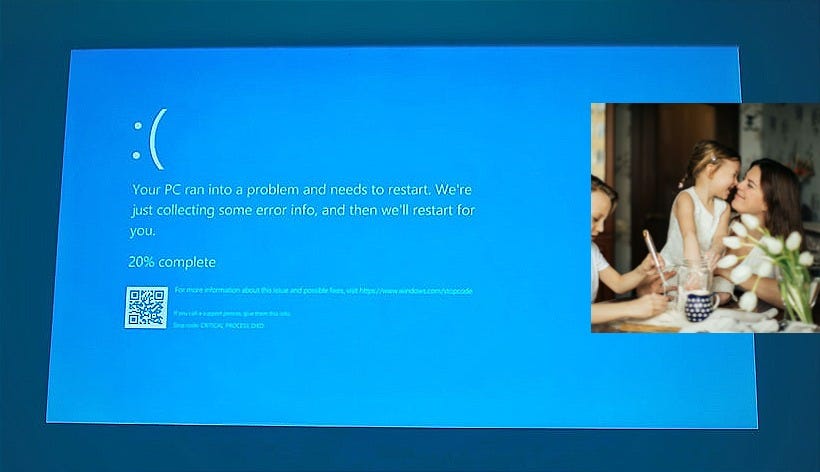
In the moment, it’s hard to recognize what is happening. Instead, you feel increasing irritation, the inability to focus, and the follow-up stress of tasks started and left unfinished as you dealt with one interruption after another.
Sound familiar?
The families I work with often present me with a situation like this — it’s weeknight dinner, it’s school day mornings, it’s bedtimes, it’s Saturdays when everyone has a game or activity at the same time. What these situations have in common is too many simultaneous demands on one overstressed processor — your brain.
Multitasking is a myth. What we call multi-tasking is actually rapid switching between multiple tasks. And it is bad for us: task-switching can reduce your effectiveness by up to 40%, make you frustrated, and drain your focus — it takes an average of 23 minutes to fully refocus after an interruption.
You aren’t a bad mother when you snap in these moments. Your brain is being asked to do something humans aren’t built to do.

Of course, there’s no silver bullet to make concurrent stresses go away. But it is possible to manage them better using The Presence Protocol — a method for shifting cognitive load away from peak family times so you can be fully present when it matters most.
Design yourself out of pathways you don’t need to be in. There are many tactics for this, from delegation to strategic redundancies such as setting up a family e-mail account. (We can support you to do this if you want help.)
Stop making your brain a node in all your family systems.
Reduce the need to have many mental processes happening at once.
Spreading family tasks across calmer moments moves you toward single-tasking. Engineers call this load smoothing, which means stabilizing demand on critical resources over time (like the power grid).
If you stagger the things your brain needs to handle to reduce demand during bottleneck times — such as when everyone is home — you can reduce overload while getting through the same number of to-dos.
And there are five ways to smooth the load:
Pre-decide.
Routinize.
Time-shift.
Delegate.
Dispatch.
Pre-decide. When a decision is foreseeable — such as what to eat — avoid making it in the moment. Instead, make decisions when things are calm and mental capacity is available.
In the example above: dinner could be pre-decided by using a chef service, a meal delivery service, or a meal plan. Routines can also pre-decide — e.g. “Taco Tuesday.” Reduce decisions needed in moments of peak demand.
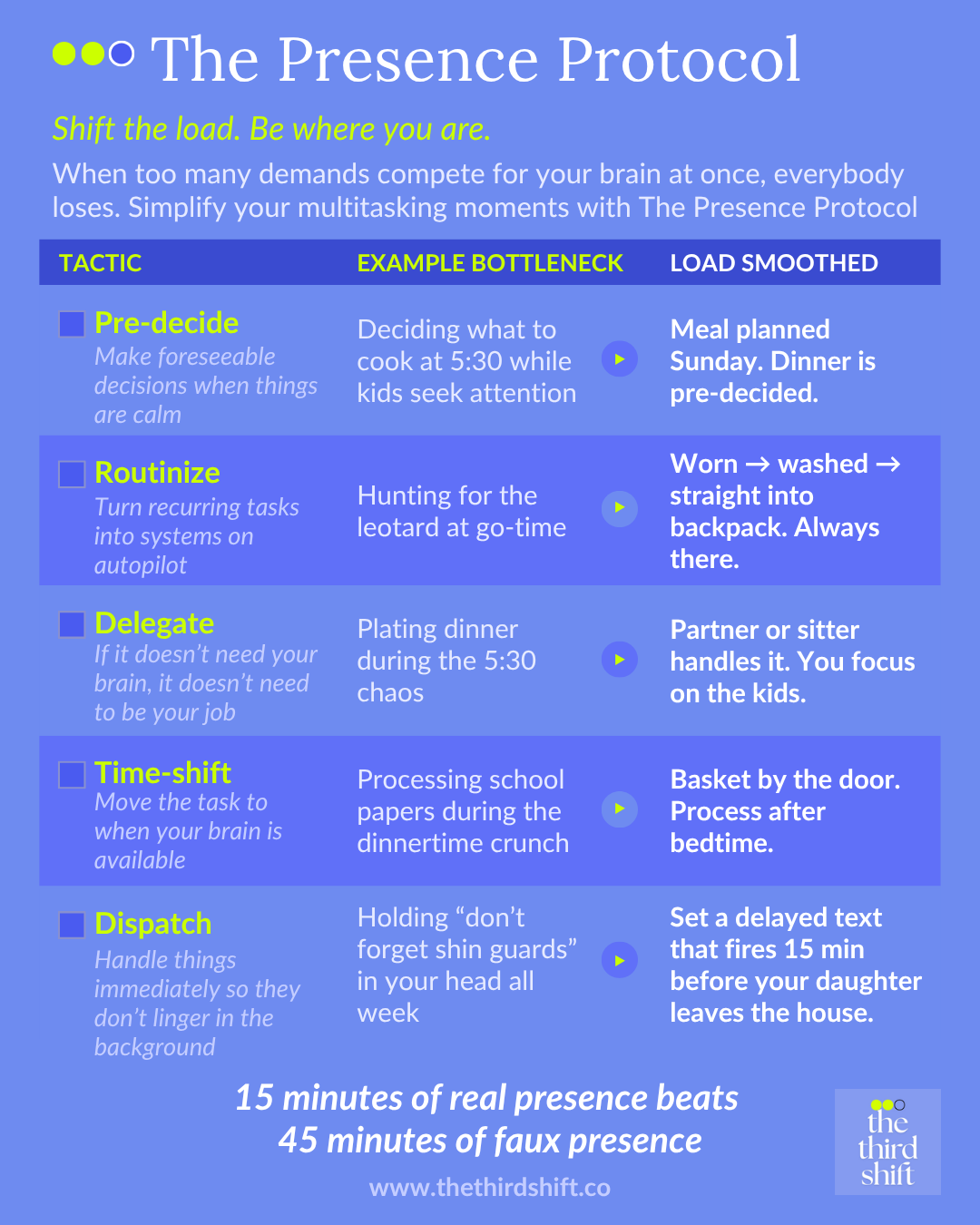
Routinize. Turn recurrent demands into systems and get them running on autopilot. Once established, routines engage a different part of your brain and require far less effort.
“Systems” are not necessarily complicated. In the case of a weekly clothing item (swimsuits, karate outfits, leotards, etc.) the system could be that after it is worn, it goes into the washing machine. It’s laundered with the next load (whatever that is) and skips being put anywhere else when clean other than into the child’s backpack. If it’s always stored there, it’s never lost.
Time-shift. Intentionally move mental load to other times. For example, the “system” for handling things that come home from school could be a basket by the door for mom’s attention. Kids unpack their backpacks and put the permission slip, newsletter, etc. into it.
You process the basket over dinner (when all are seated and calm), after bedtime, or in the early morning. This shifts the demand for attention to a time when your brain is available instead of maxed out.
Delegate. If an activity needs to be completed during a time of high cognitive load, do it earlier than required (time-shift by delegating to earlier you) or ask someone else to do it.
In our example, plating dinner could be delegated to a nanny, babysitter, or au pair, or handled earlier in the day. (Yes, you can store pre-made plates in the fridge — we use these, which have handy lids that enable stacking.)
Dispatch. When a task or thought surfaces during a bottleneck moment, use a tool — a delayed text, a scheduled email, a Slack reminder — to handle it right now in 30 seconds. Don’t hold it in your head. Don’t add it to a list you’ll have to remember to check. Dispatch it to a tool that will execute it at the right time, so your brain is immediately free to return to what matters.
Let’s say your daughter often forgets her shin guards for soccer practice. Instead of trying to remember to remind her to have them, set up a “send it later” text message for 15 minutes before she leaves the house that says “Do you have the shin guards?”
(This also works well for handling all those things you remember when you’re trying to fall asleep.)
Quick note on delegation – The Presence Protocol uses it in two ways. Structural delegation is Principle 1: removing yourself from a system entirely. Your partner owns bedtime end-to-end. The family email account handles school communications without routing through your brain. You’re no longer the node. Here we are talking about Situational delegation (Principle 2): handing off a specific task during a bottleneck moment. One is a permanent change; the other is a tactical move.
The Presence Protocol is one of our core tools because it increases families’ quality time. Instead of scattered and stressy co-location, you have genuine engagement — your brain is free to listen, to complete thoughts, to notice your child’s block tower or improvised dance proactively (without having to respond to “mom, look!” for the 15th time.)
Not only is this more enjoyable for everyone, it also helps reduce unwanted attention-seeking “bad” behavior from your children and mom guilt for you. Instead of mentally replaying moments you weren’t at your best while you were snappy and distracted, you’re replaying funny memories witnessed with your full attention.
Instead of mentally replaying moments when you were snappy and distracted, you’re replaying funny memories witnessed with your full attention.
What’s the biggest cognitive load bottleneck in your week? Try applying just one of the tactics above to smooth it.
If that feels like too much mental effort, good news! I’ve broken it into simple steps for you. Paid subscribers can access The Presence Protocol Quick Start Guide here.
Warm wishes,
Jennifer
Next: The Presence Protocol in action — what it looks like when load smoothing works (and what happens when you skip it).
Our next workshop — how to make a birth plan— is April 13. Details here. Pass along to anyone considering parenthood or expecting.
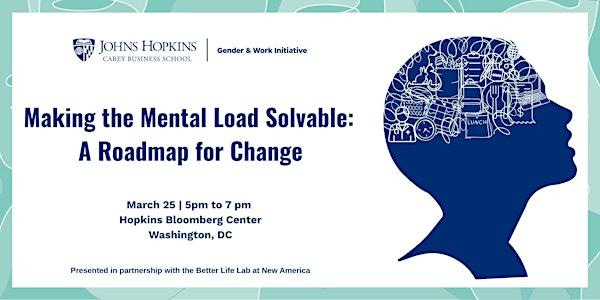
I’ll be attending the mental load collaborative at Carey School of Business. The reception is open to the public and you’ll get to hear from superstars Allison Daminger and Leah Ruppanner; I recorded a podcast debrief with Emily King for The Third Shift’s March Discussion Club:
Tickets are on sale for Moms Feelin’ Themselves DC dance party. MFT “delivers joy-forward wellness for moms.” We’re proud sponsors of this event (along with Bobbie/Kimgchappy) where moms can shed the mental load and get in touch with their personhood.
Comments
Nothing yet. Say the first thing.
Sign in to join the conversation.