
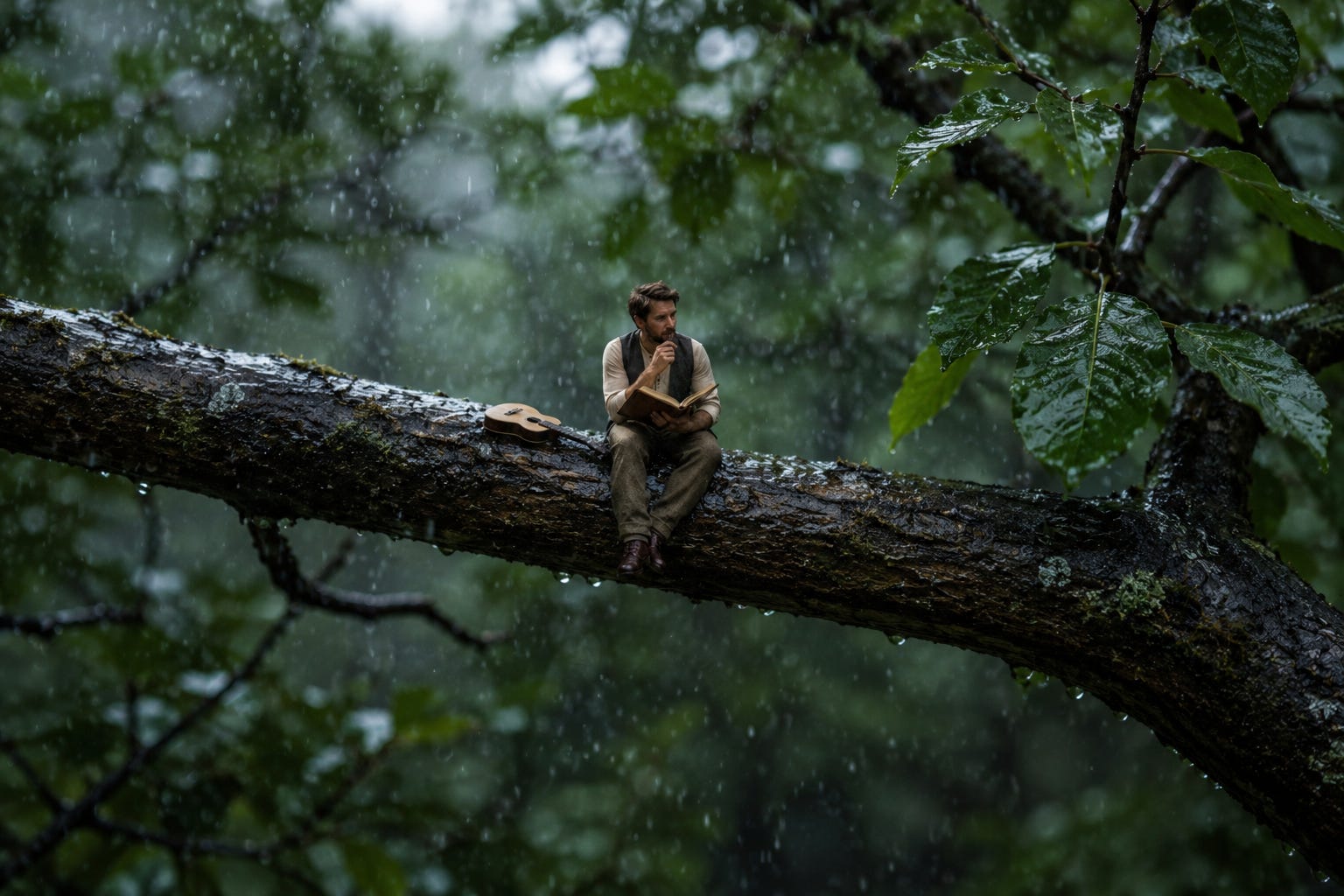
Quick intro from Phil (TTAY)
Joshua “Satch” Satchell has played and written songs all over the world, from Glastonbury and Reeperbahn to studio sessions across the US and Europe. In 2023 he headlined the first ever trans stage at Pride in London, then released his debut album, Present in the Post. Signed to Catalyst Music Publishing, co-chair of the LGBTQIA+ Council for The Ivors, and founder of songwriting brand SongTeller, he’s also lectured in songcraft up to masters level at UK universities. His cuts span Eurovision, hip-hop, pop and country. He’s busy.
Satch is one of the experts on The Team Around You, and the feedback from artists who’ve worked with him has been consistently glowing. What comes through isn’t just his command of craft, it’s how much he cares about the artist sat across from him.
Working with people like Satch has changed how I think about songwriting. Most artists treat it as fixed: you’ve got what you’ve got, maybe a little improvement at the edges, but broadly you’re already as good as you’ll ever be. As Satch puts it…
“good songs are written, and great songs are rewritten.”
Songwriting is a craft, and it has to be honed. The bar for recorded music keeps rising, and no artist gets away with second-rate songs anymore. The rhythm skip in the chorus matters. The story you’re telling matters.
This Q&A is a genuine masterclass in that craft. Dig in.
If you want to work with Satch directly on a song, or just talk songwriting, his page is here.
Q: What are two or three exercises you’d recommend to a songwriter who wants to break out of repetitive patterns and find fresh ideas?
I would recommend playing other people’s songs. When you hear a song that you connect with, have a noodle around on your instrument of choice then identify what the original songwriter was doing that moved you. It may be a new chord, melodic variation or a facet of the lyrics, which you can then try out in your own writing. Getting under the skin of a song can lead to new ideas. Also, co-writing. Nothing will improve your skills as a songwriter quicker than co-writing, as you’ll be soaking up new ideas and different methods from your collaborators.
Q: How do you know when a song is actually finished versus when you’re just sick of working on it?
Good songs are written, and great songs are rewritten so it’s important to give your songs the attention they need to be the best versions of themselves. When it feels complete, it will feel positive, when you’re frustrated... negative, so meditating and having an honest conversation with your creative self is key. If you struggle with that, get a co-writer or feedback from a trusted source to hold you accountable. Sometimes a song needs time spent with it, sometimes it needs space, serve the song not the songwriter, and you’ll be a better and happier songwriter for it!
Q: What are three non-negotiables you look for in someone you’d write with?
1) Talent. As a professional songwriter you are investing your time and creativity, so you want to give yourself the best chance of writing a song you’re proud of, that will be shared far and wide, and that you’ll enjoy co-writing. Sometimes artists or collaborators might be a little early in their development, which is someone I will try to help but not necessarily be writing with at this stage.
2) Prospects. An artist might be really talented but be early in their business development, not have the right work ethic, or may not be in a position to pursue music commercially. I would try to point them in the direction of places and people whose business it is to help them.
3) Not a dickhead. Sometimes people can be super talented, and have all the prospects, but if they’re rude or unpleasant to be around, it’s unlikely a writer is going to want to spend many days in a studio with them!
Q: What are the most common mistakes (creative, legal, practical) you see when songwriters are learning to co-write, and how do you avoid them?
I don’t think I would label them mistakes but certainly two creative tropes I would alert songwriters to are what we could call “the ambiguity trap” and “the universality fallacy.” The first arises when you hear an artist say something like “I want my lyrics to be ambiguous so listeners can make their own interpretations.” I’m not saying that abstract lyricism is not a valid stylistic choice, however if the driving force behind that choice is a fear of vulnerability that’s something to be wary of. The second is the false belief that the more bland you make your lyrics, the more people will love them. Of course simplicity has its place, but cliches are one of the fastest ways to disengage a listener. I find that most artists and songwriters want people to relate to their music, and relatability is a direct response to vulnerability. Try saying what you mean!
For a more legal/practical tip, join PRS (or another PRO). They collect your royalties for you so that you get paid. If your songs are being played (even at an open mic night) you’re owed money.
Check out SATCH’s page onThe Team Around You here. Back to the article ↓
Q: How do you handle it when you and your co-writer disagree on where a song should go, especially when opinions are strong?
You can be the best songwriter in the world and simultaneously the worst co-writer! You have to get good at collaboration. That means serving the song and not the songwriter. I think over the years, I’ve developed a vocabulary for how to articulate my ideas and opinions in a non-combative way, but it takes practice and empathy... a lot of empathy!
Q: For someone who hasn’t co-written much, what’s the best way to find collaborators who’ll actually push them rather than just agree with everything?
It’s a great start to write with your friends or people who have the same taste as you, but outside of our comfort zones is where we can find real growth. A good co-writer holds a collaborator accountable, and speaks up when they think an idea isn’t serving the song as well as another might. Joining organisations like The Ivors Academy, who hold regular songwriter networking events, means you can meet other songwriters looking to write with someone like you.
Q: How do you balance writing what feels true to you versus writing what’s more likely to connect with listeners? Has that changed over your career?
I believe that what’s true is what’s more likely to connect with listeners! Close your eyes and think back to the first song that made you want to write songs... I bet it’s because it felt like that artist was singing something real. There are of course a myriad of styles, genres, and creative intentions, it doesn’t have to be country or folk, it can be dance or comedy songs, but when they have something within them that speaks to your experience, that’s when connection is formed.
Q: If you could go back and give yourself one piece of advice when you were at the early stages as a songwriter, not yet established, what would it be?
Contact your MP, tell them generative A.I. platforms are going to try and pull off the biggest mass theft in the history of our world, and you expect our leaders to act accordingly to protect us! To be honest, I hope that all songwriters are doing that now. In terms of creativity, I would say don’t be stressed about the speed of success. I think there’s a kind of X Factor hangover a lot of artists and creatives have about being super successful before you hit that dreaded over 25s category, and if Simon Cowell doesn’t give us a roman emperor-like thumbs up our career will die in the music industry arena. Just keep writing songs and sharing them, becoming a better writer with each song you write, and the world being a little better for each song you share with it. Good things will come.
Where this leaves you
I hope this was genuinely valuable for where you are at just now. I’m grateful to Satch for sharing these insights, and I’ve learnt a lot from him in the process. If you want to connect with him, you can book sessions through The Team Around You.
If you take nothing else from this, remember: great songwriters aren’t born, they’re made. Wherever you’re at right now, you can be even better.
No posts
Comments
Nothing yet. Say the first thing.
Sign in to join the conversation.