
Live music is still the most reliable way to convert a stranger into a real fan. Not a follower, not a stream -- an actual fan. And the reason it works so well, in a way that no amount of TikTok content can fully replicate, is that people who see you live come away with stories.
They remember going there. They remember meeting people. They remember losing their shoe. They remember buying something off the merch table. They remember talking to the lead singer afterwards.
That is real-world depth. That is the kind of connection that sticks. It is also the kind of connection that turns a casual listener into someone who comes back, brings friends, and tells people about you. This guide covers how to build a live presence that creates those moments -- consistently, strategically, and from the very beginning.
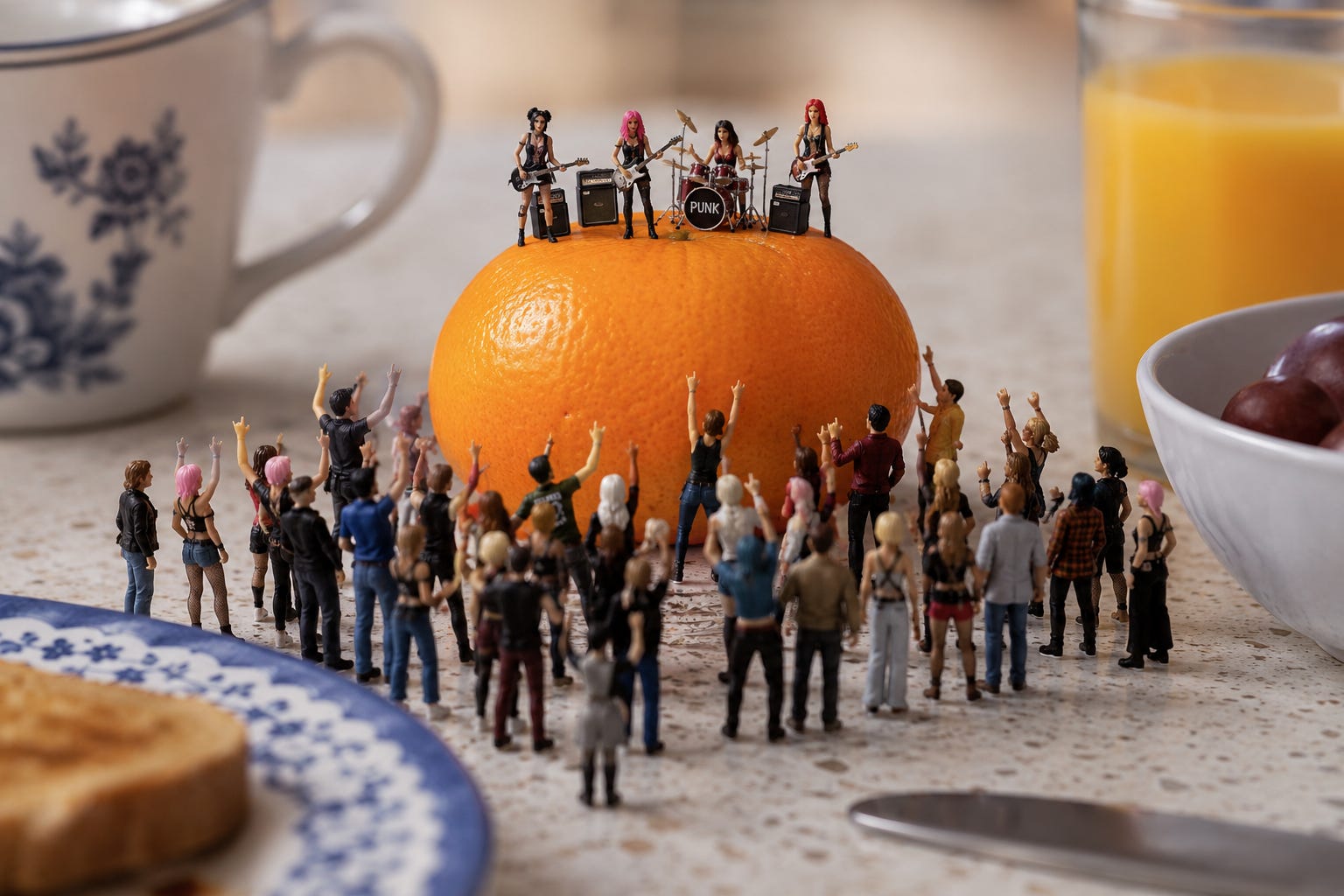
You’re ready to play live when you can perform your set confidently, consistently, and without relying on the room being forgiving.
That is the honest bar. It does not mean you need released music first. There is no rule that says you cannot start playing shows before your first single drops. But there is a practical reality: if people hear you play and want to find you afterwards, there needs to be somewhere for them to go. Before you book your first show, make sure you have an online presence; a profile, a link, something that exists when someone types your name into their phone at the end of the night.
On the set itself: make sure every song is brilliant. If you don’t have enough original material to fill the time, or even if you do, one or two well-chosen covers are a brilliant idea, but obviously make them your own. We don’t want karaoke.
If you want to test your material before committing to a proper live run, consider starting smaller. Intimate formats like SoFar Sounds -- curated living room-style gigs -- are a brilliant environment for early-stage artists to perform to an engaged audience without the pressure of a traditional venue booking. Similar, and even more scrappy, would be busking. It’s a totally legit opportunity to try your songs in the wild, get practised by facing actual humans, and also a great opportunity to make content.
Your set should tell a story -- and so should the bill you are on.
On the set: think about arc. Where are the peaks? Where do you let the room breathe? What is the last thing you want people to feel as they walk away? Your strongest song is not automatically your opener. Sometimes it is the thing that closes the night.
On the line-up: things have changed a little bit over the last few years, and it is common that trying to pull together a band means bringing in session musicians. That gets super expensive very quickly, so be very thoughtful about that choice. If there is a way in that doesn’t involve you needing a whole band, that’s amazing.
Think in a clear-eyed way about whether or not you can create a solo version of what you do that will still have impact. If you can’t do that, then think about whether or not you can cobble together a band without needing session musicians. Again, you’ll have to be clear about the level of consistency and passion. What amateurs bring is that they might be as committed or more than session musicians, but that is rare.
Lastly, if you do need to use session musicians, then you’re going to have to get very strategic about the gigs you choose to play. I know lots of people who do this to great effect. It is doable.
On the bill: if you have any influence over who you are playing with, use it. Sharing a stage with artists who have a similar sound and a similar audience gives you the best chance of turning their fans into yours. A mismatched bill is frustrating for everyone -- the audience, the promoter, and the artists on it. This applies in reverse. If you are being offered a support slot, look at the bill. Who headlined last time? Who does the promoter usually work with? Is the audience that is going to be in that room the audience you are trying to reach? Not every show is the right show. Early on, that might feel like a luxury you cannot afford -- but playing to the wrong room repeatedly is not momentum, it is just mileage.
Start locally, start proactively, and start with realistic expectations.
Matt Hanner is a booking agent with fifteen years of experience building artist careers from the ground up. He now works as a consultant through The Team Around You, and his advice on this is direct: “Banish all romantic notions that your music will simply open the floodgates and the gig offers will flood in. No matter how good your demos sound, you’re going to have to be proactive.”
Your targets are venues, promoters, artists you would like to support, and eventually booking agents. Start with the venues in your local area. Check each one’s website, find a real contact name where you can, and note what kind of acts they typically book. Then look at who promotes gigs at those venues -- promoters are often trackable through social media even if they do not have their own website.
Matt’s full guide to the booking process is worth reading in detail and covers the outreach mechanics step by step: How Do Artists Get Gigs -- Matt Hanner for The Team Around You. He recommends keeping everything in a spreadsheet -- contacts, genres, upcoming gigs, progress. It sounds basic. It is basic. It also stops you accidentally emailing the same person three times, which happens more than you would think.
A good outreach email is brief, personal, and gives the reader exactly what they need to make a decision.
Find a real name if you can. Use it. Introduce yourself in one or two sentences -- who you are, roughly where you are based, and a clear, useful description of your music. Not a list of twenty influences. Something that lets the reader decide in seconds whether to keep reading or not.
Be clear about what you want. Are you after a support slot? A headline show? Give a rough window of dates and offer a few options rather than pinning everything on one night. Include a link to your music -- wherever it lives and in whatever format presents it best. If anyone has said something nice about you in print or on air, include a line of it.
Matt’s framing here is worth keeping in mind: “Remember the person you are contacting is a human, and a music lover at that, just with limited time and an inbox full of other artists all angling for a chance to play.” Write accordingly. The delete key is never far away.
You can book time with Matt Hanner here. He started the super successful live agency Runway Artists and now works as a consultant on The Team Around You platform. You can speak to him for just one hour or a whole series of sessions, whichever feels most important for you and your career just now!
Negotiate payment as early in the conversation as you can, and approach it as someone who takes the work seriously -- not someone who is just grateful to be asked.
In the early stages, financial guarantees for support slots are rare. You may be playing for a door split, for expenses, or for nothing at all. That is not necessarily the wrong call -- the right room and the right audience can be worth more than a small fee at this point in your career. What matters is knowing exactly what you are agreeing to before you say yes.
What is realistic? It varies enormously depending on the venue, the city, the promoter, and how established you are. A rough principle: if someone is offering you £50, that is more of a gesture than a payment. It is worth knowing that, and worth understanding that asking for more -- done elegantly -- is entirely reasonable. Position yourself as someone who values the work and wants to do it justice. That is a different conversation from simply asking for more money.
As your profile develops, a manager or consultant can be genuinely useful here -- not just because they can negotiate on your behalf, but because it keeps the relationship between you and the promoter clean. If there is a difficult conversation about money, it is better coming from someone whose job it is to have it.
Alongside payment, use this moment to nail the logistics. These are the questions to get answered upfront:
What time can you arrive and soundcheck?
Is there a space to get changed and store your gear before the show?
Is there a merch table, and where is it positioned in the venue?
How many guest list spots are you getting?
What is the PA situation and will there be a dedicated sound engineer?
These are not difficult questions and they are not entitled ones. They are professional. Asking them clearly signals that you turn up prepared and treat the show as the work it is -- which is exactly the impression you want to make.
Promote the show the same way you would promote anything else -- with content that is actually worth engaging with. Don’t see this as an excuse to just throw flyers up on your social channels. I’m not saying I want to ban the flyers, but that isn’t a marketing strategy. You want to make sure you’re making the same sort of kick-ass content you normally do, and find exciting, engaging ways to talk about an upcoming live show, or share one that’s already happened
What works is content that builds anticipation. A clip from rehearsals. A snippet of a song you are planning to play. A post about what the venue means to you, or why you are excited about the bill. Content that makes the show feel like an event rather than a listing.
Keep the quality consistent. Do not phone it in just because there is a show coming up. Your audience notices the drop.
Your email list is the most direct line you have to people who have already said they are interested. Use it. A short, personal note about the show to your subscribers will outperform a week of Instagram posts. If you are still building your list, this guide to email marketing for artists is a good place to start.
And be direct with the people in your life. Tell your friends. Tell your family. Get people in the room who already know at least a few of your songs. There is a specific energy that comes from a room where people can sing along -- even partially -- and it changes the night for everyone, including the strangers who are hearing you for the first time.
Yes -- but only when the show is worth inviting them to, and only when you do it properly.
What “industry” means in your specific situation will depend heavily on where you are in your career. In the early stages, your network will be small. The first industry person you invite to a show might be someone you have spoken to at your distribution platform, or someone you shared an early demo with. That is fine. The principle holds at any scale: invite people whose opinion matters to you, who are relevant to where you are trying to go, and who will have a good experience if they come.
As you develop, think more specifically. A local promoter you want to build a longer-term relationship with. A journalist, a playlist curator, a sync agent, a manager who works with artists in your space. Do the research before you reach out. Know why you are inviting each person before you send anything.
Industry people get invited to a lot of shows and do have to be selective. Adding names to the guest list who are not coming is an occupational hazard for any artist. It is entirely acceptable to follow up on the day with something like “Can I just check -- are you still a maybe for tonight, or should I free up your spot?” That is not awkward. That is professional, and people in the industry will understand and respect it.
Perform with full commitment to the room in front of you -- not the room you wished was there and rehearse a lot!
A sparse crowd or a mid-week support slot can make it tempting to dial back your energy. Do not. The people who are there deserve the same performance you would give a sold-out room. And the professionals who might be watching -- a promoter, a journalist, another artist -- will notice the difference.
I’d love to say communicate between songs, because that is usually the right thing to do, but honestly, if that is absolutely not you, then you can be more sparse.
For the love of God, make sure everybody knows the name of the project before you get off stage, and I don’t mean mention it once. If you can’t mention it multiple times, make sure there are posters up or something. Now I’ve said that, check out how often you see a support band without knowing who they are
Get off the stage and go and talk to people.
This sounds obvious. Most artists do not do it, or do not do it enough. The ten or fifteen minutes after you come off stage are among the most valuable of the whole evening. People are warm. They have just watched you. Find them.
When you are talking to people, make it easy for them to follow you. Have a way to capture email addresses -- a sign-up sheet at the merch table, a QR code, whatever works in the room. EMAIL! EMAIL! EMAIL! A new email subscriber from a live show is worth 100 new followers! They made a deliberate choice to give you their details. That is a different level of interest and a different quality of connection. From Zero to a Real Fan List covers how to build on that from here.
Beyond the audience, use every show as an opportunity to build genuine connections in the room. Introduce yourself to the other bands -- properly, not transactionally. Get to know the sound engineer; they will work harder for someone they like. Thank the promoter and mean it. Invest in these relationships over time and they will compound in ways that are difficult to predict and impossible to manufacture later. Be lovely!
The operational stuff matters more than most artists acknowledge. Turn up on time. Bring the right gear. Send a clear spec sheet in advance. Being brilliant is one thing. Being brilliant and easy to work with is better. It will get you asked back. It will get you recommended. When that promoter is running at a stage at a festival, they’ll think to ask you. Most artists manage one of those two things. The ones who consistently manage both are the ones who build real momentum.
Think of your merch table as the physical equivalent of your link-in-bio. It is where the audience connection is realised!
That means it does three things at once. It sells products. It captures email addresses. And it creates a space for meaningful one-to-one conversation with the people who just watched you play.
As the TTAY merch guide puts it: “Your music gets them in the door. Your merchandise gives them a way to stay connected to that feeling long after the song ends.” [Read the full guide here]
Position the table somewhere visible. Staff it whenever you can -- ideally not you yourself, because you should be out in the room talking to people. Make it easy to engage with. Price things clearly. Have something at every price point, including something low enough that someone who loved the set but is short on cash can still walk away with something physical.
Think beyond t-shirts. Stickers, prints, limited physical releases, anything that feels like an artefact of the project rather than generic merchandise. The question to ask is: what would someone who loved the show tonight actually want to take home?
A show is one night. The content from it can keep working for weeks if you plan it properly.
Decide your content strategy before you arrive, not in the moment. Who is filming? From where? Are you getting footage from the front of the stage and not just from the side? Who is taking photos during the set and during soundcheck?
The most useful content from a live show is often not the performance itself. Soundcheck footage, a clip from load-in, a quick piece-to-camera outside the venue before doors open -- these give you material that builds anticipation for future shows as much as they document this one.
After the show, do not post everything immediately. Spread it out. A clip this week, a photo next week, a behind-the-scenes reel the week after. A single show, planned well, can give you two to three weeks of content. That is a meaningful return on one evening.
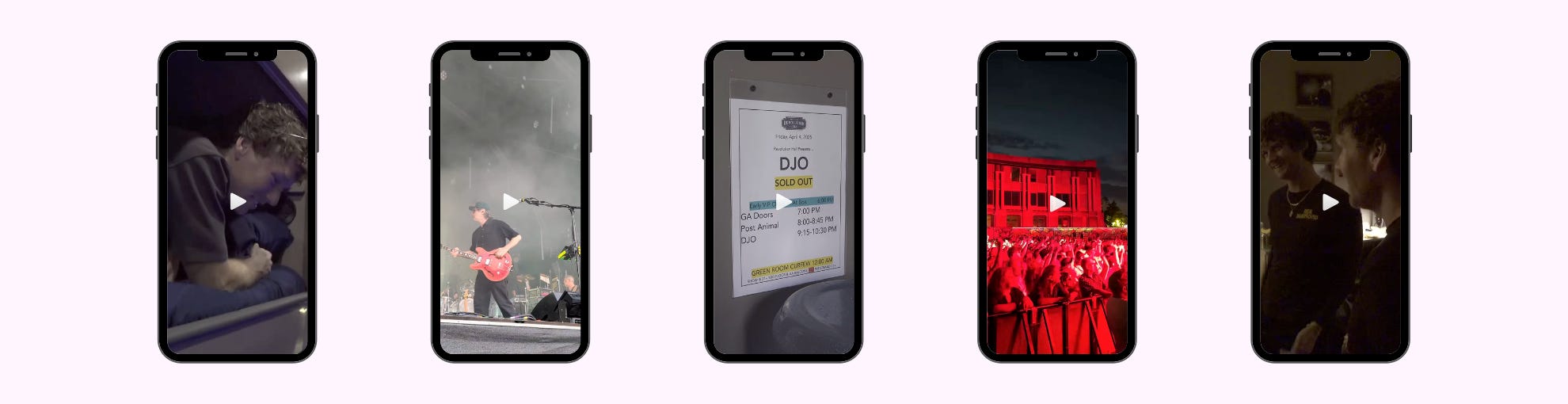
Live and recorded music should be working in the same direction, not running in parallel and hoping for the best.
The obvious connection is timing. Playing shows around a release gives you something real to talk about on stage and in content, and gives the show a reason to exist beyond the performance itself. It actually doesn’t matter which way round it is, because you are often releasing music. If you’re smart, there should be a track, EP, or even album to talk about at most shows
But the connection runs deeper than scheduling. Live shows build the kind of fan relationship that streaming cannot. Someone who has seen you play, spoken to you after the set, and bought something off your merch table is invested in a way that a passive listener simply is not. They are the ones who come back. They are the ones who bring friends. They are the ones who are still listening in five years.
Build both. Run them together. Let each one feed the other.
If you want to go deeper on the booking and outreach side of this, Matt Hanner’s guide is the place to start: How Do Artists Get Gigs. Matt has fifteen years of experience building live careers and now works as a consultant through The Team Around You -- you can book time with him directly at theteamaroundyou.com/expert/matt-hanner.
No posts
Comments
Nothing yet. Say the first thing.
Sign in to join the conversation.