
Reminiscing back to when I was a wee lad, I recall getting my first pocket knife as part of my inclusion in the coveted band of brothers: the Cub Scouts. I remember using it to make many finely crafted pokey sticks. For what? I’m not exactly sure. But when you’re a kid, you have a pocket knife, and you see a stick… well, the stick won’t carve itself now, right? Amazingly, I still have that first pocket knife.
Looking at that knife now, I’m shocked they let us have them. Unlike today’s pocket knives, that one did not have a locking mechanism. Meaning if you didn’t hold the knife correctly, there was a high likelihood of the blade closing on your fingers—generally not recommended. It also came equipped with a smaller blade and a can opener. All a kid would need for adventures in the local woods where I grew up.
While I thankfully still have all my digits after using that perilous first knife as a kid, I didn’t make anything of practical use with it. With that adventurous kid in mind, I set out this week to try carving something with a knife that I could actually use.
There is a whole forest of options when it comes to which type of wood to use for carving. To avoid analysis paralysis, I followed some great advice while researching this Tangent—when getting started, use what you have available.
For me, that meant walking out my back door and heading to the firewood pile.
Each fall, my family and I head to the local National Forests with our firewood permit and collect a few cords of wood to use as supplemental and emergency heat for our home in Montana. The two varieties we typically cut, split, and stack are fir and lodgepole pine.
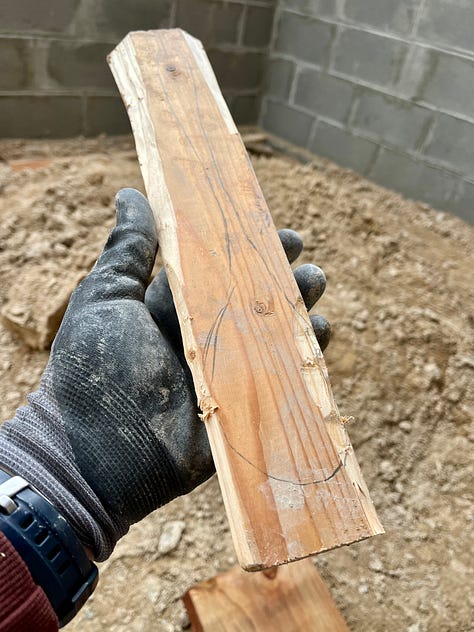
All of that wood we gather is typically standing dead. Meaning something caused the tree to die, and it dries out over the years—making it fireplace-ready when you get it home. That also means it typically has cracks in the wood as it dries and shrinks in diameter.
Looking around my woodpile, I found a nice flat piece of fir about 10 inches wide and 18 inches long.
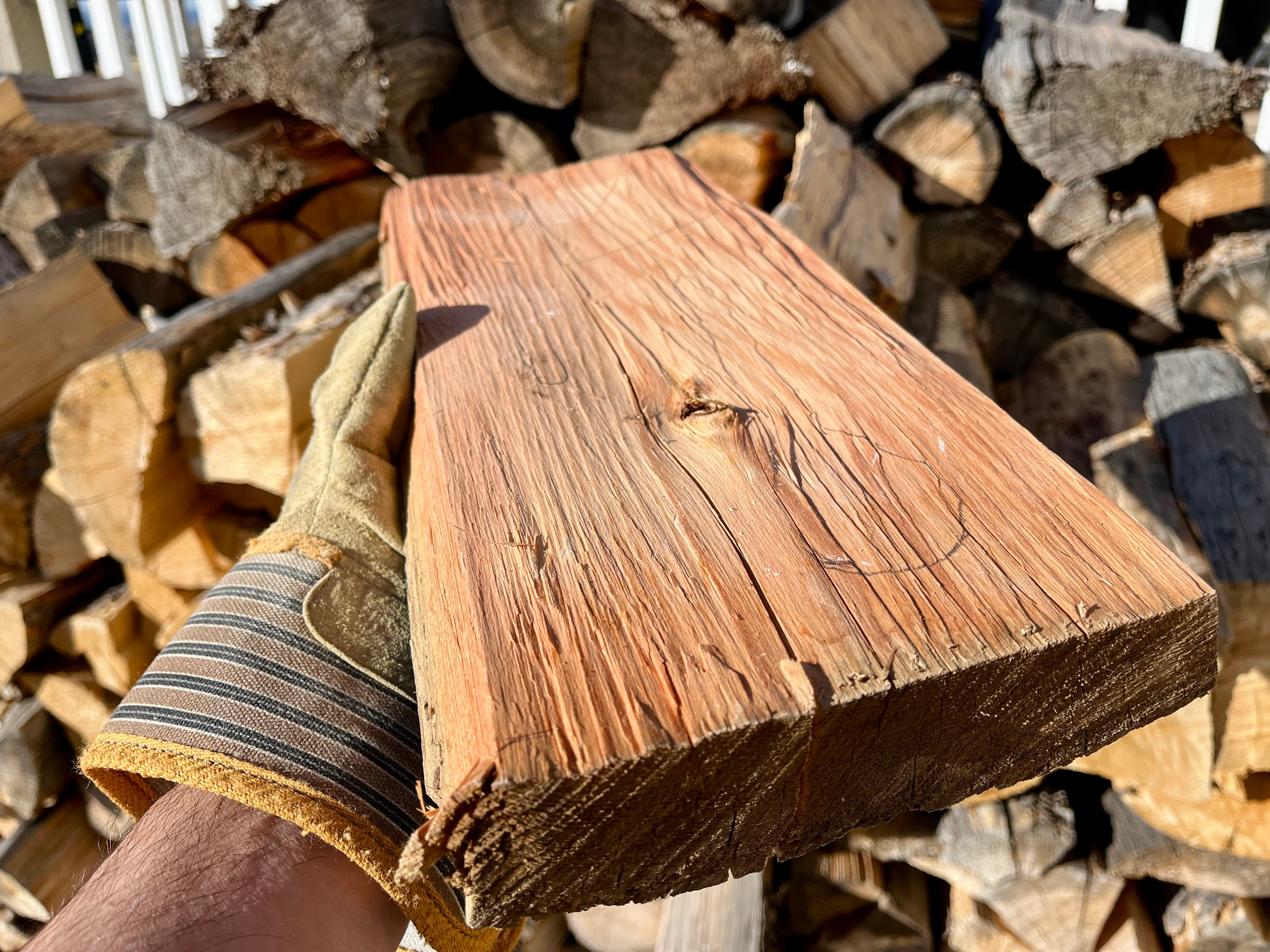
Using a pencil, I sketched out two spoon-looking shapes, thinking there was plenty of material to make at least two spoons. Or rather, enough material for me to mess up and start over at least once.
Then with a hatchet I split the piece depth-wise in half, as it was originally about two inches thick and would make for too much carving. After that, I split the piece lengthwise. From there, I picked one of the two designs and began removing material with the hatchet to get to a coarse shape.
For this Tangent, I purchased a carving kit from Beavercraft Tools. It came with a basic carving knife (“C1”) that has a two-inch (and very sharp) blade, along with another knife with a hook-type blade used for carving out the bowl shape a spoon needs to be a spoon.
Additionally, in the box there was a piece of leather for honing the carving blade and, most importantly, a couple of Beavercraft-brand band-aids.

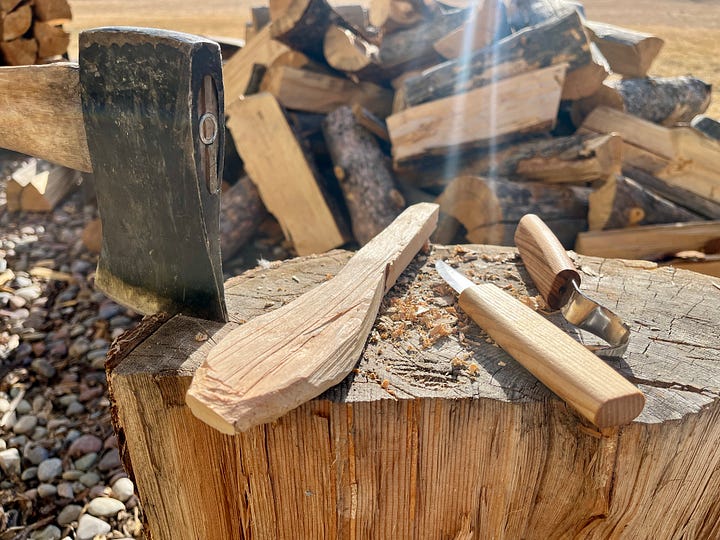
I was immediately impressed with how sharp the knife was. I’ve always heard that a dull knife is more dangerous than a sharp knife. That saying is usually meant for the kitchen, but a truly sharp knife simply works better for whatever you’re using it for.
I made quick work of bringing that coarse initial design into something that actually looked functional.
While preparing for this Tangent, I discovered there are two types of wood carvers on YouTube: those who sand, and those who don’t. I’m staying away from siding with either camp in that debate. I say choose what makes you happy and how you want the finished product to look and feel.
I did choose to sand my first spoon, but the sharpness of the carving knife—coupled with smaller, more controlled cuts—can result in a very fine, smooth, unsanded finish.
To treat and preserve your finely carved craft, there are several options available. The key is to use only food-safe finishes if you actually intend to use your new tool in the kitchen.
Some options include:
beeswax
raw linseed oil
food-grade mineral oil
coconut oil (allergies beware)
I found a cutting board oil at Walmart that was a mix of some of those ingredients (Walrus Oil brand). Do your own research before choosing what will work best for your use case.
Not only was the process fun and rewarding, it was also relaxing. The focused activity of carving and sanding the spoon I made was simply enjoyable. I honestly don’t know how much time it took because the time just seemed to fly by.
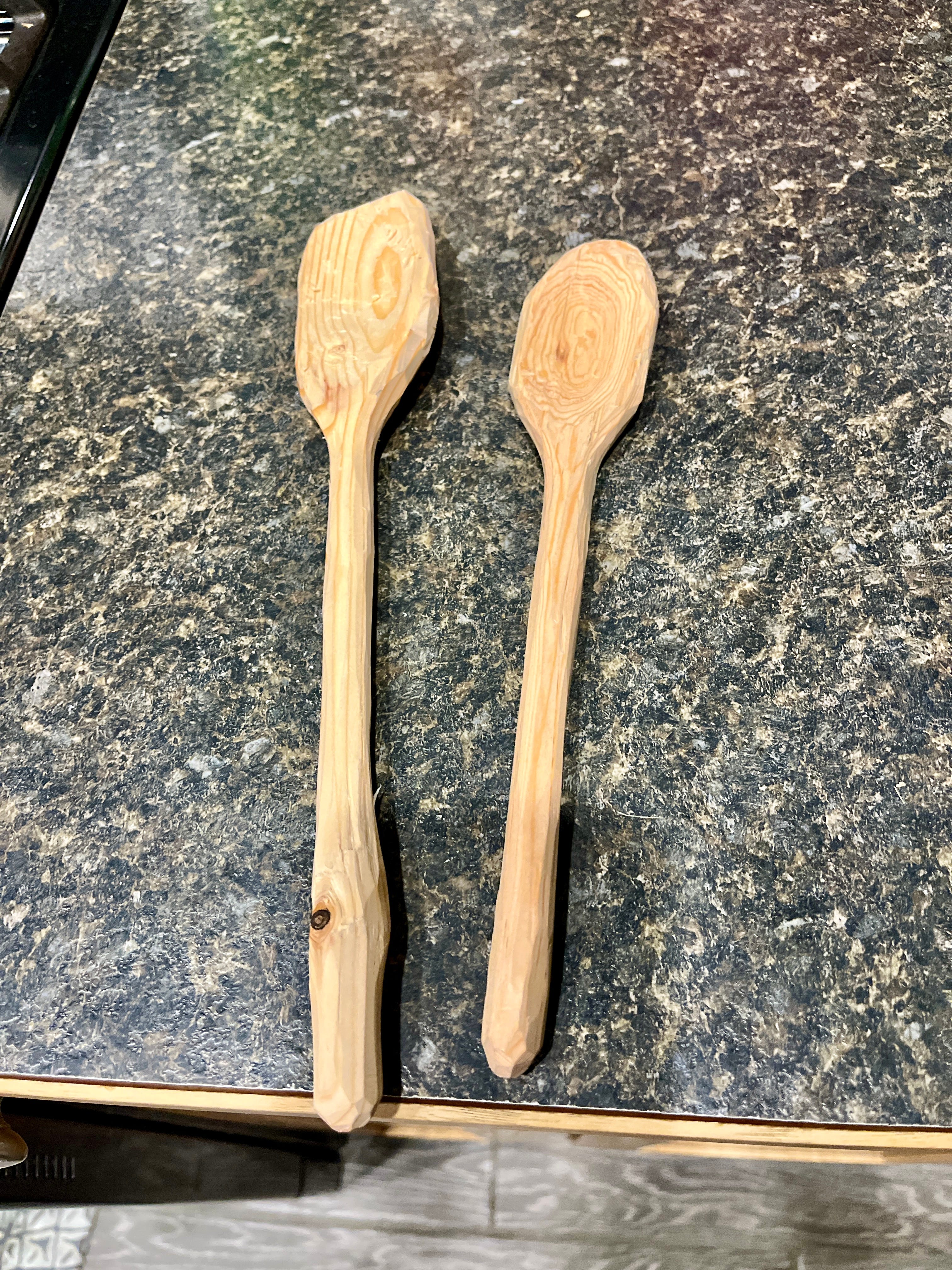
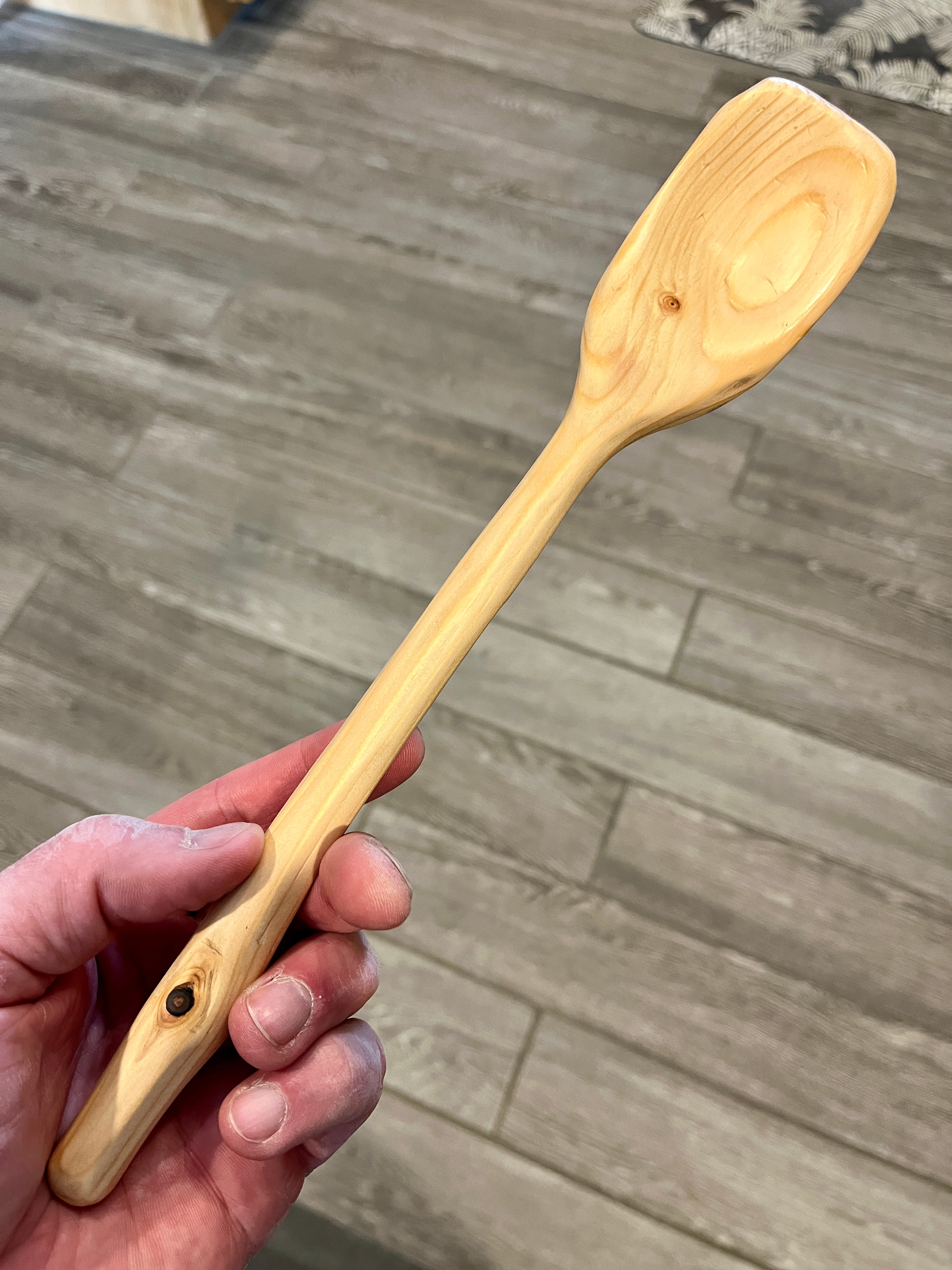
I was able to craft one finished spoon. The act of carving itself is a good teacher. The wood quickly reveals how the grain wants to be carved and the best direction to remove material to reach the final design.
My first attempt with the piece of fir was going great—until I noticed a significant lengthwise crack in the bowl end of the spoon.
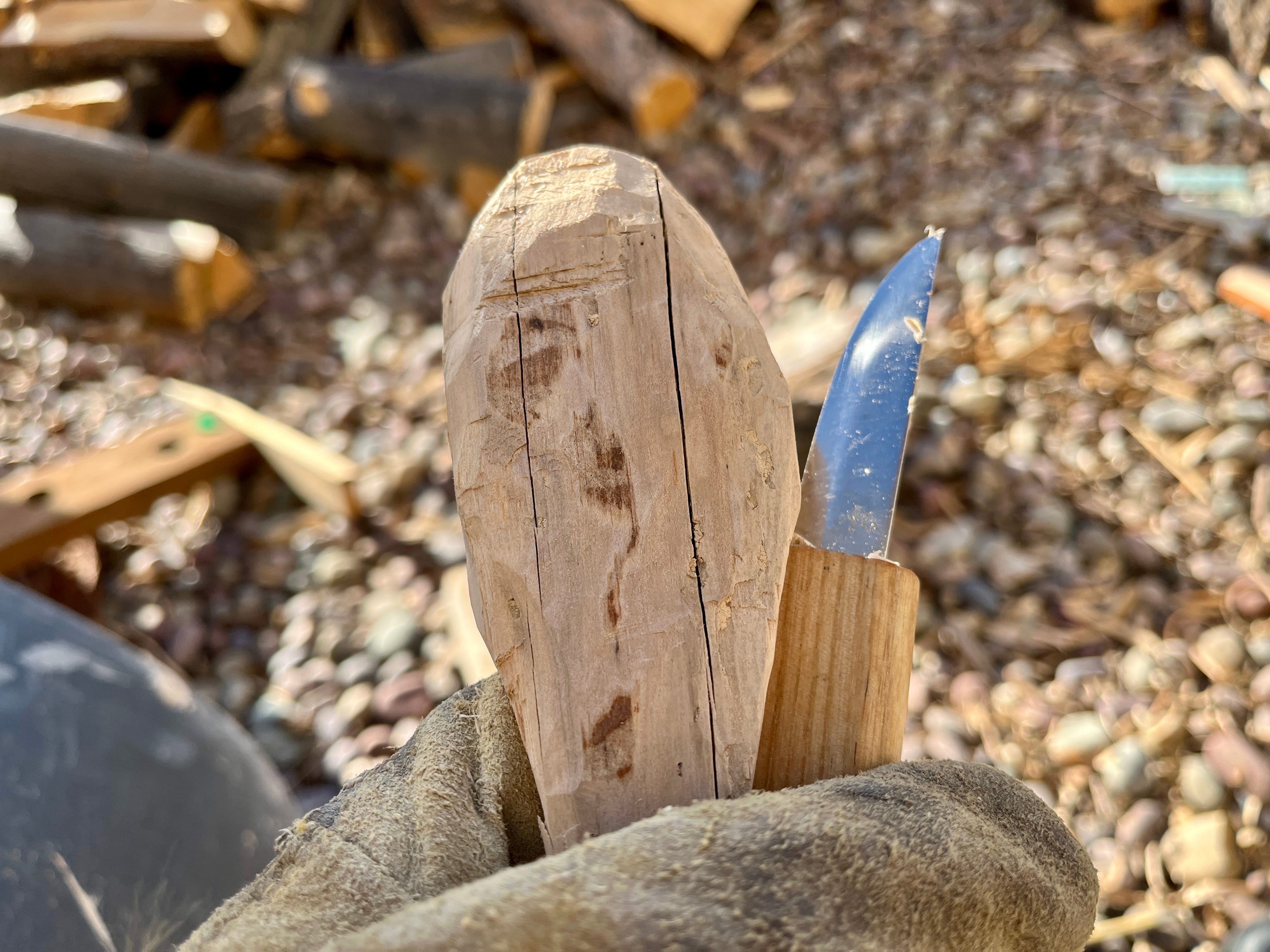
I realized finding a “perfect” piece of wood from my firewood pile would be nearly impossible. So I set my 80%-completed first attempt aside and looked for something else to start over with.
Luckily, I have many small pieces of 2×4 lumber lying around from my ongoing greenhouse project. This piece of lumber (heat-treated, not pressure treated) was likely cut green, milled, and cured properly—meaning it was less likely to contain cracks.
The second attempt worked quite well, with the exception of a couple knots I discovered in the bowl section of the spoon. Those made carving with the hook knife very difficult.


This was a fun and enjoyable Tangent—one that I look forward to exploring further with other varieties of wood.
Have you ever carved something from a simple piece of wood?
If so, I’d love to hear what you made and what you learned along the way. One of the things I enjoy most about these Tangents is discovering just how many different ways there are to make something with your own two hands.
If you’ve never tried wood carving before, maybe this week’s Tangent is the nudge you need. It doesn’t take much to get started—just a piece of wood, a sharp knife, and a little curiosity about what might be hiding inside that block of material.
You might end up with a spoon.
You might end up with something completely different.
Or you might just end up enjoying a couple quiet hours making something by hand.
Either way, that sounds like a pretty good tangent to take.
If you give it a try, feel free to share what you made or what you learned along the way.
Until next week, keep on making things.
Allen
No posts
Comments
Nothing yet. Say the first thing.
Sign in to join the conversation.