

How do you even write convincingly about things you cannot touch? The human experience in relation to what we are expected to be. Sitting on the bus, being at work, having conversations without constantly talking about the fact that we are slowly destroying ourselves and that we are all complicit?
I am interested in what happens in the spaces in between. In the smile on the bus or the stolen glances during a meeting. What is felt inside but cannot be shown on paper.
The work meeting has become a symbol of this contrast for me. A number of people in different states – fatigue, joy, anxiety about the world and with different qualities – reflective, fast, attentive – enter a room. At some point long ago, someone decided that meetings should last one hour. During that hour, an agenda must be covered. A predetermined sequence of control mechanisms. At the end there may be a point for other matters – the more expansive ones – which rarely has time to happen. The agenda represents a kind of safety, an echo from a time when business could still look like this. Everything looks right on paper. The budget adds up. The timeline is realistic. Everyone nods in agreement. But everyone feels that something is wrong.
What would you even say? “I feel that this is not going to work”? Based on what? On a vague sensation in the body? On the way the silence sounded when someone finished speaking? On how quickly everyone just wants to move on?
So no one says anything. Six months later, the project collapses. Exactly as the body knew it would.
It is not the first time. We know things we cannot prove. We sense when something is about to happen. We read rooms, moods, energies – but we have learned not to trust that, because it cannot be measured. There is no way to make it credible in a system built for proof.
So we remain silent. And pay the collective price.
We have never known more than we do now – and at the same time we understand less and less of what refuses to be explained. Our worldview is built on measurability: what can be weighed, repeated, proven. This has given us remarkable progress, but it has also left a void where everything else falls away. Experience. Intuition. Coincidences. Dreams. The feeling that something larger is touching us. We notice it – but we lack a shared language and a place where it can be expressed and taken seriously.
And yet certain experiences keep recurring throughout history. Strange synchronicities that happen with exactly the right person at exactly the right moment. The influence of the full moon. Bodies that react to hands that are not even touching them. Contact with some form of greater knowing. For those who experience this, it is real. For those who do not – it does not exist. What we do not experience ourselves, or cannot encounter and observe objectively, does not quite count and therefore is not allowed to be part of the larger conversations.
So we place these stories to the side – in literature, in the private sphere. Intuition, dreams, emotions, trust, the quality of love. The sense that a room is safe or not. That someone is speaking truthfully – or not. Everything we actually navigate by, every day, but which we have learned to disregard in contexts where it truly matters.
At best, it is allowed in as a detail in our lives: we go to yoga, carry a crystal in our bag, lay tarot cards, talk to a medium and briefly marvel that there is something more – before returning to our compartmentalized everyday lives. Few allow these experiences to shape their entire orientation in life. And even fewer dare to take them further, into a conversation that could influence our collective development.
Those who live with the immeasurable as a guiding principle often end up in a role. One puts on certain words, clothes, symbols, gestures – outward signs of which alternative world one belongs to. It attracts the curious, but it also creates distance. Those who share the experience draw closer. For others, it becomes a gap. A misunderstanding. A caricature.
But what if it is not us who have lost our way – but our instruments that are insufficient? What if it is not reality that is too diffuse – but our models that are too small?
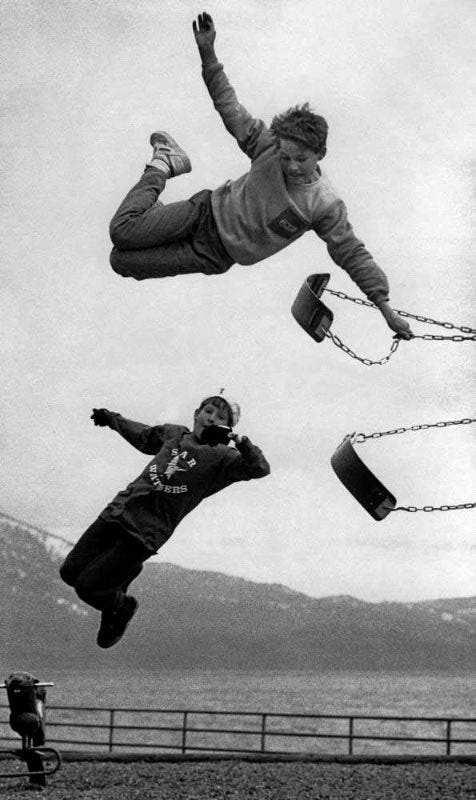
It is no coincidence that some people are drawn to what cannot be measured. Symbols, myths, spirituality, intuition – they use these as guidance rather than truth, as a language for what has not yet become fully intelligible. Others hold more tightly to what is clear, verifiable, what can be pointed to and said: this is where we stand. Not because they lack depth, but because their task has always been to hold the world together when it threatens to come apart.
In the meeting between these orientations, friction arises. To even allow the immeasurable into a room built for goals, agendas and efficiency requires something unusual: enough trust to allow what is unclear, without losing one’s footing.
Conscious thought is an extreme bottleneck. It handles only a vanishingly small part of the information flowing through the body. The rest is processed outside language – in the nervous system, in the unconscious, in what cannot yet be said but already knows.
Intuition is not the opposite of rationality, but its precursor. It is not free imagination, but a form of rapid, unconscious pattern recognition built on experience, relationships and contexts that cannot yet be articulated. Intuition knows, but does not know that it knows. It speaks through sensations, pull, resistance, clarity or unease – signals that do not carry arguments, but direction.
And intuition is not only mental – it is deeply bodily. We experience the world directly through the body, before language has had time to formulate what is happening. The body knows where the chair is without measuring the distance. Feels someone’s gaze on the back of the neck before we turn around. Breath changes when we step into certain rooms.
But that kind of knowledge was never given space in the modern world. Because it cannot be reproduced in a lab. It cannot be standardized. It is relational – arising in the meeting between me and the world, not in isolated parts. The body became something we HAVE, not something we ARE. An instrument to optimize rather than a way of knowing.
The problem today is not excessive trust in intuition, but that we have learned to dismiss it as legitimate knowledge. We have built societies, organizations and decision-making processes that almost exclusively recognize what has already become language, model and number. In doing so, we lose access to information that has not yet become intelligible, but which is often decisive precisely in times of rapid change.
To take intuition seriously therefore does not mean abandoning reason, but restoring an order in which bodily, unconscious knowledge is allowed to be present early in the process – before it is tested, translated and stabilized into form. Only when we acknowledge that much of what we need to know reaches us before we can explain it can we begin to build systems where different ways of knowing actually work together.
Not as competing worldviews, but as different phases of the same human intelligence.
And so the body fell silent. Or rather: we stopped listening.
As individuals, we seem to struggle with relating to things we have not experienced ourselves. We readily assume that our own experience is universal – and this applies to our leaders as well. Politics is rarely only a matter of facts or analysis. It is a matter of what feels reasonable. And what feels reasonable does so because it aligns, in some way, with our inner map – our history, our cognitive patterns, our upbringing, our traumas, our privileges.
Many political proposals are, at their core, stories: “When I did it this way, it worked – therefore everyone should do it this way.” But this also means that politics often starts from ONE path. ONE perspective. ONE solution to complex problems that in reality hold a hundred different needs. There is an implicit ideal at work: that the human being is – or should be – rational, independent, verbal, resilient, goal-oriented – and politics shapes structures accordingly.
But what happens to all those who do not fit that ideal? Those who need more time in school. Those who learn best through bodily movement or intuition. Those who are not cognitively equipped to navigate bureaucratic rules, but have strong social sensitivity. There are few political visions that acknowledge that people differ at a fundamental level – that we do not only have different needs, but different ways of perceiving reality. Instead, society is shaped around an average – a mean value – where certain experiences become the template, and others become deviation.
This is not always a matter of unwillingness – often it is simply a lack of imagination. We can only imagine what we ourselves, or our immediate surroundings, have experienced. That is why political solutions so often return to the familiar, the measurable, the proven – even though reality calls for diversity. We still lack a political model that truly accounts for the possibility that there may not be one best path – but many parallel paths, depending on who is walking them.
Too many times I have sat in rooms where new, major decisions were made. Where everything looked right. And yet something was off. I have seen how what cannot be said nevertheless governs. How unspoken tensions shape the direction of a meeting. How silence becomes action. And I have seen the price we pay when we do not listen. Projects that collapse. Organizations that implode. Decisions that wound because half of reality was never allowed to be present in the room.
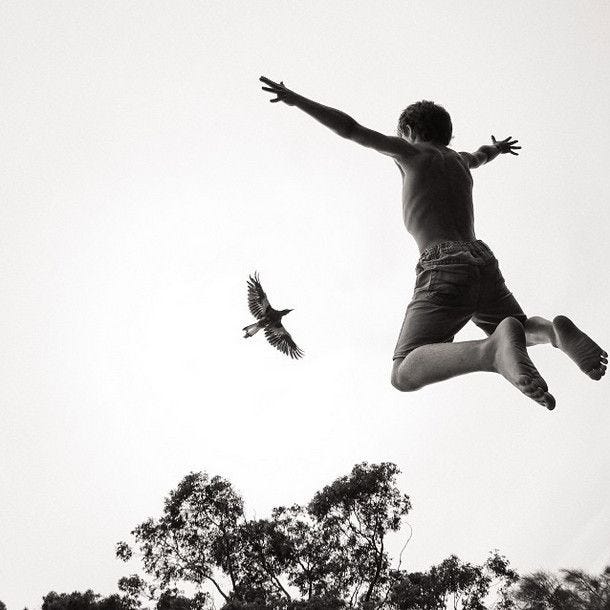
In the much-discussed podcast The Telepathy Tapes, researchers talk about autistic children who communicate without words. On the surface, the podcast appears very serious, produced by a journalist and anchored in science and method, with one researcher in particular that the series keeps returning to.
As a listener, you step into a space that is equal parts wonder and doubt. How can this be possible? And if it is possible – why is it not something that plays a greater role in our conversations and shapes how we move forward? Because there is no research funding available. No university wants to carry the question. No career survives it.
And yet the parents say: “This is happening.” Here, the dilemma becomes visible: when the experience exists, in many people even – but the method is missing – the method wins. Academia closes the door. The phenomenon continues to live on the margins, free from proof, free from language.
Autistic children’s perception is often more sensorially open, less filtered, sometimes hypersensitive, more direct and precise. That their brains might perceive information differently is not unreasonable in the slightest. But it is a liminal phenomenon: difficult to measure, difficult to reproduce, associated with stigma, challenging the view of the brain as a “closed container”.
That the researcher receives no funding is entirely logical within the academic structure – but not logical in relation to reality. What makes this especially delicate today is that if we open up to the idea that research does not offer the whole of reality, then anyone – leaders, for example – can use this to guide people in destructive directions.
When academia cannot measure something, two things happen. Academia calls it “unscientific”. That is correct within its methodological framework – but that framework is not the whole of reality.
But people continue to experience the phenomenon. And so myths, spirituality, healing, shamanism, alternative medicine, intuitive practices, everyday experiences, crystal healing emerge. Separate phenomena.
This creates a kind of double reality: the measurable world and the experienced world. Neither of them is “more true”. But we have learned that only one of them is allowed to count. And when we refuse to listen to the other, it does not fall silent – it simply disappears from our language, from our institutions, from our collective ability to think about it and include it in the larger conversation.
I have lived in both worlds at the same time. Worked in organizations where everything had to be measured, proven, followed up – while knowing that the most important decisions were made on entirely different grounds. A sense that something was right. An intuition about who needed to be in the room. A silence that said more than any words. But it was never allowed to be spoken aloud. It was never allowed to become part of how we governed.
So we stole time. Took detours. Called intuition “experience” and feeling “gut instinct” – words that were acceptable enough to pass. But it was never honest. And it was never sustainable.
But at the outer edges of physics, something radical begins to happen: The observer affects the observed. Particles communicate without contact. Time and space behave like playgrounds. Matter is vibration, frequency, energy.
Suddenly physicists and spiritual practitioners are saying almost the same thing – but in different languages. When quantum physicists talk about entanglement, many people recognize it: “Yes, that’s what it feels like when I know my friend is thinking of me.”
Quantum physics is the branch of science that most radically undermines our everyday worldview. It shows that consciousness affects matter. That communication can occur beyond language and distance. That everything is interconnected. It sounds like prayer, healing, intuition, telepathy, synchronicity, rituals, “energy” and “vibration”. It is hardly surprising that people’s everyday experiences sometimes overlap more with quantum physics than with classical mechanics.
Two languages that have not yet learned to understand one another.
Crystals are used in watches, computers and radio transmitters precisely because they resonate stably. They have an ordered molecular structure that creates resonance. They respond to pressure, heat, electricity and magnetism. But when a person says that an amethyst brings calm, many people look at them strangely.
Why are we so afraid of the idea that matter might have properties that affect us subtly? Why is it hard to believe that vibrations and frequencies – fundamental physical phenomena – could also be felt in the body? If crystals are frequencies in the most literal physical sense, then it is not unreasonable to assume that they could have subtle effects on humans. It is simply difficult to measure.
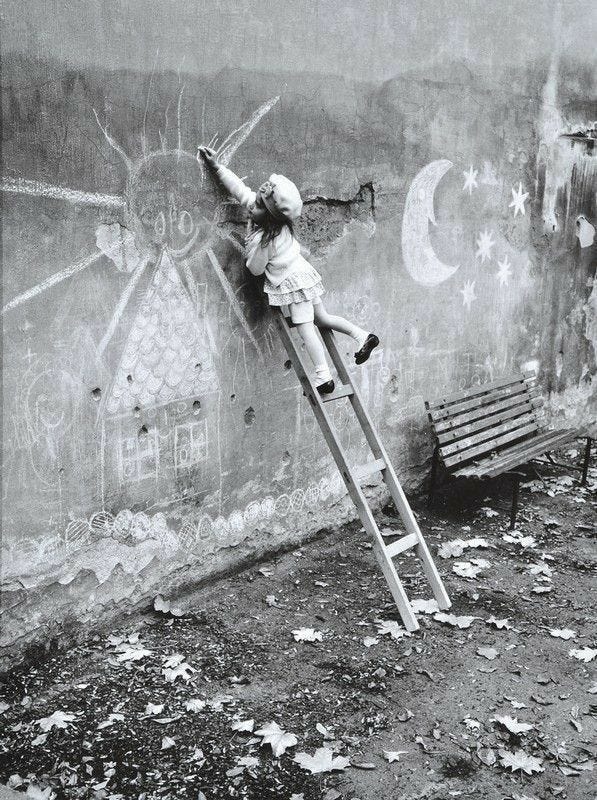
The academic ideal is objectivity. But much of what is most human is not objective: intuition, sensitivity, dreams, energy, creativity, love, telepathy between twins, human premonitions, healing relationships.
When academia says that subjectivity is not “reliable”, it is also saying: “The human being is a faulty instrument.” But what if the human being is the most advanced instrument we have? What if bodily signals, the images of dreams, the intuition that warns, the synchronicities that guide – are not noise, but information we have not yet learned to read? And what if they are also an entry point into understanding cognitive capacities that may serve a larger purpose for the whole? Perhaps not everyone is meant to experience everything, but everyone needs the right to their own subjective experience, and to be listened to.
I think of all the times I have felt something strongly – and not dared to say it. Because it sounded too diffuse. Too soft. Too subjective. What if I am wrong? What if it is just me? And so I said nothing. And later it turned out I was right. But by then it was too late.
That is the cost. Not only for me, but for all systems that leave no space for what is felt but not seen. The knowledge that is lost. The warning signs that are ignored. The possibilities that never get the chance to take form.
Historically, reality has always been larger than our models. Long before we could measure bacteria, bacteria existed. Long before we could measure electricity, electricity existed. Long before we could understand the brain, people were already dreaming.
We think we are reaching the end of knowledge – but we are only reaching the limits of our instruments. The new paradigm begins exactly where the old one ends. And right now, we are standing there. In the crack. Where more and more people experience phenomena that academia cannot explain – but that keep happening anyway. Where science says “impossible” at the same time as life says “but it happened”.
I feel it myself. That crack. Living with one foot in each world. Knowing that both are real – but that no institution yet acknowledges that they can coexist.
Perhaps the knowledge of the future is neither purely rational nor purely mystical. Perhaps it is relational: a dialogic state between what we can measure and what we can experience. Science is one language. Spiritual experience is another. But they coexist, in the same room, without being in conflict. They are simply two different ways of seeing the same world from different directions.
The real problem is not that some things cannot be explained, but that we stop believing it is even worth trying. So perhaps what we need is a certain kind of courage. The courage to affirm what we notice even when we cannot measure it. The courage to listen to stories that do not quite fit within our own lived reality, and to acknowledge that reality has always been more than our theories.
The courage to say: “I don’t know what this is – but I take it seriously.” Because that is where all real knowledge begins. To allow multiple worlds to exist at the same time, where we stop choosing one path over another and train our capacity to understand what it means to be human. And perhaps that can lead us to live in a world that is larger, stranger, and more alive than we have allowed ourselves to believe.
And perhaps that is exactly what we are facing now: not a new answer, but a new way of listening. To science – yes. To the body. To the dream. To the story. To what cannot be seen, but can be felt. To begin seeing the whole human being as a carrier of information – not only through data, but through experience, resonance and relation.
Perhaps we need a new kind of institution – one that does not choose sides between mysticism and method, but listens to both. A conversation where physicists, doctors, shamans, programmers, children, dreamers and skeptics all have a place at the same table. Not to compromise – but to explore.
Because what is the alternative? To continue excluding what does not fit our models – even as people continue to experience it? Or to dare to believe that the next chapter of knowledge will not be about isolating – but about integrating.
We need people who sense shifts before they appear in data. We need people who see patterns that algorithms miss. We need people who dare to say “something feels wrong here” – even when they cannot prove it.
And we need systems that give them space to do so.
It is not dangerous to believe in more than we can prove. What is dangerous is allowing fear of the intangible to make our world smaller than it is.
Because that crack I live in – between the measurable and the experienced – does not exist only in me. It exists in all the systems we have built. In every meeting where half of reality is not allowed to be spoken aloud. In every decision where something essential is lost because it could not be quantified.
Perhaps the next chapter of knowledge is not about isolating – but about integrating. About stopping the choice of one path over another. About training our ability to hold multiple truths at once.
About allowing the world to become larger, stranger and more alive than we have permitted ourselves to believe. Because that is what it is. And always has been. We have simply stopped listening.
About this essay
We’re facing challenges that cannot be solved with the same logic that created them. In exploring our vast “knowing–doing gap,” I’m writing a book as a tool to help us see our inner and outer systems – and the friction between them. Like a compass, it offers a set of lenses or directions that can be explored individually or together.
“The immeasurable” is the fifth of these lenses. Here you can find the first four - Rythm, Position, Relation and Communication.
If this text meant something to you, your pre-order helps make that real.
You can subscribe to follow this work, or explore it through your own life and context by joining 100 Days.
Comments
Nothing yet. Say the first thing.
Sign in to join the conversation.