
Before I get started, I have a quick request for all you lovely subscribers out there: please take part in some new research for The Sponsorship Effectiveness Forum. We’re partnering with the IPA to set the first real benchmark for sponsorship effectiveness since 2018. Whether you’re a brand, rights holder, or agency, it only works if people like you take part. It’s ten minutes, and you’ll get early access to the findings ahead of the IPA Effectiveness Conference in October.
For brands https://www.surveymonkey.com/r/FBYJQ2J
For rights holders https://www.surveymonkey.com/r/3J2JWLF
For agencies https://www.surveymonkey.com/r/3RQJMST
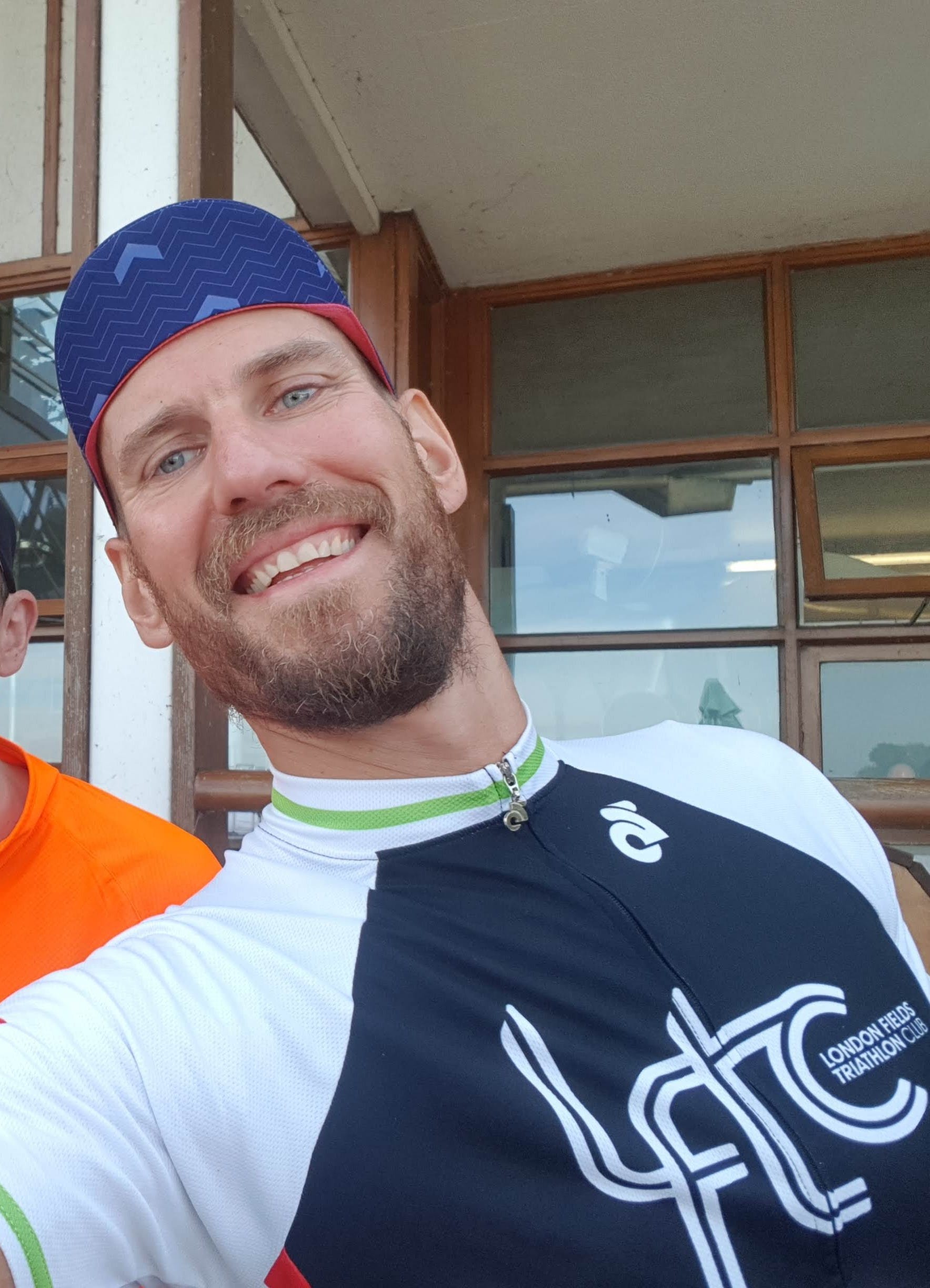
A while back, before young children and Dad-bod got in the way, I was a pretty handy age-group triathlete. I got involved with London Fields Triathlon Club, served as Chair for a couple of years, and even earned my Level 1 Triathlon Coaching qualification.
As a result, many people have asked me for training advice over the years, so I’ll suggest that a club runner train the way the best distance runners train. Periodise the year. Spend the majority of your time at very low intensities, but do the threshold work properly. Add regular strength training to your week. I’m always surprised by the kind of answer that comes up again and again: “I’m not Mo Farah. I’m not a professional.”
The implication is that elite methods are necessary for being elite, and that someone who’s just trying to run a marathon comfortably has no place borrowing them.
It is exactly the wrong instinct. The methods aren’t what you do once you get good. They are how you get good in the first place. The runner who trains as if they were a professional, inside whatever hours they actually have, is the one who improves most. Acting bigger than you are is how you improve.
I hear the same modesty in sponsorship, and it costs a lot more than a parkrun PB. “I don’t need that kind of measurement; I’m a small rights-holder.” “We can’t activate like that; our budget’s tiny.” “Econometrics, brand tracking, proper money behind the rights, that’s for the Cokes and the adidases of this world.” The instinct feels sensible and humble, but it’s actually one of the most expensive mistakes a sponsor can make, and there is now some new evidence to prove it.
Les Binet and Will Davis have published a new (free) report for the IPA called Go Big or Go Home. Do go and read it, because what I’ll cover today doesn’t do it full justice. But the short version is that the marketing industry has fallen in love with efficiency and forgotten about effectiveness, and that the love affair is making everyone poorer. It draws on the IPA Databank, a survey of 500 senior marketers and Gartner spend data, and its conclusion should change how every sponsor sets a budget.
So, as an update for you all on the latest in effectiveness research, I want to walk through some key charts before coming back to what they mean for sponsorship in particular.
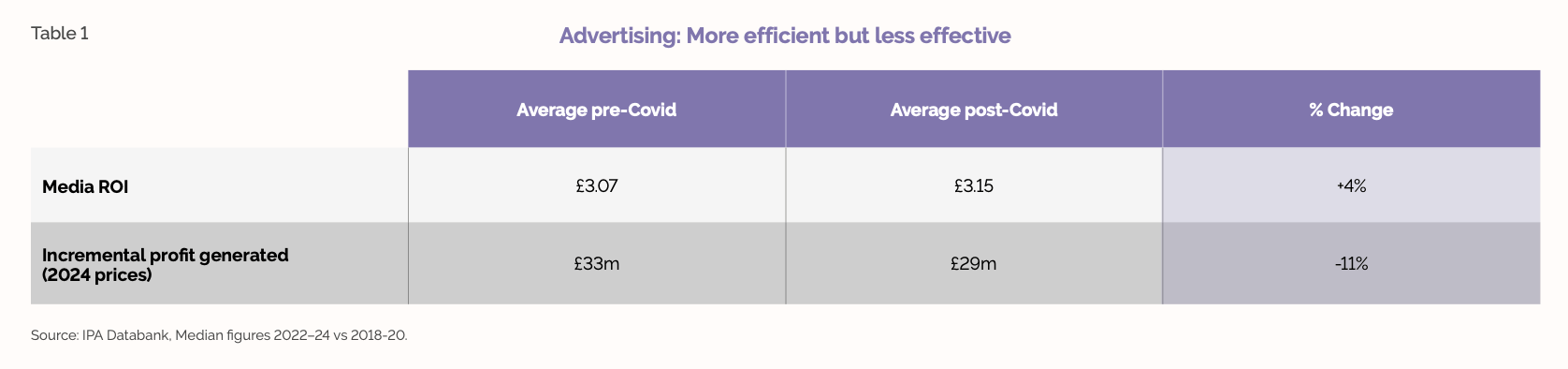
Start with the chart that frames everything. Since Covid, the median advertising ROI in the Databank has risen by 4%, from £3.07 to £3.15 for every pound spent. Great news, right?
The issue is that over the same period, the incremental profit those campaigns generated has fallen by 11% in real terms, from £33m to £29m on average. As I’ve written before, this is the problem with ROI: focus on it, and you become more efficient, but less effective.
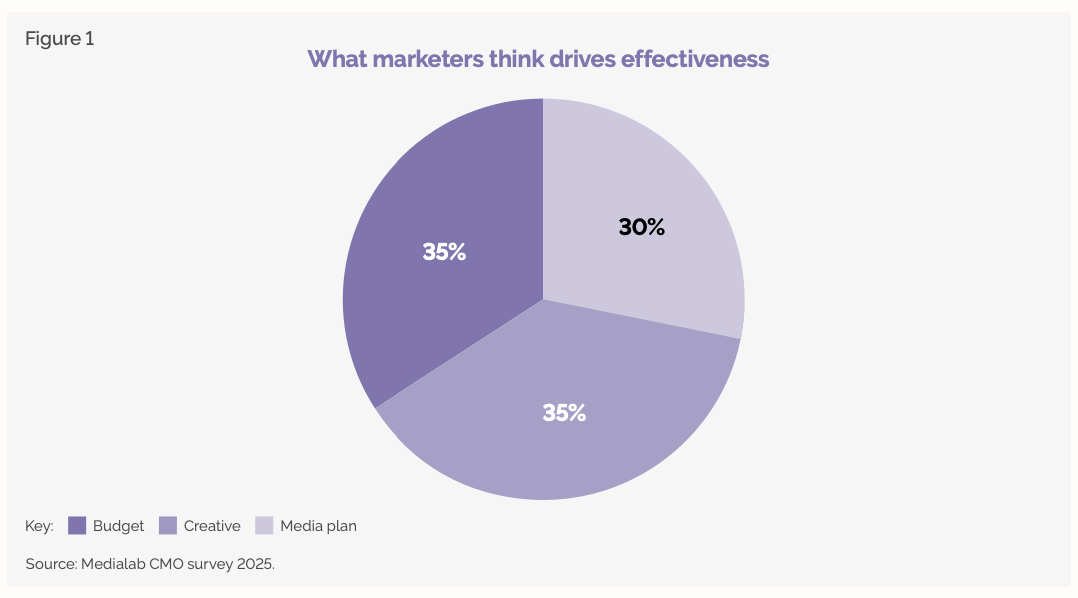
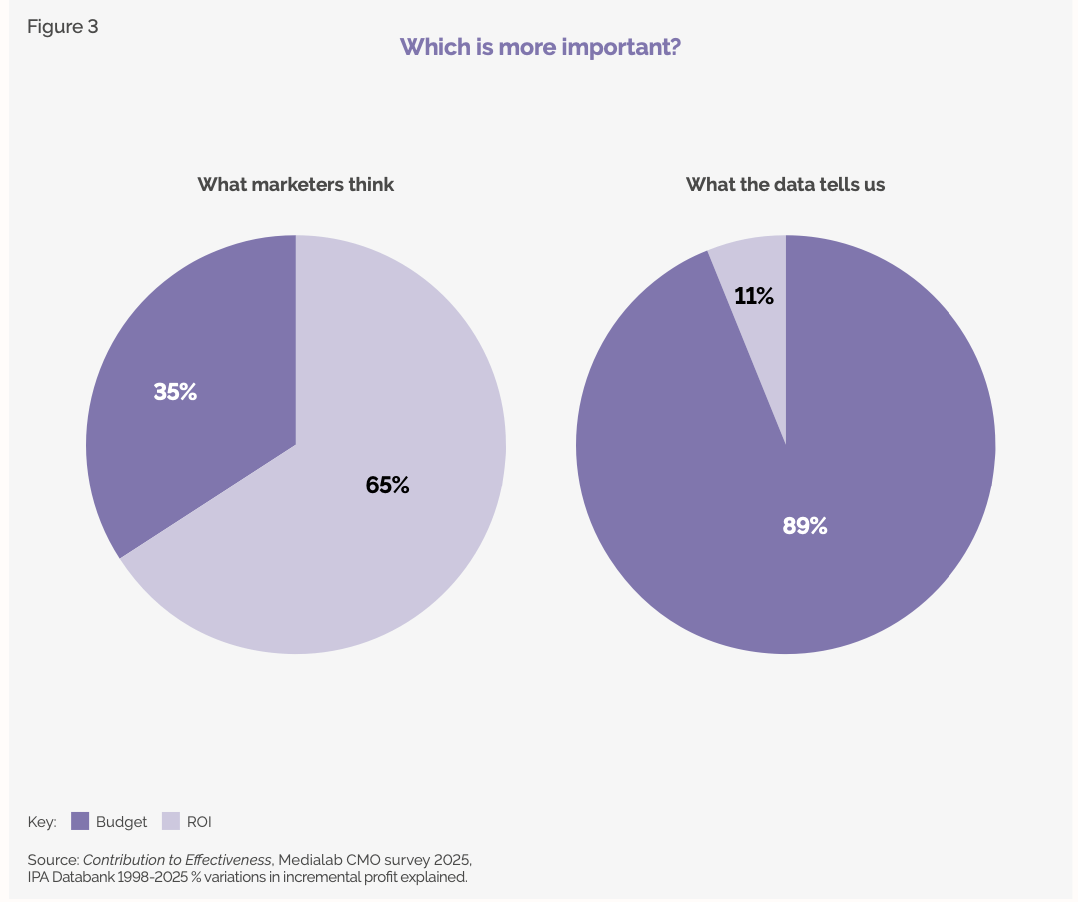
But what’s driving that decline in profitability? They next asked the 500 marketers what drives effectiveness: ROI, creative, or media plan. 65% thought creative or media plan, and only 35% thought budget. Put another way, the majority of marketers believe that how you spend the money is more important than how much you spend. In their minds, efficiency beats scale two to one.
When asked to choose between budget and ROI, again, 65% (I’d guess the same 65%) chose ROI. But an independent regression analysis across the Databank from 1998 to 2024, separating how much of the variation in profit is explained by ROI versus budget size, shows that ROI (how you spend) accounts for 11%. Budget (how much you spend) accounts for 89%. Budget is roughly eight times more important than the efficiency everyone obsesses over.
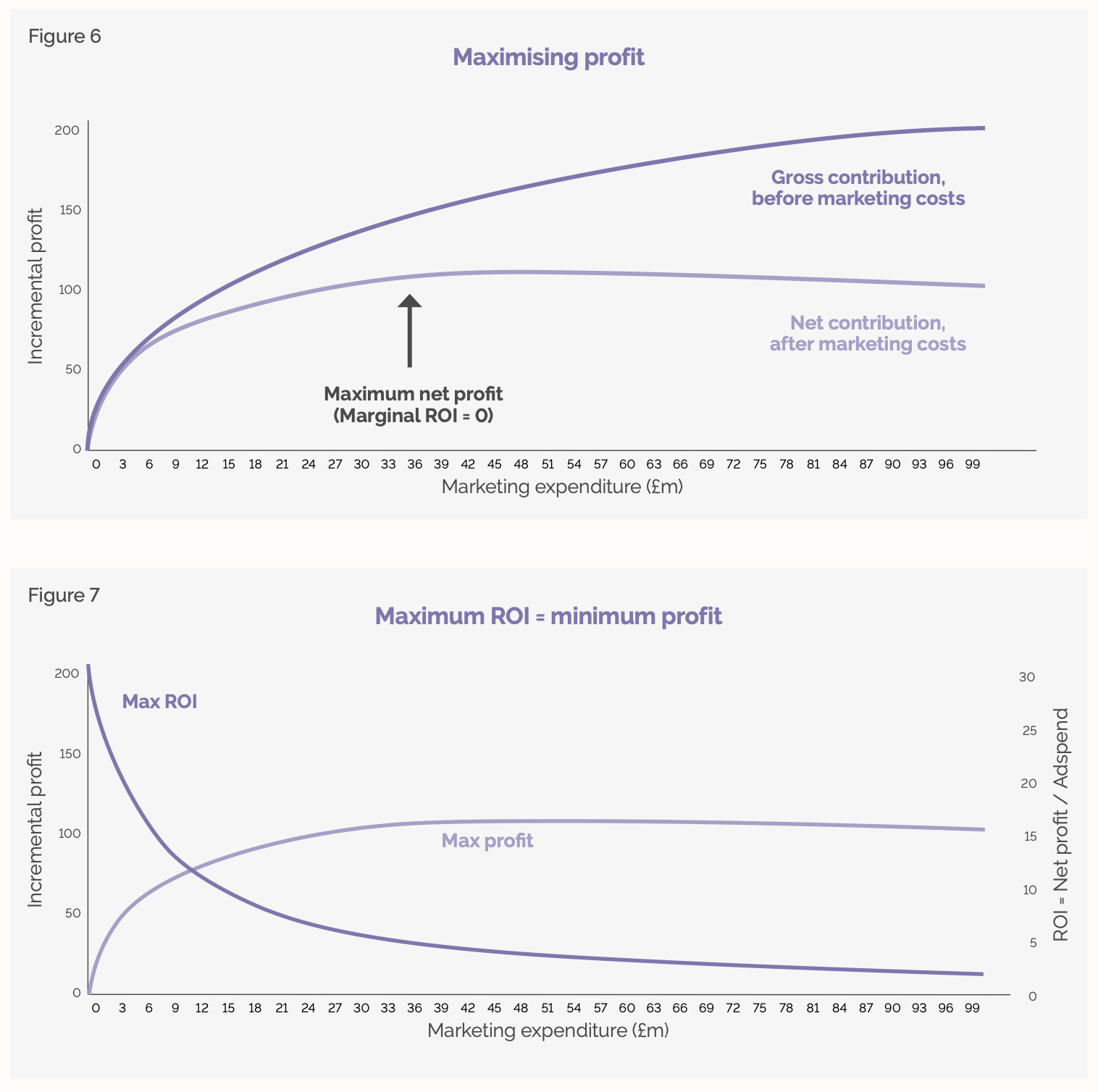
Which brings us to the most eye-opening pair of charts that’s invaluable for any marketer who reports to a CFO. Plot profit against spend and you get an inverted U. It rises, peaks, and eventually falls as each extra pound buys less. But plot ROI against the same spend, and it falls the whole way down, because efficiency is always highest when you spend almost nothing. The two curves point in opposite directions. Maximum ROI sits at minimum profit. The point of maximum profit is the point where the last pound you spend returns nothing at all. So a business that optimises for ROI will always stop spending too early, leaving money on the table.
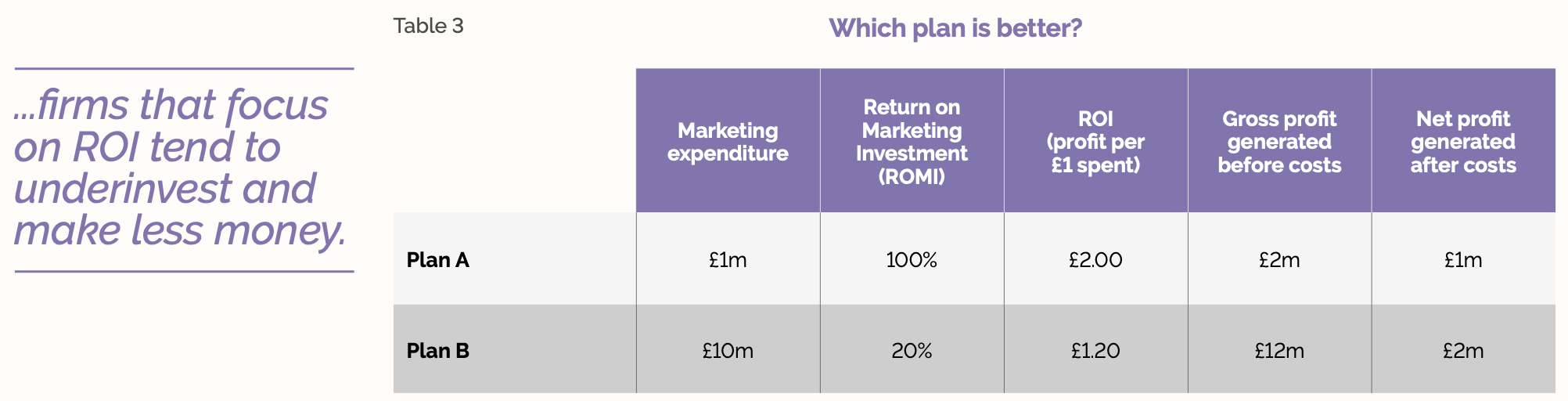
Binet (he and Davis take it in turns to author different sections of the report) makes it concrete with two plans. Plan A spends £1m, returns a stunning 100%, and nets £1m. Plan B spends £10m at a feeble 20% return, netting £2m. If your metric is ROI, you pick A and feel clever. If your goal is profit, you pick B and go home richer. The frugal, efficient plan is the one that makes less money
So when a CFO asks “what’s the ROI on the sponsorship?” and uses the answer to trim the activation budget, they are doing precisely what the report warns against. They are polishing the ratio and shrinking the prize. The key question should never be whether the sponsorship is efficient; it should be whether it is generating enough profit and whether spending more on it would generate more still.
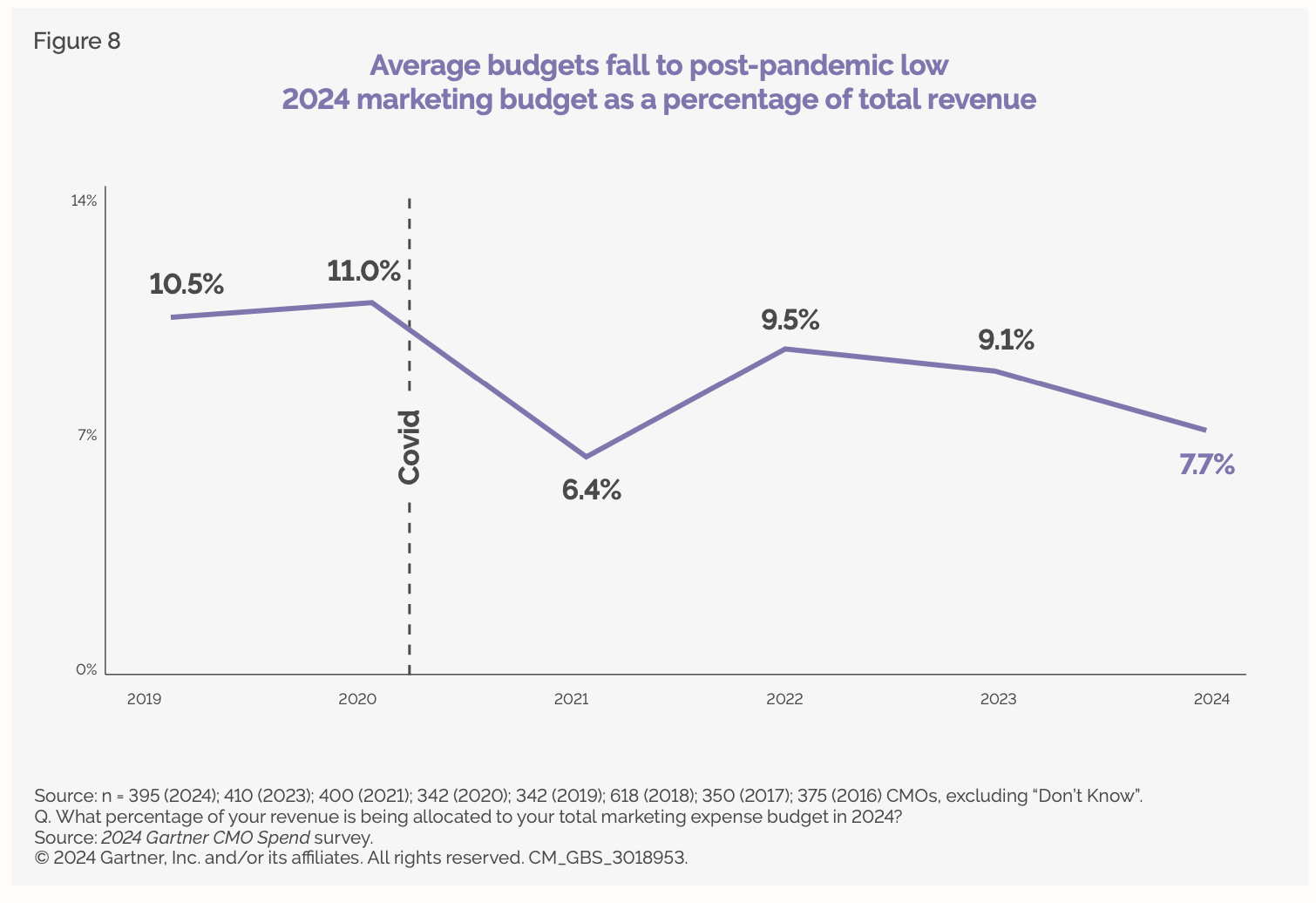
Gartner’s data shows that marketing budgets as a share of revenue have fallen by about 40% since before the pandemic, from over 10% to under 8%. Budgets are being cut as a proportion of the business at the exact moment when the evidence shows that budget is what counts most.
Worse, the report shows how those budgets get set. 76% of firms do no financial modelling at all. 52% use ROI as their primary metric. Only 38% use econometrics. The single most common rule is “last year plus a bit.” Most of the industry, in Binet’s phrase, is flying blind.
Pull these together, and you get the death spiral the report describes. A tight budget forces a focus on short-term efficiency. Short-term efficiency maximises ROI but suppresses profit, and Binet’s data show that long-term strategies generate far more profit and far more often than short-term ones. Lower profit invites another cut. Round and down it goes.
“Do more with less” is not a clever operating principle - it is the first symptom of a business eating itself.
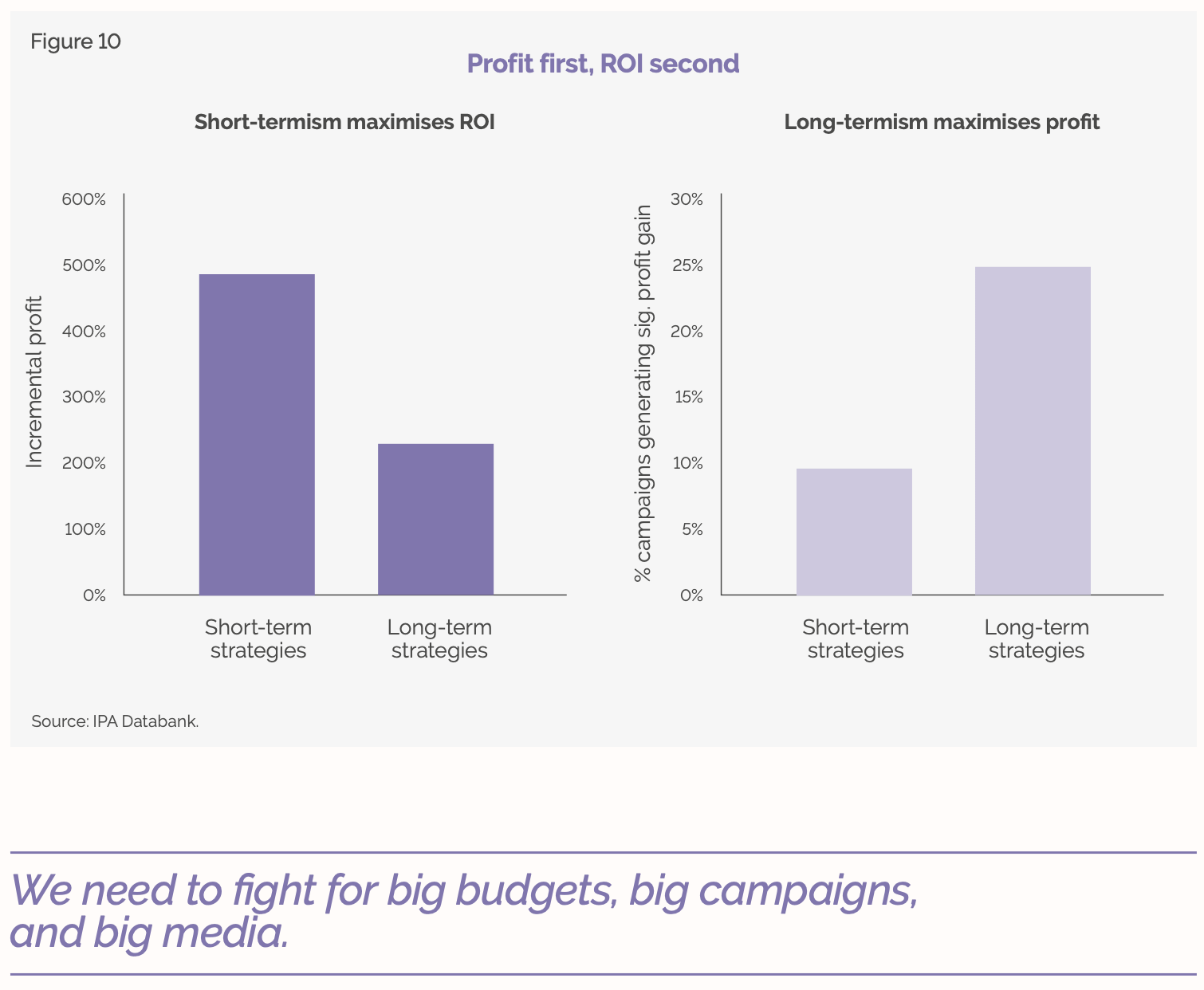
All of which tees up a principle I’ve argued before: activate with conviction and scale. It is the seventh of the ten in the sponsorship effectiveness manifesto, and Binet’s research validates it.
Conviction, because half-committing to a sponsorship is the surest way to waste the rights fee. Scale, because effectiveness is mostly a question of how much you put behind a good idea, invested steadily over years, rather than how cleverly you optimise a small amount.
I’ve also written in the past in defence of exposure and of the fact that reach is an incredibly important aspect of sponsorship. In Will Davis’s section of the research, he shows that fewer than half of CMO’s maximise reach.
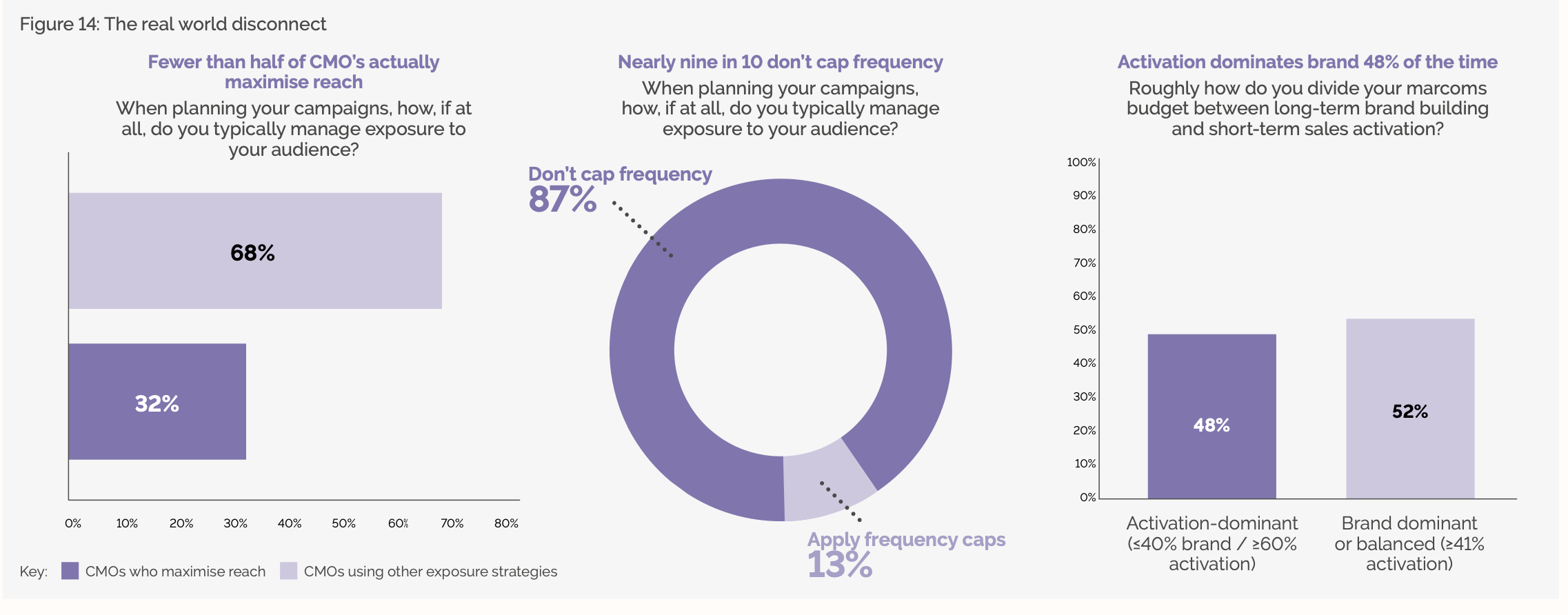
In advertising, reach is only achieved through paid media spend. Sponsorship is slightly different in that a certain level of reach is baked into the rights - the exposure you’ll receive from the rights holder even if not a single pound more is spent on activation.
But, in one of the most crucial tables in the report, we see just how much exposure is needed to achieve measurable sales or market share growth, and how much more is needed to achieve strong growth. You need 100s of millions of exposures for strong growth.
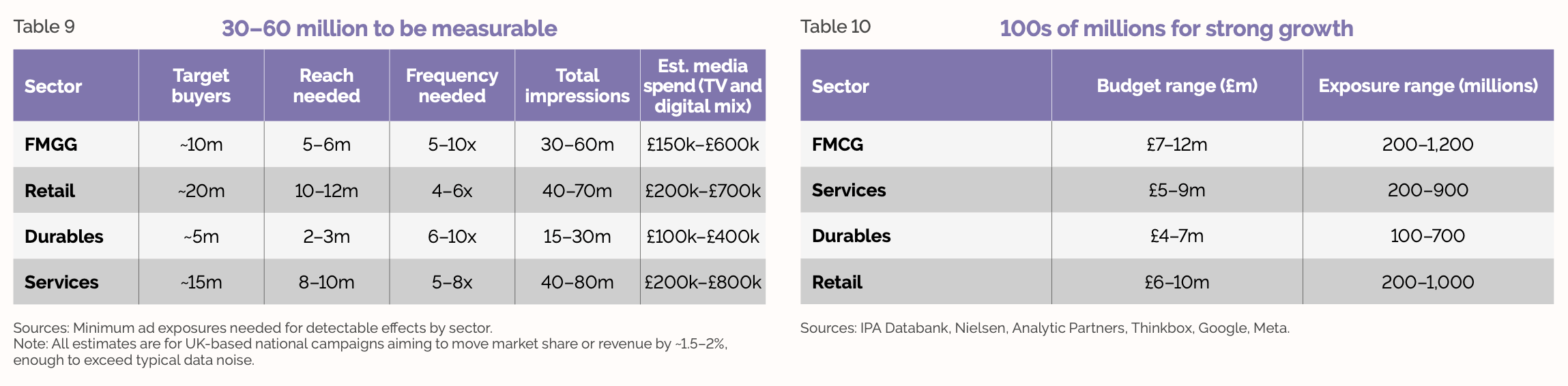
The implication for sponsorship isn’t that there’s no need to activate because you’ll get loads of exposure. The implication is that you can take the level of exposure that’s been forecasted by the rights holder and use that to work out how much additional exposure you’ll need to achieve a measurable bottom-line result, and how much on top of that you’ll need to achieve strong growth.
There has always been a question about the right ratio of activation budget to rights fee. I’ve seen 3:1; a common rule of thumb is 1:1, but in reality it’s rarely that.
But this new research suggests that the answer to the activation budget is simple: as much as possible (or, at least, until the ROI is less than 1). And when the CFO asks why we’re not seeing a sales uplift, the answer may well be that you’ve not spent enough to see one.
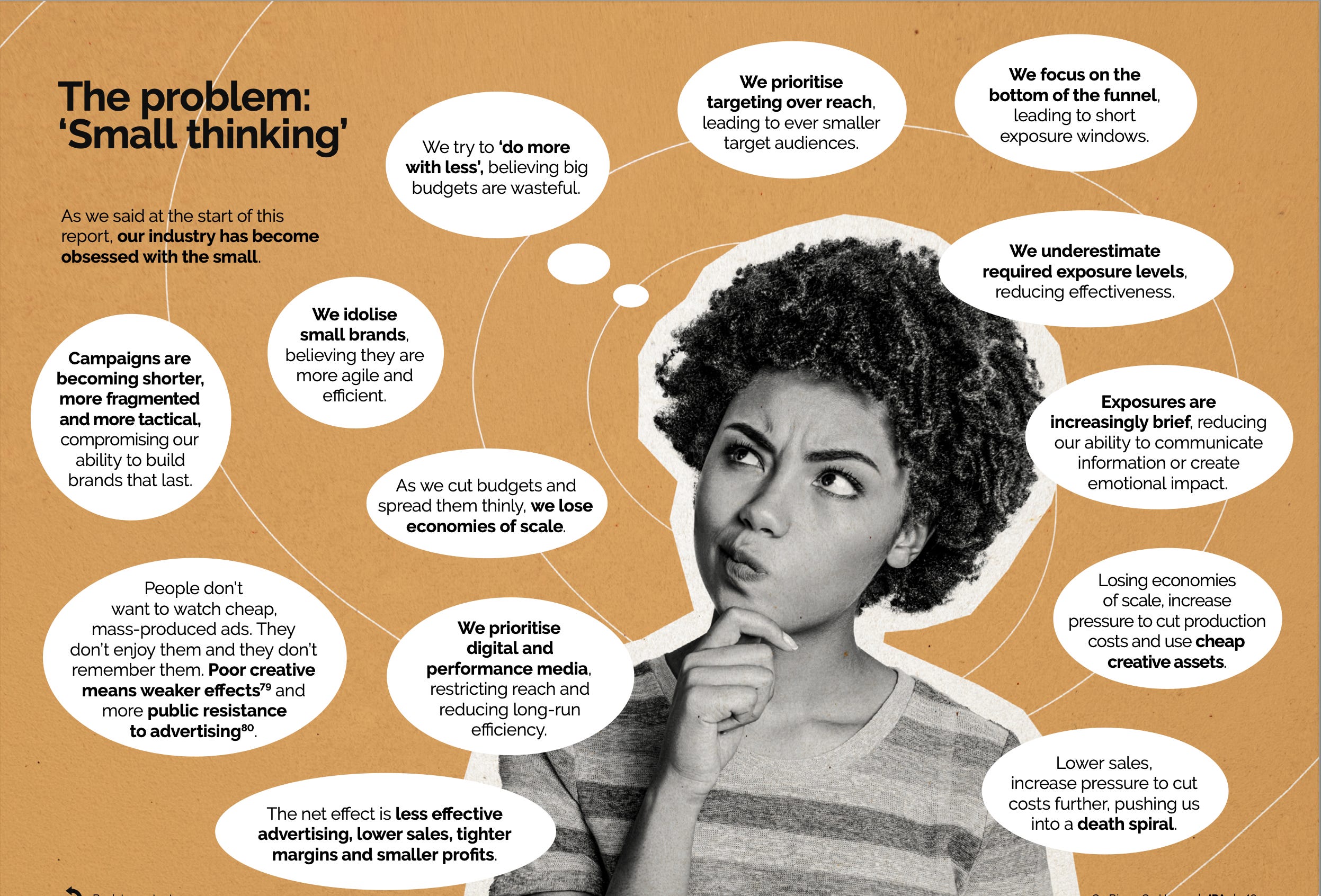
The report finishes with a great slide about all the dangers with small thinking. It lists all the ways that thinking small leads to a death spiral for businesses that think the answer to falling revenues is to cut budget, when increasing it is one of the best ways you can reverse decline or, on the other hand, grow more than you did last year.
But another problem with small thinking goes back to my original point: if you only act in line with how you perceive a business of your size should act, you’re much less likely to grow.
“That’s all right for the big brands/rights holders/agencies, but we’re different from them” is a limiting mindset whether you’re training for sport or growing a brand. Rosabeth Kanter, writing in the Harvard Business Review in 2012 said:
One secret of successful business and social entrepreneurs is that they act bigger than they are. Not bigger in the bad sense, with the arrogance and complacency that has made some banks, for example, feel they are above the rules. But bigger in terms of having the confidence to propel growth and set courageous goals.
Tom Roach wrote about this last week in Marketing Week, arguing that “marketers shouldn’t restrict themselves by the size of their brand – and acting bigger than you are is a powerful signal that your brand means business.”
In a piece a while back, I mentioned Richard Shotton’s work on costly signalling, and it’s relevant here too. Shotton has shown that people read the medium itself as a message about the brand. Ask the public to guess what a million views cost and they will say roughly £25,000 on TV and £5,000 on YouTube. Their guesses are beside the point. The perception is the point. The Thinkbox Signalling Success study, which Shotton helped shape, found that the channel a brand chooses moves perceptions of its financial strength, quality, popularity and trust before a single word of the ad has been processed. Where you show up tells people who you are.
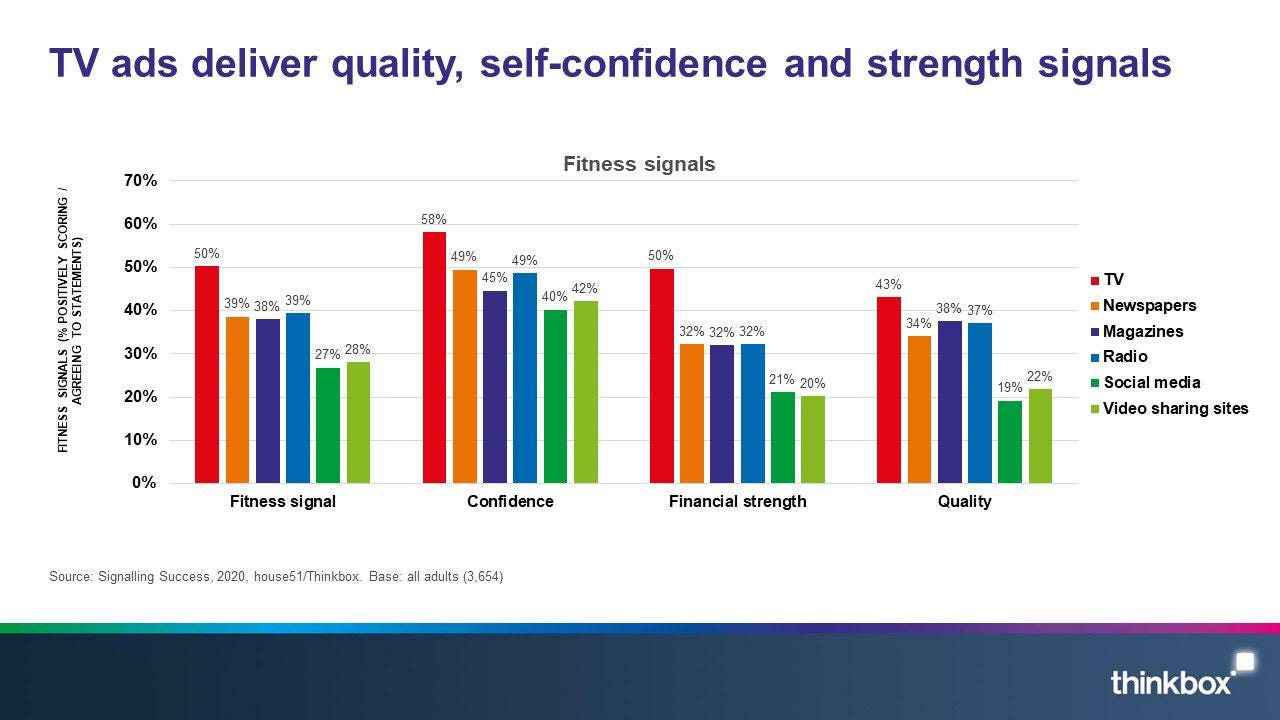
Sponsorship is one of the loudest signals available. Putting your name alongside a major property, and backing it with real money and real ideas, tells every customer, competitor and employee that you can afford to be there and intend to stay.
A timid, under-funded activation throws that signal away. It says the opposite of what you paid to say. The scale is not the waste. The scale is the message.
So when a small brand or a modest rights-holder tells me they can’t activate like the big players, I think of the club runner who wants to take a few minutes off their PB.
The methods aren’t a reward for arriving. They are how you get there. Act, invest and measure as if you are already the size you want to be. That is the part most people skip, and it is the part that works.
A big thank you to The Attention Shift podcast that invited me on recently. The episode dropped today and you can listen here.
Thanks for reading The Sponsorship Effect! This post is public so feel free to share it.
No posts
Comments
Nothing yet. Say the first thing.
Sign in to join the conversation.