
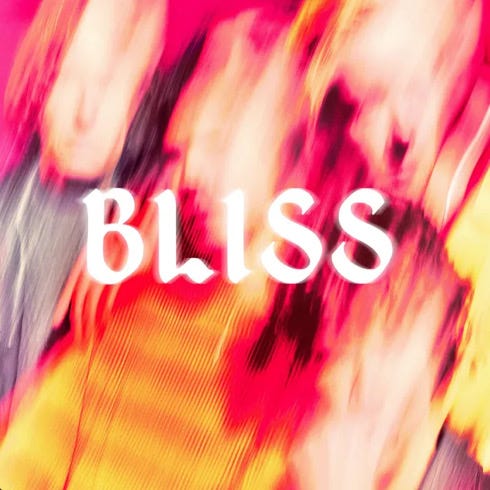
More than a decade into their career, UK-based indie rock band, Temples, are looking to redefine their position in the music scene. While the 4-piece group have typically been linked to the psychedelic renaissance of the mid 2010s, Temples cannot be so easily pigeon-holed. With the arrival of their 5th full-length release, Bliss, they’ve proven that they have chameleon capabilities. Bliss sees the band leaving behind psychedelic pop in favor of 1990s-inspired electronic grooves and retro aesthetics.
Temples rarely follow a set blueprint when it comes to songwriting methods, and the making of Bliss was no exception. Now nearly 15 years into their time together as a group, Temples’ chemistry guides their creative process.
“For what we do as Temples, there’s never really a set entry point and our process changes every time, we don’t keep an excel sheet that tells us what we are going to be doing,” lead singer James Bagshaw said. “Songwriting and being creative are not linear, and you can’t always use the same formula.”
“When we all get into a room together, it becomes much easier to get ideas flowing. I feel like this record, we were all instantly on the same page. There’s a lot of comfort in the fact that we’ve been doing this together for this long,” he said.
The starting point for Bliss would turn out to be demos written by each band member that were shared with the group and later shaped to fit the dance music landscape Temples were aiming for. Having a set of demos ready gave the band room to experiment, allowing a greater degree of creative freedom than they would have had if they’d come empty handed.
“We had all been making demos for over a year, so we were able to take those and get a feel for what we wanted this album to sound like,” Bagshaw said. “When you already have the basis of the song, there's so much space to have fun with sound design and create drama at different moments. You can be so much more instinctive because you’re truly at the liberty to do whatever the hell you want without losing anything important.”
Following their Sean Lennon-Ono produced 4th album, Exotico, Temples decided to bring production back in house for the first time since 2019’s Hot Motion.
“In addition to songwriting, we’ve always been huge fans of production,” Bassist Tom Walmsley said. “Once you can detach yourself from the songwriting element, and you’re mixing your own music, you can look at everything objectively. In some ways, Bliss is all about the process of detaching yourself from a song so that you can be even more creative with how you put it together.”
“With this record, we were making such a statement of intent with what we were already doing, that bringing in anybody would have altered it,” Bagshaw said. “Whether it was for good or for bad, it would have changed the way that we worked on these songs.”
While they continue to write the songs themselves, they felt that production would be this album’s defining feature. The band said that shifting focus from songwriting to producing gave them a new perspective and helped them craft a true dance record.
“We always strive to do something different when we are in the creative process. It’s almost always something that happens in the moment, and for this record it was a really different group of influences behind the sound choices and songwriting style,” Bagshaw said. “It was very much an in-the-studio album, with the songs being influenced by the techniques we used to make them.”
The decision to self-produce led Temples to new sonic and recording techniques, including the use of samplers and tape echoes, which they said largely influenced the direction of the album.
“As soon as you involve things like samplers, your whole approach to songwriting and constructing music changes. Dance music accommodates sampling well, so we just really leaned into that approach and created something entirely new.” Walmsley said.
“It was really important for us to be able to change up the textures of our sound for this album, because we knew that we wanted it to be something interesting and something we had never done before,” Keyboardist Adam Smith said. “The last thing we want is to have a discography where you could take a song from our fifth album and have it sound exactly like our first.”
Beyond the use of samplers, the band found innovative ways to employ their current set of tools, including unconventional uses for instruments and pedals throughout the recording process, which Bagshaw described as “the wrong way to record instrumentals.”
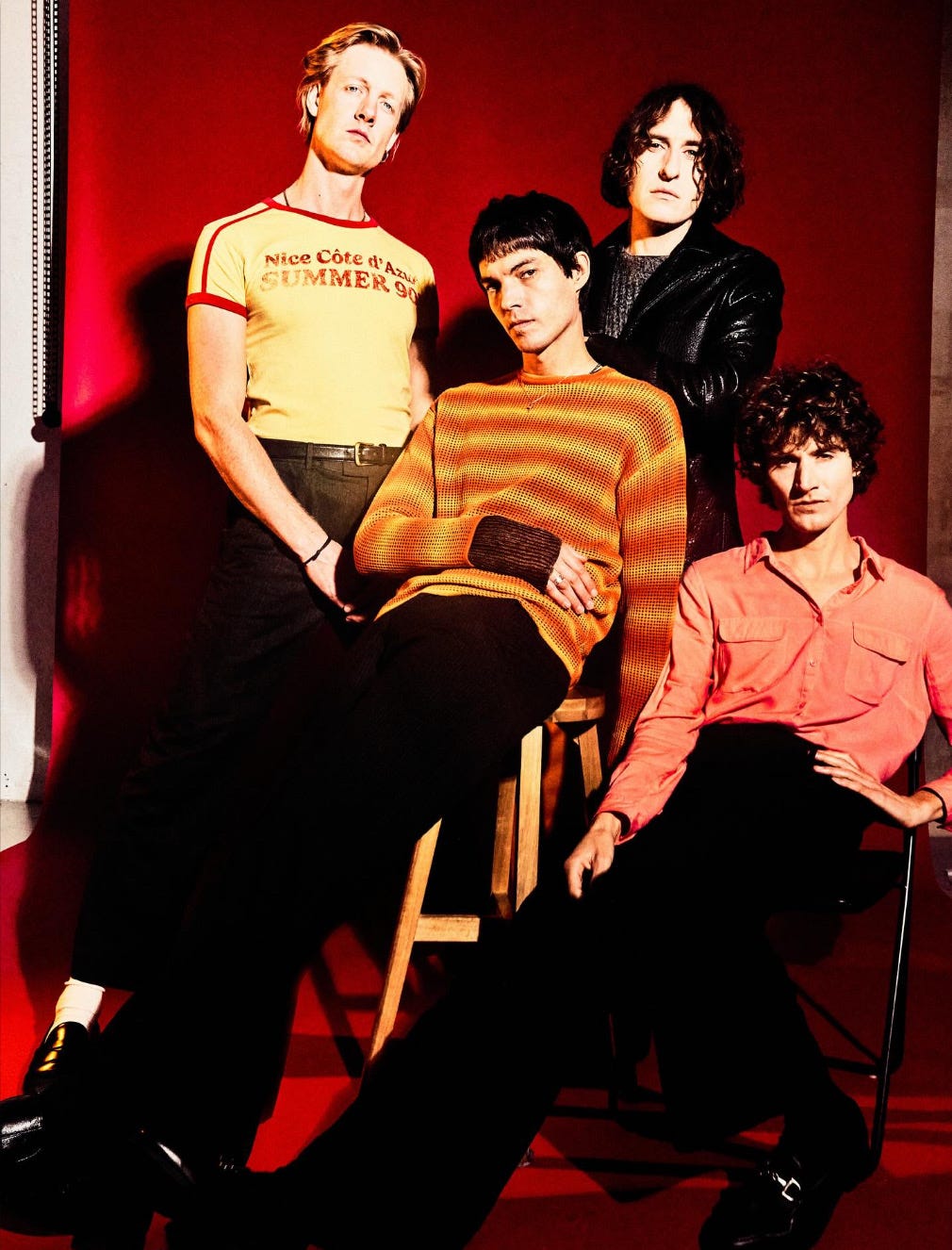
“We did a lot of random things like putting synths through guitar pedals, which creates the wrong impedance and reacts in a really unusual way, to get this noisy, interesting, scuzzy sound,” Bagshaw said. “We’re doing stuff that would probably make a sound engineer shriek, but we made it work in some really cool ways.”
The result is an album that sounds loose and unfettered. There is a sense of harmony between the tracks, with each one balancing out the strengths of the others.
“A big difference between this album and the last three is that we decided not to treat each song individually in the sense of production and songwriting style. The whole album feels much more cohesive than the last few records,” Bagshaw said.
While dance music can often come down to a science, Temples made the decision to abandon the pursuit of perfection. Reflecting upon their scrappier early work, the band embraced minor recording flaws and left Bliss rougher around the edges.
“I realized how raw our older stuff was, and just sort of unedited and unfiltered, and I realized that we had done that on this record, which I’m actually very happy about,” Bagshaw said. “When you’re re-recording multiple times to get something completely right, a song can become completely devoid of character. With this, we left imperfections in, warts and all, and that just adds to the whole thing.”
“In a lot of ways, it’s almost anti-dance music, because dance music is so fine tuned, so this was a really interesting concept for us to make this very loose and very free dance music,” Walmsley said.
Taking inspiration specifically from the 1990s music scene was something instinctive for Temples. The album’s sound and visual identity were not born from preconceived ideas, but from what felt the most genuine to the band. Temples spent their early career curating an eccentric 1960s vibe after finding success with their 2014 psych-rock debut, Sun Structures, but for Bliss, they wanted to branch out into something more authentic to their real lives. Having lived through the 90s as children, the band had a certain inclination to lean into that time period.
“When you reference something from before you were born, you can only really capture the essence of it- you feel like you know it but you don’t. Whereas with the 90s, we have more of a right to make a statement about that time through the lens of being in our youth,” Bagshaw said. “So that was really interesting, being able to capture the real feelings we did have at that time, and the nostalgia that comes with that, whether it's euphoric nostalgia or more of a melancholy kind.”
The genre transition is something that came naturally to Temples, who found that there is an innate aspect of psychedelia within dance music.
“A lot of the music of that time, especially in the early 90s, was really electronic and experimental, it shares a lot in common with more psychedelic leaning music, which has always been an influence for us,” Walmsley said. “It felt like a completely natural progression, going from one to the other. It just fit and still feels like us completely.”
“The main difference is as opposed to being song focused, it feels more energy driven. There are builds and breaks, and it just feels more emotionally driven in a way,” he said.
Letting go of any outside expectations, whether from fans or critics, gave the band permission to be freely creative.
“If you start thinking of what people are going to make of what you're writing, you straight away limit any potential channel you’re going to go down musically,” Bagshaw said. “The arts are one of the few industries where you get to do whatever the hell you want. So as weird as it sounds to say you don’t think about your fans, you genuinely can’t if you want a truly liberating experience.”
“We’re going to get some negative comments anyway, so why not just go outside of the box- especially because it does still sound like Temples at the end of the day,” he said.
Lyrically, the band felt that this was the most transparent and real they have been to date. While their previous records often play out more like a fairy tale, Temples wanted to keep this album grounded and personal.
“We’ve hidden behind a lot of metaphor in the past, and a bit of floral language here and there, but we are just at a point where we wanted this record to be our clearest, lyrically, It’s an honest album. We do, in our own way, pour our hearts out slowly,” Bagshaw said. “It’s a little bit more raw, a little more straight to the point and I think that’s quite liberating, not hiding behind anything.”
After the release of Bliss on June 26th, Temples will play a few release shows in the UK before launching straight into a tour that will keep them on the road for nearly six months. The tour is broad, with back to back shows nearly every night from September through December across 15 countries. While many bands would find a tour this size daunting, Temples are looking forward to bringing Bliss to live audiences.
“We haven’t been on a proper tour in a while, and it’s probably the most extensive and most condensed tour we have done since our first or second album,” Smith said. “But we’re generally in good spirits and we’re all excited, so hopefully it’ll be a lovely experience for us and the audience.”
“I’m just really excited to see reactions from people, especially because we haven’t really toured for a couple years,” Bagshaw said. “I think this record will translate live pretty viscerally, so I’m very intrigued. I’ll probably forget words because I’ll be looking at the audience to see how they react”
Bliss can mean something different for everyone, and for Temples it has become more of a mantra than a title. As an era and an album, it represents a step forward and a new beginning for a band that has reinvented themselves over the course of 15 years.
“Bliss as both a title and a theme, it’s not a naive kind of bliss, it’s a kind of a bliss that has to be earned,” Walmsley said. “You have to go through both these internal and external wars in a sense before you reach the point where you’re at peace with things in your life. So I think that’s a heavy theme on the album- to come out from the other side of difficulty with resolution.”
Comments
Nothing yet. Say the first thing.
Sign in to join the conversation.