
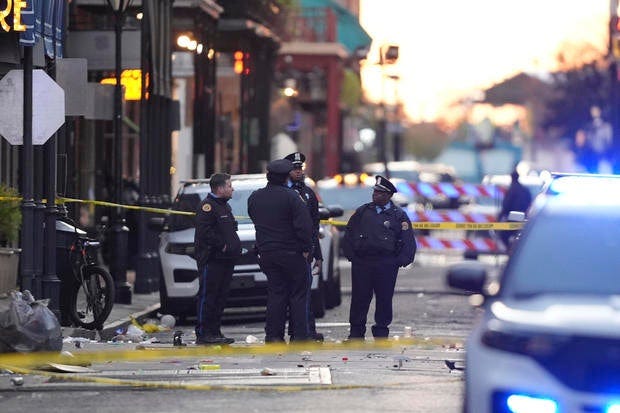
As fireworks lit the sky and confetti rained down across the country to ring in the New Year, our collective sense of celebration was tragically marred by a terrorist attack in New Orleans. The attacker drove a truck through the crowd on Bourbon Street, claiming at least ten lives and wounding dozens more. In the chaotic aftermath, two police officers were shot while engaging the suspect in a fierce gun battle. Though the suspect was apprehended, the toll on the community remains devastating.
For many of us, the excitement of New Year’s Eve was tempered by a heightened awareness of the threat of violence at large gatherings. I, personally attended the Zac Brown Band concert at Atlanta’s State Farm Arena. While revelers cheered on their favorite artists, my mind lingered on the fact that such venues—packed with thousands of joyous attendees—are at risk of becoming prime targets. This is not saying that’s all I thought about; I certainly enjoyed the event, but as a 16-year veteran of Law Enforcement, it’s a thought that is always on my mind in public venues - constant hypervigilance.
With a new presidential administration set to take office in just 20 days—one that campaigned on a platform of heightened Law & Order—the urgency to address escalating violent crime and terrorism could not be clearer. The incident in New Orleans, along with other highly publicized acts of violence over the past year, underscores the continued need for vigilance and strategic investment in law enforcement. It also highlights the vital role of innovative technology in keeping communities safe, not just at major events, but in everyday life.
Large gatherings, whether for holiday celebrations, concerts, or sporting events, have become attractive targets for those seeking to inflict mass casualties. The attack in New Orleans follows a pattern seen in incidents worldwide, where vehicles are used as weapons in crowded pedestrian areas. These evolving methods demand a proactive, agile response from law enforcement.
Past Vehicle Attacks: From Bastille Day in Nice, France, to the Christmas market attacks in Berlin, mass killers using trucks or vans to mow down crowds have proven how lethal and unpredictable such acts can be.
Concert and Venue Attacks: Incidents like the bombing at the Ariana Grande concert in Manchester, the mass shooting at the Route 91 music festival in Las Vegas, or the march 2024 Crocus City Hall music venue terrorist attack highlight that any large assembly of people can draw the attention of those wishing to cause harm.
In each of these cases, local authorities faced immense logistical challenges in both preventing and responding to the threat. These incidents serve as grim reminders that preparedness, training, and advanced resources are crucial.
A New Year traditionally symbolizes fresh starts and renewed commitments. This New Year must bring a strengthened resolve to protect our communities. While slogans of “Law & Order” resonate, words alone will not suffice. To truly mitigate terrorist and criminal threats, law enforcement agencies at every level—local, state, and federal—need comprehensive support, including:
Increased Staffing and Specialized Training
More officers on the ground with targeted training in counterterrorism, crowd management, and crisis response.
Specialized units equipped to identify and mitigate emerging threats, such as drone surveillance and cyber infiltration.
Advanced Forensic Capabilities
Cutting-edge forensic technologies for rapid DNA analysis and digital forensics that enable investigators to tie suspects to crimes quickly and efficiently.
Expanded data-sharing networks (eg. Flock, Fusus, ect) across departments to track suspects who move between jurisdictions.
Community Engagement and Early Intervention
Stronger ties with community leaders, businesses, and citizens to encourage reporting of suspicious activity.
Mental health resources and intervention programs to prevent extremist radicalization and reduce crime rates through proactive measures. This problem is complex and must be treated from multiple angles.

From facial recognition software to AI-driven threat detection, technology can serve as a powerful force multiplier for law enforcement—provided it is deployed ethically and responsibly to enhance public safety while respecting individual rights. AI and real-time analytics help by analyzing surveillance footage to identify unusual crowd behavior or suspicious items, and AI-powered pattern recognition can predict potential attack sites or movements of suspects. Meanwhile, drones offer valuable monitoring and rapid-response capabilities by providing aerial surveillance during large events and delivering real-time data to command centers; outfitted with thermal imaging or other sensors, they can detect hidden threats and assist ground units in their response efforts.
In tandem with these technological measures, target hardening of public venues has become crucial, requiring community officials and architects to incorporate counterterrorism considerations into the very design of public spaces. Vehicle-prevention devices, strategically placed surveillance cameras, and thoughtful environmental layouts developed in consultation with law enforcement can balance aesthetic appeal with security. While these innovations occasionally spark debates over privacy and civil liberties, their judicious use and transparent oversight ensure that technology remains a vital ally—rather than an overbearing intrusion—in keeping people safe.
In 20 days, a new administration will begin its tenure with a promise of bolstering Law & Order. This pledge must materialize into meaningful funding, bipartisan legislation, and actionable policies that reinforce law enforcement capabilities. Such measures might include:
Federal Grants for Security Upgrades
Allocating resources to local police departments to purchase surveillance equipment and fund specialized teams.
Nationwide Intelligence Collaboration
Formalized communication pipelines between federal agencies (e.g., FBI, DHS) and local LE agencies, ensuring swift data exchange on potential threats. We have to get back to a post 9/11 mindset of direct intelligence exchange between Federal/State/Local law enforcement. This has once again become too siloed.
Transparent Oversight and Civil Rights Protections
Establishing clear guidelines that preserve citizens’ freedoms and privacy while empowering law enforcement with the tools they need. This is perhaps one of the most difficult aspects to the problem of community protection. The balance of protecting the community without trampling all over the Constitution is the juxtaposition that members of the LE and Intelligence community often must navigate. Understanding this and having equal respect for both side of the coin are critical in both our local and national teirs of discussion.
“They who can give up essential liberty to obtain a little temporary safety, deserve neither liberty nor safety.”
-Benjamin Franklin
The tragedy in New Orleans casts a somber shadow over what should have been a joyful occasion. Yet the spirit of the New Year remains an emblem of hope—a time to commit to solutions that protect our families, friends, and neighbors. The lessons gleaned from this latest attack and previous acts of terror must fuel our resolve to adapt, modernize, and unite.
As we come together in remembrance of those we have lost, let us also look ahead with determination. A safer tomorrow requires concerted effort from policymakers, law enforcement, technology innovators, and individual community members alike. As a police officer, I have often remarked that I am not truly the first line of defense—the community is. Without vigilant citizens maintaining a watchful mindset, I can only detect and stop so much crime. Communities must take ownership of their own safety, while law enforcement serves as one crucial tool in achieving that goal. By investing in strategic, cutting-edge security measures and fostering a genuine sense of unity, we can transform these dark moments into catalysts for enduring progress. However, at a time when many jurisdictions are reducing budgets, including those for police and community development, it is critical to acknowledge the tangible returns that robust investment in law enforcement provides. Well-funded agencies, guided by an innovative mindset, stand as the clearest examples of the secure and vibrant communities we can collectively create.
New Year’s is meant to be a time of celebration and renewal. Let the memory of this tragic year’s beginning galvanize our collective determination to safeguard our streets, venues, and public spaces. By uniting innovative law enforcement strategies with proactive community engagement, we can transform these dark moments into lasting progress. Through thoughtful investment and collaboration, we ensure that safety, joy, and a vibrant sense of unity prevail in the future years of our communities.
No posts
Comments
Nothing yet. Say the first thing.
Sign in to join the conversation.